
That flashing DPF warning light on your dashboard isn't just an annoyance, it's your Range Rover telling you something is genuinely wrong before it turns into a much bigger, much costlier problem. If your engine has gone into limp mode, your fuel economy has quietly worsened, or you've just been quoted an eye-watering figure by a main dealer for a diesel particulate filter replacement, you're in the right place.
We deal with this exact issue every week at RR Engine Works in Grays, Essex. Range Rovers, particularly those running the 3.0 SDV6, 4.4 SDV8, and Ingenium diesel engines, are well known for DPF problems, especially when they're used mostly for short, stop-start journeys rather than long motorway runs. The good news is that a blocked or failed DPF doesn't always mean the most expensive fix. It means understanding exactly what's gone wrong first.
This guide walks through real Range Rover DPF replacement costs by model, the warning signs you shouldn't ignore, when cleaning is a genuine alternative to replacement, and how a proper diagnosis protects you from paying for a new filter when the actual fault lies somewhere else entirely.
How Much Does Range Rover DPF Replacement Cost?
There's no single honest answer to "how much does a Range Rover DPF replacement cost" without knowing your model, engine, and whether the part is genuine or OE-quality aftermarket. What we can give you is a realistic, experience-based range, because we quote this job regularly.
Broadly speaking, Range Rover DPF replacement cost in the UK sits anywhere between roughly £900 and £2,500+ once you factor in the filter itself, labour, and any necessary sensor or software work. Main dealers typically sit at the top end of that range; independent Land Rover specialists using genuine or OE-matched parts usually come in noticeably lower without cutting corners on quality.
Range Rover DPF Replacement Cost by Model
Different Range Rover models use different DPF assemblies, exhaust layouts, and access points, all of which affect labour time and part cost.
Range Rover Sport DPF Replacement Cost
Range Rover Sport models (L494 and L320) running the 3.0 SDV6 or later Ingenium diesel engines generally fall in the mid-to-upper part of the cost range, largely due to the DPF's position within the exhaust system and the additional sensor work often required alongside it.
Range Rover Evoque DPF Replacement Cost
The Evoque, with its smaller 2.0-litre Ingenium diesel (TD4/SD4), tends to be the more affordable end of the range. It's also one of the more common DPF failures we see, largely because Evoques are frequently used as shorter-commute vehicles, exactly the driving pattern that prevents proper regeneration.
Range Rover Velar DPF Replacement Cost
Velar diesel variants sit similarly to the Evoque and mid-range Sport models, though newer emissions hardware on later cars can mean additional software configuration is needed post-replacement.
Range Rover Vogue & L405 DPF Replacement Cost
The full-size Range Rover Vogue and L405, particularly with the 4.4 SDV8 engine, typically carry the highest DPF replacement costs of the range, both the part itself and the labour involved in accessing and removing it are more substantial.
Model / Engine | Typical DPF Replacement Cost Range* |
| Range Rover Evoque (2.0 TD4/SD4) | Lower end of range |
| Range Rover Velar (2.0/3.0 diesel) | Lower-to-mid range |
| Range Rover Sport (3.0 SDV6 / Ingenium) | Mid-to-upper range |
| Range Rover Vogue / L405 (4.4 SDV8) | Upper end of range |
*Actual pricing depends on part sourcing (genuine vs OE-quality aftermarket), whether sensors or hoses also need replacing, and any required ECU/PCM programming. We always confirm an exact price after inspection, never before.
What's Included in a DPF Replacement Quote?
A proper quote isn't just "filter plus fitting." A DPF replacement done correctly should account for:
- The filter assembly itself, genuine Land Rover DPF or a trusted OE-quality aftermarket equivalent
- Labour, removal of the old unit, exhaust reassembly, and testing
- Sensor and hose checks, the differential pressure sensor, sensor hoses, and exhaust gas temperature sensor are common failure points that get missed
- ECU/PCM programming, resetting soot and ash counters and configuring the new filter so the car recognises it correctly
- A live-data road test, verifying regeneration behaviour and pressure readings after fitting
Parts, Labour & ECU Programming Costs Explained
Skipping the programming step is one of the most common reasons a "new" DPF starts throwing faults again within weeks. The car's ECU tracks soot load, ash load, and regeneration history against the old filter, without a proper reset and adaptation, it's effectively still working from outdated data. Any specialist quoting you for DPF replacement should include this as standard, not as an optional extra.
Signs Your Range Rover DPF Needs Replacing
Not every DPF warning light means you need a full replacement, but ignoring the early signs almost always turns a moderate repair into a major one.
Common Range Rover DPF Warning Signs
DPF Warning Light, What It Means
The DPF light illuminating usually indicates the filter's soot load has crossed a threshold the engine management system flags as significant. It doesn't automatically mean replacement, but it does mean the car needs attention, ideally within the next few journeys rather than weeks later.
Limp Mode & Reduced Engine Power
If your Range Rover suddenly feels sluggish, caps its revs, or drops into limp mode, the engine management system has likely detected excessive exhaust backpressure, a classic sign of a significantly blocked DPF protecting the engine and turbocharger from damage.
Frequent or Failed Regeneration Cycles
You might notice your engine fan running longer than usual, a change in idle note, or a slightly unusual smell after a drive, signs the car is attempting an active regeneration cycle. If these cycles keep starting but never completing (often because journeys are too short), soot continues building until the filter can no longer clear itself through normal regeneration.
Other symptoms worth watching for include noticeably reduced fuel economy, increased exhaust smoke, and a rise in exhaust temperature under load. On their own, none of these confirm a failed DPF, but together, they build a picture worth having checked properly.
What Causes a Range Rover DPF to Fail?
Understanding the cause matters just as much as recognising the symptoms. Replace a DPF without fixing the underlying issue, and you'll likely be back in the same position within months.
Faulty EGR Valve, Turbo & Sensor Issues
A sticking EGR valve, a leaking turbocharger seal (which lets oil into the exhaust stream), or a faulty differential pressure sensor can all cause DPF-related warning lights and blockages, sometimes without the filter itself being damaged at all. This is precisely why a full diagnostic check matters before any parts get ordered.
Short Journeys & Incomplete Regeneration
Range Rovers used mainly for short school runs or local errands rarely reach the sustained engine temperature and speed needed for a complete passive or active regeneration cycle. Soot builds faster than it clears, and over time this leads to genuine, physical blockage rather than a sensor fault.
DPF Cleaning vs Replacement, Which Does Your Range Rover Need?
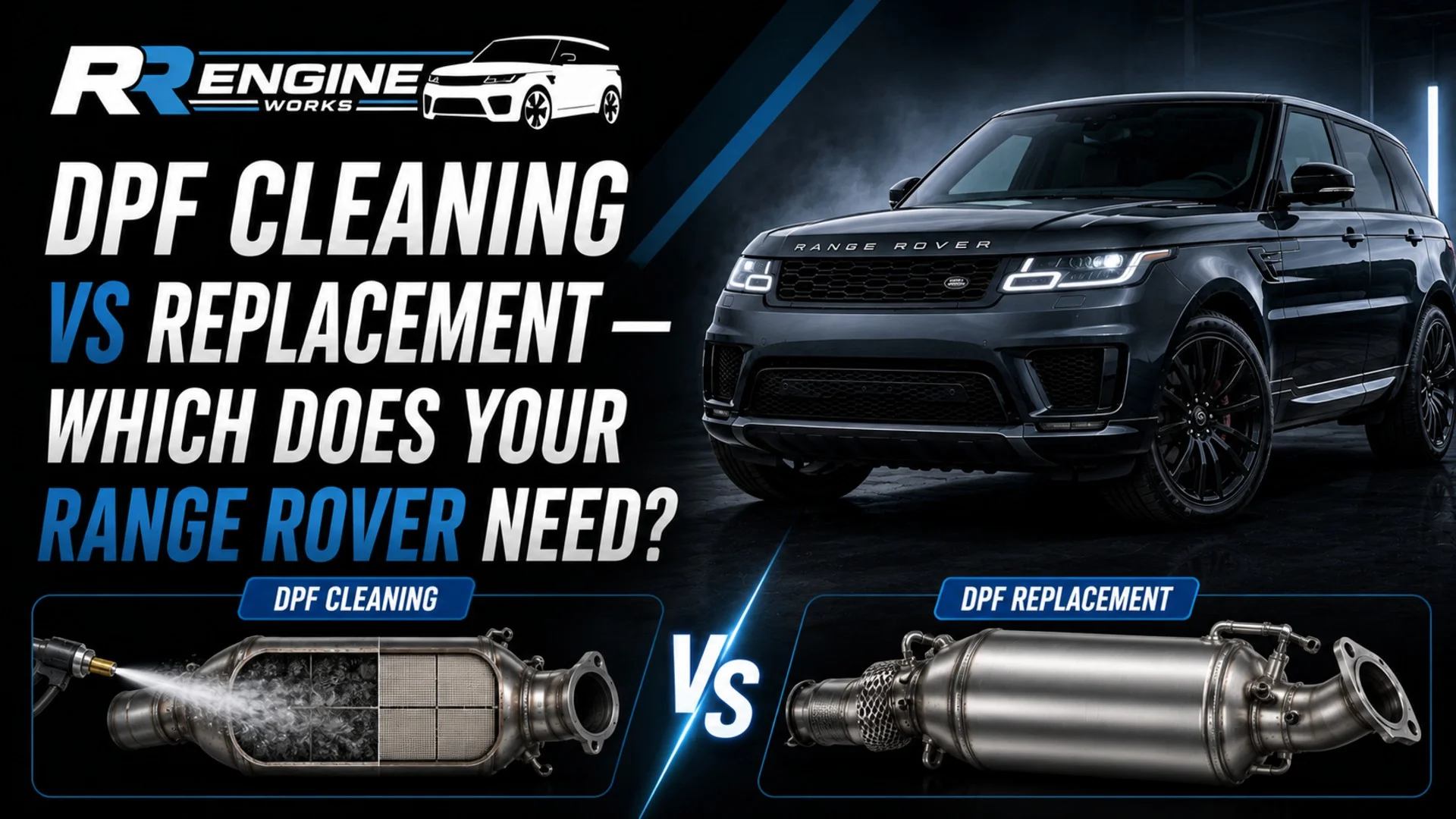
This is the question we get asked most, and it's the one too many quotes skip over entirely by jumping straight to "you need a new DPF."
How We Diagnose a Blocked or Failed DPF
Proper diagnosis starts with a differential pressure reading and a check of soot and ash load figures using live diagnostic data, not a guess based on mileage or warning light alone.
Differential Pressure & Soot/Ash Load Testing
A DPF pressure sensor reading well outside normal range, combined with a high recorded soot load, points toward genuine blockage. If ash load is high but soot is manageable, that's a different problem, ash doesn't clear through regeneration or chemical cleaning, and it's often a sign the filter is genuinely reaching end of life.
Reading Fault Codes (Including P2002)
Fault code P2002, diesel particulate filter efficiency below threshold, is one of the most common codes we see on Range Rovers. It confirms the filter isn't performing as it should, but it doesn't by itself tell you why. That requires checking the sensor readings and pressure data alongside it.
When Cleaning Works, and When Replacement Is Necessary
DPF Condition | Recommended Solution |
| Low soot load, early warning light | Forced regeneration |
| Moderate soot blockage, filter otherwise sound | Professional off-car cleaning |
| High ash accumulation | Cleaning rarely effective, replacement usually needed |
| Cracked or melted substrate | Replacement required |
| Oil-contaminated filter | Diagnose turbo/engine fault first, then decide |
| Faulty pressure sensor, filter itself fine | Sensor repair, no DPF replacement needed |
As a general rule: regeneration and cleaning are worth attempting when the filter's physical structure is sound and the blockage is soot-based. Once ash has built up significantly, or the ceramic substrate has cracked or melted from excessive heat, cleaning simply won't restore proper function, replacement is the only reliable fix.
Genuine vs Aftermarket DPF: What We Recommend
Genuine Land Rover DPF units guarantee exact fitment and emissions compliance but carry the highest price tag. OE-quality aftermarket filters, sourced from reputable manufacturers, can offer comparable performance and reliability at a lower cost, the key is sourcing from a specialist who knows which aftermarket parts genuinely match OE tolerances, rather than the cheapest option available online. We talk buyers through this trade-off honestly rather than defaulting to whichever option is easiest to sell.
Book Range Rover DPF Replacement at RR Engine Works, Grays
Our Range Rover DPF Replacement Process
We don't fit a new filter and hand the keys back. Our process is built around confirming the fix actually works before the car leaves us.
Removal, Fitting, Sensor Checks & ECU/PCM Reset
- Full diagnostic scan and differential pressure/soot-ash load assessment
- Inspection of related components, EGR valve, turbocharger, pressure sensor hoses
- Removal of the old DPF and fitting of the genuine or OE-quality replacement
- Replacement of any faulty sensors or hoses identified during diagnosis
- ECU/PCM programming to reset soot and ash counters and configure the new filter
- A live-data road test confirming correct regeneration behaviour before handover
Why Choose RR Engine Works
Warranty, Experience & Genuine Parts Sourcing
We work on Range Rover and Land Rover diesel engines day in, day out, from the 2.0 Ingenium through to the 3.0 SDV6 and 4.4 SDV8. That focus means we recognise patterns main dealers and general garages sometimes miss, particularly when a DPF fault is actually a sensor or EGR issue in disguise. Every DPF replacement we carry out is backed by a warranty, and we're upfront about genuine versus OE-quality parts pricing before any work begins, no surprise invoices.
Visit or Contact Us in Grays, Essex
You'll find us at Unit 1, Hedley Ave, Grays, RM20 4EL. If your Range Rover's DPF light has come on, or you've already had a quote elsewhere and want a second opinion, get in touch and we'll talk you through diagnosis and pricing before anything is booked in.
Frequently Asked Questions About Range Rover DPF Replacement
How much does a Range Rover DPF replacement cost? Costs typically range from around £900 to £2,500+ depending on model, engine, and whether genuine or OE-quality aftermarket parts are used. Larger models like the Vogue with the 4.4 SDV8 sit at the higher end; the Evoque tends to be more affordable.
Can a blocked Range Rover DPF be cleaned instead of replaced? Often, yes, if the blockage is soot-based and the filter's substrate is intact. High ash accumulation or a cracked/melted core generally means cleaning won't be effective and replacement is the better long-term option.
How long does Range Rover DPF replacement take? A straightforward replacement, including sensor checks and ECU programming, typically takes a few hours, though this varies by model and whether additional faults are found during diagnosis.
Can I drive with the DPF warning light on? You can usually continue driving short-term, but it's not advisable to ignore it. Continuing to drive with a significantly blocked DPF increases the risk of limp mode and can lead to turbocharger damage from excessive backpressure.
Does a new Range Rover DPF need programming? Yes. The ECU/PCM needs to be reset and configured to recognise the new filter correctly, skipping this step is one of the main reasons replacement DPFs develop faults shortly after fitting.
What causes repeated Range Rover DPF blockage? Frequent short journeys that prevent full regeneration are the most common cause, alongside underlying issues like a faulty EGR valve, turbocharger oil leakage, or a failing pressure sensor that triggers false or repeated warnings.
Is it worth cleaning a DPF before considering replacement? In many cases, yes, professional off-car cleaning is significantly cheaper than replacement and can fully resolve soot-related blockages. It's not a fix for ash buildup or physical damage, which is why proper diagnosis matters before deciding.
If your Range Rover's DPF light won't clear, or you've been quoted for a replacement without a proper diagnostic explanation, bring it to RR Engine Works in Grays. We'll check exactly what's going on before recommending anything, because the right fix depends entirely on what's actually wrong.