
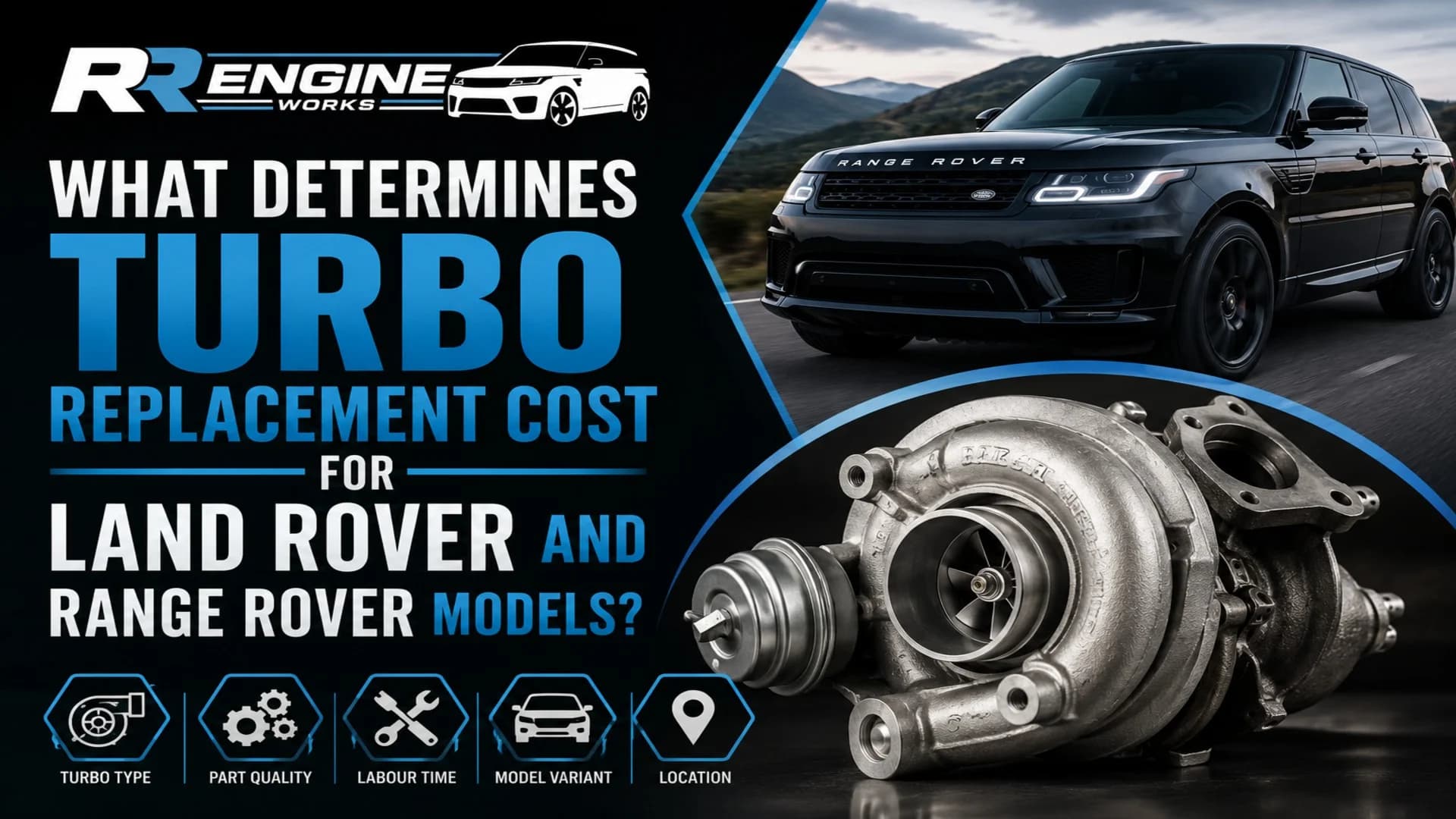
If your Range Rover has started blowing black or blue smoke, lost that instant surge of power on acceleration, or you've heard a strange whining noise from under the bonnet, chances are your turbocharger is on its way out. And the first question every owner asks is the same one you're probably asking right now: how much is this actually going to cost me?
It's a fair question, and a tricky one to answer honestly. Turbo replacement cost for Land Rover and Range Rover models isn't a single fixed number. It depends on your exact model, your engine, the type of turbo fitted, and the route you choose to take for the repair. Anyone quoting you a flat figure before even looking at your vehicle is guessing.
What we can do instead is walk you through exactly what drives that cost up or down, what symptoms tell you a turbo is failing, whether repair or full replacement makes more sense for your situation, and how a proper specialist handles the job from start to finish. By the end of this guide, you'll know precisely what you're dealing with, and what questions to ask before you book anyone.
What Determines Turbo Replacement Cost for Land Rover and Range Rover Models?
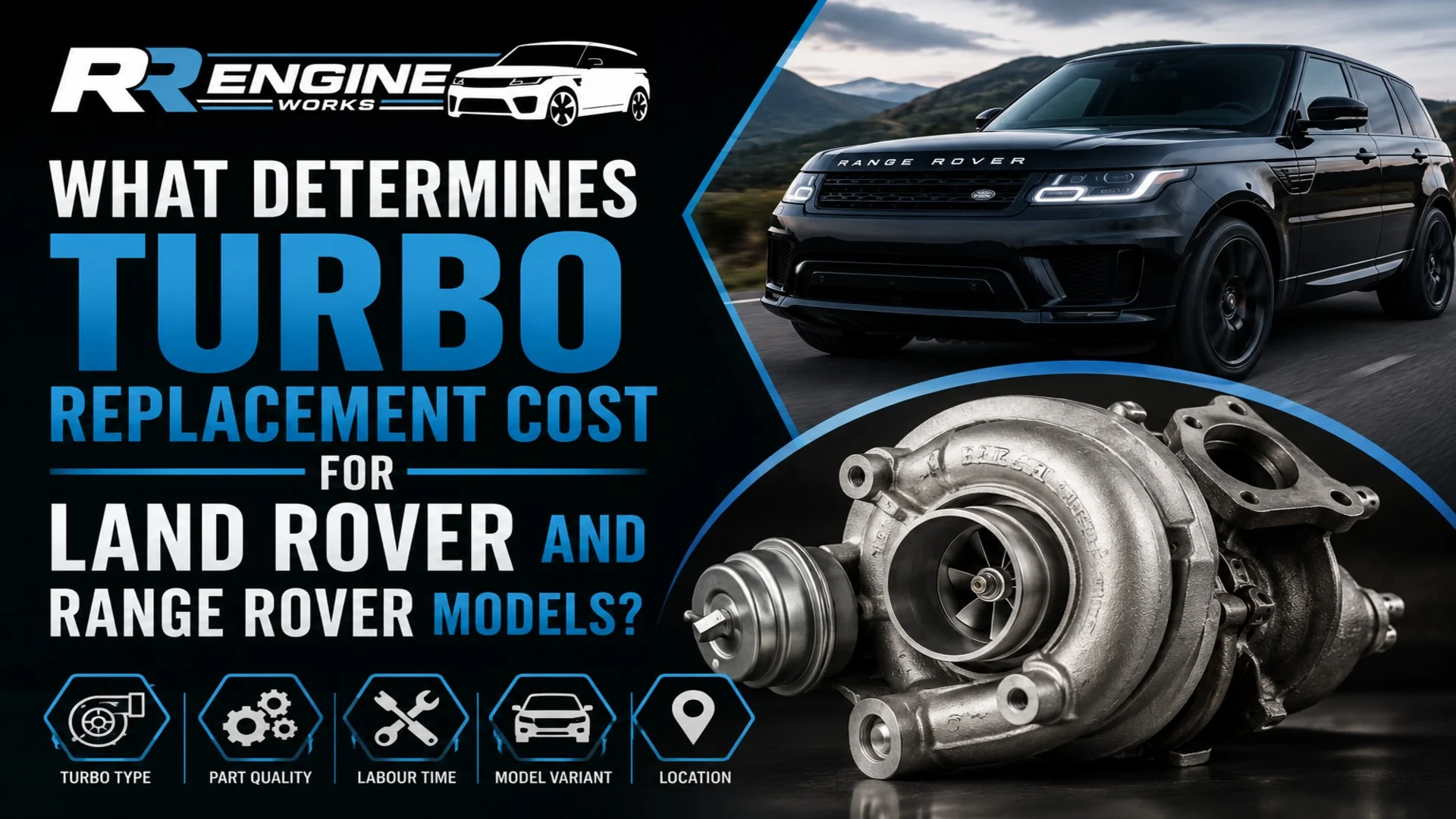
There's no single "Land Rover turbo replacement cost" or "Range Rover turbo replacement cost" that applies across the board. Two Range Rovers sitting side by side in a car park could have wildly different turbo replacement costs depending on their engine, age, and turbo configuration.
Several core factors shape the final price:
- The vehicle model and generation, A Range Rover Evoque with a smaller Ingenium engine is a different job entirely from a Range Rover Sport running a twin-turbo SDV8.
- Engine type, Ingenium, TDV6, SDV6, and SDV8 engines all use different turbo arrangements, and some are considerably more labour-intensive to access than others.
- Single vs twin/bi-turbo setups, V8 diesel Range Rovers typically run bi-turbo systems, meaning two units instead of one, which naturally affects both parts and labour.
- New, OEM, aftermarket, or reconditioned turbo choice, Each option carries a different cost-to-reliability balance (more on this shortly).
- Additional components needed, A genuine turbo failure often damages or contaminates surrounding parts: oil feed pipes, return pipes, gaskets, and sometimes the intercooler.
- Labour complexity, Some turbos sit in easily accessible positions; others are buried deep in the engine bay, which adds hours to the job.
Parts vs Labour, What You're Actually Paying For
When a garage gives you a quote, it isn't just "one turbo, please." A proper turbo replacement cost typically breaks down into:
- The turbocharger unit itself, new, reconditioned, OEM, or aftermarket
- Gaskets and seals, these should always be replaced, not reused
- Oil feed and return pipes, frequently contaminated by the same debris that killed the original turbo, and reusing them risks killing the new one too
- Diagnostics, confirming the turbo is actually the fault, not a symptom of something else (a boost leak or actuator fault can mimic turbo failure)
- Labour hours, removal, fitting, and system checks
- VAT, where applicable
Skipping the "boring" parts, like the oil feed pipe, is one of the most common false economies in turbo repair. If old, sludge-contaminated oil reaches a brand-new turbo, it can fail again within weeks. A specialist worth trusting will always explain why these components matter, not just bolt on a new unit and send you on your way.
Why Cost Varies Across Range Rover, Range Rover Sport, Evoque, Velar & Discovery
Here's a simplified look at how the cost picture typically shifts across the range, not in figures, but in relative complexity:
Model | Typical Engine | Turbo Setup | Relative Job Complexity |
| Range Rover Evoque | 2.0 Ingenium | Single | Lower, smaller engine bay, more accessible |
| Range Rover Velar | 2.0 Ingenium / diesel V6 | Single | Moderate |
| Discovery Sport | 2.0 Ingenium | Single | Moderate |
| Discovery 3 / 4 | 2.7 / 3.0 TDV6 | Single | Moderate to higher |
| Range Rover Sport | 3.0 SDV6 | Single | Higher |
| Range Rover Sport / Range Rover | 4.4 SDV8 | Twin (bi-turbo) | Highest, two units, deeper access |
The pattern is fairly consistent across the industry: bigger V8 diesel engines with twin-turbo layouts (common on the higher-spec Range Rover Sport and full-size Range Rover) tend to involve more labour than a single-turbo four-cylinder Ingenium engine on an Evoque or Discovery Sport. That doesn't mean V8 jobs are always more expensive overall, parts pricing plays its part too, but labour hours are a genuine factor worth understanding before you compare quotes.
Signs Your Land Rover or Range Rover Turbo Is Failing
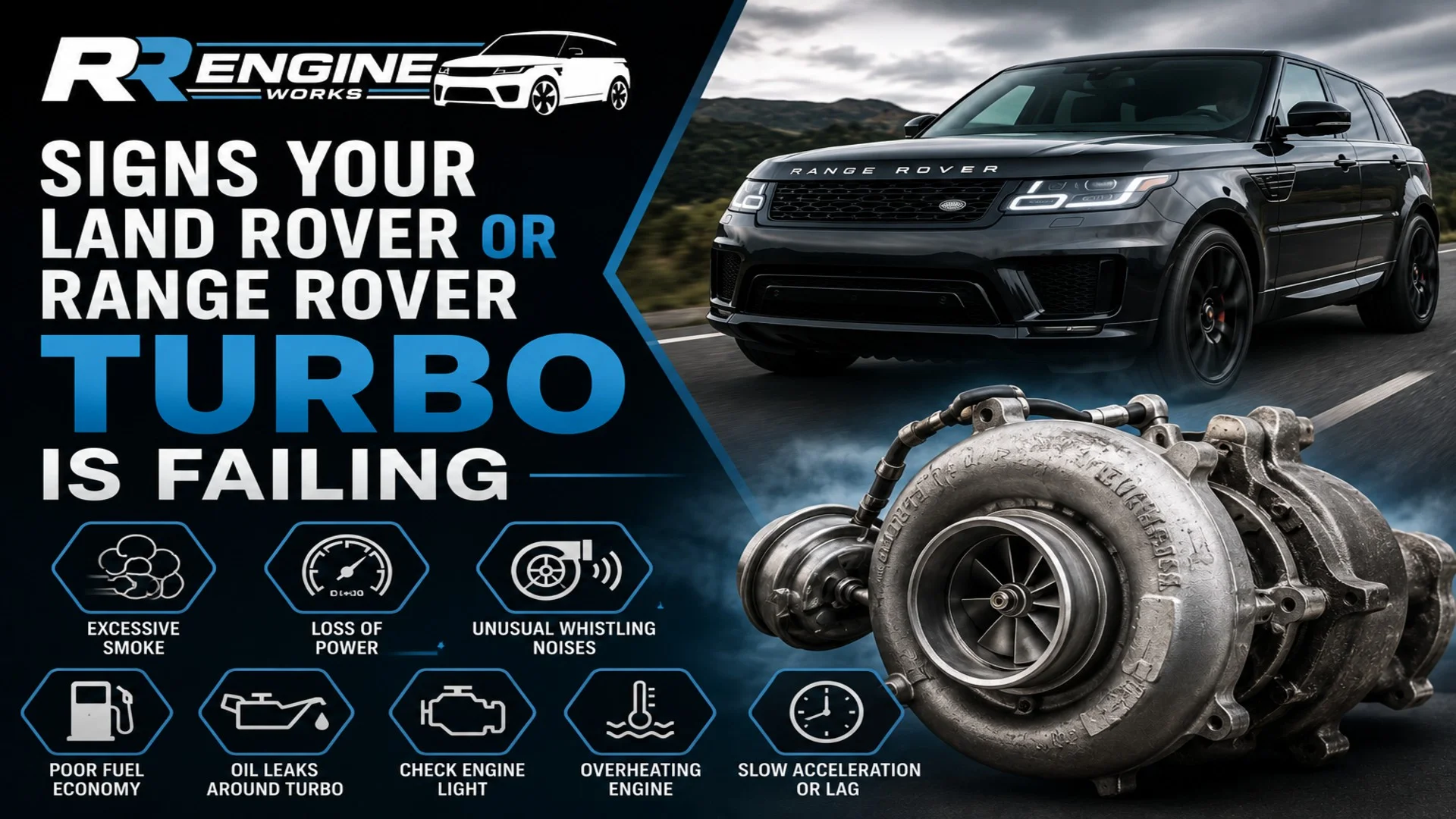
Turbos rarely fail without warning. Most give off clear signals well before they stop working entirely, the trick is recognising them early enough to act, rather than waiting until you're stuck in limp mode on the motorway.
Common Turbo Failure Symptoms to Watch For
- Excessive exhaust smoke, Blue smoke usually points to oil burning in the turbo or engine. Black smoke often signals an overly rich fuel mixture, sometimes linked to boost pressure loss. White smoke can indicate coolant or more serious internal issues.
- Whining or whistling noise, A high-pitched whine under acceleration is one of the most classic early turbo warning signs, often caused by a failing bearing or shaft.
- Noticeable loss of power, If your Range Rover feels sluggish, hesitant, or like it's lost its usual punch under acceleration, reduced boost pressure is a likely culprit.
- Increased oil consumption, A failing turbo seal can let oil leak into the intake or exhaust system, meaning you'll find yourself topping up more often than usual.
- Check engine light or limp mode, Modern Land Rover and Range Rover models are quick to flag turbo-related faults electronically. Limp mode is the engine protecting itself, don't ignore it.
- Rattling or grinding sounds, This can point to a damaged turbine or compressor wheel, and usually means the internal components are already compromised.
Catching even one or two of these symptoms early, rather than waiting for all of them to show up at once, is often the difference between a straightforward turbo repair and a full engine rebuild.
What Causes Land Rover and Range Rover Turbos to Fail?
Understanding the root cause matters because it affects how you prevent it happening again. The most common causes include:
- Oil starvation, Turbos spin at extremely high speeds and rely on a constant, clean oil supply. Even a brief interruption can cause serious bearing damage.
- Oil contamination, Old, sludgy, or infrequently changed oil clogs the tiny oil feed passages inside the turbo, starving it of lubrication.
- Worn bearings and shaft seals, Simply a product of age and mileage on higher-mileage vehicles.
- Actuator or wastegate faults, These control boost pressure. When they stick or fail, you get either overboost (stressing the turbo) or underboost (poor performance).
- Boost leaks, Cracked hoses or loose intercooler connections reduce the pressure reaching the engine, sometimes without any obvious turbo damage at all.
This is precisely why proper diagnostics matter before anyone recommends a full turbo replacement. Sometimes what looks like turbo failure is actually a wastegate actuator fault or a boost leak, both considerably cheaper problems to fix than a full unit swap.
Turbo Repair vs Replacement: Which Option Is Right for Your Vehicle?
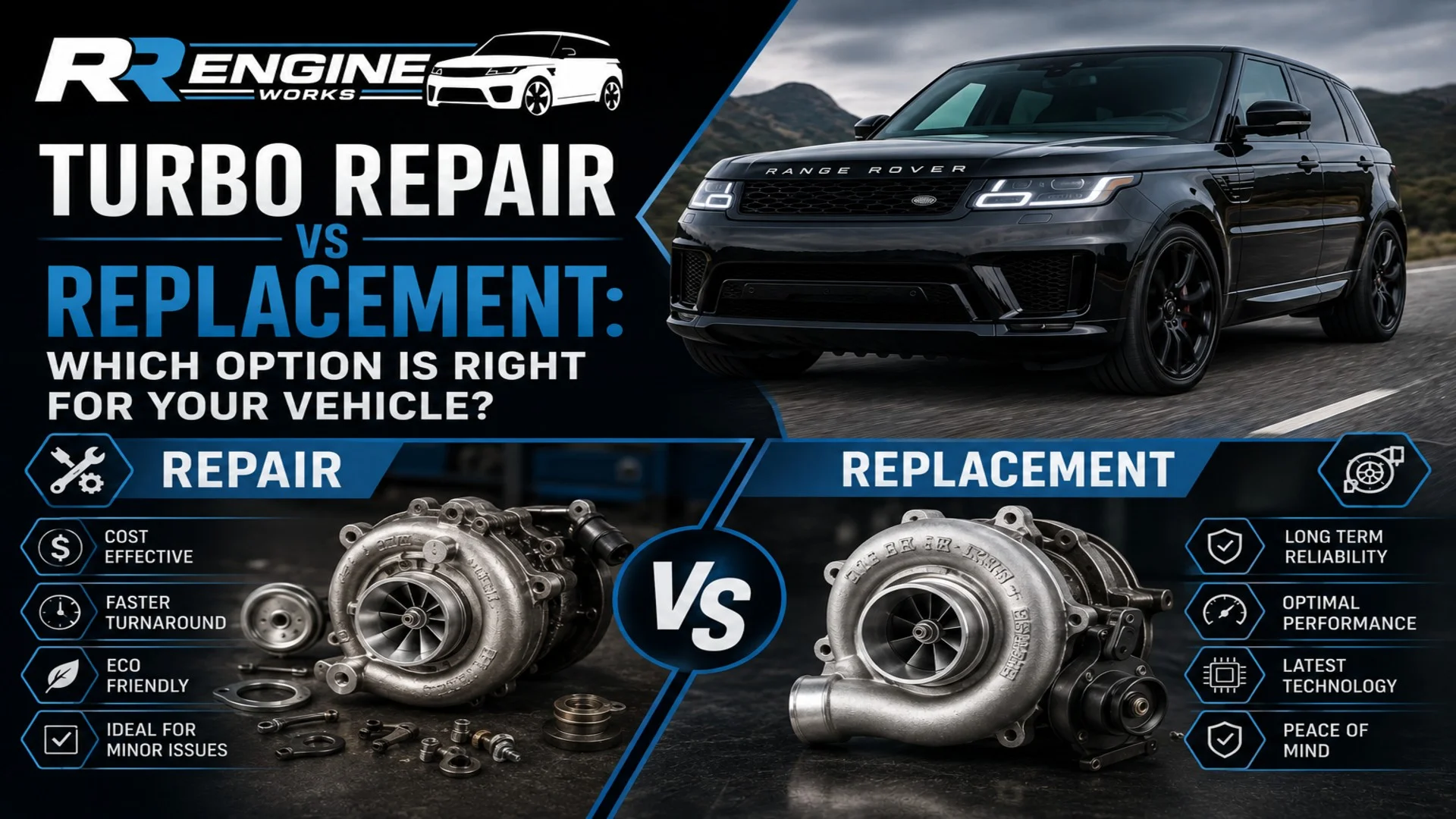
Not every turbo problem means you need a brand-new unit. This is one of the most common questions we're asked, and the honest answer is: it depends on what's actually failed.
Repair may be enough when:
- The fault lies in the actuator or wastegate rather than the core turbo assembly
- There's a boost leak in the hoses or intercooler connections
- The issue is caught very early, before internal components suffer wear
Full replacement is usually necessary when:
- The bearings, shaft, or turbine/compressor wheels show physical wear or damage
- Oil has been contaminated and has already caused internal scoring
- The turbo has failed completely and metal debris may have entered the engine or exhaust system
New, OEM, Aftermarket or Reconditioned, Which Should You Choose?
This decision has a bigger impact on long-term reliability than almost anything else in the process, so it's worth understanding your options properly.
Option | Reliability | Warranty Coverage | Best Suited For |
| Genuine/OEM | Highest, built to original manufacturer spec | Usually strongest | Owners planning to keep the vehicle long-term |
| New aftermarket | Good, but varies by manufacturer | Supplier-dependent | Budget-conscious owners wanting a fresh unit |
| Reconditioned | Depends heavily on the rebuilder's quality standards | Supplier-dependent | Cost-conscious repairs where quality reconditioning is available |
| Used | Least predictable | Often limited or none | Short-term fixes only, generally not recommended |
A genuine or OEM turbo tends to be the safest long-term choice if you plan to keep your Range Rover for years to come, since it's built precisely to the specification your engine was designed around. Reconditioned units can offer excellent value, but only when the rebuilder has a proven, transparent process, ask what's actually been replaced during the recondition, not just "cleaned and tested."
If you're weighing this decision against a full engine rebuild service, it's worth having that conversation with a specialist too, sometimes a turbo failure is a symptom of a wider engine issue rather than an isolated fault.
Book a Trusted Land Rover & Range Rover Turbo Specialist, RR EngineWorks
By this point, you've got a clear picture of what drives turbo replacement cost, what symptoms to watch for, and which replacement option suits your situation. The next step is getting an accurate assessment from someone who actually specialises in these engines, not a generalist garage that sees one Range Rover a month.
At RR EngineWorks, based at Unit 1 Hedley Ave, Grays, RM20 4EL, we work specifically on Land Rover and Range Rover engines day in, day out, including Ingenium, TDV6, SDV6, and SDV8 turbo systems across the full model range. That focus matters. A technician who's replaced dozens of SDV8 bi-turbo units understands exactly where the pitfalls are, from oil feed contamination to the access points that make some jobs more labour-intensive than others.
Our Turbo Replacement Process, Turnaround Time & Warranty
Every turbo job starts with proper diagnostics, not assumptions. We confirm the fault is genuinely the turbo (and not a wastegate, actuator, or boost leak issue) before recommending replacement, because there's no point paying for a new unit if the real problem lies elsewhere.
Once confirmed, our process typically includes:
- Full diagnostic assessment and fault code scanning
- Careful removal of the failed unit
- Inspection and, where necessary, replacement of oil feed and return pipes to prevent premature failure of the new turbo
- Fitting of your chosen replacement (new, OEM, aftermarket, or reconditioned)
- Post-fit testing to confirm boost pressure and performance are correctly restored
Turnaround time depends on parts availability and the specific model, but we'll always give you a realistic timeframe upfront, not an optimistic one that slips. Every replacement we carry out is backed by a workshop warranty, giving you confidence that the job's been done properly, not just quickly.
Frequently Asked Questions, Land Rover & Range Rover Turbo Replacement
Can I still drive with a failing turbo?
Short trips at low speed are generally possible if the turbo is only showing early symptoms, but it's not something we'd recommend relying on. A failing turbo can send metal debris into the engine or exhaust system if it fails completely, turning a turbo job into a much bigger repair. If you're seeing warning signs, get it checked as soon as you reasonably can.
Is turbo repair cheaper than full replacement?
Usually, yes, when repair is actually viable. Actuator, wastegate, and boost leak fixes cost considerably less than a full unit replacement. The catch is that repair only works if the core turbo assembly itself hasn't suffered internal damage, which is why accurate diagnosis matters so much.
How often should a Land Rover or Range Rover turbo be replaced?
There's no fixed mileage figure, turbos can last well over 100,000 miles with good maintenance, or fail much earlier if oil changes have been neglected. Regular oil changes using the correct specification, along with letting the engine idle briefly before switching off after hard driving, both go a long way toward extending turbo life.
Do you offer collection or a mobile service?
We're based in Grays, RM20 4EL, and welcome vehicles brought directly to our workshop where our full diagnostic equipment is on hand. Get in touch to discuss the best arrangement for your situation.
Does the warranty cover parts and labour?
Yes, our turbo replacement work is backed by a workshop warranty covering both the part fitted and the labour carried out, giving you peace of mind after the job is complete.
Can a turbo actuator be repaired separately from the turbo itself?
In many cases, yes. If diagnostics confirm the actuator or wastegate mechanism is the fault rather than the turbo core, it can often be repaired or replaced without needing a full new unit, another reason proper diagnosis before replacement matters.
Final Thoughts
Turbo problems on a Land Rover or Range Rover rarely resolve themselves, and driving on a failing unit for too long risks turning a manageable repair into a far more expensive engine repair. The good news is that with the right diagnosis, the right parts decision, and a specialist who actually understands these engines, it's a straightforward job to get right.
If you're noticing smoke, power loss, unusual noise, or warning lights on your dashboard, don't wait for it to get worse. Get in touch with RR Engine Works at Unit 1 Hedley Ave, Grays, RM20 4EL, and we'll give you an honest, accurate assessment of exactly what your vehicle needs, no guesswork, no inflated quotes, just a proper fix from people who work on Land Rover and Range Rover engines every single day.