

Your Range Rover has just thrown a warning light, gone into limp mode, or stopped for good. A main dealer has quoted you a figure that makes the whole car look like a write-off, and every website you open promises "rebuilt", "reconditioned" or "remanufactured" engines for wildly different prices.
That confusion is normal, because these words get used loosely across the trade.
We are Range Rover engine remanufacturers working from Unit 1, Hedley Avenue, Grays, RM20 4EL. This page explains what a properly remanufactured engine involves, how it differs from a used or patched-up unit, how to work out which engine your car needs, and what to expect on cost, warranty and fitting. If you would rather skip straight to a price, enter your registration for a quote and come back to this guide afterwards.
What Are Range Rover Engine Remanufacturers, and Why Choose One Over a Used Engine?
A Range Rover engine remanufacturer takes a worn or failed engine and returns it to a known, tested standard. That means a full strip-down, measurement of every critical component, machining where needed, replacement of parts that wear, and testing before it leaves the workshop.
A used engine is a different proposition. It comes from a donor vehicle, usually a crash-damaged or scrapped car, with its history mostly unknown. You are trusting mileage claims and hoping the previous owner changed the oil.
For a vehicle as complex as a Range Rover, that gamble often ends badly. These engines run tight tolerances, rely on healthy oil pressure, and punish neglect. An engine that looks fine on a pallet can hide worn bearings or a tired timing chain.
What Is the Difference Between Remanufactured, Reconditioned, Rebuilt and Used Range Rover Engines?
The trade uses these terms interchangeably, and there is no single legal definition in the UK. So the useful question is not which label a seller uses but what work sits behind it. Ask what was inspected, what was replaced, what was tested, and what the warranty covers.
Here is how we separate them in practice:
Used | Reconditioned | Rebuilt | Remanufactured | |
| Source | Donor vehicle | Original engine or exchange core | Original engine or exchange core | Exchange core, fully assessed |
| Inspection | Usually visual only | Partial, focused on the fault | Full strip-down | Full strip-down, measured to specification |
| Machining | None | Sometimes | Where needed | Block, crankshaft and head machined or replaced as required |
| Parts replaced | None | Failed and obvious wear items | Wear items | Bearings, rings, gaskets, seals, timing components and other wear items as standard |
| Testing | Rarely | Basic | Varies | Pressure, compression and diagnostic testing |
| Condition | Unknown | Variable | Variable | Known, documented |
| Typical price | Lowest | Low to mid | Mid | Higher, but priced against long-term running |
The table shows the trade-off honestly. A used engine costs least on day one. A remanufactured engine costs more up front, but you know what is inside it and what backs it. If a seller cannot tell you which parts were replaced, treat the label with caution.
Is a Remanufactured Range Rover Engine Better Than a Used One?
In most cases, yes. A remanufactured engine has been stripped, measured and rebuilt with new wear components, so its condition is known. A used engine's condition is a guess.
The difference shows in three places: reliability, warranty and lifespan. A remanufactured unit is built to be a long-term repair, not a way of getting the car through its next MOT. A used engine can be a fair choice on an older, low-value vehicle where budget is the priority, but on a Range Rover it often leads to a second bill.
Not sure which route suits your car? Send us your reg and we will tell you what makes sense for that vehicle, including when a used unit is a reasonable call.
How Are Range Rover Engines Remanufactured, and What Is Tested Before Fitting?
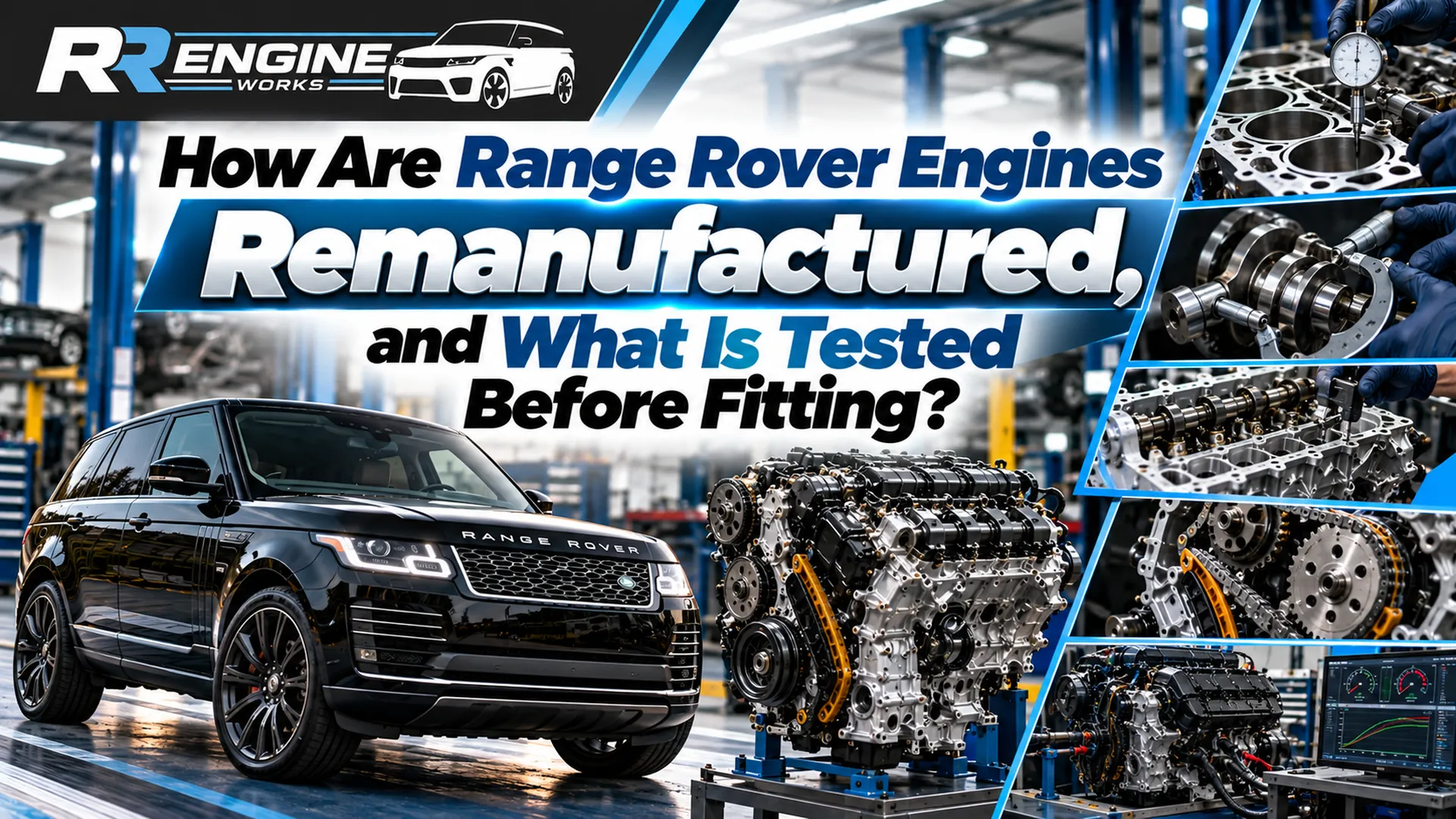
Every engine that leaves our workshop follows the same route. We skip no step, because a shortcut at the bench usually shows up as a fault on the road. Below is what actually happens, so you can compare it with what other suppliers say they do.
What Happens During Range Rover Engine Remanufacturing, Step by Step?
- Engine removal and strip-down. The engine is dismantled completely: block, cylinder head, crankshaft, connecting rods, pistons, camshafts, oil pump and timing components. Nothing is assumed to be reusable.
- Cleaning. Every part is degreased and cleaned so it can be measured and inspected properly. Sludge and carbon hide cracks and scoring.
- Crack testing. Blocks, heads and crankshafts are checked for cracks that are invisible to the eye. A cracked head or block is a common hidden cause of coolant contamination.
- Measurement. Cylinder bores, crankshaft journals, bearing clearances and head surfaces are measured against OEM specification. This is where remanufacturing separates from a quick refresh.
- Machining and honing. Bores are honed or bored, the crankshaft is ground where suitable, and the head is skimmed or has its valve seats and guides reworked.
- Component replacement. Main and big-end bearings, piston rings, head gaskets, seals, gaskets, and timing chain, tensioner and guide sets are replaced. Where a part is worn beyond tolerance, it is replaced, not reused.
- Assembly and timing. The engine is reassembled to torque specification with the timing set accurately. Errors here are costly, so this stage is done with care and checked twice.
- Pressure and compression testing. We pressure test the cooling passages and check cylinder compression to confirm the engine is sealed and building pressure evenly.
- Diagnostic testing. Fuel system and engine-management related checks help ensure the engine will behave when it meets your car's ECU.
- Final quality inspection. A last visual and mechanical check before the engine is prepared for supply and fit or delivery.
Each stage answers a question the buyer usually cannot check for themselves: is the block sound, are the tolerances right, will it hold oil pressure, and will it run cleanly?
Are OEM Parts Used and Is Every Engine Tested?
We use OEM-specification parts for the components that matter most: bearings, gaskets, seals and timing components. Cheap replacements in these areas are a false economy, because they are the parts that fail first.
Every engine is tested. There are no untested units sitting on a shelf. The testing described above is not an optional extra, it is part of how the engine is built.
We also keep a record of what was done to each unit, so if a question ever comes up, there is a trail to check. [Add here: technician name, years of Range Rover experience, and a short first-hand comment from the workshop team.]
Can My Original Range Rover Engine Be Remanufactured?
Sometimes, yes. If your original engine block and crankshaft are in sound condition, the engine can be remanufactured and refitted. This is often the right route on rarer or older variants where exchange stock is limited.
The catch is that it depends entirely on the state of the core. If the block is cracked, a bore is badly scored, or the crankshaft is beyond saving, remanufacturing that same engine may not be viable or cost-effective. In that case an exchange engine is the sensible alternative.
We assess this at the strip-down stage and tell you plainly which route makes sense, before you commit to anything.
Which Range Rover Engine Do I Need, and How Much Does Replacement Cost?
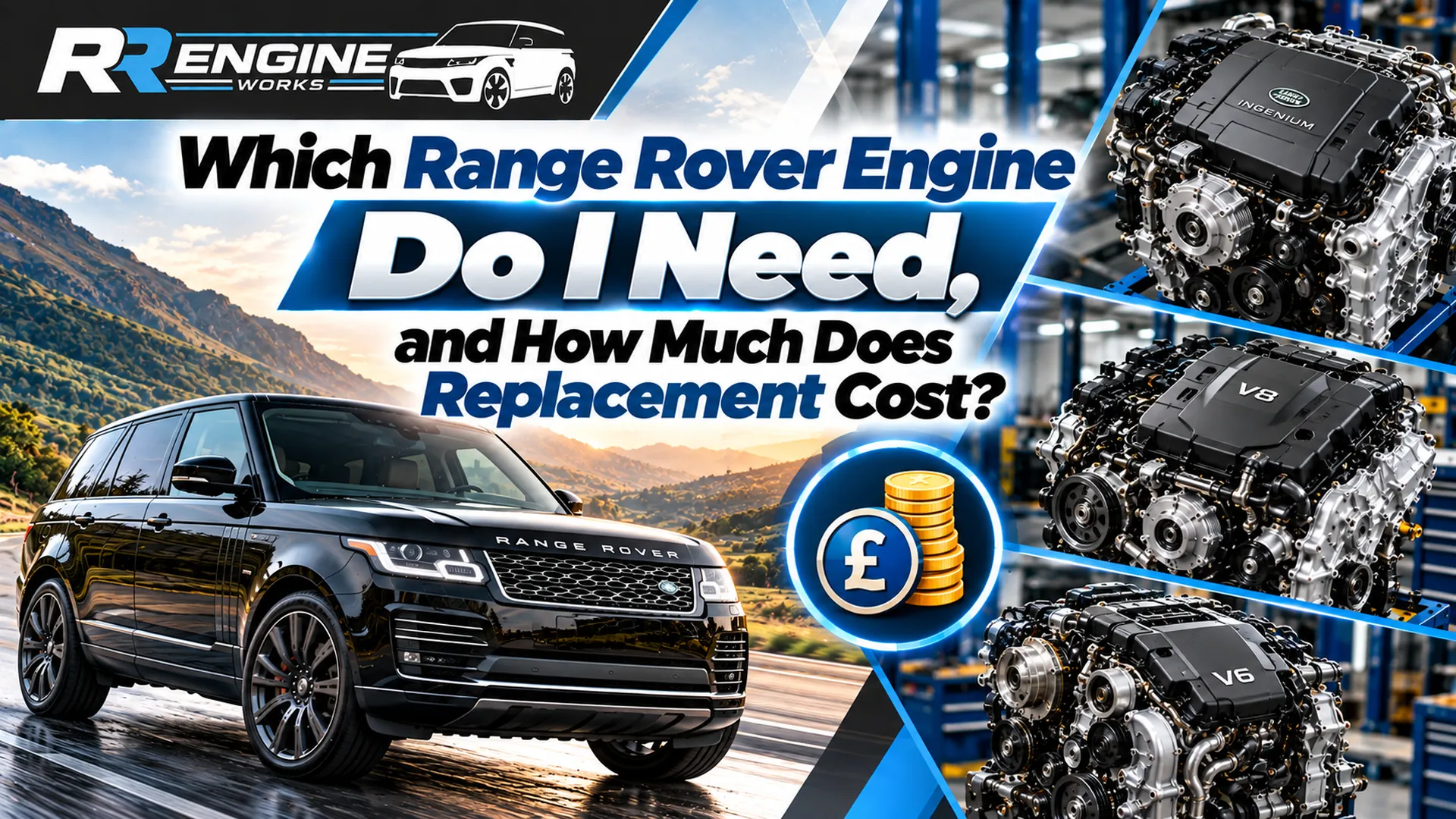
This is the question most buyers actually arrive with. The answer starts with correctly identifying your engine, because the wrong match wastes time and money.
How Do I Identify My Range Rover Engine Code and Get a Price by Registration?
Range Rover engines are identified by their engine code, and a single model can carry several different engines depending on the year. The fastest way to get it right is your registration number or VIN. We match either against the vehicle's specification and confirm the engine before quoting.
If you prefer to check yourself, the table below covers the engines we are asked about most. Treat it as a guide, not a substitute for a reg or VIN check, because specifications changed between model years.
Engine | Code | Fuel | Capacity | Typical models | Generation |
| Ingenium | 204DTD | Diesel | 2.0 | Range Rover Evoque, Velar | L538, L560 |
| TDV6 / SDV6 | 306DT | Diesel | 3.0 | Range Rover, Range Rover Sport | L322, L320, L405, L494 |
| 3.0 diesel (later) | 30DDTX | Diesel | 3.0 | Range Rover, Range Rover Sport | L405, L494 |
| TDV8 | 368DT | Diesel | 3.6 | Range Rover, Range Rover Sport | L322, L320 |
| SDV8 | 448DT | Diesel | 4.4 | Range Rover, Range Rover Sport | L322, L320, L405 |
| AJ133 V8 | 508PN / 508PS | Petrol | 5.0 | Range Rover, Range Rover Sport | L322, L320, L405, L494 |
Your engine code is usually stamped on the engine block and is sometimes listed in the vehicle's service records. If you cannot find it, the reg or VIN lookup is quicker and more reliable.
A few points help you narrow it down:
- Model and generation. Knowing whether you have an L322, L405, L460 or L494 rules out a lot of engines immediately.
- Model year. Engine variants changed within generations, so the build date matters.
- Fuel type and capacity. Diesel or petrol, and 2.0, 3.0, 4.4 or 5.0, narrows the choice further.
- Transmission and ancillaries. Some engines need specific ancillary components to match your car, and these are checked before supply.
Enter your registration for an instant quote, or use the manual vehicle selector if you do not have it to hand.
What Does a Range Rover Engine Replacement Include: Cost, Warranty, Fitting and Nationwide Delivery?
Price depends on several things, which is why any figure quoted without your vehicle details should make you cautious. The main factors are:
- The engine itself. A 2.0 Ingenium and a 5.0 supercharged V8 are very different builds with very different parts costs.
- Your model and generation. Availability and complexity vary between the Range Rover, Sport, Evoque and Velar.
- Core condition. If you are supplying your own engine for remanufacture, its condition affects the work required.
- Fitting. Supply only, or supply and fit at our Grays workshop.
Supply and fit is the option most customers choose. We fit the engine at our workshop, so the installation, running-in checks and diagnostics are handled by the same people who built it. If you would rather use your own garage, we can arrange nationwide delivery across the UK.
Warranty: every engine comes with warranty cover. [Add here: exact warranty length, whether it covers parts and labour, and any conditions such as servicing requirements or approved fitting.] Read the warranty terms of any supplier before buying. The length matters less than what it actually covers and what voids it.
Ask any supplier, including us, these questions before you pay:
- What work was done to this engine, and can I see it listed?
- What exactly does the warranty cover, and for how long?
- Does the price include fitting, ancillaries and delivery?
- What happens if there is a problem after fitting?
The answers tell you more than the price does.
Frequently Asked Questions
What is a remanufactured Range Rover engine?
It is an engine that has been fully stripped, measured, machined where necessary, rebuilt with new wear components, and tested before it is supplied. It is built to a known standard, unlike a used engine.
How much does a remanufactured Range Rover engine cost?
It depends on the engine, your model and whether you want supply only or supply and fit. Give us your registration and we will quote for your specific vehicle.
How long does a remanufactured engine last?
A properly remanufactured engine can give many years of service, but the outcome depends on servicing, oil quality and driving. Regular oil changes with the correct specification are the single biggest factor in engine life.
Do remanufactured Range Rover engines come with a warranty?
Ours do. See the warranty terms above and ask for the full written terms before you order.
Can you supply and fit a Range Rover engine?
Yes. We supply and fit at our Grays, Essex workshop, and we also deliver engines across the UK for fitting elsewhere.
How quickly can a replacement engine be supplied?
Lead times depend on the engine and current stock. Send your reg and we will confirm availability when we quote.
What is the difference between a rebuilt and a remanufactured engine?
Both are rebuilt from a stripped-down state, but remanufacturing follows a fuller process: measurement to specification, machining, standard replacement of wear parts, and formal testing. Ask any supplier to list what they replace.
Can I buy a Range Rover engine online?
You can request a quote online using your registration. We confirm the engine match before anything is ordered, which protects you from buying the wrong unit.
How do I identify my Range Rover engine code?
Check the stamp on the engine block, look through your service history, or send us your reg or VIN and we will identify it for you.
Do you offer nationwide delivery?
Yes, engines can be delivered anywhere in the UK.
Ready to Get Your Range Rover Back on the Road?
A failed engine is stressful, but it does not have to be a guessing game. Choose a supplier who can tell you exactly what was done to the engine, what it is backed by, and why the price is what it is.