
The oil warning light flickers on a roundabout, then goes out. Or the engine sounds a little rougher than usual on a cold morning, and you tell yourself it's nothing.
With Land Rover oil starvation, that kind of hesitation is the problem. When bearings and moving parts stop getting enough oil, damage can build quickly and quietly, and the first loud symptom often arrives when the harm is already done.
This guide explains what oil starvation actually means, what causes it, which symptoms deserve action, and how a specialist diagnoses and repairs it. We won't quote prices, because they change and depend entirely on the damage found. We'll show you what shapes a quote so you can judge one fairly.
What Is Land Rover Oil Starvation, and What Causes It?
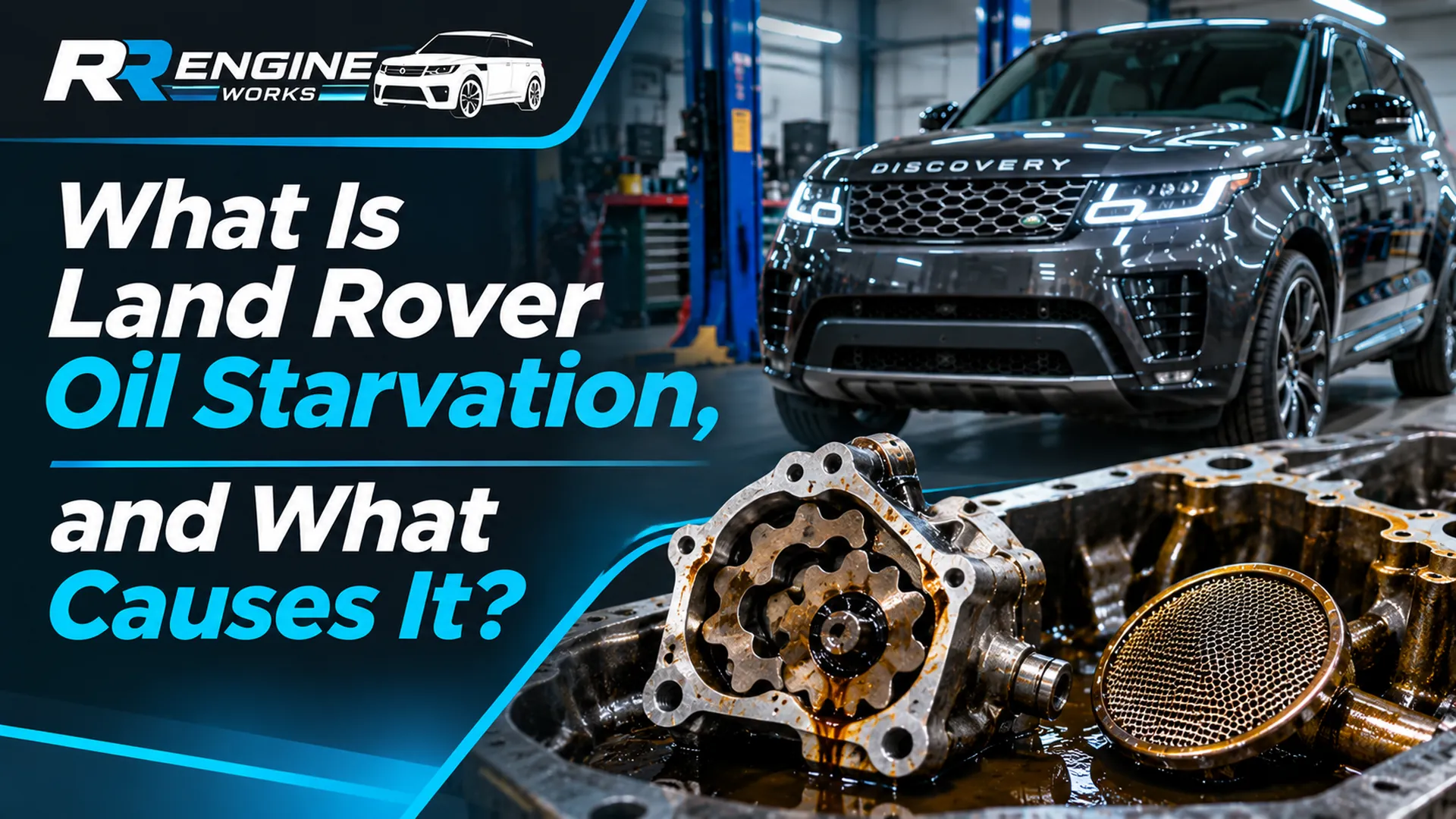
Oil starvation happens when an engine doesn't receive enough oil, or enough oil pressure, to keep its moving parts separated by a protective film. Metal then touches metal, heat rises, and wear accelerates.
It is not a single fault. It is an outcome with many possible causes, which is why a proper diagnosis matters more than a guess.
What Does Oil Starvation Mean, and Why Does It Happen in Land Rover Engines?
The meaning of oil starvation is simple: the oil isn't reaching the parts that need it, in the right amount, at the right pressure. The reason can sit anywhere along the oil's path, from the sump and pickup to the pump, the filter, the oil galleries and the bearings.
Land Rover and Range Rover engines are powerful, heavy-duty units that work hard in towing, motorway and off-road use. They depend on clean oil at the correct level and specification. When something interrupts that supply, the effects show up fast.
The most common causes of starvation of oil include:
- Low oil level. Oil consumption, leaks or missed top-ups let the level drop below safe limits.
- Blocked pickup strainer or oil passages. Sludge or debris restricts flow before the oil even reaches the pump.
- Worn or failing oil pump. Pressure falls even when the level looks fine.
- Oil dilution. Fuel getting into the oil, which can happen with frequent short trips on diesel engines, thins it and weakens the oil film.
- Wrong oil grade or poor quality oil. Oil that doesn't meet the manufacturer's specification protects less.
- Overdue servicing. Old, degraded oil loses its ability to protect.
- Existing bearing wear. Worn bearings let oil escape too freely, so pressure drops elsewhere.
What Are the Most Common Oil Starvation Causes, Including Oil Starvation on Startup and Oil Starvation on Track?
Two situations come up often, and they work very differently.
Oil starvation on startup. A short delay before oil reaches the top of the engine is normal. It becomes a problem when the oil is thin, degraded or low, or when the pump is weak. Repeated cold starts with poor oil can wear bearings gradually. If you hear a rattle or see the oil light for several seconds on every cold start, don't ignore it.
Oil starvation on track. Hard cornering, braking and acceleration push oil around inside the sump. If the level is marginal or the sump design can't hold the oil at the pickup, the pump can briefly draw air. For anyone using a Land Rover or Range Rover in spirited driving, track days or steep off-road work, keeping the oil level correct and the oil fresh matters far more.
Situation | What Happens | What Helps |
| Cold start | Oil takes a moment to circulate, and thin or old oil protects less | Correct spec oil, on-time servicing, listening for startup noise |
| Short trips (diesel) | Fuel can dilute the oil over time | Regular longer runs, shorter oil change intervals where advised |
| Track or hard driving | Oil surges away from the pickup | Correct level, fresh oil, avoiding overfilling or underfilling |
| Towing and heavy loads | More heat and stress on the oil | Quality oil, regular checks, attention to temperature |
Is There a Land Rover Oil Starvation Recall, and Does a Land Rover Oil Reset Prevent the Problem?
We won't tell you a recall exists or doesn't, because recall status depends on your specific vehicle, year and engine. The right way to check is to enter your registration or VIN on the official DVSA recall checker or ask a Jaguar Land Rover retailer. That gives you an answer for your car rather than a general claim.
On the Land Rover oil reset, there is a common mix-up. A reset clears the service reminder on the dashboard. It does not change the oil level, the oil condition or the engine's internal state. Resetting the message after an oil change is normal. Resetting it without changing the oil protects nothing and hides a real overdue service.
What Are the Symptoms and Damage of Land Rover Oil Starvation Problems?
Catching oil starvation issues early is the difference between a service-level fix and a major engine repair. The symptoms are often easy to dismiss, which is why owners miss them.
What Are the Land Rover Oil Starvation Symptoms, and Is It Safe to Keep Driving?
Common Land Rover oil starvation symptoms include:
- Oil pressure warning light flickering or staying on, especially at idle or when hot
- Knocking, rumbling or ticking from the bottom end of the engine
- Loss of power or rough running that gets worse under load
- Overheating or higher-than-normal temperatures
- Burning oil smell or visible smoke
- Low oil level between services, with no obvious leak
- Metallic particles in the oil or filter during servicing
Is it safe to keep driving? If the oil pressure warning light stays on, or you hear a deep knock, stop as soon as it is safe and switch off. Driving further can turn a repairable problem into a failed engine. Check the level, and have the car recovered rather than gambling on a few more miles.
Here is a realistic scenario. An owner notices the oil light flick on at traffic lights after a long motorway run. The level looks fine, so they carry on. Over the next few weeks the engine develops a faint rumble when hot. A scan and oil pressure test show low pressure at idle, and the bearing wear is already underway. Caught at the first flicker, the cause might have been a pump, a blocked strainer or the wrong oil. Left to run, it can reach the crankshaft.
What Oil Starvation Damage Can Happen to Bearings and the Crankshaft in TDV6 and SDV6 Engines?
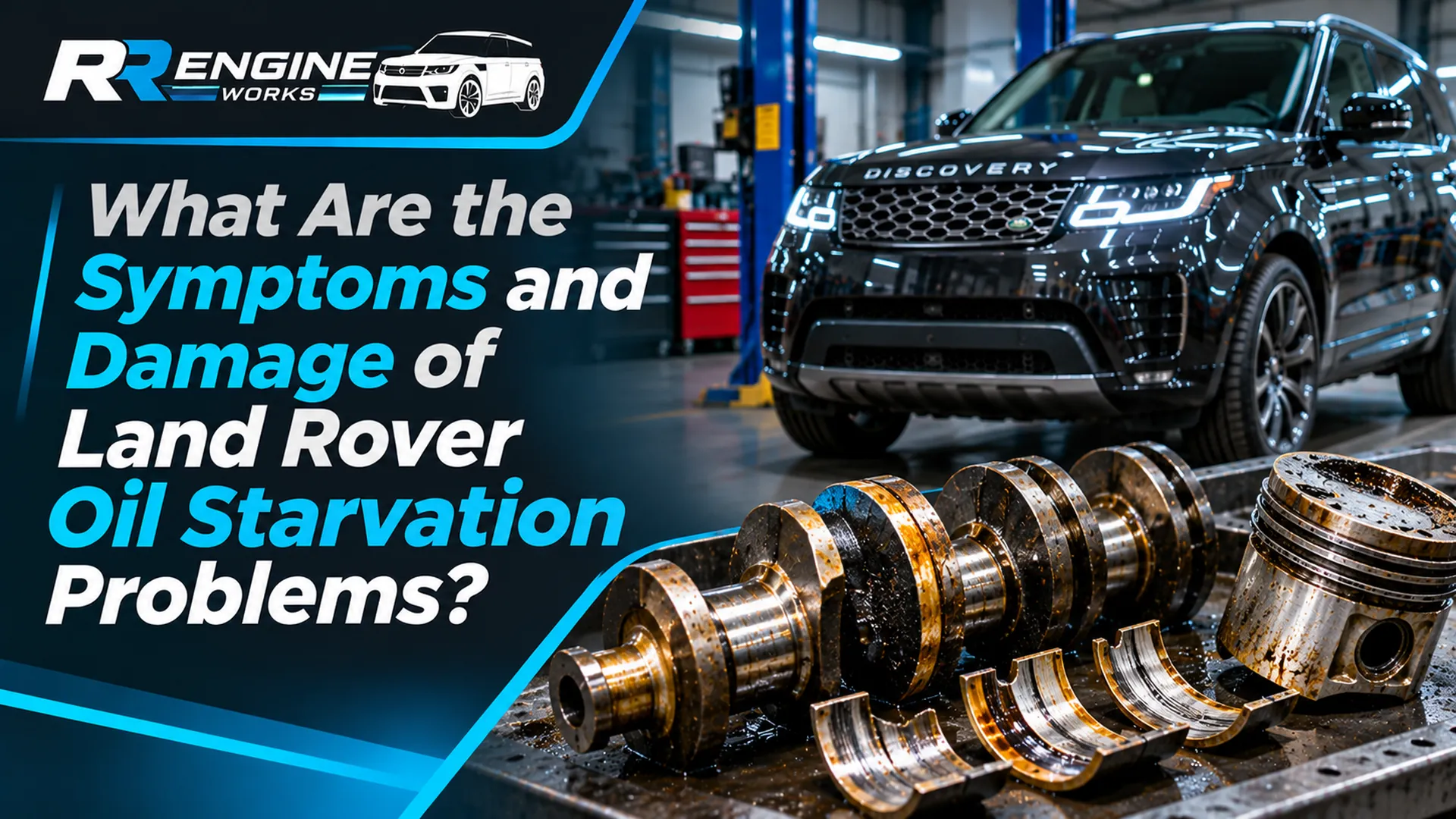
The oil starvation damage that worries owners most is bearing and crankshaft damage. Main bearings and big-end bearings rely on a thin film of pressurised oil. When that film fails, the bearing surfaces score, overheat and wear through.
In severe cases, the bearing can spin in its housing (often called a spun bearing), which damages the crankshaft journal. That is the stage where engine repair becomes a major job.
The 3.0-litre TDV6 and SDV6 diesel engines used across Discovery, Range Rover Sport and Range Rover models are commonly discussed in this context. We'd rather be careful than dramatic: not every engine fails, and many run for years without trouble. What we see in the workshop is that low oil, neglected servicing and ignored warning signs sit behind most bearing-related failures.
Stage | What Is Happening | Typical Outcome |
| Early | Oil pressure dips, minor bearing wear begins | Often fixable with the cause corrected early |
| Developing | Scoring on bearing surfaces, knocking noises | Bearings and related parts likely need attention |
| Advanced | Spun bearing, crankshaft journal damaged | Major repair or engine replacement decision |
Do the 2.0 and 3.0 Ingenium Engine Problems Involve Oil Starvation Issues Too?
Ingenium engines are newer, and owners search for 2.0 Ingenium engine problems and 3.0 Ingenium engine problems for good reasons. Reported concerns vary by engine and model year and include timing chain wear, oil consumption and fuel dilution of the oil.
Those issues can connect back to oil condition. For instance, diluted or degraded oil protects less, and a stretching timing chain can add to the stress on the system. We wouldn't call every Ingenium fault oil starvation, but low or compromised oil is worth ruling out early in any diagnosis, because it is cheap to check compared with what it can protect.
If you own an Ingenium-powered Land Rover, regular oil level checks and servicing on time are your best protection. For more on related engine work, see our guide to timing chain and timing belt replacement.
How Is Land Rover Oil Starvation Diagnosed and Repaired, and What Affects the Repair Cost?
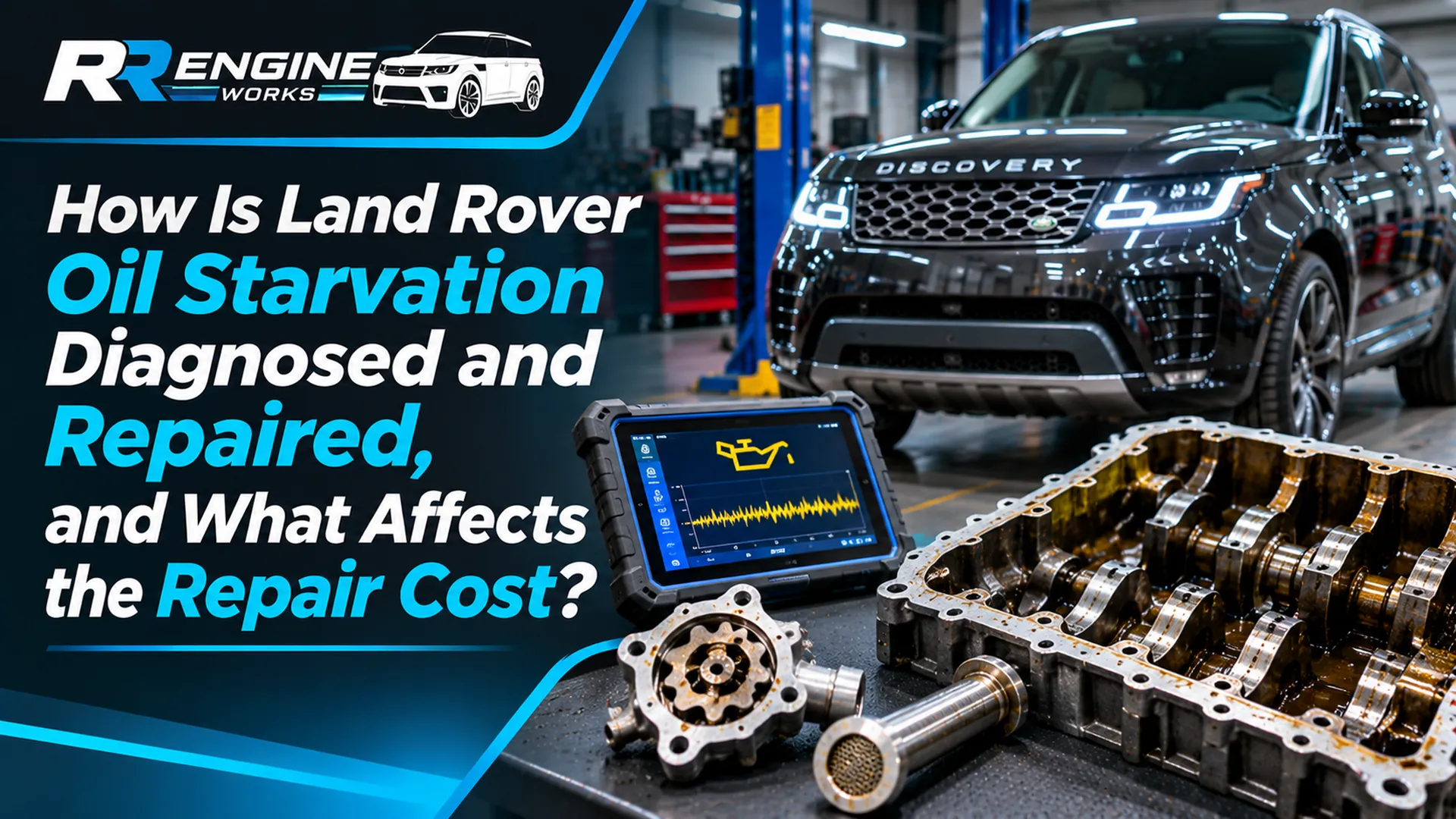
A correct diagnosis stops you paying for the wrong repair. Oil starvation has many possible roots, and replacing parts without finding the cause often means the damage returns.
How Do Specialists Diagnose Oil Starvation Before Recommending a Repair?
A thorough diagnosis normally follows these steps:
- Listen to the history. When does the light appear? Does the noise change when hot or cold? When was the last service?
- Check the oil. Level, condition, smell, fuel dilution and any metal content.
- Scan the vehicle for stored fault codes and live engine data.
- Test oil pressure with a gauge to confirm what the sensor suggests.
- Inspect the oil path. Filter, pickup, pump, cooler and related lines.
- Assess bearing condition where symptoms or test results point to internal wear.
Fault codes alone can mislead. A pressure warning may come from a faulty sensor, not low pressure at all, and a real pressure problem may leave no code. That is why we combine data with hands-on testing. If you want a proper assessment, our Land Rover diagnostic service is where it starts.
Can a Land Rover Engine Be Repaired After Oil Starvation, or Does It Need Replacing?
Sometimes it can be repaired, and sometimes it can't. The decision depends on how far the damage has spread.
Scenario | Likely Direction |
| Cause found early, no internal damage | Fix the cause (oil, pump, strainer, servicing) and monitor |
| Minor bearing wear, crankshaft still serviceable | Bearing replacement and related work may be possible |
| Spun bearing, damaged crankshaft journal | Crankshaft repair or replacement, or engine replacement |
| Widespread internal damage | Replacement or rebuild is often the sensible route |
The honest approach is to inspect first and then explain your options plainly. A repair that costs less up front can cost more if the engine fails again, so we weigh condition, vehicle value and your plans for the car before recommending a route.
What Affects the Land Rover Oil Starvation Repair Cost and Quote?
Owners often ask about Land Rover oil starvation repair cost and the overall oil starvation cost. We don't publish prices because they change and depend on the vehicle. What we can tell you is what moves the figure:
- Extent of damage. Caught early is very different from a failed crankshaft.
- Engine type. A TDV6, SDV6 or Ingenium unit each involves different parts and labour.
- Parts needed. Bearings, pump, crankshaft, sump components or a replacement engine.
- Labour time. Access varies widely between models.
- Condition of surrounding parts. Turbo, timing components and cooling system can add to the scope.
- Repair or replace decision. Often the biggest factor of all.
Ask any garage for a written quote that lists parts and labour separately. For an exact figure on your vehicle, send us your registration and symptoms.
How Can You Prevent Oil Starvation and Book a Land Rover Engine Check With RR Engine Works in Grays?
Prevention is far cheaper than repair, and most of it is routine.
What Oil Habits and Service Checks Help Prevent Oil Starvation Issues?
Build these habits:
- Check the oil level regularly. Every few weeks and before long journeys, on level ground with the engine off for a few minutes.
- Use the correct oil specification for your engine, as listed by the manufacturer.
- Service on time, and consider shorter intervals if you do mostly short trips, tow or drive hard.
- Act on warning lights immediately. Don't wait to see if they return.
- Listen for new noises, especially on cold starts and when hot.
- Fix leaks early. A slow leak turns into a low-oil problem.
- Get an oil analysis or diagnostic if consumption or dilution is suspected.
Remember the oil reset point from earlier: a cleared dashboard message is not a completed service.
How Do You Book a Land Rover Oil Starvation Inspection in Grays?
Booking is simple:
- Contact us with your registration, model, year and the symptoms you've noticed.
- We advise on next steps, including whether it is safe to drive in.
- We inspect and test, then explain what we find in plain language.
- You get a clear quote before any repair work begins.
Our workshop: Unit 1 Hedley Ave, Grays RM20 4EL
Frequently Asked Questions About Land Rover Oil Starvation
What is oil starvation in a Land Rover?
It is when the engine doesn't get enough oil, or enough oil pressure, to protect its moving parts. Bearings and the crankshaft are most at risk.
What causes oil starvation?
Common causes include low oil level, a blocked pickup strainer, a failing oil pump, fuel dilution, the wrong oil grade and overdue servicing.
What are the symptoms of Land Rover oil starvation?
An oil pressure light, knocking or rumbling from the engine, power loss, overheating and unexplained oil loss are the main ones.
Can I keep driving with the oil light on?
No. If the oil pressure light stays on, stop safely and switch off. Further driving can cause serious damage.
Is there a Land Rover oil starvation recall?
Check your specific vehicle with the DVSA recall checker or a Jaguar Land Rover retailer using your registration or VIN.
Does a Land Rover oil reset fix oil starvation?
No. It only clears the service reminder. It does not change the oil or the engine's condition.
What does oil starvation damage?
Mainly the main and big-end bearings and the crankshaft, plus potentially the pistons and cylinder walls in severe cases.
Can oil starvation happen on startup?
Yes, particularly with old or thin oil, low level or a weak pump. Repeated poor cold starts can add wear over time.
Is oil starvation common on track or off-road?
It is more likely under hard cornering or steep angles, especially if the oil level is marginal.
Are there 2.0 or 3.0 Ingenium engine problems linked to oil?
Owners report varied issues, including oil consumption and fuel dilution. Keeping the oil level correct and servicing on time helps reduce risk.
How much does Land Rover oil starvation repair cost?
It depends on the engine and extent of damage. A written quote after inspection is the only reliable answer.
Don't Wait for the Engine to Tell You Twice
Oil starvation rarely gives a second chance. A flicker, a rattle or a low level is the engine's early warning, and acting on it is the cheapest decision you'll make.
If you suspect oil starvation or simply want peace of mind, RR Engine Works is ready to help. Contact us today with your registration and symptoms, and we'll tell you what your Land Rover needs.