
If your Range Rover's oil pressure light has just flickered on, or you've noticed a faint ticking under the bonnet that wasn't there last week, don't ignore it. On the 4.4-litre SDV8 diesel, oil pump failure and low oil pressure aren't cosmetic warnings, they're early signals of a problem that can turn into a seized engine within days if it's driven through.
This guide walks through exactly what's happening inside your SDV8's lubrication system, why the oil pump fails, how to tell it apart from a faulty sensor, and what replacement actually costs. Whether you're trying to diagnose a warning light before it strands you, or you've already been quoted for a repair and want a second opinion, everything below is built around the real diagnostic path a technician would follow, not just a symptom checklist.
What Are the Symptoms of Range Rover SDV8 Oil Pump Failure?
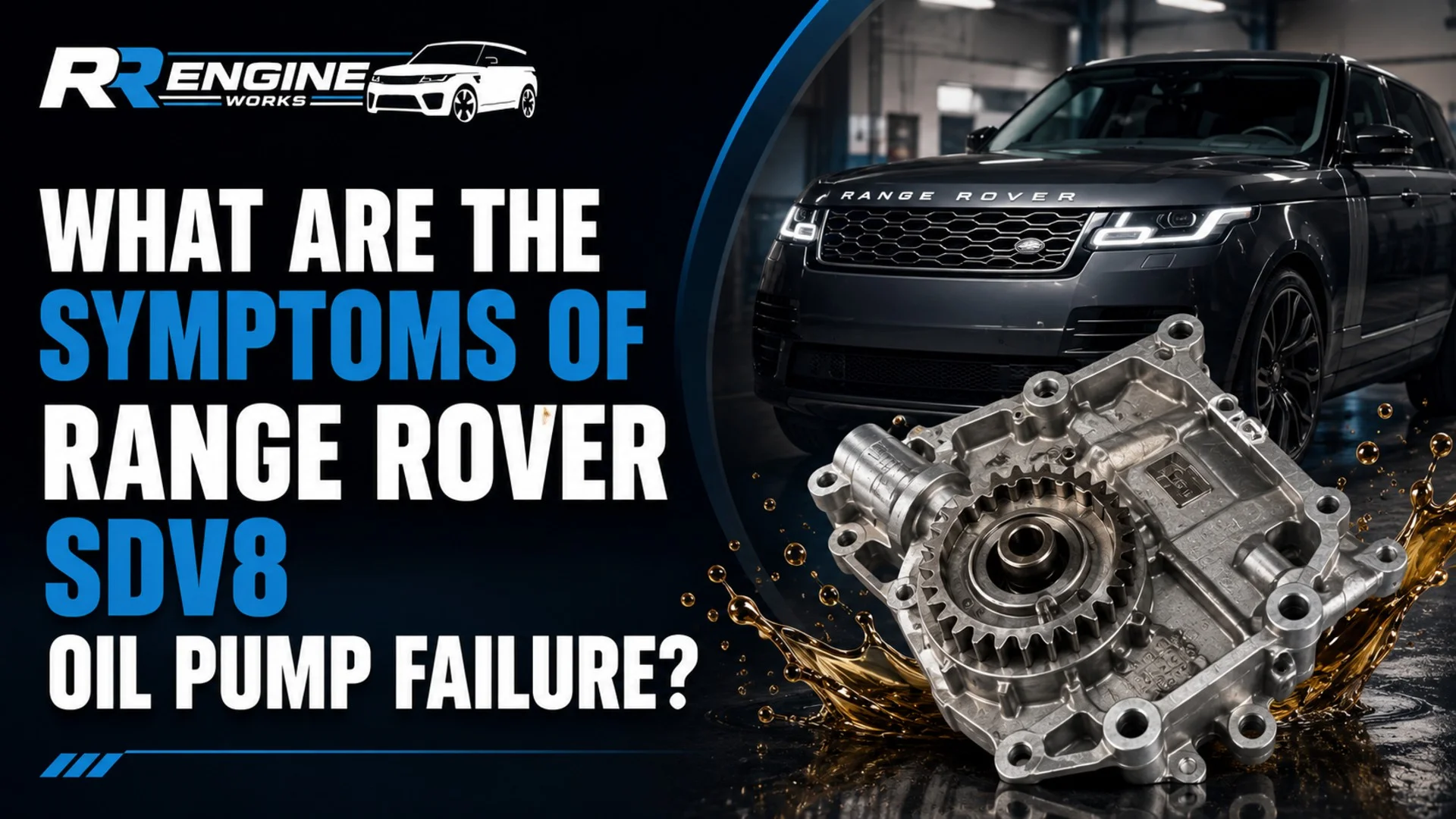
The 4.4 SDV8 (also badged 448DT in Land Rover's engine coding, and closely related to the earlier 4.4 TDV8) uses a two-stage, load-dependent oil pump. That means the pump varies its output depending on engine speed and load rather than pumping a fixed volume constantly. It's an efficient design when it's healthy, but it also means failure symptoms can be subtle at first before becoming impossible to ignore.
Low Oil Pressure Warning Light & Dashboard Alerts
The most common first sign is a low oil pressure warning on the instrument cluster, sometimes paired with a message telling you to stop the vehicle safely. On the L405 Range Rover and L494 Range Rover Sport, this warning is driven by the oil pressure sensor reading, not a physical gauge, which is exactly why sensor faults and genuine pump faults can look identical to the driver.
Owners typically describe one of these patterns:
- Warning appears briefly at idle, especially at hot idle after a motorway run, then disappears once revs increase
- Warning appears intermittently at start-up, particularly in cold weather, before settling
- Warning stays on constantly, often accompanied by the engine dropping into limp mode
Each of these patterns points toward a different part of the lubrication system, which is why the diagnostic section further down matters more than the warning light alone.
Ticking, Knocking, or Turbo Noise from the Engine
If oil flow to the top end or the turbochargers drops even briefly, you'll usually hear it before you see a warning. Common noise complaints on SDV8 oil pressure loss include:
- A light ticking noise from the top of the engine, often mistaken for a hydraulic lifter or timing chain tensioner issue
- A knocking noise that gets louder under load, suggesting bearing clearance has already increased
- A whining or rattling turbo noise, which can indicate the turbocharger bearings are running oil-starved
- Rough or hesitant acceleration, as the ECU pulls power to protect the engine
None of these noises are things to "monitor for a while." On a V8 diesel producing this much torque, oil starvation symptoms tend to escalate fast, not slowly.
Is It the Oil Pump or the Oil Pressure Sensor?
This is one of the most important distinctions on the SDV8, and it's the difference between a low-cost sensor swap and a major engine repair.
Indicator | Points to Sensor Fault | Points to Genuine Pump/Pressure Fault |
| Warning behaviour | Intermittent, random, clears on restart | Consistent, worsens with engine temperature |
| Mechanical gauge reading | Normal pressure when tested directly | Pressure below specification at idle and/or RPM |
| Engine noise | None | Ticking, knocking, or turbo whine present |
| Oil condition | Clean, correct level | May show contamination, dilution, or metallic debris |
| Response to RPM increase | No pressure change on gauge (sensor issue only affects reading) | Pressure rises less than expected, or stays low |
A sensor fault is an electrical or reading problem, the oil pressure is actually fine, but the dashboard doesn't know it. A genuine pump or pressure fault means the oil pressure really is low, and driving on it risks bearing and turbo damage. The only reliable way to tell them apart is a mechanical oil pressure test, covered in detail below, never assume it's "just the sensor" without confirming it.
What Causes SDV8 Oil Pump Failure and Low Oil Pressure?
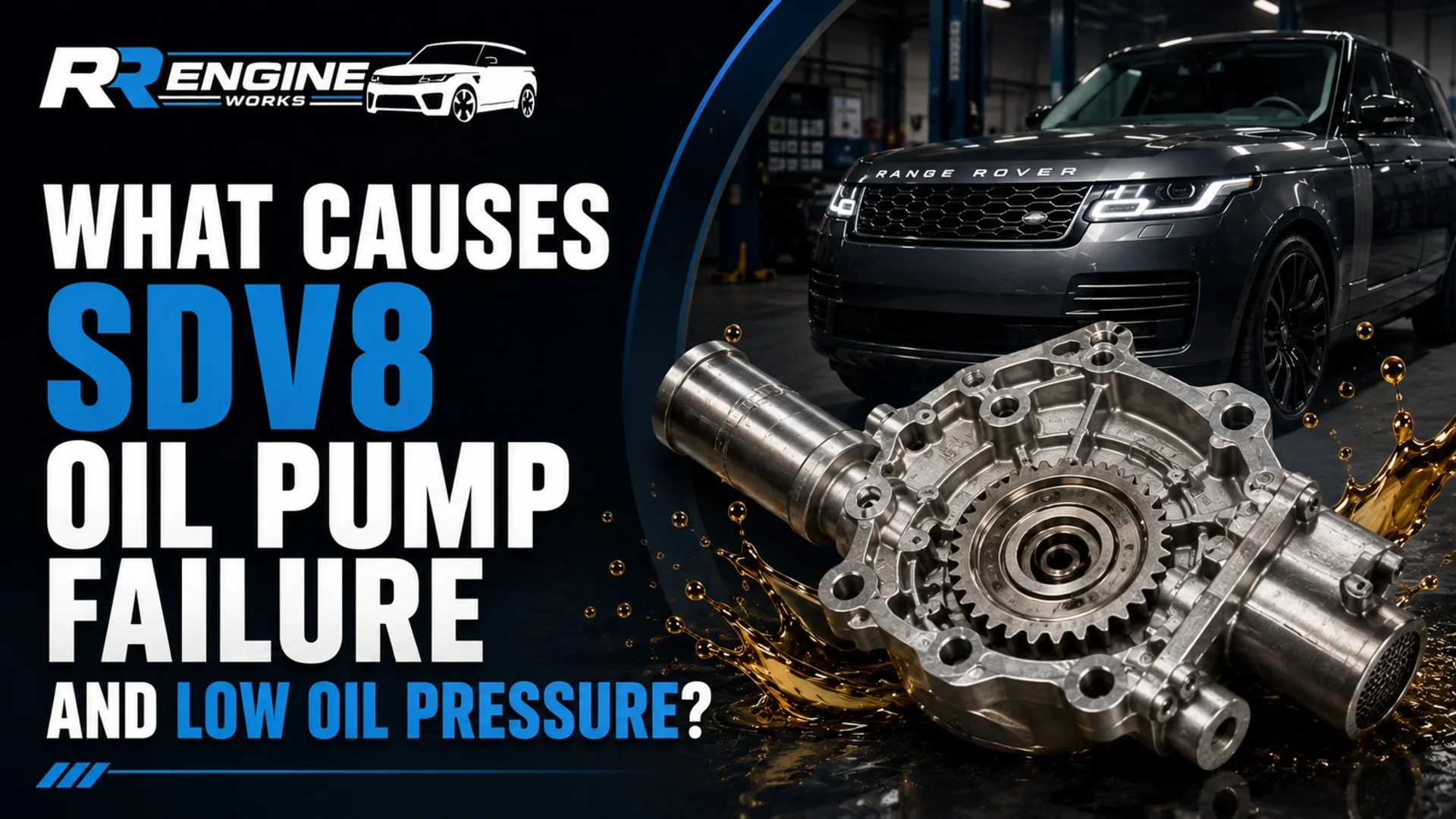
Understanding the cause matters because it changes the repair. Sometimes the pump itself has failed mechanically. Other times, the pump is fine but something upstream, the oil condition, the filter, or the pickup, is starving it of oil to circulate in the first place.
Oil Starvation, Blocked Pickups & Filter Failures
The oil pump can only move the oil that reaches it. If the supply is restricted before it gets to the pump, the pump can be in perfect mechanical condition and you'll still see low oil pressure symptoms.
Common restriction points on the SDV8 lubrication system include:
- A blocked or partially collapsed oil filter. There are documented owner cases of aftermarket oil filters collapsing internally after a service, restricting flow to the point of causing oil starvation and rapid engine seizure. This isn't universal to all aftermarket filters, but it's a well-known enough risk that many SDV8 specialists insist on genuine or OE-quality filters specifically for this engine.
- A blocked oil pickup or sump strainer, often from sludge build-up in engines that have had inconsistent servicing history.
- Worn or damaged pump gears, housing, or seals, which reduce the pump's ability to generate pressure even with clean oil.
- A seized pump, usually the end stage of prolonged low-pressure running rather than a sudden first-time failure.
The pattern worth remembering: oil pump failure is often the visible symptom, but oil starvation upstream of the pump is frequently the actual root cause.
Oil Dilution from DPF Regeneration & Incorrect Oil Specification
This is a cause that's specific to diesel engines with particulate filters, and it catches a lot of owners off guard because it has nothing to do with the pump wearing out mechanically.
During DPF regeneration, extra fuel is injected into the cylinders to raise exhaust temperature and burn off trapped soot. If regeneration cycles are frequently interrupted, short journeys, stop-start city driving, or a regeneration that never completes, some of that unburned fuel can find its way past the rings and dilute the engine oil in the sump.
Diluted oil is thinner than it should be. Thinner oil struggles to maintain the pressure the pump is designed to generate, which shows up on the dashboard as low oil pressure even though the pump itself may be completely undamaged.
Other contributing factors worth ruling out:
- Incorrect oil viscosity or specification. The 4.4 diesel engines fitted with a DPF are generally specified to run a low-SAPS oil meeting the relevant Jaguar Land Rover specification (commonly referenced as WSS-M2C934-B in owner and workshop material). Always confirm the exact specification against your vehicle's handbook or VIN, since this can vary by model year and market.
- Coolant contamination, sometimes linked to oil cooler seal issues, which thins and degrades the oil's lubricating properties.
- Extended service intervals or missed oil changes, allowing sludge to build up in galleries and pickups over time.
Can SDV8 Oil Pump Failure Damage the Turbo or Engine Bearings?
Yes, and this is the part that turns a moderate repair into an expensive one if it's not caught early.
The SDV8's oil pump doesn't just lubricate the crankshaft and camshafts. It's also the sole oil supply for the turbochargers, which spin at extremely high speeds and rely entirely on a constant, pressurised oil film to prevent their bearings from grinding against the shaft housing.
The typical failure chain looks like this:
Oil pump problem → reduced oil pressure → oil starvation → turbocharger bearing wear or seizure → metal debris circulated through the oil system → accelerated wear on crankshaft and connecting rod bearings → engine knocking → potential engine seizure.
There are real-world L405 cases where a turbocharger failure was the first visible symptom, only for further diagnosis to trace the root cause back to a failing or seizing oil pump. This is exactly why a proper diagnostic sequence matters more than replacing whichever part failed first, if the pump caused the turbo failure, fitting a new turbo without addressing the pump means you'll likely be back in the workshop within weeks.
It's worth being precise here: not every SDV8 oil pump failure follows this exact chain, and not every turbo failure on this engine is pump-related. But when low oil pressure has been present for any length of time before a turbo or bearing failure shows up, the connection needs to be investigated rather than assumed away.
How to Diagnose SDV8 Oil Pressure & Oil Pump Problems
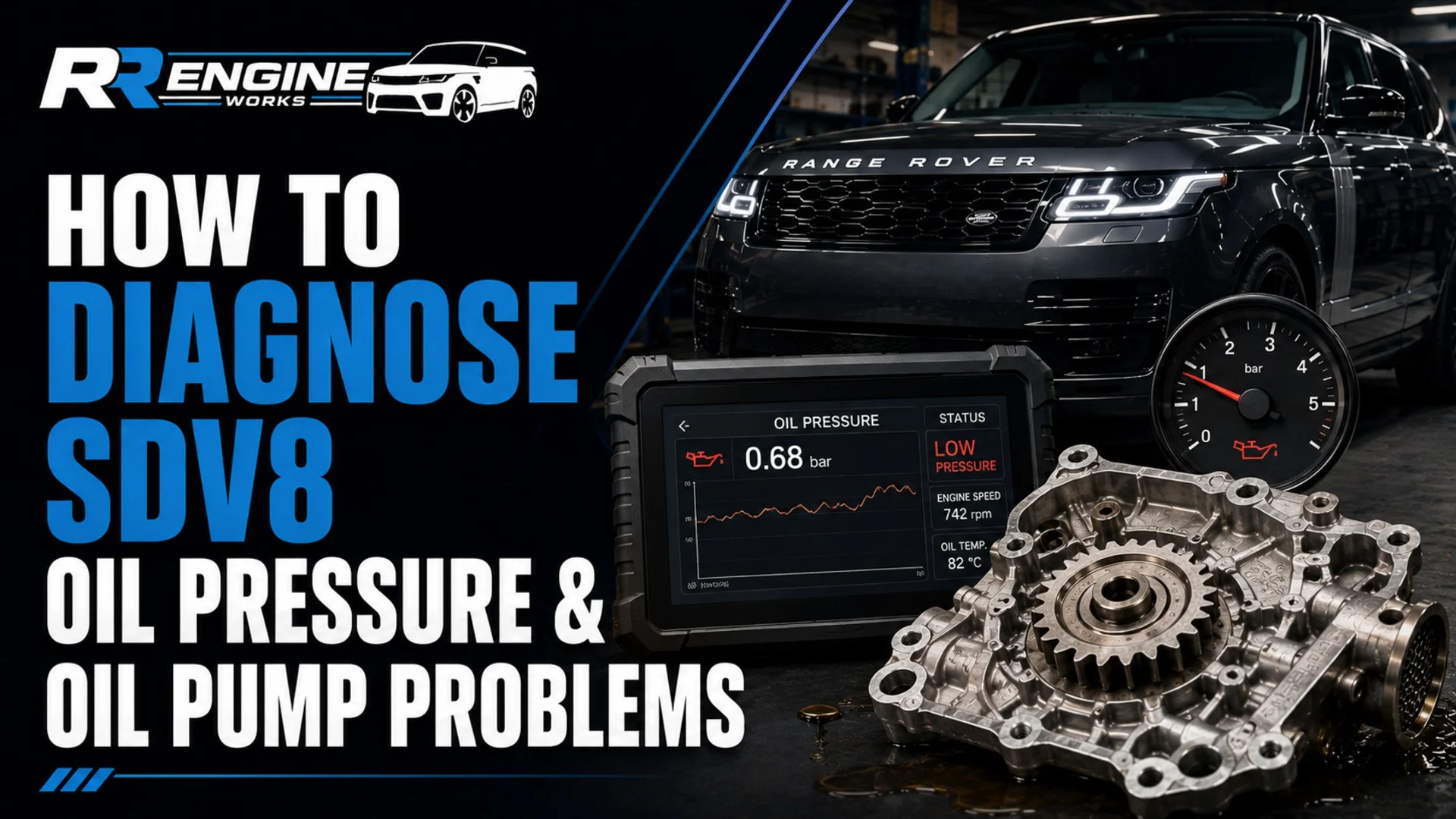
A dashboard warning light tells you something is wrong. It doesn't tell you what. Proper diagnosis on the SDV8 follows a specific order, moving from the simplest and cheapest checks toward the more involved ones, there's no reason to remove an oil pump before you've ruled out a blocked filter or a faulty sensor.
The general sequence a competent technician follows:
- Check oil level and top-up history
- Inspect oil condition, colour, smell (fuel dilution has a distinct odour), and consistency
- Check the oil filter for damage, contamination, or internal collapse
- Test oil pressure mechanically rather than trusting the dashboard reading alone
- Compare readings at idle and at higher RPM against specification
- Test or substitute the oil pressure sensor to rule out an electrical fault
- If pressure remains low after the above, inspect the oil pickup for blockages
- If still unresolved, inspect the pump itself for wear, damage, or seizure
- Check for bearing clearance issues if pressure loss has been present for any length of time
Mechanical Oil Pressure Testing at Idle & High RPM
The dashboard sensor is a convenience feature, it's not a diagnostic tool. The only way to know your actual oil pressure is to fit a mechanical pressure gauge directly to the engine's oil gallery and test it under real conditions.
A typical diagnostic sequence tests pressure at:
- Cold start, checking how quickly pressure builds as the engine first turns over
- Hot idle, this is where marginal pumps and diluted oil show their weakness most clearly, since pressure is at its lowest when the engine is warm and idling
- Around 2,500 RPM, checking the pressure response as engine speed increases
- 3,000–3,500 RPM, confirming higher-RPM performance matches specification
Readings that come back consistently below specification at hot idle, but improve at higher RPM, often point toward a pump or filtration issue rather than a sensor fault, since a sensor problem wouldn't correlate with engine speed in a predictable way.
SDV8 Oil Pressure Specifications (What's Normal vs Faulty)
Exact pressure figures can vary slightly by model year and specific engine variant, so always cross-reference against the workshop manual data or VIN-specific figures rather than treating any single number as universal. That said, workshop-manual-derived diagnostic procedures commonly reference minimum pressure thresholds in the region of 0.50 bar at idle and around 1.0 bar as a baseline check point, used as part of a broader pass/fail sequence rather than a single standalone figure.
Test Condition | What's Being Evaluated | General Concern If Below Spec |
| Cold start | Speed of pressure build-up | Delayed lubrication to bearings and turbo |
| Hot idle | Minimum sustained pressure | Most sensitive test for pump wear or dilution |
| ~2,500 RPM | Mid-range pressure response | Indicates pump performance under moderate load |
| ~3,000–3,500 RPM | High-RPM pressure | Confirms pump capacity at higher demand |
| Reading above expected | — | Can indicate a restriction elsewhere, not just a "good" result |
If your figures come back below specification at more than one test point, that's a strong indication the issue lies with the pump, filtration, or internal engine clearances rather than a simple sensor fault, and it's not a fault that resolves itself by continuing to drive.
SDV8 Oil Pump Replacement, Process, Cost & Prevention
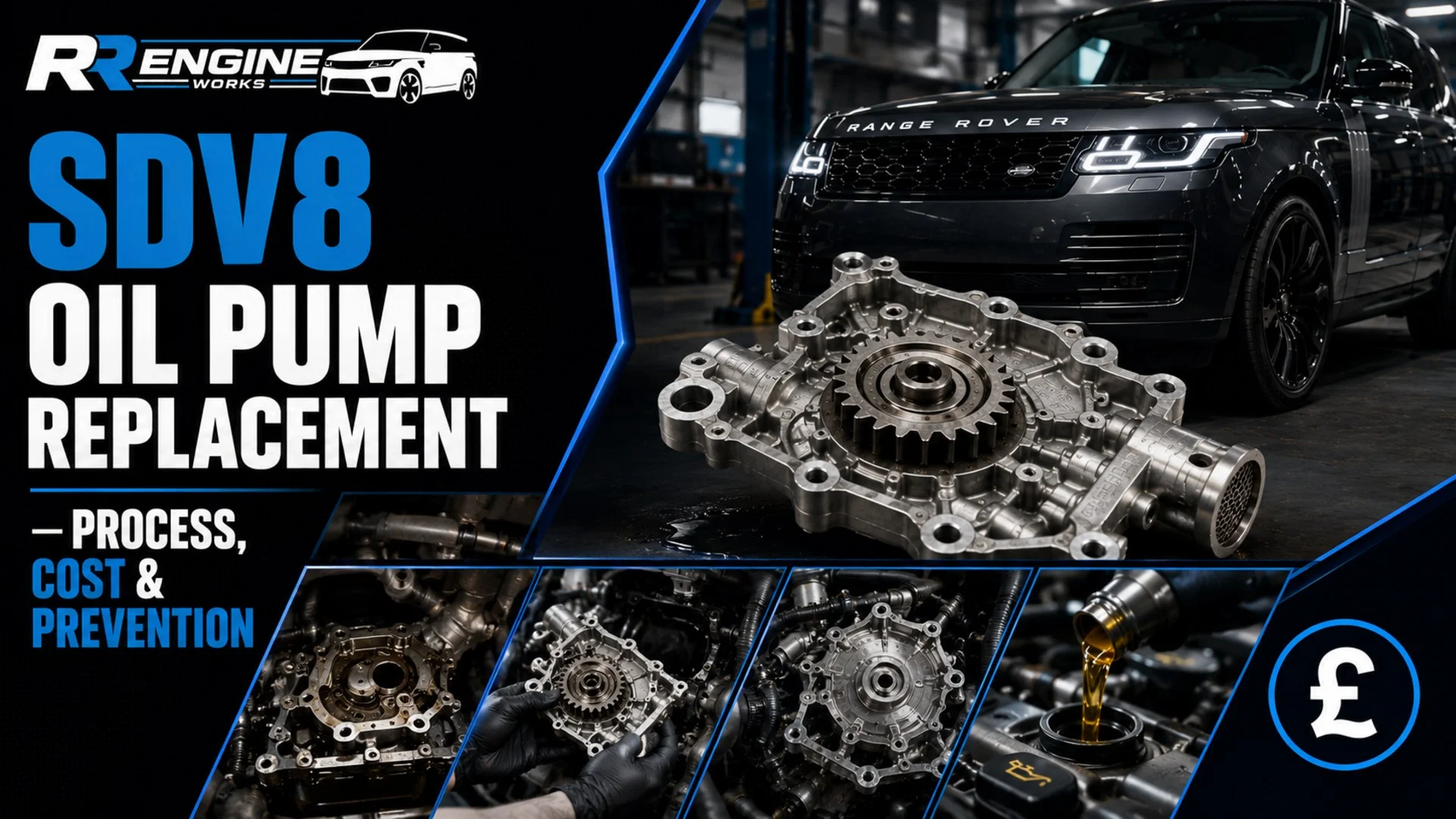
Once a genuine oil pump or lubrication fault has been confirmed through proper testing, the next question is almost always cost and turnaround.
How Much Does SDV8 Oil Pump Replacement Cost?
Costs vary depending on a few factors, so treat the ranges below as general guidance rather than a fixed quote, the right way to get an accurate figure is a proper inspection of your specific vehicle:
- Parts-only cost for a genuine or OE-quality oil pump assembly tends to sit at the higher end compared to many other engine ancillaries, given the labour-intensive access required and the precision components involved.
- Labour time is a significant factor, since accessing the oil pump on a V8 diesel typically involves more disassembly than a simpler four-cylinder engine, this is not a job that can be rushed without risking reassembly issues.
- Additional costs can apply if the pickup, filter housing, or oil cooler also need attention, or if the diagnosis reveals bearing wear that needs addressing at the same time to avoid a repeat failure.
- Full engine rebuild costs sit well above a straightforward pump replacement, and only become necessary if oil starvation has already caused bearing or crankshaft damage before the fault was caught.
This is exactly why early diagnosis matters. A pump caught early because of a warning light or a subtle noise is a contained, predictable repair. A pump ignored for weeks because "the light went off after a restart" risks turning into turbo and bearing damage that costs several times more to put right.
Book an SDV8 Oil Pressure Diagnostic or Oil Pump Replacement
If your Range Rover or Range Rover Sport SDV8 has shown any of the warning signs covered above, a low oil pressure light, a ticking or knocking noise, or unusual turbo sounds, the safest next step is a proper mechanical pressure test before the vehicle is driven any further than necessary.
RR Engine Works, based at Unit 1 Hedley Ave, Grays, RM20 4EL, specialises in diagnosing and repairing 4.4 SDV8 and TDV8 lubrication faults, from oil pressure sensor checks through to full oil pump replacement and, where necessary, bearing and turbo repair work. Getting an accurate diagnosis first means you only pay for the part that's actually at fault, not a guess.
Frequently Asked Questions About SDV8 Oil Pump Failure
What causes Range Rover SDV8 oil pump failure?
Most cases trace back to either mechanical wear or seizure of the pump itself, or oil starvation caused by a blocked filter, restricted pickup, or diluted oil reaching the pump in reduced volume. DPF regeneration issues and incorrect oil specification are also common contributing factors on diesel-particulate-filter-equipped SDV8 engines.
How do I know if my SDV8 oil pump is failing?
The clearest signs are a low oil pressure warning on the dashboard, a ticking or knocking engine noise, and unusual turbocharger noise. A mechanical oil pressure test at idle and at higher RPM is the only reliable way to confirm the pump itself, rather than the sensor, is at fault.
Can a bad oil pump cause engine knocking?
Yes. Reduced oil pressure means the crankshaft and connecting rod bearings run with less protective oil film than they need, which can cause a knocking noise, especially under load. Continued driving in this state increases the risk of permanent bearing damage.
Can oil pump failure cause turbo failure on a Range Rover SDV8?
It can. The turbochargers rely entirely on oil supplied by the same pump. If oil pressure drops, the turbo bearings can run starved of lubrication, leading to wear, noise, or complete turbo failure. In some documented cases, a turbo failure was the first noticeable symptom of an underlying pump problem.
Is it the oil pressure sensor or the oil pump?
The only way to know for certain is a mechanical pressure test. Intermittent warnings that clear on restart, with no unusual noise, often point toward a sensor fault. Consistent low readings confirmed by a gauge, especially alongside engine noise, point toward a genuine pump or pressure issue.
How much does SDV8 oil pump replacement cost?
Costs depend on parts quality, labour required for access, and whether related components like the filter housing or pickup also need replacement. A proper diagnostic inspection is the only way to get an accurate figure for your specific vehicle.
Can a blocked oil filter cause SDV8 oil pump failure?
Yes, in some documented cases. A collapsed or restricted oil filter can starve the pump of oil to circulate, leading to pressure loss and, in severe cases, rapid engine damage. This is one reason many specialists recommend genuine or OE-quality filters specifically for this engine.
Should I keep driving with a low oil pressure warning?
No. Continuing to drive with confirmed or suspected low oil pressure risks turning a repairable pump or filtration issue into bearing, turbo, or crankshaft damage that requires a far more extensive and expensive repair.
Final Thoughts
Low oil pressure on a Range Rover SDV8 is never something to wait out. The two-stage oil pump on this engine is well engineered when it's healthy, but the same design that makes it efficient also means problems, whether from the pump itself, a blocked filter, or diluted oil, tend to escalate quickly rather than gradually.
The good news is that most cases are caught in time with the right diagnostic approach: confirm whether it's a sensor or a genuine pressure fault, test mechanically rather than trusting the dashboard alone, and address the root cause rather than just the symptom that happened to show up first.
If you're currently dealing with a warning light, an unfamiliar noise, or a vehicle that's already gone into limp mode, it's worth getting it looked at properly before driving it any further. RR Engine Works, Unit 1 Hedley Ave, Grays, RM20 4EL, can carry out a full oil pressure diagnostic and oil pump replacement on your SDV8, with the aim of catching the problem while it's still a straightforward repair.