
If your Range Rover has started knocking on cold mornings, dropped into limp mode on the motorway, or left a puff of blue smoke behind it at the lights, you're not imagining things, and you're definitely not alone. TDV6 and TDV8 diesel engines are known for strong performance and genuine long-term durability when they're looked after, but they also carry a handful of well-documented weak points that catch a lot of owners off guard.
The good news is that most Range Rover TDV6 and TDV8 engine problems give warning signs long before they turn into a five-figure repair bill. Knowing what those signs look like, and which engine variant you're actually dealing with, is the difference between a routine fix and a roadside recovery truck.
This guide walks through the real-world faults we see on TDV6 and TDV8 engines every week, what typically causes them, how to tell if your car is affected, and what your repair options actually look like.
What Are the Most Common Range Rover TDV6 & TDV8 Engine Problems?
Before diving into specific faults, it helps to understand that "TDV6" and "TDV8" aren't one single engine, they're a family of diesel units fitted across the Range Rover L322, L405, and Range Rover Sport L320/L494, built on the Ford-derived AJD-V6 (Lion V6) and Lion V8 architecture shared with Jaguar and PSA during that era.
That matters because a 3.0 TDV6 has a very different failure profile to a 3.6 TDV8 or 4.4 TDV8, even though owners often lump them together when searching for answers.
3.0 TDV6 Engine Problems You Should Know About
The 3.0 TDV6 is generally well regarded for refinement and fuel economy, but it has one issue that specialists take very seriously: bottom-end failure.
What Causes TDV6 Crankshaft and Bearing Failure?
This is the fault that gives the 3.0 TDV6 its reputation. In a number of documented cases, the crankshaft's main or big-end bearings wear prematurely, and in more serious instances the crankshaft itself has fractured. Once bearing shells start to break down, metal debris circulates through the oil system, accelerating wear on everything downstream, the oil pump, oil galleries, and eventually the cylinder head.
Early warning signs typically include:
- A metallic knocking noise from the bottom of the engine, especially noticeable at idle or under light acceleration
- A sudden drop in oil pressure, sometimes accompanied by a dashboard warning light
- Vibration through the cabin that wasn't there before, particularly at idle
If you catch it at the knocking stage, a specialist can sometimes intervene before the crankshaft fractures completely. Left unchecked, it almost always ends in total engine failure.
Why Does the TDV6 Suffer from Oil Dilution and Low Oil Pressure?
Diesel particulate filter (DPF) regeneration cycles inject small amounts of fuel into the exhaust stroke to burn off soot. On the TDV6, some of that unburned fuel can find its way past the piston rings and into the sump, thinning the engine oil over time. Diluted oil loses its lubricating properties, which puts extra load on the crankshaft bearings, tying this fault directly back into the crankshaft failure issue above.
Regular oil changes, ideally shorter than the manufacturer's standard interval on cars doing a lot of short journeys, go a long way toward managing this risk.
Other known 3.0 TDV6 issues worth flagging:
- Timing belt failure, unlike most modern diesels, the TDV6 uses a timing belt rather than a chain, and it must be replaced on schedule (typically every 10 years or 100,000 miles) or it can snap and cause catastrophic valve damage
- Turbocharger wear, twin-turbo setups on the TDV6 can develop boost leaks, actuator faults, or bearing wear over high mileage
- EGR and DPF problems, carbon buildup in the EGR valve and cooler is common, often triggering warning lights and rough running
- Fuel injector wear, leading to hard starting, misfires, and increased fuel consumption
TDV8 Engine Problems (3.6 & 4.4) Explained
The TDV8 range covers two distinct engines, the 3.6-litre (368DT) and the later, more powerful 4.4-litre (448DT), sometimes referred to under the SDV8 badge in its final iteration. Both share a broadly similar architecture but have different weak points.
Why Do TDV8 Turbochargers Fail?
Turbo problems are the single most common complaint across both the 3.6 and 4.4 TDV8. On the 3.6 in particular, a known oil feed restriction can starve the turbo bearings of lubrication, leading to premature wear or complete turbo failure, sometimes with very little warning beyond a whistling noise under boost.
Typical symptoms include:
- A high-pitched whistle or whine under acceleration
- Noticeable loss of power or turbo lag
- Blue-grey smoke from the exhaust, indicating the turbo seals are letting oil into the intake
- Limp mode, where the engine management system deliberately restricts power to protect the engine
Related 3.6 TDV8 faults include intercooler hose splits (a common and comparatively cheap fix), intake manifold carbon buildup, EGR valve sticking, and DPF blockages from short-journey driving.
Is Timing Chain Failure Common on the 4.4 TDV8?
The 4.4 TDV8 moved to a timing chain instead of a belt, which sounds like an improvement, and for the most part it is, but the chain tensioners and guides can wear over high mileage, causing a rattling noise on startup that fades as oil pressure builds. Left unaddressed, chain stretch can eventually cause it to jump time, which is a serious and expensive failure.
The 4.4 TDV8 also has a reputation for:
- Oil cooler failure, which can allow coolant and oil to mix, look out for a "mayonnaise" residue under the oil filler cap
- EGR cooler and carbon buildup issues
- DPF blockages, particularly on cars used mainly for short trips
- Oil leaks from rocker cover gaskets and sump seals over time
- White, blue, or black smoke, each pointing to a different underlying cause, coolant, oil, or fuel-related respectively
How Do You Know If Your Range Rover Has an Engine Problem?
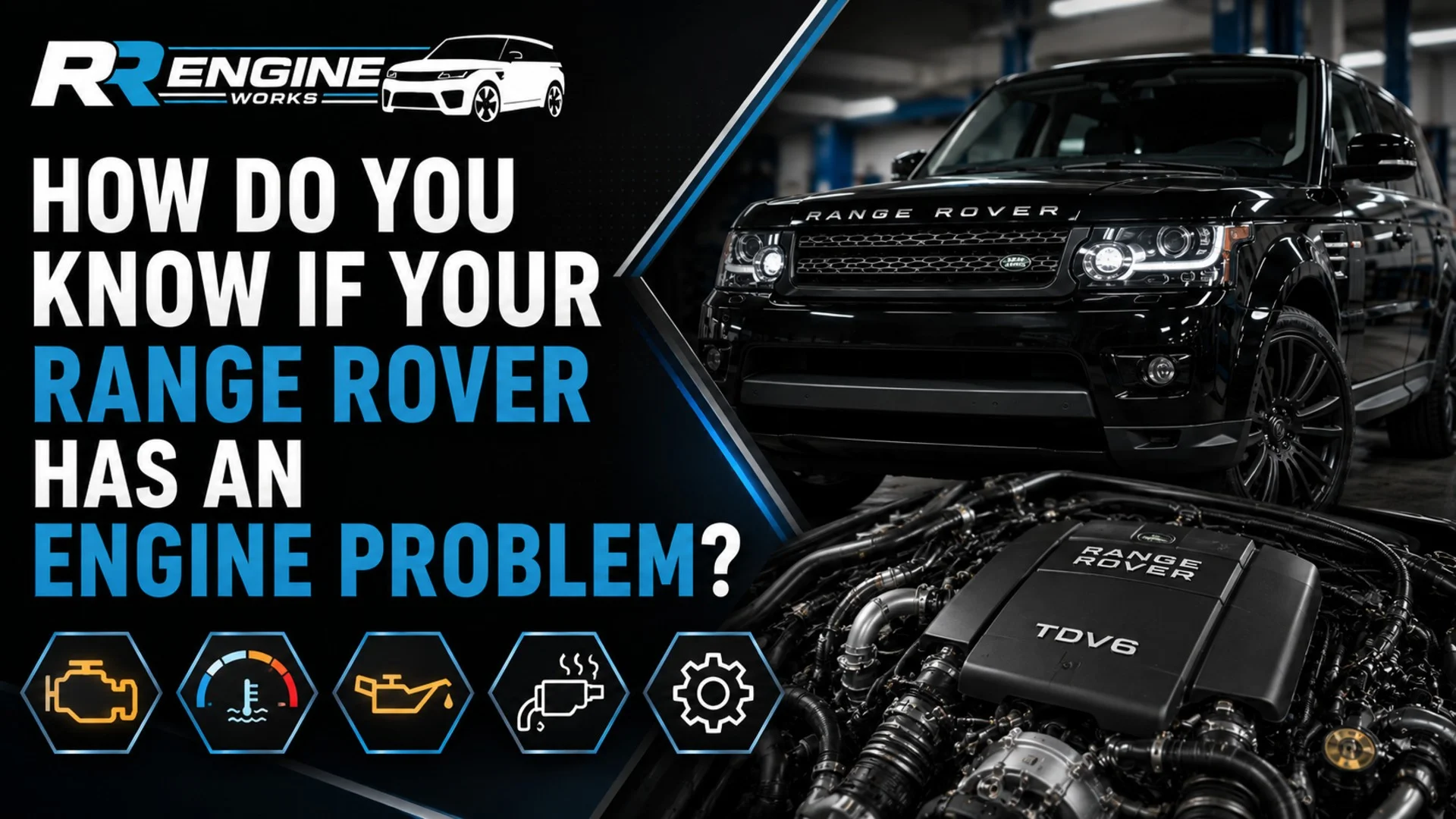
Diesel engines rarely fail without warning. The trick is recognising which symptom points to which fault before it escalates.
Warning Signs of TDV6 Engine Failure (Knocking, Smoke, Loss of Power)
If your TDV6 is developing a problem, you'll usually notice one or more of the following:
- A knocking or rattling noise from the bottom end, especially at cold start
- Blue smoke on startup or under load
- A gradual or sudden loss of power, particularly under acceleration
- The oil pressure warning light appearing on the dash, never ignore this one
- Rough idle or a noticeable vibration through the pedals and seat
Warning Signs of TDV8 Engine Failure (Limp Mode, Rattling, Oil Warning Light)
TDV8 owners tend to report a slightly different symptom pattern:
- Limp mode, where the car suddenly feels sluggish and won't rev past a certain point
- A rattling noise on cold start that quietens after a few seconds (classic timing chain symptom on the 4.4)
- Turbo whistle or whining under acceleration
- Coolant loss with no visible external leak, often a sign of an internal oil cooler fault
- White or blue-grey smoke depending on whether coolant or oil is being burned
When Should You Get Your Range Rover Engine Professionally Diagnosed?
As a general rule: if a warning light appears, if you hear a new noise more than once, or if performance drops noticeably, get it checked. Diesel engine faults on the TDV6 and TDV8 rarely resolve themselves, and driving on a diluted oil pressure warning or an active limp mode significantly increases the risk of turning an affordable repair into a full engine replacement.
A proper diagnostic should include a fault code scan, an oil pressure test where relevant, and a visual inspection for coolant or oil contamination, not just a code reader plugged in for five minutes.
TDV6 vs TDV8 – Which Range Rover Engine Is More Reliable?
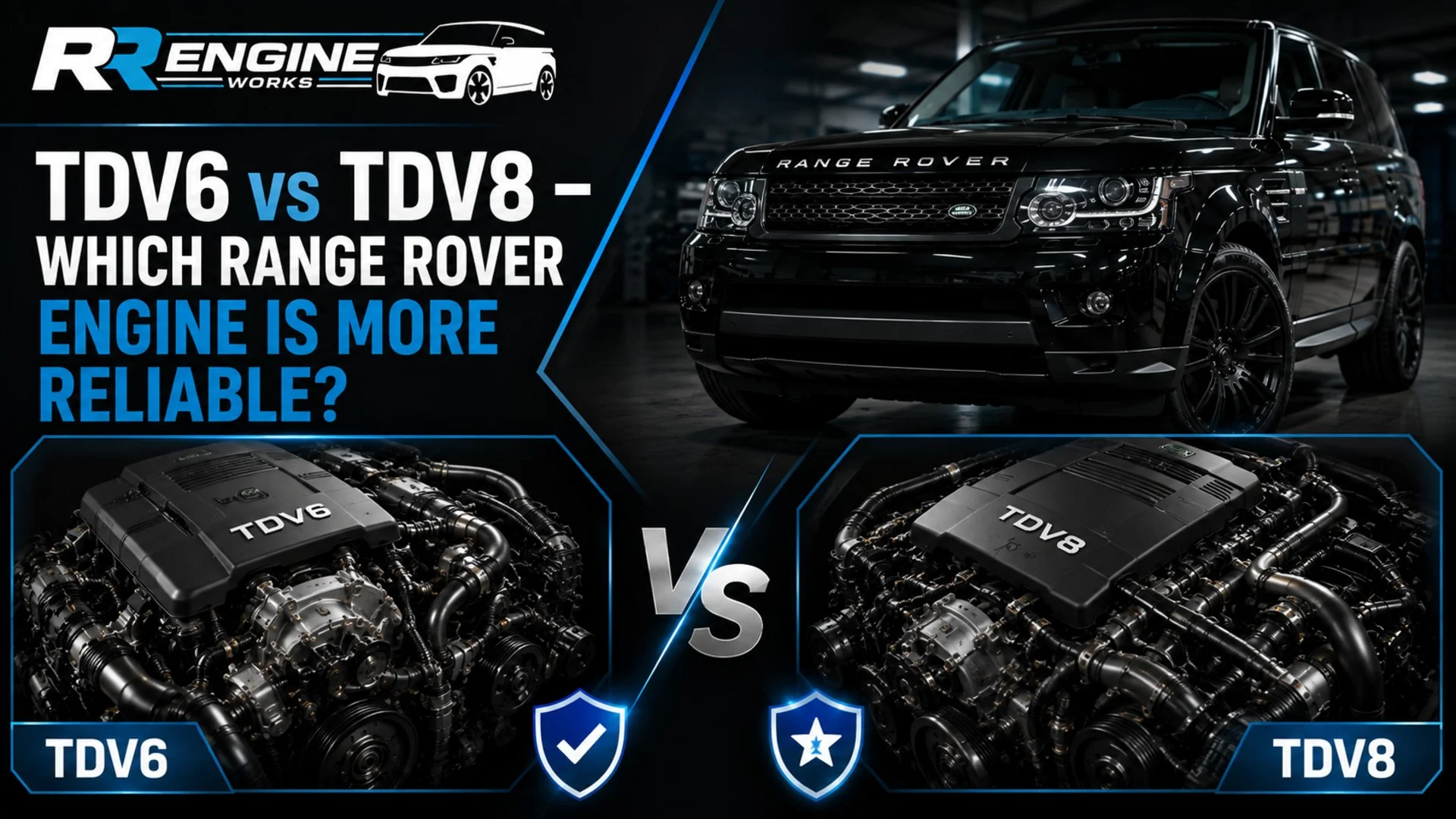
This is one of the most common questions we're asked, and the honest answer is: it depends what you mean by "reliable." Both engines can cover well over 150,000 miles without major issues if they've been serviced properly, but both also have a specific failure mode that can strike even a well-maintained example.
Reliability Comparison at a Glance
Factor | 3.0 TDV6 | 3.6 / 4.4 TDV8 |
| Main risk | Crankshaft/bearing failure | Turbo failure (3.6), timing chain wear (4.4) |
| Failure warning | Knocking noise, low oil pressure | Whistling turbo, cold-start rattle, limp mode |
| Typical cause | Oil dilution, bearing wear | Oil starvation to turbo, chain tensioner wear |
| Severity if ignored | High – often total engine failure | Medium to high depending on fault |
| Running costs | Slightly lower fuel consumption | Higher power, higher servicing complexity |
| Best suited to | Motorway/long-distance driving | Towing, higher load use (4.4 especially) |
Which Engine Has Lower Long-Term Repair Costs?
In our experience, the 3.0 TDV6's crankshaft/bearing issue tends to be the more expensive of the two when it does occur, simply because it usually means a full bottom-end rebuild or engine replacement rather than a component-level repair. TDV8 turbo and timing chain issues, while still costly, are more often catchable and repairable before they cascade into full engine failure, provided they're addressed early.
Which Range Rover Diesel Engine Should You Avoid?
Neither engine should automatically be avoided, both have covered huge mileages reliably in the right hands. What matters far more than the badge on the back is:
- Full, documented service history
- Evidence of oil changes at or below the recommended interval
- Timing belt replacement history on the TDV6 (non-negotiable if it's due)
- No unexplained warning lights or recent limp mode events
- A pre-purchase inspection from a specialist who knows these engines specifically
A TDV6 with a patchy service history is a far bigger risk than a well-maintained TDV8, and vice versa.
Range Rover TDV6 & TDV8 Engine Repair, Rebuild & Replacement
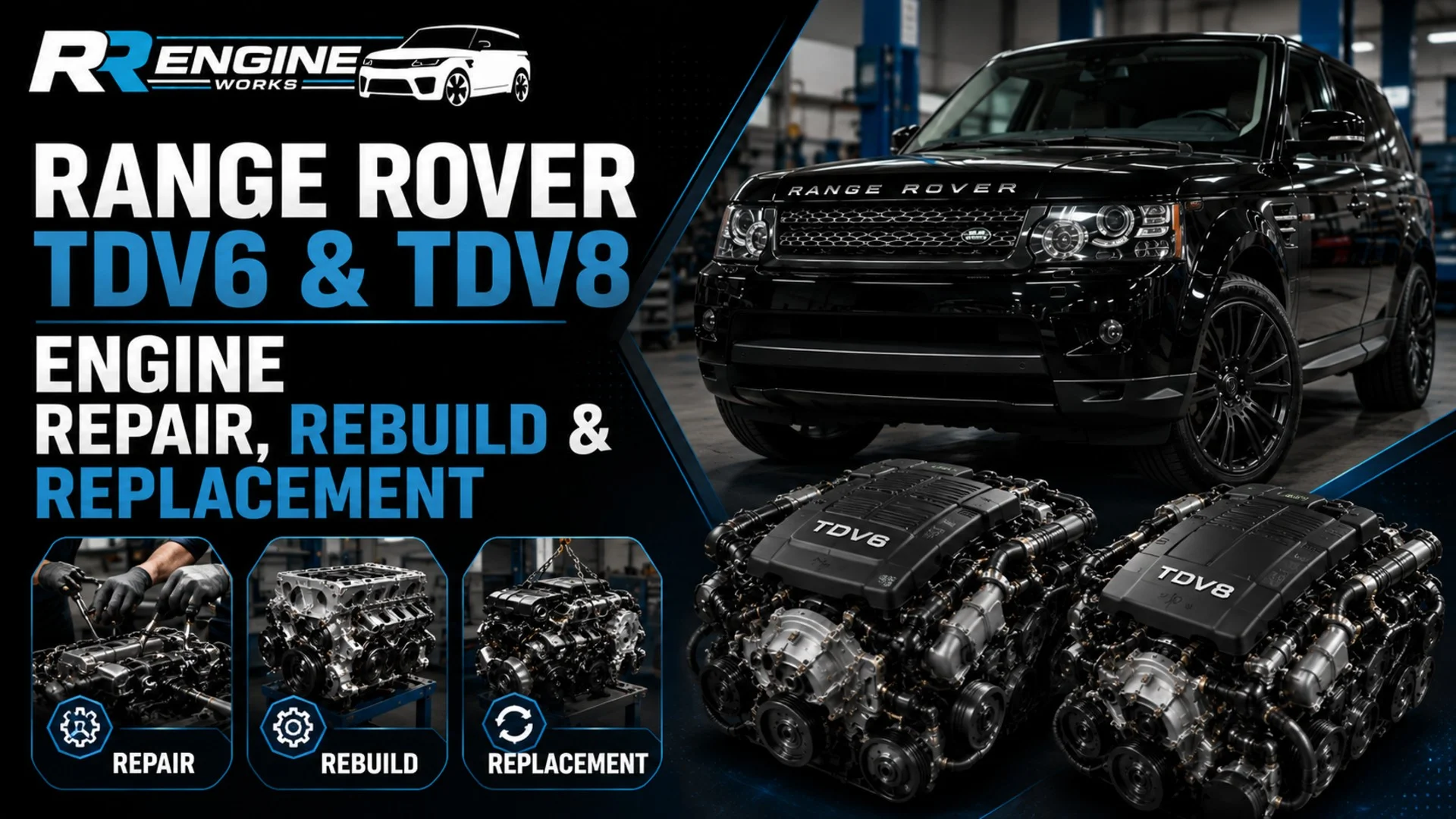
Once a fault has been diagnosed, you're usually looking at one of three routes: repair the specific component, rebuild the engine, or replace it entirely with a reconditioned unit.
How Much Does a TDV6 or TDV8 Engine Repair Cost?
Costs vary significantly depending on the fault, but as a rough guide:
- Component-level repairs (turbo, EGR valve, intercooler hose, injectors) are the most affordable route and can often be done without removing the engine
- Timing belt or chain replacement sits in the mid-range, but is far cheaper than the alternative if it fails
- Bottom-end rebuilds (crankshaft/bearing work) and full engine replacements are the most significant investment, but are often still more cost-effective than buying another used Range Rover with an unknown history
Repair, Rebuild or Replace, Which Option Is Right for You?
- Repair makes sense when the fault is isolated, a single component like a turbo, hose, or sensor, with no evidence of contamination or bottom-end damage.
- Rebuild is worth considering when the engine block itself is sound but internal components (bearings, crankshaft, pistons) need attention, it's more involved than a repair but avoids the cost of a full replacement unit.
- Replacement with a reconditioned or exchange engine is usually the right call after catastrophic failure, crankshaft fracture, hydrolock, or a snapped timing chain that's caused valve damage, where rebuilding the original isn't cost-effective.
A good specialist should walk you through all three options with real numbers, rather than defaulting to the most expensive one.
Why Choose RR Engine Works for Your Range Rover Engine Problem?
We work on TDV6 and TDV8 engines specifically, not as one job among many general repairs, but as engines we diagnose, rebuild, and replace regularly. That focus matters when you're dealing with faults like crankshaft failure or timing chain wear, where getting the diagnosis wrong can mean paying for the wrong fix twice.
Trusted Range Rover Diesel Specialists Based in Grays, Essex
We're based at Unit 1 Hedley Ave, Grays RM20 4EL, and we work with Range Rover owners across Essex and London who want a straight answer about what's actually wrong with their engine, not just a code reader printout and a guess.
Get a Free Diagnosis & Quote from RR Engine Works Today
If your Range Rover TDV6 or TDV8 is showing any of the symptoms covered in this guide, a knock from the bottom end, a whistling turbo, a cold-start rattle, or a limp mode warning, don't wait for it to get worse. Get in touch with RR Engine Works for a proper diagnosis and a clear, honest quote on your repair, rebuild, or replacement options.
Frequently Asked Questions About TDV6 and TDV8 Engines
Is the Range Rover TDV6 reliable? Yes, generally, provided the timing belt is replaced on schedule and oil changes are kept up to date. Its main known weakness is crankshaft and bearing wear, which is why service history matters so much when buying used.
Is the Range Rover TDV8 reliable? The 3.6 and 4.4 TDV8 engines are capable of high mileage with proper care. The 3.6's main risk is turbo oil starvation, while the 4.4's is timing chain wear, both are manageable if caught early.
How long does a TDV6 engine last? With regular servicing and a timely timing belt change, a 3.0 TDV6 can comfortably exceed 150,000–200,000 miles. Neglected oil changes significantly shorten that lifespan due to oil dilution risk.
How long does a TDV8 engine last? Similarly, a well-maintained 3.6 or 4.4 TDV8 can also cover well over 150,000 miles. Longevity depends heavily on how well the turbo, EGR, and timing chain (4.4) have been maintained.
What causes TDV6 crankshaft failure? It's typically linked to bearing wear that progresses undetected, often worsened by oil dilution from DPF regeneration cycles thinning the oil and reducing its protective properties.
Does the 4.4 TDV8 have timing chain problems? It can, usually presenting as a rattling noise on cold start caused by a worn chain tensioner. It's not universal, but it's common enough to check for on any used 4.4 TDV8.
Why is my Range Rover in limp mode? Limp mode is the engine management system's way of protecting the engine from a detected fault, commonly a turbo issue, an EGR fault, or occasionally low oil pressure. It always warrants a proper diagnostic scan rather than being ignored or reset.
Why is there oil in my Range Rover's coolant? This is usually a sign of oil cooler failure, particularly on the 4.4 TDV8, where internal seals degrade and allow oil and coolant to mix. It should be addressed promptly, as continued driving can cause further engine damage.
Range Rover TDV6 and TDV8 engines are fundamentally strong units, the reputation for problems comes from a small number of well-known faults, not widespread unreliability. Catching the warning signs early, keeping on top of servicing, and working with a specialist who knows these engines inside out is what separates an affordable repair from an engine-out nightmare.
If you're dealing with any of the symptoms covered here, get in touch with RR Engine Works in Grays, Essex for an honest diagnosis and a repair plan that actually fits your engine and your budget.