

That knock under the bonnet isn't going away. You've noticed it for a week or two now, maybe longer, and a small part of you is hoping it's nothing, a loose heat shield, a bit of carbon on a valve, something a good service will sort out. But if you're reading this, you already suspect it's more serious than that.
Here's the honest truth: not every strange noise or warning light means your Range Rover needs a new engine. But some absolutely do. The difference between a £400 repair and a £6,000+ replacement often comes down to catching the right signs early and getting them properly diagnosed, not guessed at.
This guide walks through the real symptoms of Range Rover engine failure, what they actually mean mechanically, how to tell a minor fault from catastrophic internal damage, and what your options look like if replacement genuinely is the answer. No scare tactics. Just what we'd tell a customer standing in our workshop.
How Do You Know If Your Range Rover Engine Needs Replacing?
Range Rover engines, whether it's the 3.0 TDV6, the SDV8, the 5.0 Supercharged V8, or the newer Ingenium units, tend to give warning before they fail completely. The problem is that owners often dismiss these warnings as "normal Range Rover quirks," especially on higher-mileage L322s and L405s. They're not quirks. They're data.
Below are the symptoms that consistently show up before a genuine engine replacement is needed.
Persistent Knocking, Ticking or Rattling From the Engine
A light tick on cold start that disappears after a minute can be normal, often just hydraulic tappet noise or a cold start rattle from the timing chain tensioner settling. That's usually not an emergency.
A deep, rhythmic knocking that gets louder under load is a different story entirely. This is frequently a sign of worn main bearings or rod bearings, sometimes caused by oil starvation or degraded oil pressure over time. Once bearing surfaces wear down, the crankshaft is riding on metal-to-metal contact instead of a protective oil film, and that damage doesn't reverse itself.
What to listen for:
- Knocking that increases with engine RPM, often bottom-end (bearing) related
- A rattle specifically on cold start that fades, commonly timing chain related, worth investigating before it worsens
- Ticking that stays constant regardless of load, could be valve train, less urgent but still needs inspection
Blue, White or Black Smoke From the Exhaust
Smoke colour tells you almost exactly what's burning, which makes this one of the more diagnostically useful symptoms on this list.
- Blue smoke usually means engine oil is entering the combustion chamber, typically through worn piston rings or failing valve seals. This is a strong indicator of internal wear.
- White smoke (thick, sweet-smelling, persistent, not just condensation on a cold morning) often points to coolant entering the combustion chamber, commonly via a failed head gasket or a cracked cylinder head.
- Black smoke generally indicates the engine is running rich, burning excess fuel. On its own this is more often a fuelling or sensor issue than an internal engine fault, but combined with power loss, it's worth a proper diagnostic.
Overheating or Unexplained Coolant Loss
If your Range Rover is running hot or you're topping up coolant more often than seems reasonable, don't wait this one out. Overheating is one of the fastest routes to genuinely serious, expensive engine damage, a cylinder head can warp or crack in a matter of minutes under sustained high temperatures.
Coolant loss with no visible external leak is a particular red flag. It often means coolant is being consumed internally, which circles back to head gasket failure or a cracked block, both of which put you firmly in replacement or major rebuild territory.
Sudden Loss of Power, Rough Idle or Misfiring
A Range Rover that used to pull confidently and now feels flat, hesitant, or rough at idle is telling you something changed internally. This can stem from low or uneven cylinder compression, timing chain stretch throwing off valve timing, or a misfire caused by a fouled or damaged cylinder.
Occasional misfires under specific conditions (cold weather, certain fuel) can be sensor or ignition related. Persistent misfiring, especially paired with reduced power and rough idle, points toward something happening inside the cylinders themselves.
Low Oil Pressure Warning or Metal Shavings in the Oil
This is the symptom we take most seriously. Low oil pressure means the engine's internals, bearings, camshaft, crankshaft journals, aren't getting adequately lubricated, and that damage accumulates fast, sometimes within minutes of continued driving.
Metal shavings or metallic flecks found in the oil during a service or oil change are close to a smoking gun. It means components are physically wearing against each other. If your technician finds this, it's rarely a case of "keep an eye on it", it usually means internal inspection is needed immediately.
Is It Serious Engine Damage, or Something You Can Still Repair?
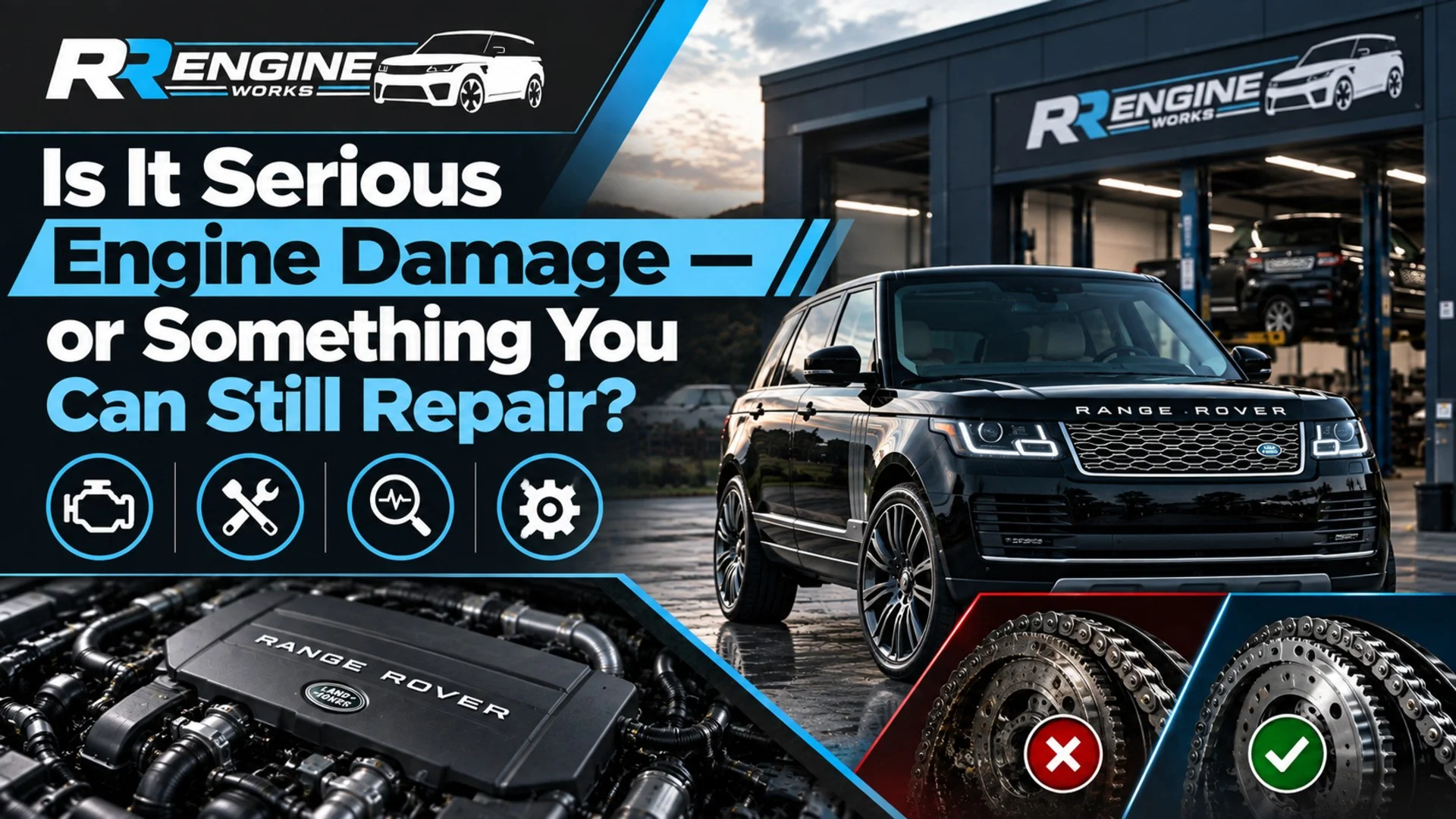
Here's where a lot of engine replacement advice online goes wrong: it treats every symptom above as proof you need a new engine. That's not accurate, and frankly, it's not honest. A responsible specialist tells you when a symptom points to something minor and fixable, because that builds the kind of trust that keeps customers coming back.
Diagnostic Tests That Actually Confirm Internal Damage
Symptoms tell you where to look. Diagnostic tests tell you what's actually happening. This is the step too many guides skip entirely.
Compression Test, Leak-Down Test and Oil Pressure Check Explained
- Compression test, measures how well each cylinder holds pressure during the compression stroke. Low or uneven readings across cylinders usually indicate worn piston rings, valve damage, or a head gasket issue.
- Leak-down test, a more precise follow-up to the compression test. Compressed air is fed into the cylinder, and the test identifies exactly where pressure is escaping (past the rings, past the valves, or into the cooling system), which tells you precisely what's failing.
- Oil pressure test, confirms whether the lubrication system is delivering adequate pressure to bearings and moving parts. Combined with an oil analysis (checking for metal content), this is often the clearest indicator of bottom-end wear.
A borescope inspection, essentially a small camera fed into the cylinder through the spark plug or injector hole, can also give a direct visual of piston and cylinder wall condition without stripping the engine down.
When These Symptoms Don't Mean You Need a New Engine
This is the section most competitor pages leave out, and it's arguably the most useful part of this guide.
Common Faults Mistaken for Engine Failure (Sensors, Turbo, Water Pump)
Plenty of components can mimic engine failure symptoms while being entirely separate, and far cheaper, fixes:
- A faulty crankshaft or camshaft sensor can cause rough running, misfires and warning lights that look exactly like internal engine damage but are actually a £100–£200 sensor replacement.
- Turbocharger issues (on diesel and some petrol variants) can cause smoke, power loss, and unusual noise without any internal engine damage at all.
- A failing water pump or thermostat can cause overheating symptoms identical to head gasket failure, but is a straightforward, relatively inexpensive repair if caught before the engine actually overheats.
- A worn EGR valve on diesel Ingenium and TDV6/SDV6 engines can trigger rough idle, power loss and warning lights that look like serious internal wear.
- Timing chain rattle on cold start, caught early, is often a tensioner or guide issue, replaceable without touching the internals, provided it hasn't already caused timing-related damage.
- A simple oil leak from a rocker cover gasket or sump gasket can look alarming but rarely indicates internal engine wear on its own.
The point isn't to talk you out of a repair you genuinely need. It's to make sure you're not paying for a full engine replacement when a diagnostic would have shown you needed a £150 sensor.
Repair, Rebuild or Replace, What's the Right Call for Your Range Rover?
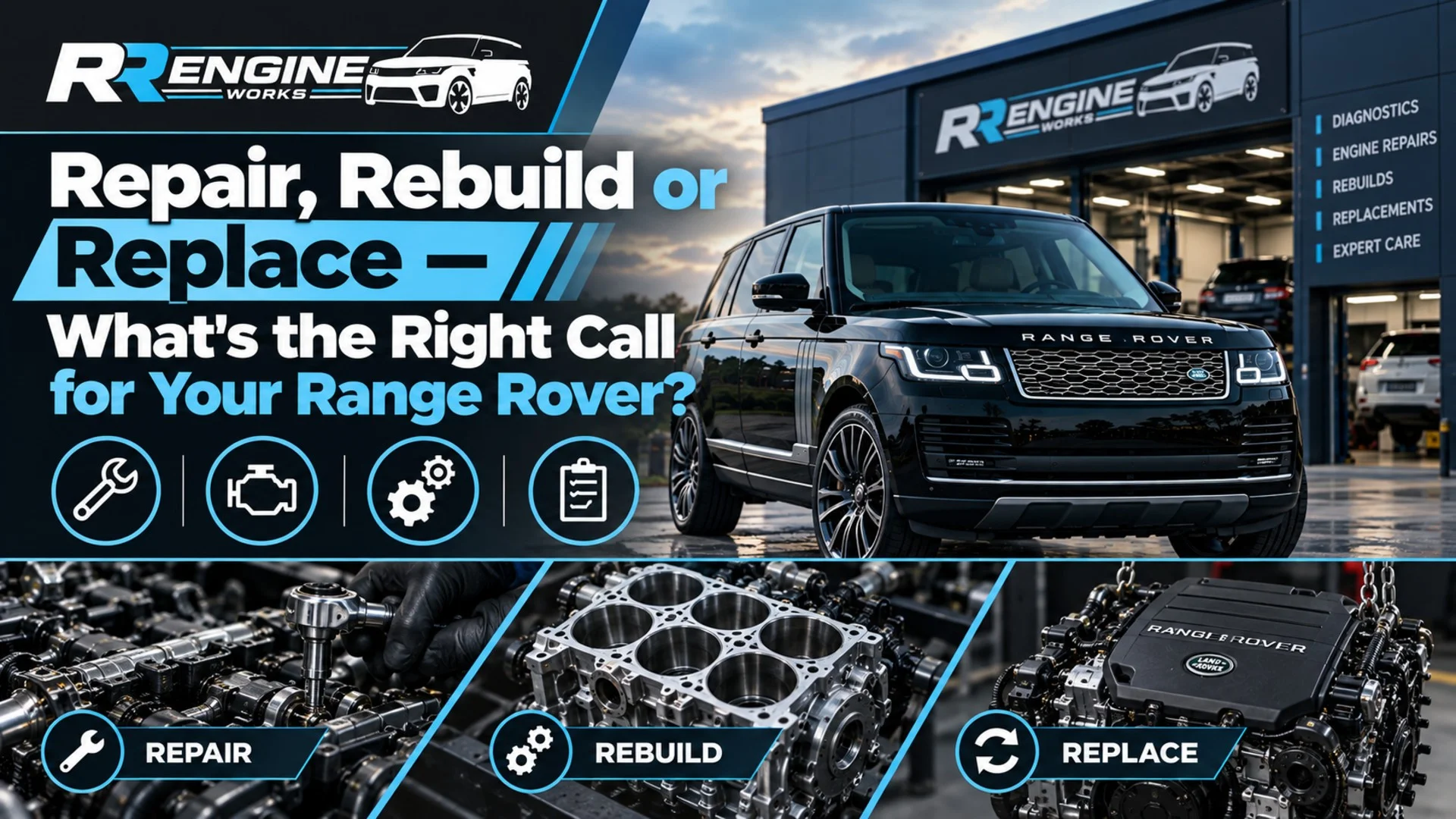
Once diagnostics confirm genuine internal damage, the next question is what to actually do about it. This is where cost, engine type, and vehicle value all come into play.
What Affects Range Rover Engine Replacement Cost
A handful of factors consistently drive the price of Range Rover engine replacement up or down:
- Engine type, a 2.0 Ingenium replacement typically costs less than a 5.0 Supercharged V8 or a TDV8, purely due to parts availability and labour complexity
- Extent of damage, an engine needing full replacement due to a seized crankshaft costs more to sort than one needing a rebuild with reusable components
- New vs reconditioned vs used engine, this is usually the single biggest swing factor in total cost (see comparison below)
- Labour and fitting, supply-and-fit pricing varies by specialist, and it's worth confirming whether ancillary parts (gaskets, coolant, sensors) are included
- Warranty terms, a longer warranty typically reflects higher confidence in the engine's condition and adds to upfront cost, but reduces your risk
Reconditioned vs Used vs New Engines, Which Is Worth It
This is one of the most searched questions among Range Rover owners facing replacement, and for good reason, the difference in price and reliability between these three options is significant.
Option | What It Means | Typical Reliability | Best For |
| Used Engine | Sourced from a donor vehicle, minimal reconditioning | Variable, depends heavily on donor mileage and history | Budget-conscious owners with an older, lower-value vehicle |
| Reconditioned Engine | Stripped, worn components replaced or machined, rebuilt to tight tolerances | High, provided the reconditioning specialist is reputable | Most owners, strong balance of cost and long-term reliability |
| Brand-New (Dealer) | Factory-new unit direct from the manufacturer | Highest, full manufacturer backing | Owners prioritising OEM specification and maximum warranty, willing to pay a premium |
For most Range Rover owners, a reconditioned engine hits the sweet spot: significantly cheaper than a brand-new dealer unit, but rebuilt with fresh bearings, seals, and often upgraded components in areas known for wear, without the uncertainty of a used engine's unknown history.
Get a Straight Answer From RR Engine Works, Grays
If any of the symptoms above sound familiar, the worst thing you can do is keep driving and hope it resolves on its own. Continued driving on a genuinely damaged engine, particularly with low oil pressure, overheating, or metal in the oil, very often turns a repairable fault into a total replacement.
Why Range Rover Owners in Essex Trust Our Diagnostics
We work exclusively with Range Rover and Land Rover engines at our workshop in Grays, Essex, from the 3.0 TDV6 and SDV6 through to the 5.0 Supercharged V8 and current Ingenium units. That focus matters. It means when you bring a car in with a knock, a smoke issue, or a warning light, we're not guessing based on general mechanical knowledge, we've seen the same fault pattern on the same engine family before.
Every diagnostic starts with proper testing, not assumption. We'd rather tell you honestly that your engine needs a £200 sensor than sell you a replacement you don't need, and that's the approach that's kept Range Rover owners across Essex and the wider region coming back to us.
Book a Diagnostic or Request a Free Quote
If your Range Rover is showing any of the warning signs covered in this guide, get it properly checked before the damage, or the cost, gets worse. Our team can run a full diagnostic, walk you through exactly what's happening under the bonnet, and give you a clear, honest quote for repair, rebuild, or replacement, whichever genuinely applies.
Get in touch with RR Engine Works today to book a diagnostic or request your free, no-obligation quote.
Frequently Asked Questions
1. How can I tell if my Range Rover engine is dying?
The clearest combined indicators are persistent knocking under load, low oil pressure warnings, overheating with unexplained coolant loss, and visible exhaust smoke. Any one of these on its own warrants a check; two or more together strongly suggest internal damage and should be diagnosed promptly.
2. What indicates problems with the Ingenium engine?
Ingenium engines (2.0-litre petrol and diesel) commonly show timing chain rattle on cold start, oil dilution issues in diesel variants, and EGR-related rough running. Genuine internal failure typically presents as persistent knocking, low compression, or metal debris in the oil.
3. Can a failing engine be repaired instead of replaced?
Often, yes. Many symptoms that look like engine failure, sensor faults, turbo issues, water pump failure, minor oil leaks, are repairable without touching the internals. A proper diagnostic (compression test, leak-down test, oil analysis) is the only reliable way to know whether repair, rebuild, or replacement is the right call.
4. What are the typical Range Rover engine problems?
The most common issues across TDV6, SDV6, SDV8 and Ingenium engines include timing chain wear, oil starvation and low oil pressure, head gasket failure leading to coolant loss, and injector or turbo-related power loss. Higher-mileage vehicles with inconsistent servicing history are more prone to these faults.
5. Should I avoid buying a Range Rover with an Ingenium engine?
Not necessarily. Early Ingenium diesel units had documented issues with oil dilution and timing chains, some of which manufacturers addressed through revised parts and software updates. A pre-purchase inspection and full service history check are the best way to assess risk on any specific vehicle.
6. How much would a Range Rover engine replacement cost?
Cost varies significantly by engine type and whether you choose a used, reconditioned, or brand-new unit. Reconditioned engines typically offer the best balance of cost and reliability for most owners. Contact us for a free, accurate quote based on your specific model and engine.