
That faint metallic rattle when you start your Range Rover on a cold morning isn't just annoying, it could be the first warning sign of a timing chain problem that, left unchecked, turns a manageable repair into a full engine rebuild. If you've searched for "range rover timing chain replacement," chances are you've either heard that noise yourself, seen a warning light pop up on the dash, or read a forum thread that left you more confused than reassured.
We get it. Timing chain issues on Range Rover and Land Rover engines, particularly the AJ133 and Ingenium units, are a known concern, and the internet is full of half-answers, outdated advice, and forum guesses. This guide cuts through that. We'll walk you through the real symptoms, what replacement actually costs, how a proper repair is carried out, and why catching this early can save you thousands of pounds down the line.
What Are the Symptoms of a Failing Range Rover Timing Chain?
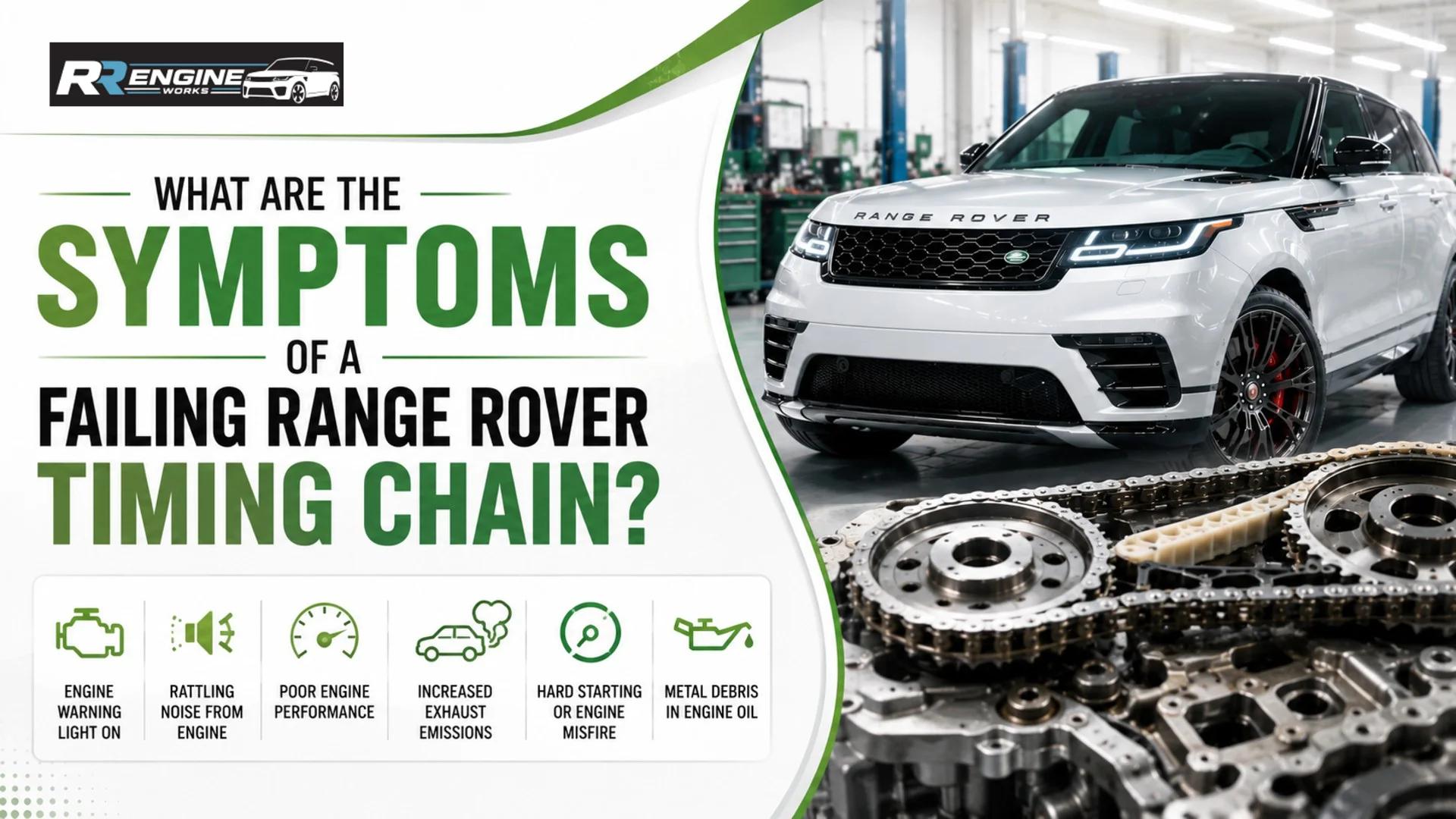
A timing chain keeps your camshaft and crankshaft moving in perfect sync, which is what allows your valves to open and close at exactly the right moment. When that synchronisation drifts, usually because the chain has stretched or the guides have worn down, your engine starts telling you about it, often well before anything catastrophic happens.
The trouble is, early symptoms are subtle enough that a lot of owners brush them off. Here's what to actually listen and watch for:
- A rattling or metallic clattering noise, especially noticeable on startup
- Rough idling or a slight vibration through the cabin at low revs
- Loss of power or hesitation during acceleration
- Misfires that come and go without an obvious pattern
- An illuminated check engine light, sometimes paired with a "reduced performance" message
- Poor fuel economy that's crept up without explanation
Any one of these on its own might not mean much. But two or three together, particularly noise combined with a warning light, is a strong signal that your timing chain, tensioner, or guides need attention.
Cold Start Rattle and Metallic Timing Chain Noise
This is the symptom we hear about most, and for good reason, it's usually the earliest indicator. The rattle happens because a stretched chain has more slack in it, so when oil pressure hasn't fully built up yet (right after startup, when the engine's cold), the chain slaps against its guides.
As the engine warms up and oil pressure rises, the tensioner takes up some of that slack and the noise often fades or disappears. That's exactly why so many owners ignore it, "it only does it for a few seconds, then it's fine." Unfortunately, that few-second rattle is doing damage every single time it happens, gradually wearing the guides and accelerating chain stretch.
We've inspected plenty of Range Rovers where the owner described the noise as "not that bad" , only for a borescope inspection to reveal guides worn down to the plastic backing. Cold start noise is your engine asking for an inspection, not something to wait out.
Check Engine Light & Fault Codes Explained (P0016, P0017, P0018, P0019)
When timing drifts far enough that your camshaft and crankshaft position sensors detect it, your ECU logs a fault code and lights up the dashboard. These are the codes most commonly linked to timing chain problems:
Fault Code | What It Means |
| P0016 | Crankshaft/camshaft correlation fault , Bank 1, Sensor A |
| P0017 | Crankshaft/camshaft correlation fault , Bank 1, Sensor B |
| P0018 | Crankshaft/camshaft correlation fault , Bank 2, Sensor A |
| P0019 | Crankshaft/camshaft correlation fault , Bank 2, Sensor B |
These codes essentially confirm that the camshaft and crankshaft are no longer rotating in the relationship the ECU expects , a direct sign of chain stretch, a slipped guide, or tensioner failure. One important caveat: these codes can occasionally be triggered by a faulty sensor rather than the chain itself, which is why proper diagnosis (not just a code reader) matters. We'll come back to that.
Can You Still Drive With a Noisy or Failing Timing Chain?
Technically, yes , for a while. Realistically, no, you shouldn't.
A timing chain that's stretched or slipping doesn't fail gracefully. If it jumps a tooth on the sprocket, or worse, snaps entirely, the pistons and valves can collide inside the engine. On an interference engine , which is what you'll find in Range Rover petrol and diesel units , that kind of contact almost always means bent valves, damaged pistons, or a scored cylinder head. At that point, you're not looking at a timing chain replacement anymore. You're looking at a full engine rebuild or replacement, which can cost five to ten times more.
If you've noticed any of the symptoms above, the safest move is to get it inspected before your next long drive, not after.
How Much Does Range Rover Timing Chain Replacement Cost?
This is usually the question that brings people to this page, so let's be direct about it. Timing chain replacement cost on a Range Rover varies quite a bit depending on the engine, how far the wear has progressed, and whether related components need replacing at the same time.
As a general guide:
- Ingenium 2.0 petrol/diesel engines: typically the more affordable end, given easier access
- AJ133 (5.0 V8 supercharged): significantly higher, due to labour-intensive access and dual timing chains
- SDV6 / TDV6 diesel V6 engines: mid-to-upper range, depending on chain and guide condition
The wide range you'll see quoted online exists because "timing chain replacement" isn't always the same job. A guide-and-tensioner refresh caught early is a very different repair to a full chain, guide, and tensioner replacement on an engine that's been rattling for months.
Cost by Model and Engine (AJ133, Ingenium, SDV6, Supercharged V8)
Different Range Rover models use different engine families, and the engine , not the model badge , is what really drives the cost:
- Range Rover Sport & Range Rover Vogue (5.0 Supercharged V8, AJ133) , complex access, twin chains, higher parts and labour cost
- Range Rover Velar & Evoque (2.0 Ingenium) , more accessible layout, generally lower labour hours
- Discovery & Discovery Sport (SDV6/TDV6, Ingenium) , cost depends on whether it's the V6 diesel or four-cylinder Ingenium unit
- Defender (Ingenium petrol/diesel) , comparable to Evoque/Velar pricing on equivalent engines
Because the AJ133 has been through several engineering revisions over the years, chain and guide durability actually varies between production years , something worth mentioning when you request a quote, since it affects whether an upgraded guide kit is available for your specific engine.
Genuine vs Aftermarket Timing Chain Kits , What's Worth Paying For
This is one area where cutting cost up front tends to cost more later. A timing chain kit typically includes the chain itself, guides, tensioner, and often the sprockets , and quality varies a lot between suppliers.
Genuine (OEM) kits are manufactured to Jaguar Land Rover's original tolerances. They cost more, but the fitment and metallurgy match what the engine was designed around.
Aftermarket kits range from genuinely solid, reputable-brand components to budget kits that stretch again within 20,000–30,000 miles. The problem is you often can't tell the difference from the outside , the failure only shows up later, as a repeat repair.
Our general recommendation: for the chain, guides, and tensioner, genuine or premium aftermarket parts from an established manufacturer are worth the extra cost. This isn't a component you want to be replacing twice.
What Affects Labour Time and Final Repair Price
A few things push labour time , and therefore price , up or down:
- Engine layout and access , some engines require more disassembly (front cover removal, engine mount adjustment, sometimes engine drop) than others
- Whether the water pump is replaced at the same time , often recommended, since it's driven by the same timing components and access is already open
- Condition of the guides and tensioner, not just the chain
- Whether ECU relearning/adaptation is required after the job (it usually is)
- Parts sourcing , genuine parts on back-order can extend turnaround, though not usually cost
A properly itemised quote should break these down individually rather than giving you a single vague figure , that's a good sign you're dealing with a specialist who actually understands the job, not just quoting a flat rate.
How We Diagnose and Replace a Range Rover Timing Chain
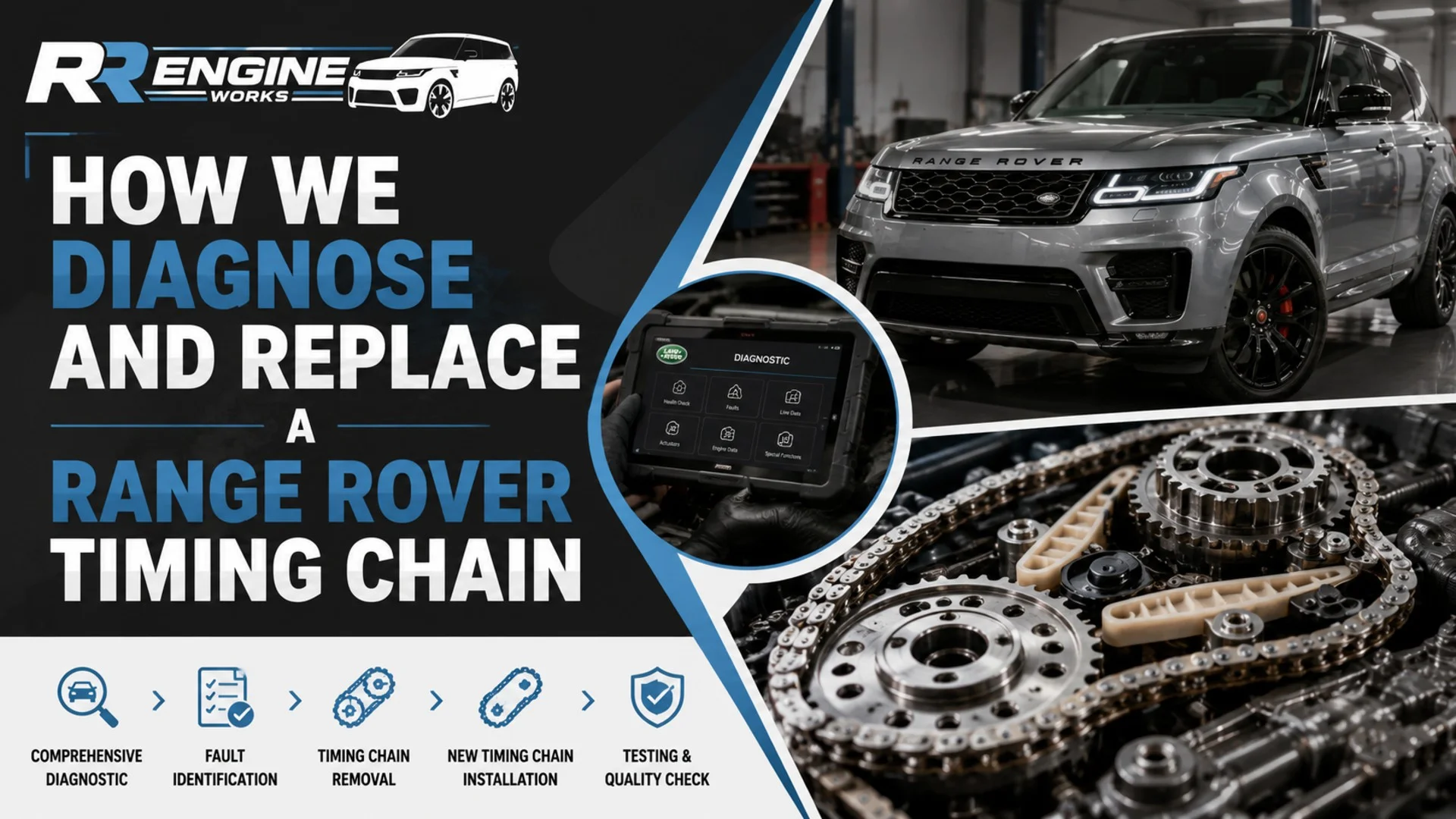
Timing chain problems get misdiagnosed more often than you'd expect. A worn cam or crank sensor can throw similar fault codes to an actual chain issue, and general garages without Land Rover-specific experience sometimes replace parts based on the code alone , without confirming the chain is genuinely the problem first.
Here's how a proper diagnosis and repair should actually go.
Diagnostics , Chain Stretch Measurement & Borescope Inspection
Before anything gets replaced, we confirm what's actually happening inside the engine. That means:
- Reading and interpreting fault codes (P0016–P0019 and related) alongside live data, not in isolation
- Oscilloscope waveform diagnosis on cam and crank sensors, to rule out a sensor fault mimicking chain wear
- Chain stretch measurement, checking the deviation against manufacturer tolerance
- Borescope inspection where needed, to visually assess guide wear without fully stripping the engine
This step matters more than people realise. We've seen vehicles quoted for a full chain kit elsewhere when the actual fault was a failing camshaft sensor , a repair that costs a fraction as much. Proper diagnostics protect you from paying for work you don't need.
The Replacement Process, Step by Step
Once chain, guide, or tensioner wear is confirmed, the repair itself typically follows this sequence:
- Draining coolant and removing ancillary components for access (varies significantly by engine)
- Removing the front timing cover
- Locking the camshafts and crankshaft in position using the correct locking tools for that specific engine , this step is critical, as even a one-tooth error will throw the valve timing out
- Removing the old chain, guides, and tensioner
- Fitting the new kit and verifying timing marks against manufacturer specification
- Replacing the water pump and any other components disturbed during the job, where appropriate
- Reassembling the timing cover and ancillaries, refilling coolant
Every engine , AJ133, Ingenium, SDV6, TDV6 , has its own specific locking tool set and timing procedure. This isn't a job where a "close enough" approach works; being even slightly out on cam or crank timing can cause exactly the drivability problems you were trying to fix.
ECU Relearning and Post-Repair Testing
Once the mechanical work is done, the job isn't finished until the ECU has been taken through an engine relearning procedure , this allows the engine control unit to recalibrate to the new components and confirm camshaft and crankshaft correlation is back within tolerance.
After that, we run the vehicle through a road test and re-check live data, confirming there are no residual fault codes and that idle, acceleration, and cold-start behaviour are all back to normal. Skipping this step is a common reason some repairs "don't quite fix it" , the mechanical work can be correct while the ECU is still flagging old adaptation values.
Recommended Maintenance After Replacement
A new timing chain will last a long time if it's looked after. A few habits make a real difference:
- Shortened oil change intervals , clean oil directly protects chain and guide life, more than most owners realise
- Using the correct oil viscosity specified for your engine, not just "whatever's cheapest"
- Periodic listening checks on cold start, so any new noise gets caught early
- Not ignoring a returning check engine light, even if the car "seems to drive fine"
Why Choose RR Engine Works for Your Timing Chain Repair?
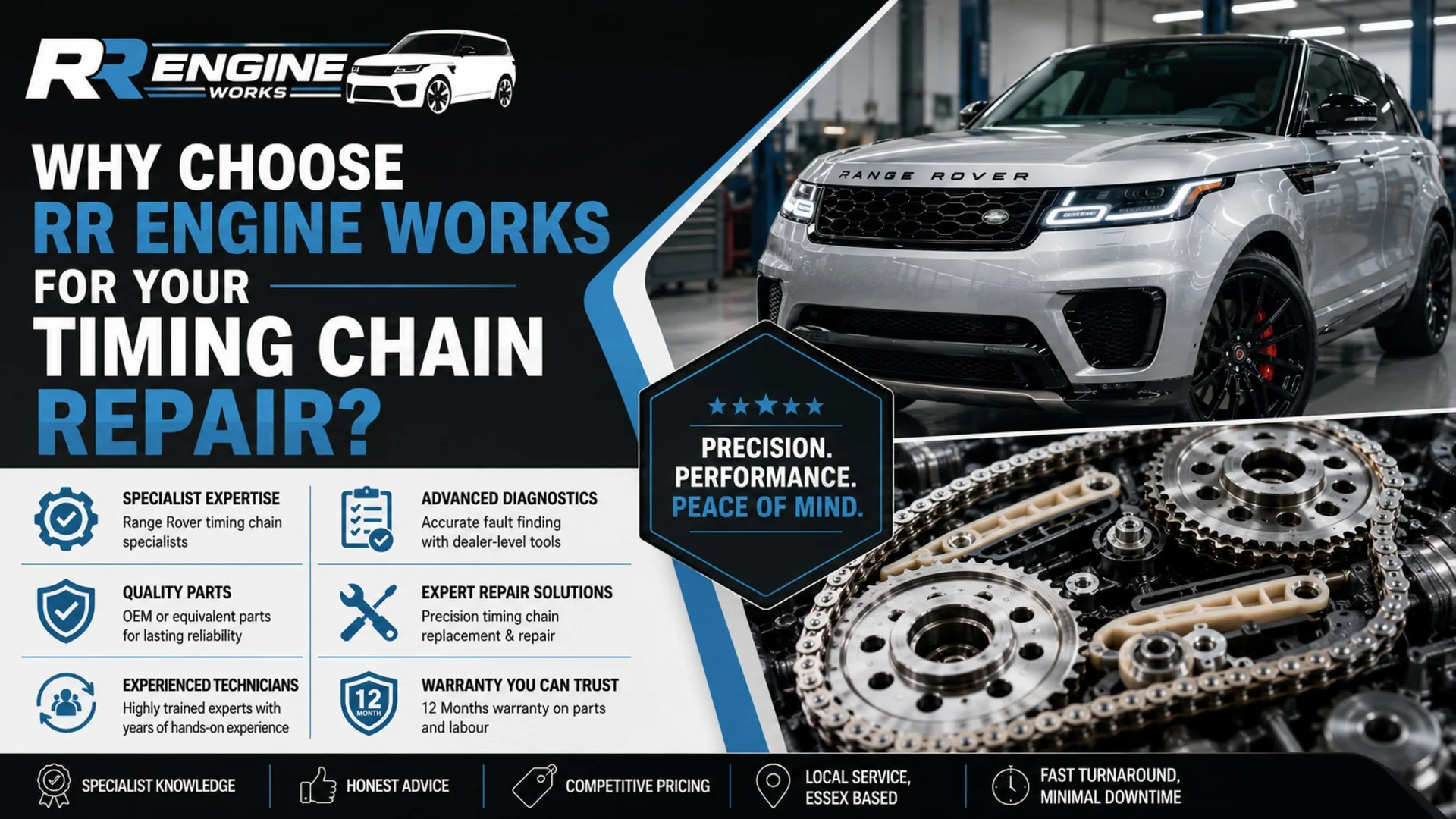
Timing chain work on a Range Rover isn't a job for a general mechanic working from a code reader and a YouTube video. It requires the correct locking tools, engine-specific timing procedures, and the diagnostic equipment to confirm the fault before any parts come off , otherwise you risk paying for a repair that doesn't actually solve the problem, or worse, introducing a new one.
Specialist Range Rover & Land Rover Engine Experience
We work on Range Rover, Range Rover Sport, Velar, Evoque, Discovery, and Defender models day in, day out, across the full engine range , AJ133, AJ126, Ingenium, SDV6, and TDV6. That focus means we've seen the specific failure patterns each engine tends to show, and we know which model years have had guide or tensioner revisions worth factoring into a repair.
Warranty-Backed Repairs Using Genuine Parts
We fit genuine or premium-grade timing chain kits, not budget components that risk repeat failure, and back our workmanship with a warranty. If you're weighing up a dealer quote against an independent specialist, this is usually the deciding factor: are you getting the same quality of parts and diagnostic process without the dealership overhead?
Book a Timing Chain Inspection at Our Grays, Essex Workshop
If your Range Rover is showing any of the symptoms covered in this guide , cold start rattle, a check engine light, rough idling, or reduced performance , the most cost-effective thing you can do is get it inspected before it gets worse. We're based at Unit 1 Hedley Ave, Grays, RM20 4EL, and we're happy to walk you through what we find, with no pressure to book work you don't need.
Get in touch with RR Engine Works today for a proper diagnostic and a transparent, itemised quote for your timing chain replacement.
Frequently Asked Questions
What are the symptoms of a failing timing chain? The most common signs are a metallic rattling noise on cold start, rough idling, misfires, reduced power, and a check engine light , often with fault codes P0016 to P0019.
How much does timing chain replacement cost on a Range Rover? Cost depends heavily on the engine (Ingenium, AJ133, SDV6, or TDV6), the extent of wear, and whether the water pump or other components are replaced at the same time. Contact us for a quote specific to your model and mileage.
Can I drive with a noisy timing chain? You can in the short term, but it's not advisable. A stretched or slipping chain can jump timing or fail completely, which on an interference engine typically causes serious internal damage well beyond the original repair cost.
Does Range Rover have common timing chain problems? Yes , certain AJ133 and early Ingenium engines have known histories of chain stretch and guide wear, which is why regular inspection and using quality replacement parts matters.
Is timing chain failure covered under warranty? This depends on your vehicle's age, mileage, and warranty terms. Some cases have been covered under manufacturer goodwill policies; we can advise on this during your inspection.
Should the water pump be replaced at the same time as the timing chain? In many cases, yes. Since access to the water pump often overlaps with the timing chain job, replacing it at the same time saves on future labour costs.
Can a stretched timing chain be repaired instead of replaced? No , a stretched chain itself cannot be "un-stretched." However, if caught early, sometimes only the guides and tensioner need replacing alongside the chain, rather than more extensive engine work.
How long does timing chain replacement take? This varies by engine, from a day for more accessible layouts to several days for engines requiring extensive disassembly for access, such as the AJ133.
A timing chain rattle rarely fixes itself, and waiting rarely saves money. If your Range Rover is showing any of the warning signs above, get it checked properly before it turns into a bigger repair. Contact RR Engine Works for an honest diagnostic and a clear, itemised quote , we're based in Grays, Essex, and we're here to help you make the right call for your engine.