
Your Range Rover L322 just dropped into limp mode on the M25, and now you're sat on the hard shoulder wondering if you've bought yourself a £4,000 problem or a £40 sensor fault. If that sounds familiar, you're not alone, and you're in the right place.
The L322, built between 2002 and 2012, is one of the most capable luxury 4x4s Land Rover has ever made. It's also one of the most misunderstood when it comes to reliability. Some of that reputation is earned. A lot of it isn't. The truth sits somewhere in the middle, and it depends heavily on which engine is sitting under your bonnet.
This guide walks through exactly what goes wrong, why it happens, what it costs to fix, and how to tell a minor niggle from a genuine engine-out job, engine by engine, symptom by symptom.
What Are the Most Common Range Rover L322 Engine Problems?
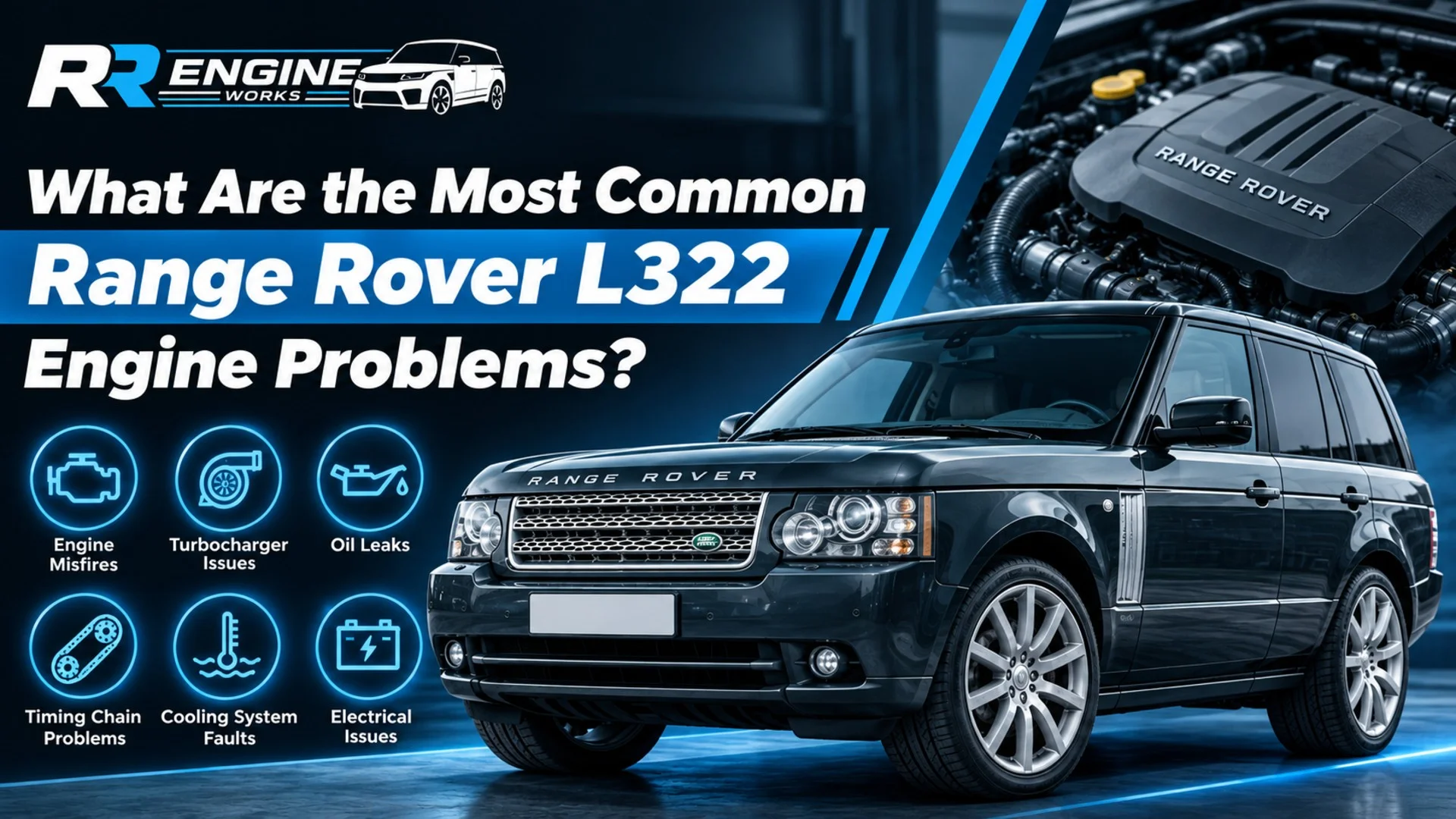
The L322 was built across three distinct engineering eras, and each one has its own personality when it comes to faults. Land Rover switched engine suppliers twice during the model's life, which means "Range Rover L322 engine problems" isn't really one topic, it's four separate conversations depending on your build year.
Here's the quick breakdown before we go deeper:
Era | Years | Engines | Reputation |
| BMW era | 2002–2005 | 4.4 V8 (M62), 3.0 Td6 (BMW M57) | Solid diesel, cooling-prone petrol |
| Jaguar era | 2006–2009 | 4.4 V8, 4.2 Supercharged, 3.6 TDV8 | Strong performance, turbo/timing weak points |
| Late era | 2010–2012 | 4.4 TDV8, 5.0 V8 | Refined but expensive to fix when it goes wrong |
BMW 4.4 V8 (M62) Cooling & Timing Chain Problems (2002–2005)
The early petrol V8 is a BMW-sourced M62 unit, and it's fundamentally a strong engine, but the cooling system is its Achilles' heel. Plastic coolant components (thermostat housings, water pump impellers, radiator end tanks) were common on M62 engines of this era, and two decades on, most originals have already failed or are close to it.
Timing chain guides can also wear on higher-mileage examples, producing a rattle on cold start that quietens down once oil pressure builds. It's tempting to ignore this noise, don't. Left unchecked, worn guides can eventually let the chain skip, which turns a £300 repair into a engine-out rebuild.
Jaguar 4.4 V8 & 4.2 Supercharged Engine Faults (2006–2009)
From 2006, Land Rover switched to Jaguar-sourced AJ V8 engines, the naturally aspirated 4.4 and the supercharged 4.2. Both are genuinely strong units, but each has a signature complaint.
- 4.2 Supercharged: listen for whining or rattling from the supercharger coupling and drive belt. It's wear-and-tear rather than catastrophic failure, but ignoring it can damage the supercharger pulley over time.
- 4.4 V8: generally the more dependable petrol option of the whole L322 range, though timing chain tensioners can still wear on high-mileage, poorly serviced examples.
3.6 TDV8 Diesel Turbo, EGR & Crankshaft Problems (2006–2009)
This is where things get more serious. The 3.6 TDV8 is a capable, torquey diesel, but it's earned a reputation for three specific issues:
- Turbo actuator failure, often the first sign of trouble, showing up as sudden loss of power or the engine dropping into limp mode.
- EGR valve and swirl flap problems, carbon build-up over time restricts airflow and triggers rough idling or reduced performance.
- Crankshaft and bottom-end wear, the more serious of the three, and the one worth taking seriously if you're buying used. Not every 3.6 TDV8 suffers this, but it's common enough that specialists flag it as a known risk area, particularly on engines with patchy service history.
4.4 TDV8 Timing Chain & Coolant Crossover Pipe Failures (2010–2012)
The later 4.4 TDV8 (AJD-V8) is smoother and more powerful, but it introduced two problems that owners now discuss constantly in forums and specialist workshops alike:
- Timing chain tensioner collapse, sometimes nicknamed the "death rattle" because of the metallic noise it makes on start-up as the tensioner loses hydraulic pressure. Left unaddressed, this can lead to complete timing chain failure.
- Coolant crossover pipe leaks, a plastic pipe buried under the intake manifold that's prone to cracking with age and heat cycles. It leaks coolant slowly, often without an obvious puddle under the car, which is why it's sometimes called the "silent killer", by the time the temperature gauge moves, damage may already be underway.
Common L322 Fault Codes to Watch For (P0299, P0016, P0017)
If your L322 has thrown the engine management light, a diagnostic scan will usually point you in the right direction:
- P0299, turbo/boost underboost condition, commonly linked to actuator failure on the TDV8 engines.
- P0016 / P0017, crank/camshaft position correlation faults, frequently associated with timing chain stretch or tensioner wear.
- P0008, engine position system performance fault, another timing-related code seen on later TDV8 units.
These codes don't diagnose the problem on their own, they point a qualified technician toward where to look. Anyone quoting a repair price from a fault code alone, without a proper diagnostic scan and live data check, isn't giving you the full picture.
How Do You Know If Your Range Rover L322 Engine Is Failing?
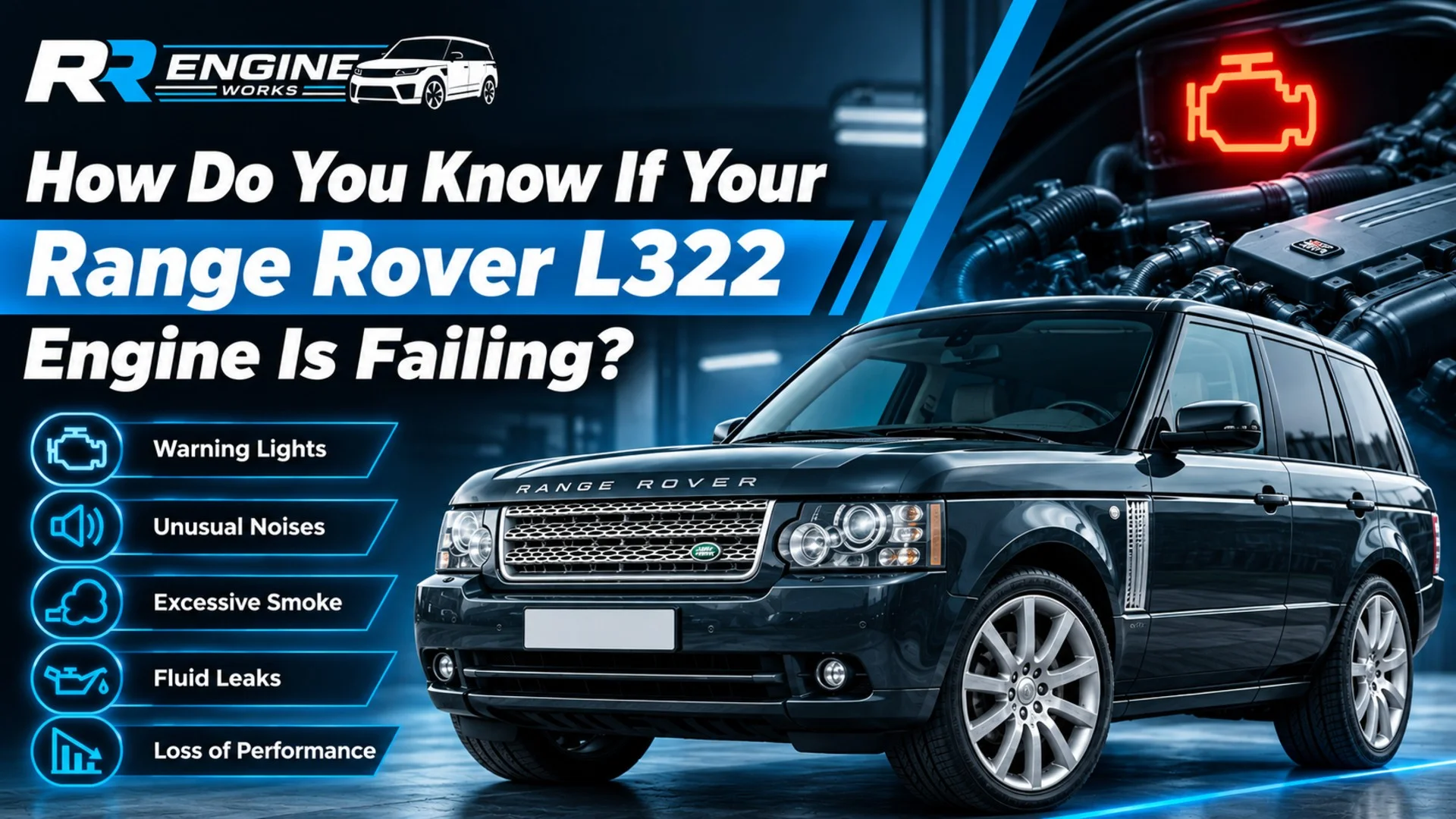
Engines rarely fail without warning. They usually give you weeks, sometimes months, of small signals before something breaks completely. Knowing what to listen and look for can be the difference between a routine repair and a five-figure rebuild.
Why Is My Range Rover L322 Losing Power or Going Into Limp Mode?
Loss of power and limp mode are the L322's most common cries for help, and they're almost always the engine management system protecting itself. Common triggers include:
- Turbo actuator failure (TDV8 diesels)
- A failing MAF or MAP sensor
- Boost leaks from a cracked intercooler hose
- EGR valve stuck open or closed
Limp mode caps engine power and revs deliberately, it's not a fault in itself, it's a safety response. Driving in limp mode won't usually cause further damage, but ignoring the underlying cause will.
Why Is My L322 Overheating or Losing Coolant?
If your temperature gauge is climbing or you're topping up coolant more than you should be, don't wait for it to get worse. Likely culprits include:
- A failed water pump or thermostat (common on the BMW-era 4.4 V8)
- A cracked coolant crossover pipe (4.4 TDV8, 2010–2012)
- A leaking radiator hose or expansion tank
Overheating is one of the few problems on this list that can escalate from "annoying" to "engine-out rebuild" in a single journey. If the temperature needle moves into the red, stop the car as soon as it's safe to do so.
Why Does My L322 Rattle or Knock on Cold Start?
A rattle that appears on start-up and fades after a few seconds is a classic timing chain symptom, worn guides or a failing tensioner losing oil pressure momentarily. It's most commonly reported on:
- High-mileage BMW-era 4.4 V8 engines
- 4.4 TDV8 engines from 2010 onward
It's easy to dismiss because it often disappears within seconds. But this is exactly the kind of noise that specialists recommend investigating early, before a stretched chain turns into a skipped tooth and bent valves.
Why Is My L322 Smoking, Misfiring or Idling Rough?
- Black smoke on diesels usually points to an overfuelling issue or a failing injector.
- Blue smoke suggests oil is being burned, often from worn piston rings or valve seals on higher-mileage engines.
- White smoke can indicate coolant entering the combustion chamber, a sign to get the car checked immediately, as it may point toward head gasket or crossover pipe failure.
- Misfires and rough idling are frequently caused by ignition coils or spark plugs on petrol V8s, or EGR/swirl flap carbon build-up on diesels.
None of these symptoms confirm a diagnosis on their own. They're a starting point for a proper diagnostic scan with live data, not a reason to assume the worst, and not a reason to ignore it either.
Which Range Rover L322 Engine Is Most Reliable?
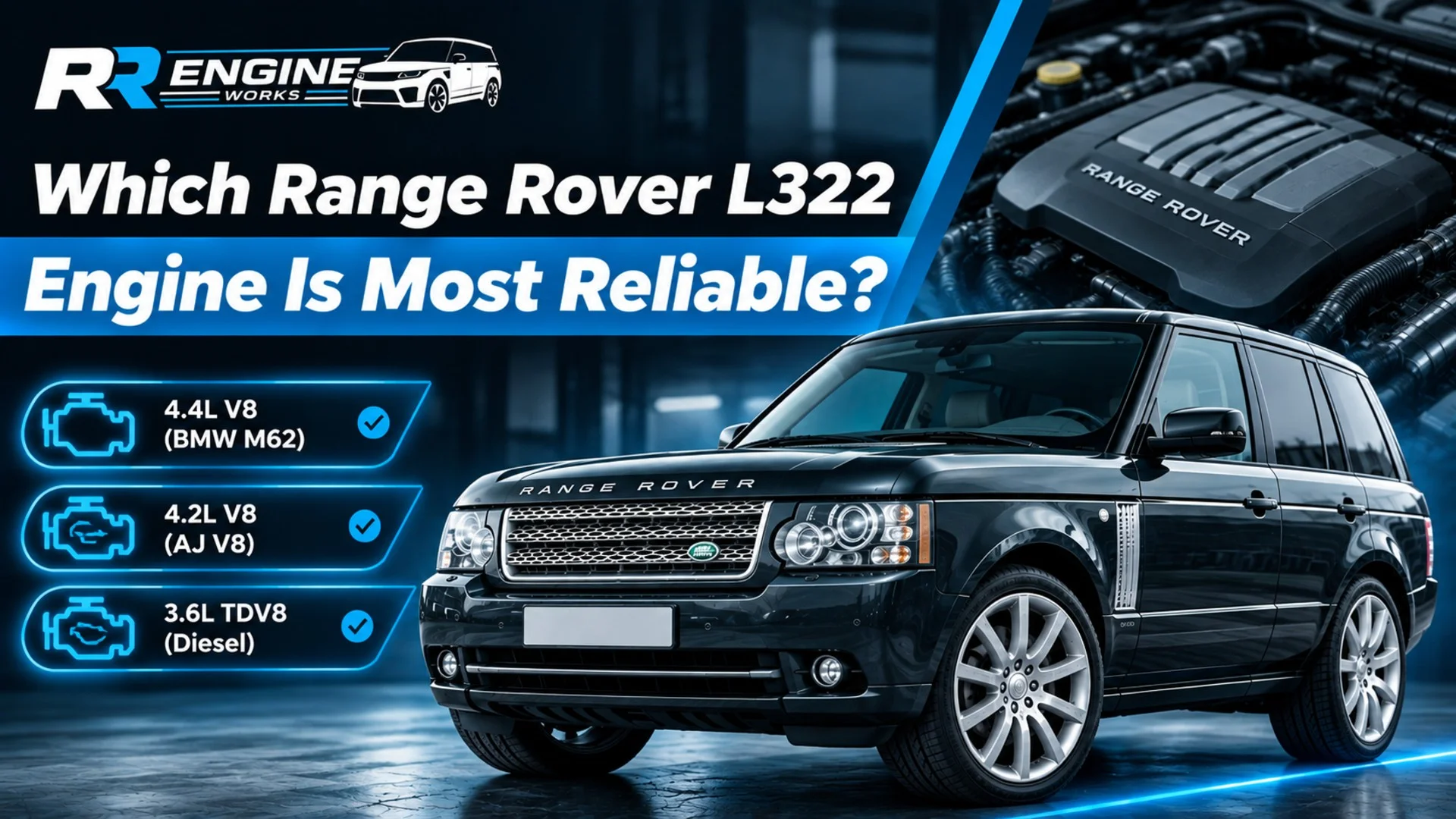
If you're buying a used L322, or deciding whether to keep repairing the one you have, this is the question that actually matters.
Petrol V8 vs TDV8 Diesel, Which Holds Up Better Long-Term?
There's no single correct answer here, it depends on use case, mileage, and how well the car has been maintained.
Factor | Petrol V8 (4.4 / 4.2 SC) | TDV8 Diesel (3.6 / 4.4) |
| Typical strength | Fewer major failure points once cooling is sorted | Strong torque, good for towing/long distance |
| Common weak spot | Cooling system (BMW-era), supercharger wear (4.2) | Turbo actuator, timing chain, crankshaft (3.6) |
| Running costs | Higher fuel consumption | Better fuel economy, pricier parts when things fail |
| Best suited to | Lower-mileage, occasional use | High-mileage motorway driving with full service history |
In broad terms, the naturally aspirated Jaguar 4.4 V8 (2006–2009) has one of the strongest reliability reputations across the whole L322 range. The 3.6 TDV8, despite being popular for its performance, carries the most well-documented risk profile, particularly around crankshaft and bottom-end wear on neglected examples.
Best and Worst L322 Engines to Buy
If reliability is your priority, here's how the range generally stacks up:
- Strongest reputation: Jaguar 4.4 V8 petrol (2006–2009), 4.2 Supercharged (with maintained supercharger coupling)
- Solid but cooling-dependent: Early BMW 4.4 V8 (2002–2005), fine once plastic cooling components are replaced with upgraded parts
- Higher risk if neglected: 3.6 TDV8, excellent when well maintained, but the engine most associated with expensive bottom-end failures
- Powerful but pipe-prone: 4.4 TDV8 (2010–2012), strong performance, but budget for the coolant crossover pipe and timing chain tensioner as maintenance items, not just repairs
What to Check Before Buying a Used Range Rover L322 (Service History, Turbo, Coolant System)
A full, documented service history matters more than the specific model year. Before buying, it's worth checking:
- Full service records, particularly for timing chain and cooling system work
- Cold start behaviour, listen for rattles before the engine warms up
- Coolant level and condition, milky or discoloured coolant is a red flag
- Turbo response under load on diesel models, hesitation or delayed boost can indicate actuator wear
- A pre-purchase diagnostic scan, not just a visual inspection
A car with 100,000 miles and full history is almost always a safer buy than one with 60,000 miles and no paperwork.
Range Rover L322 Engine Repair, Rebuild & Replacement Costs (UK)
Once you know what's wrong, the next question is always the same: is this worth fixing, and what should it cost?
Repair vs Rebuild vs Full Engine Replacement, Which Does Your L322 Need?
- Repair, suitable for isolated component failures: a turbo actuator, a coolant pipe, a water pump. Usually the most cost-effective route if caught early.
- Rebuild, appropriate when internal wear is present but the engine block itself is sound. Common for timing chain damage caught before it causes secondary harm.
- Replacement, necessary when there's significant internal damage, such as bottom-end failure on a neglected 3.6 TDV8, or when a rebuild would cost close to the price of a quality reconditioned unit.
The right choice depends on the specific fault, the engine's overall condition, and sometimes the car's value relative to the repair bill. This is exactly the kind of decision that benefits from an honest, independent assessment rather than a guess based on symptoms alone.
How Much Does L322 Engine Diagnostics, Repair & Replacement Cost?
Costs vary depending on the engine, the fault, and whether genuine, OEM, or reconditioned parts are used, but as a general guide:
Job | Typical Cost Range (UK) |
| Diagnostic scan | £60–£120 |
| Turbo actuator repair/replacement | £400–£900 |
| Coolant crossover pipe replacement | £350–£700 |
| Timing chain/tensioner repair | £800–£1,800 |
| Full engine rebuild | £3,000–£6,000+ |
| Reconditioned engine supply & fit | £4,500–£8,000+ |
These figures are indicative and will vary based on parts availability, labour rates, and your specific vehicle specification. A proper quote always follows a diagnostic assessment, never a phone-based guess.
Why Choose RR Engine Works for Your L322 Engine Repair (Grays, Essex)
At RR Engine Works, based at Unit 1, Hedley Ave, Grays, RM20 4EL, we work on Range Rover L322 engines every week, not occasionally. That matters, because these engines don't behave like generic 4x4 powertrains. Knowing the difference between a harmless cold-start rattle and an early-warning timing chain fault takes hands-on experience with this specific model, across all three engine eras.
We diagnose before we quote. That means live data, proper fault code interpretation, and a clear explanation of what's actually wrong, not just a parts list. Whether you need a turbo actuator replaced, a coolant crossover pipe swapped out, or a full reconditioned engine supplied and fitted, we'll tell you honestly whether it's worth repairing, rebuilding, or replacing.
Book a Diagnostic Check or Request a Free, No-Obligation Quote
If your L322 is showing any of the symptoms covered in this guide, a rattle on start-up, a loss of power, a coolant warning, or an engine light that won't clear, don't wait for it to get worse. Get in touch with RR Engine Works for a proper diagnostic assessment and an honest, no-obligation quote.
Frequently Asked Questions
Is the Range Rover L322 reliable?
The L322 can be genuinely reliable when it's been properly maintained, but reliability varies significantly by engine. The Jaguar-sourced 4.4 V8 petrol has one of the strongest reputations, while the 3.6 TDV8 diesel carries more risk if service history is patchy.
What is the most common Range Rover L322 engine problem?
Cooling system failures on early BMW-era petrol V8s and timing chain tensioner wear on later TDV8 diesels are among the most frequently reported issues, alongside turbo actuator failure on the 3.6 TDV8.
Which L322 engine is best, petrol V8 or TDV8 diesel?
It depends on how you use the car. The petrol V8 tends to have fewer major failure points once cooling components are sorted, while the TDV8 diesel offers better fuel economy and towing performance but carries a higher risk of expensive turbo and bottom-end issues if neglected.
Are Range Rover L322 parts expensive?
Parts costs vary widely. Wear items like coolant hoses and sensors are reasonably affordable, but major components such as turbochargers, timing chain kits, and reconditioned engines represent a significant investment, which is why catching problems early matters.
Should I be worried about TDV8 crankshaft failures?
It's a known risk area on the 3.6 TDV8 specifically, particularly on engines with irregular servicing. It's not inevitable, but it's worth a proper inspection and service history check before buying, and regular oil changes if you already own one.
Why is my L322 dashboard flickering or going blank?
This is usually an electrical fault rather than an engine problem, often linked to connector corrosion or a failing instrument cluster, but it's worth having checked alongside any engine diagnostics, since electrical gremlins can sometimes mask or mimic engine-related warning signs.
Final Thoughts
The Range Rover L322 isn't the unreliable money pit its reputation sometimes suggests, but it isn't a car that forgives neglect either. Know your engine, watch for the early warning signs, and treat service history as seriously as mileage, and there's no reason an L322 can't comfortably clear 150,000 miles.
If yours is already showing symptoms, the worst thing you can do is wait. Get it properly diagnosed, understand your options, and make the repair-or-replace decision with real information, not guesswork.
Get in touch with RR Engine Works today for a diagnostic check or a free, no-obligation quote on your Range Rover L322 engine.