
You've just seen the odometer tick past 120,000 miles, and now you're wondering if your Range Rover's diesel engine is living on borrowed time. Or maybe you're eyeing a used Range Rover Sport with 160,000 miles on the clock and can't decide if it's a bargain or a ticking time bomb.
Either way, you're asking the right question. Because with a Range Rover diesel, mileage alone never tells the full story.
We've stripped down, diagnosed, and rebuilt hundreds of Range Rover and Land Rover diesel engines, from the older TDV6 units to the modern Ingenium range, and if there's one thing we've learned, it's this: two engines with identical mileage can have completely different fates. One keeps running smoothly past 250,000 miles. The other needs a rebuild at 90,000. The difference almost always comes down to how the engine was treated, not how far it's travelled.
This guide breaks down exactly what determines Range Rover diesel engine lifespan, how the different engine families compare, what actually causes failure, and what to check before you buy, or before you decide whether to repair, rebuild, or replace.
How Long Does a Range Rover Diesel Engine Last?
A well-maintained Range Rover diesel engine can realistically last between 150,000 and 250,000 miles, and in some cases considerably longer. Owners running SDV6 and TDV8 units with full service histories have reported reliable performance well past 200,000 miles, while neglected engines, even relatively young ones, can develop serious problems before hitting 100,000.
There's no getting around it: Range Rover diesel engine lifespan is not a fixed number. It's a range, and where your engine lands within that range depends on maintenance discipline, driving conditions, and which specific engine sits under the bonnet.
What Is the Average Range Rover Diesel Engine Lifespan?
Across the engine families Land Rover has used since the early 2000s, the average lifespan before major mechanical work becomes necessary tends to sit somewhere between 150,000 and 200,000 miles. That's the point at which timing components, turbochargers, and emissions systems typically start showing their age, not necessarily failing outright, but demanding closer attention.
This average shifts depending on the era of the vehicle. Older TDV6 and TDV8 units from the L322 and early L405 generations were mechanically simpler and, in many cases, more forgiving of minor maintenance lapses. The newer Ingenium diesels are more efficient and cleaner-running, but they're also more sensitive to oil quality, short journeys, and delayed servicing.
Is There a "Standard" Mileage You Can Rely On?
No, and any article that gives you one flat number without context is oversimplifying things. Engine longevity depends on a combination of factors working together, not mileage in isolation.
Think of it this way: two identical Range Rover Sport diesels leave the factory with the same engine. One spends its life on motorway commutes with oil changed every 8,000 miles. The other does short school-run trips and gets serviced only when a warning light appears. By 100,000 miles, these are effectively different engines, even though the mileage counter says otherwise.
Can a Range Rover Diesel Reach 200,000 or 300,000 Miles?
Yes, and it happens more often than most people expect. We regularly see SDV6 and TDV8 engines still running strong past 200,000 miles, particularly in vehicles that have spent most of their life on longer motorway journeys rather than stop-start city driving.
Reaching 300,000 miles is rarer but not unheard of, especially in commercial or high-mileage private use where the engine has been serviced meticulously and any early warning signs were addressed immediately rather than ignored. The key pattern we see in these high-mileage survivors is consistency: regular oil changes, prompt attention to fault codes, and no history of running the engine hard while low on oil or coolant.
Range Rover Diesel Engine Lifespan by Engine Type
Not all Range Rover diesel engines are built the same, and lifespan expectations shift significantly depending on which unit you're dealing with. Here's how the main engine families compare.
Engine | Typical Longevity | Main Longevity Risks |
| 2.7 TDV6 | Moderate, high variation | Timing chain wear, oil sludge |
| 3.0 TDV6 | High variation | Crankshaft bearings, timing system, lubrication |
| 3.0 SDV6 | Often 180,000+ miles with proper care | Crankshaft wear, timing chain, cooling system |
| 3.6 TDV8 | High-mileage examples common | Turbocharger wear, timing components, cooling |
| 4.4 TDV8 | Strong long-term durability | Cooling system, timing chain, turbo |
| 4.4 SDV8 | High-mileage potential | EGR issues, cooling, turbocharger |
| 2.0 Ingenium | Highly dependent on maintenance and driving style | Oil dilution, DPF blockage, timing chain |
| 3.0 Ingenium | Newer generation, longevity still emerging | DPF/emissions system, servicing consistency |
How Long Does the 3.0 TDV6 Engine Last?
The 3.0 TDV6 is capable of high mileage, but it's also known for developing crankshaft and bearing issues if oil changes are stretched beyond recommended intervals. With disciplined servicing, many owners see 150,000–200,000 miles without major intervention. Skip a few oil changes, though, and problems can surface far earlier.
How Long Does the 3.0 SDV6 Engine Last?
The SDV6 is generally regarded as one of the more durable diesel options in the Range Rover lineup. Engines maintained on schedule frequently exceed 180,000 miles, with some well-documented examples running considerably further. Its main vulnerabilities are timing chain wear and crankshaft bearing degradation, both of which are strongly linked to oil change frequency.
How Long Does the 4.4 TDV8 / SDV8 Engine Last?
These larger V8 diesels were built for torque and towing capability, and they tend to reward that robustness with strong long-term durability when properly cared for. High-mileage TDV8 and SDV8 examples aren't unusual, though cooling system health and turbocharger condition become increasingly important as mileage climbs.
How Long Does the Ingenium (2.0L / 3.0L) Diesel Last?
The Ingenium diesel is the newest generation and, frankly, the most maintenance-sensitive. It's a technically advanced engine with tighter tolerances, and it doesn't tolerate neglect the way older units sometimes could. Oil dilution, where diesel fuel used in DPF regeneration cycles contaminates the engine oil, is a known concern if oil isn't changed on schedule. With consistent servicing and a driving pattern that allows proper DPF regeneration, though, the Ingenium is a capable, long-lasting engine.
What Factors Actually Affect Range Rover Diesel Engine Lifespan?
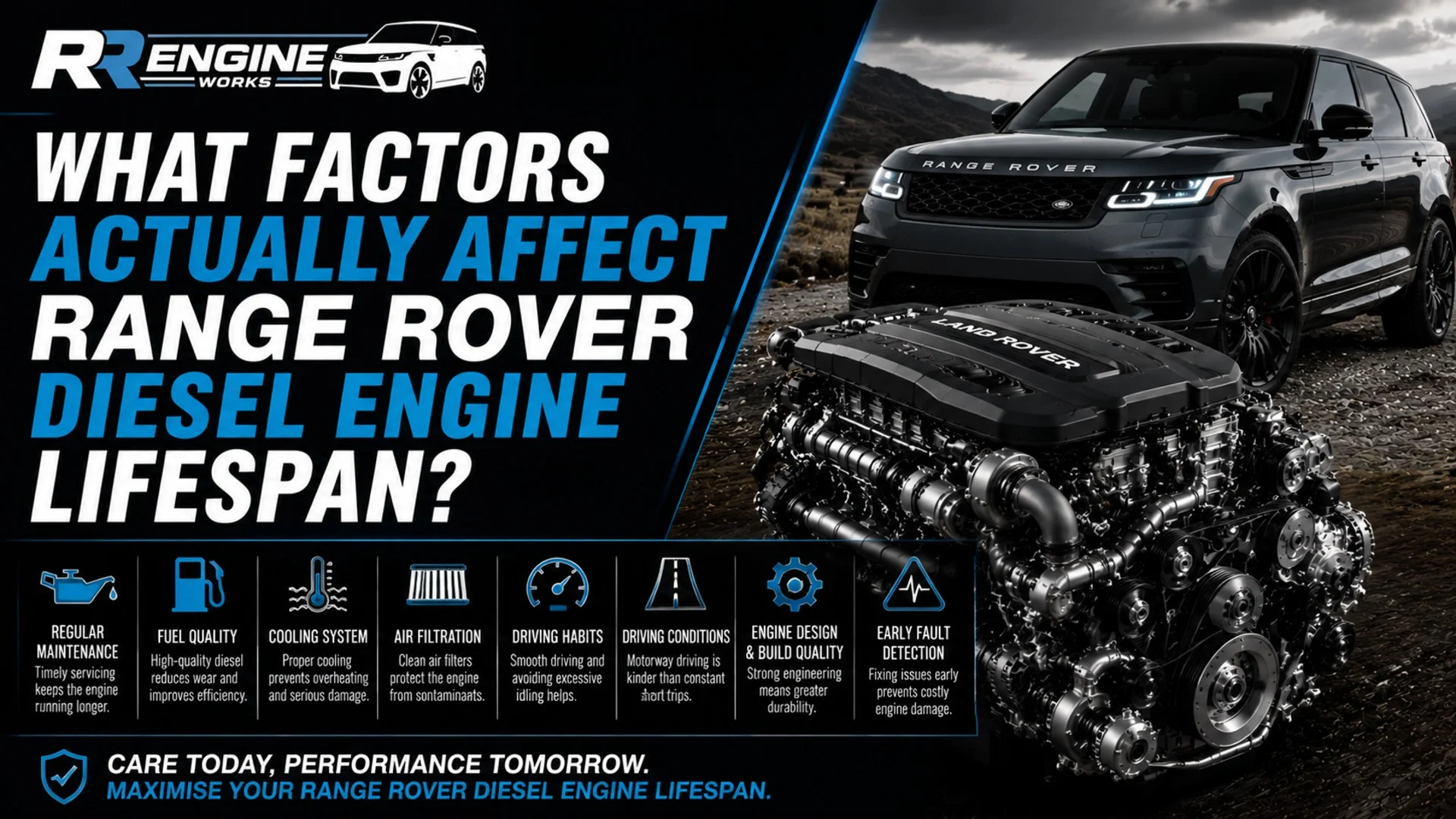
Mileage gets all the attention, but it's rarely the real story. The factors below have a far bigger impact on how long your Range Rover diesel engine will actually last.
Does Service History Matter More Than Mileage?
In almost every case we deal with, yes. A Range Rover diesel with 150,000 miles and a complete, documented service history is a safer bet than one with 90,000 miles and gaps in its maintenance record.
Here's why this matters so much:
- Consistent oil changes prevent sludge buildup and protect crankshaft bearings from premature wear
- Timely timing chain and belt inspections catch stretch or wear before it causes catastrophic engine damage
- Regular diagnostic checks flag developing EGR, turbo, or injector issues while they're still cheap to fix
- Documented cooling system servicing reduces the risk of overheating-related head gasket or cylinder head damage
A neglected low-mileage engine can already be carrying hidden wear that a well-maintained high-mileage engine simply doesn't have. Service history tells you what the mileage counter can't.
Do Short Journeys Reduce Diesel Engine Life?
Yes, and this is one of the most underestimated factors in diesel engine longevity. Diesel engines, and particularly modern ones fitted with a diesel particulate filter (DPF), need sustained higher-speed running to reach the temperatures required for proper DPF regeneration.
If your Range Rover mostly does short school runs or stop-start city driving, you're likely dealing with:
- Incomplete DPF regeneration cycles, leading to soot buildup and eventual blockage
- Increased oil dilution, particularly in Ingenium engines, as unburned fuel finds its way into the sump
- EGR valve fouling from carbon deposits that never get burned off
- Engine components running below optimal operating temperature for extended periods
If your driving pattern is mostly short trips, taking your Range Rover on a 30–40 minute motorway run every couple of weeks can make a genuine difference to long-term engine health.
How Does DPF Regeneration Affect Long-Term Reliability?
The DPF traps soot particles from exhaust gases, and periodically it needs to burn off that accumulated soot in a process called regeneration. When this happens correctly, it's largely invisible to the driver. When it doesn't, because journeys are too short or too infrequent, soot builds up, the filter clogs, and the engine management system starts compensating in ways that can accelerate wear elsewhere, including through increased fuel dilution of engine oil.
A blocked DPF isn't just an emissions problem. Left unaddressed, it can contribute to reduced engine performance, increased fuel consumption, and in more serious cases, forced regeneration cycles that place additional strain on the engine.
What Actually Kills a Range Rover Diesel Engine?
Based on the engines that come through our workshop for rebuild or replacement, failure almost never comes down to one single cause. It's usually a combination of neglected maintenance and unresolved warning signs. The most common culprits include:
Timing Chain and Timing Belt Neglect
Timing components stretch and wear over time. On engines with timing chains, poor oil quality or extended service intervals accelerate this wear significantly. If the chain skips or fails, the resulting valve and piston damage can be catastrophic and expensive to fix, often the difference between a routine repair and a full engine rebuild.
Crankshaft and Bearing Wear
This is a well-documented weak point on certain TDV6 and SDV6 units, and it's directly linked to oil change frequency and oil quality. Bearings rely on a consistent, clean oil film to prevent metal-on-metal contact. Stretch the oil change interval, and that protective film breaks down faster than it should.
Turbocharger, EGR, and Oil Dilution Issues
Turbochargers spin at extremely high speeds and depend on clean oil and proper lubrication to survive. Combine turbo wear with a struggling EGR valve and diesel-diluted oil, and you've got a recipe for reduced performance, increased engine load, and accelerated internal wear, even before any single component fails outright.
Is a High-Mileage Range Rover Diesel Worth Buying?
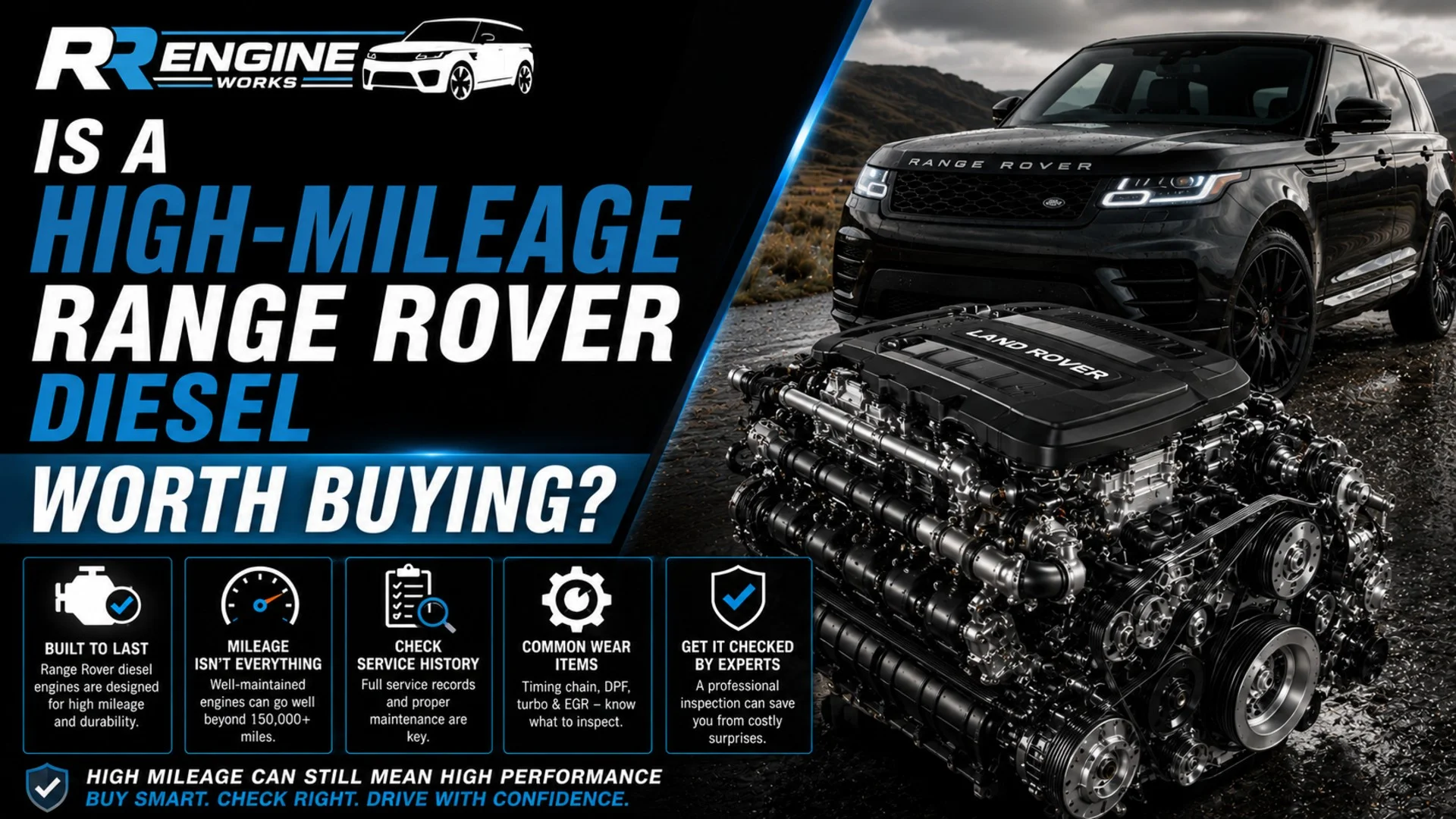
If you're shopping for a used Range Rover diesel, the question isn't really "how many miles is too many?" It's "what's the story behind those miles?"
Is 100,000 Miles High Mileage for a Range Rover Diesel?
Not particularly. For most Range Rover diesel engines, 100,000 miles is still relatively early in the engine's realistic service life, provided it's been maintained properly. At this mileage, you should still expect strong performance, with the main focus being on verifying that early maintenance, oil changes, timing checks, has been kept up.
Is 150,000–200,000 Miles Too Much to Buy?
Not automatically, but it does raise the stakes on due diligence. At this mileage range, a Range Rover diesel with full service history and no red flags can still represent excellent value and years of further use. The same mileage on a vehicle with patchy records deserves far more scepticism.
This is where the buying decision genuinely comes down to evidence, not just numbers on a dashboard.
High-Mileage Buying Checklist (100k / 150k / 200k+ Framework)
Use this framework depending on where the vehicle sits on the mileage scale:
Around 100,000 miles, check:
- Timing belt or chain service history
- Oil change frequency and records
- DPF and EGR condition
- Turbocharger performance (listen for whining or lag)
- Cooling system condition
- Transmission service history
Around 150,000 miles, require:
- Complete, documented service history, not partial
- A full diagnostic scan for stored or pending fault codes
- Assessment of timing system condition and any past replacement
- DPF and EGR health check
- Evidence of consistent oil quality and change intervals
200,000+ miles, focus primarily on:
- Overall maintenance history and any previous engine work
- Documented repairs, including parts and labour records
- Current engine condition via diagnostic scan and physical inspection
- Chassis, transmission, suspension, and electrical system condition
- Realistic total cost of ownership going forward, including likely upcoming work
Warning Signs of Engine Failure Before You Buy or Sell
Whether you're buying or preparing to sell, these warning signs deserve serious attention:
- Excessive exhaust smoke, particularly blue (oil burning) or thick black smoke under load
- Unusual knocking or rattling noises, especially on cold start
- Warning lights for oil pressure, coolant temperature, or engine management
- Rough idle or hesitant acceleration, which can point to injector or turbo issues
- Coolant loss without an obvious external leak, often a sign of head gasket trouble
- Persistent DPF or EGR warning lights, indicating emissions system strain
None of these signs alone means the engine is finished. But ignoring them is exactly how a manageable repair turns into a full engine rebuild.
How to Extend Your Range Rover Diesel Engine's Life, And What to Do If It's Reaching the End
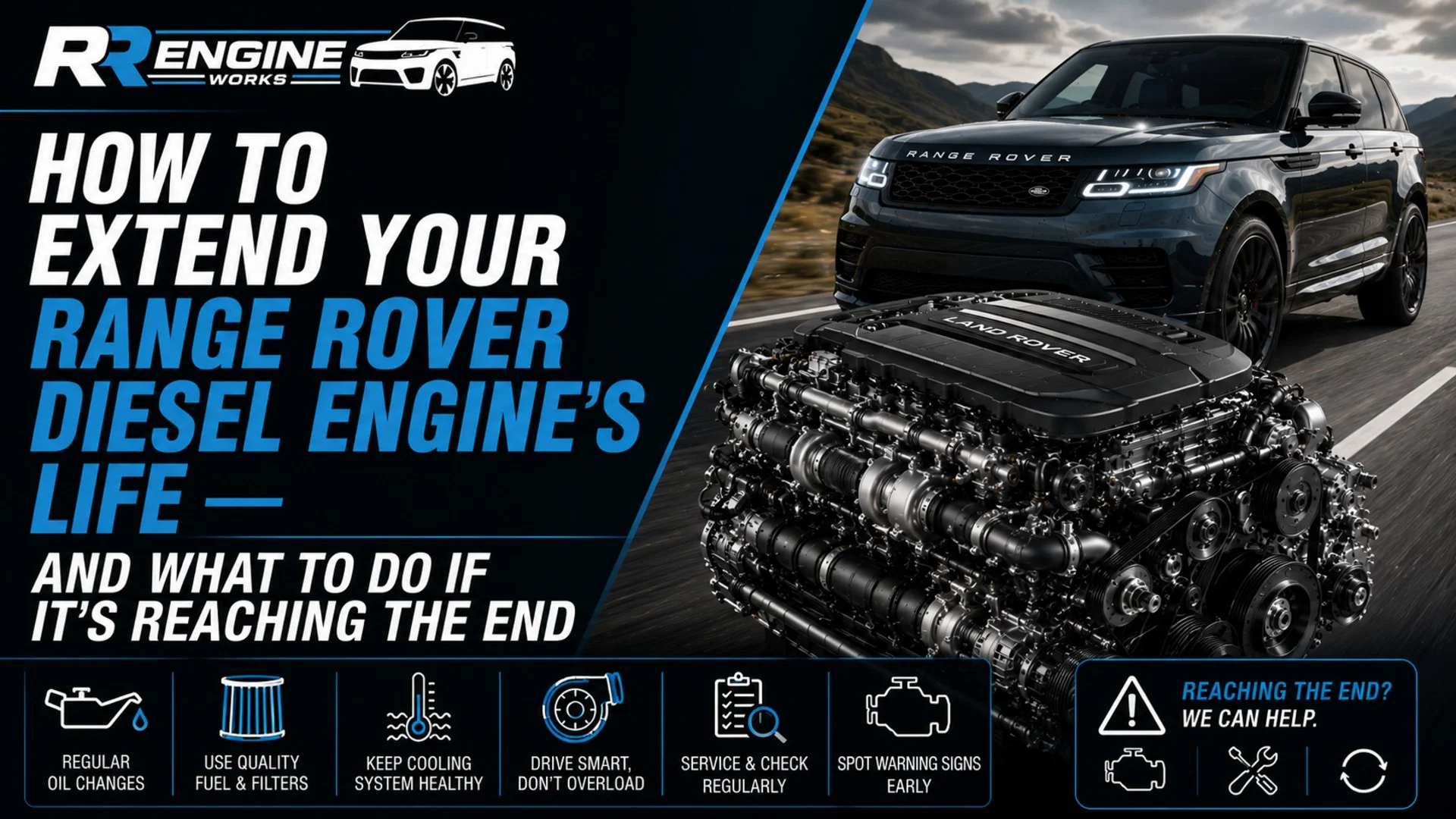
The good news is that Range Rover diesel engine lifespan is largely within your control. The habits that separate a 100,000-mile engine on its way out from a 250,000-mile engine still going strong are entirely manageable.
Preventive Maintenance Tips to Maximise Engine Life
A few consistent habits go a long way toward protecting your investment:
- Stick to oil change intervals, and use the correct specification oil for your engine, not just whatever's cheapest
- Take regular longer journeys to allow proper DPF regeneration, especially if most of your driving is short trips
- Address warning lights immediately rather than waiting to see if they clear on their own
- Have the cooling system checked periodically, since overheating is one of the fastest routes to major engine damage
- Get timing chains and belts inspected at manufacturer-recommended intervals, particularly on engines known for timing-related wear
- Keep transmission and ancillary servicing up to date, since a healthy engine still depends on the systems around it
When Should You Repair, Rebuild, or Replace the Engine?
This depends on the extent of the damage, the age and mileage of the vehicle, and the cost comparison between each option.
- Repair makes sense when the issue is isolated, a failed sensor, a leaking gasket, a single component fault, and the rest of the engine is in good condition.
- Rebuild becomes the better option when there's internal damage, such as worn bearings or a compromised cylinder, but the engine block itself is salvageable and the vehicle still has strong long-term value.
- Replacement is usually the most sensible route when the engine has suffered catastrophic failure, a snapped timing chain causing valve damage, for example, or when repair costs start approaching the value of a replacement unit.
Reconditioned vs. Used Range Rover Diesel Engines, Which Is Better?
This is a genuinely common dilemma, and the right answer depends on your priorities.
A used engine (sourced from a donor vehicle) is typically the cheaper option upfront, but it comes with unknown history, you're inheriting whatever wear and maintenance habits the previous vehicle had, often with limited documentation.
A reconditioned engine has been stripped, inspected, and rebuilt with new or refurbished components in the areas most prone to wear, bearings, seals, gaskets, and often the timing system. It costs more than a straight used engine but comes with far greater confidence in long-term reliability, and typically a proper warranty to back it up.
For most owners planning to keep their Range Rover for several more years, a reconditioned engine offers the better balance of cost and peace of mind.
Why Choose RR EngineWorks for Your Range Rover Engine Needs
We specialise specifically in Range Rover and Land Rover diesel engines, not general automotive repair with Range Rovers as an afterthought. That focus means we've seen the full range of TDV6, SDV6, TDV8, SDV8, and Ingenium engine issues, and we know exactly what to look for, what to test, and what genuinely needs replacing versus what can be repaired.
Whether you need a full diagnostic assessment, a professional rebuild, or a reconditioned replacement engine supplied and fitted, we work to get your Range Rover back on the road reliably, not just quickly.
Nationwide Delivery & Local Support (Grays, Essex)
We're based at Unit 1 Hedley Ave, Grays, RM20 4EL, and we support customers across the UK with reconditioned and replacement engine supply, alongside full workshop services for local customers. Whether you're nearby in Essex or further afield, we can help you get the right engine solution for your Range Rover.
Frequently Asked Questions
How long does a Range Rover diesel engine last?
Most Range Rover diesel engines last between 150,000 and 250,000 miles with proper maintenance, though this varies significantly by engine type and how consistently the vehicle has been serviced.
Which Range Rover diesel engine is most reliable?
The SDV6 and TDV8 engines are generally regarded as among the more durable options, particularly when serviced on schedule. The Ingenium diesel is efficient and capable but more sensitive to maintenance lapses and short-journey driving.
Is a high-mileage Range Rover diesel worth buying?
Yes, provided it comes with a full, documented service history and passes a proper diagnostic and physical inspection. Service history matters more than the mileage figure alone.
Can a Range Rover diesel engine last 300,000 miles?
It's possible, particularly with SDV6 and TDV8 engines that have had consistent maintenance and regular longer-distance driving, though it's less common than reaching the 200,000-mile mark.
Do short journeys damage a Range Rover diesel engine?
Yes. Short trips prevent proper DPF regeneration and can contribute to oil dilution and EGR fouling, particularly in Ingenium engines. Regular longer drives help offset this.
Should I repair, rebuild, or replace my Range Rover diesel engine?
It depends on the severity of the fault. Isolated issues usually warrant repair, internal wear often calls for a rebuild, and catastrophic failure typically makes replacement, often with a reconditioned engine, the most cost-effective option.
Final Thoughts
There's no single number that defines Range Rover diesel engine lifespan, and if you've read this far, you already understand why. Engine family, service history, driving habits, and how quickly problems get addressed all matter far more than the figure on the odometer.
The reassuring part is that you have real control over the outcome. Consistent maintenance, prompt attention to warning signs, and the occasional longer journey to keep the DPF happy can be the difference between an engine that struggles at 100,000 miles and one that's still going strong at 250,000.
If your Range Rover's engine is already showing signs of trouble, or you're weighing up repair versus rebuild versus replacement, get in touch with our team at RR Engine Works. We'll give you an honest assessment and the right solution, whether that's a repair, a full rebuild, or a reconditioned replacement engine supplied and fitted with confidence.