
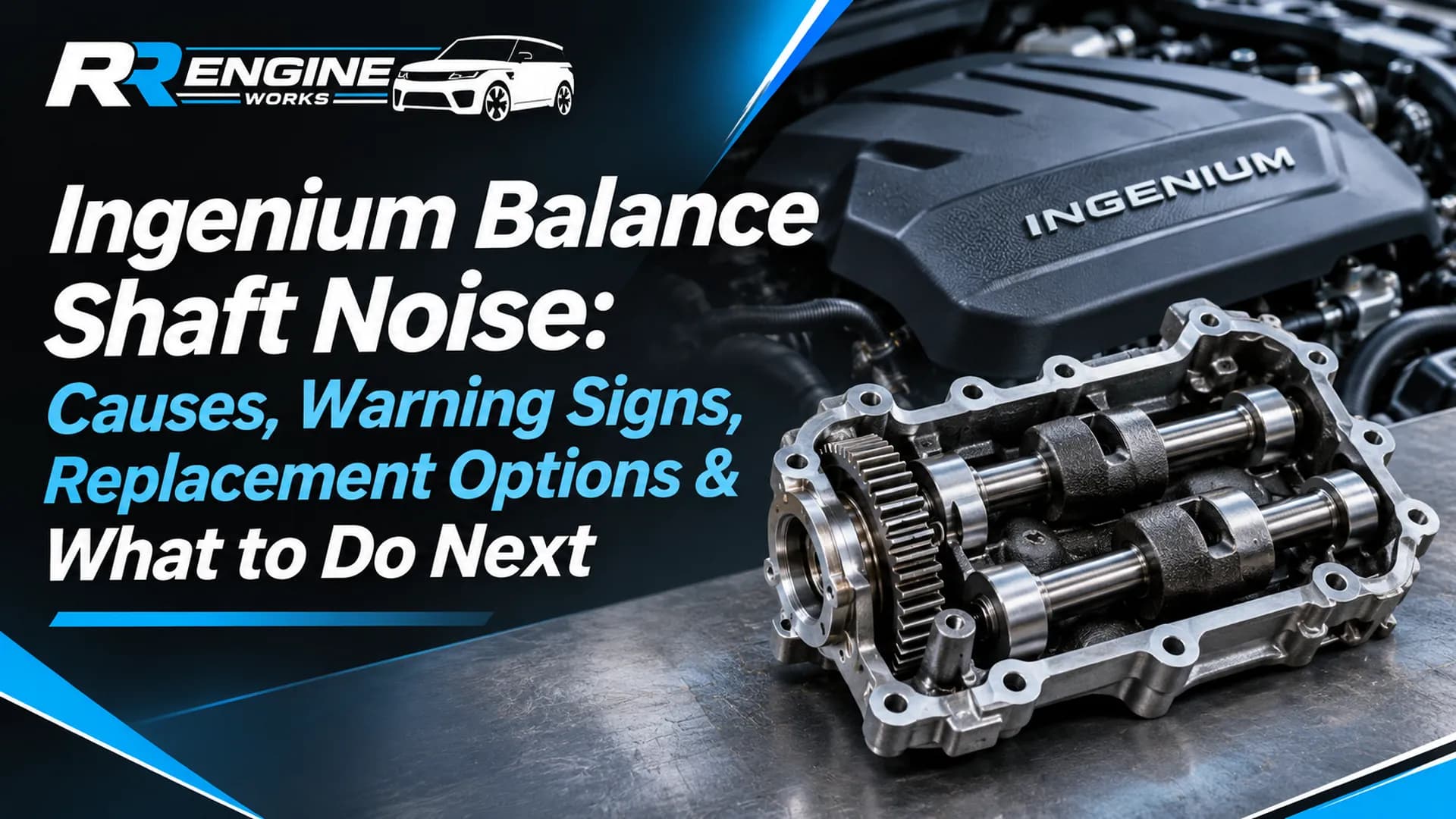
A whine at idle. A hum that climbs as you accelerate. A rattle on a cold start that you swear wasn't there last month. You search for Ingenium balance shaft noise, and the forums give you ten different answers, most of them guesses.
This guide separates what's known from what's folklore. At RR Engine Works in Grays, Essex, we handle JLR engines every week. We'll explain what the balance shaft does, how to tell its noise from timing chain rattle, what your repair options are and when to stop driving.
Quick answer: balance shaft noise on the 2.0 Ingenium is usually a symptom of wear or an oil-related problem, and it is easy to confuse with timing chain rattle. Get the noise diagnosed before you spend any money on parts.
What Is the Ingenium Balance Shaft and Why Does It Make Noise?
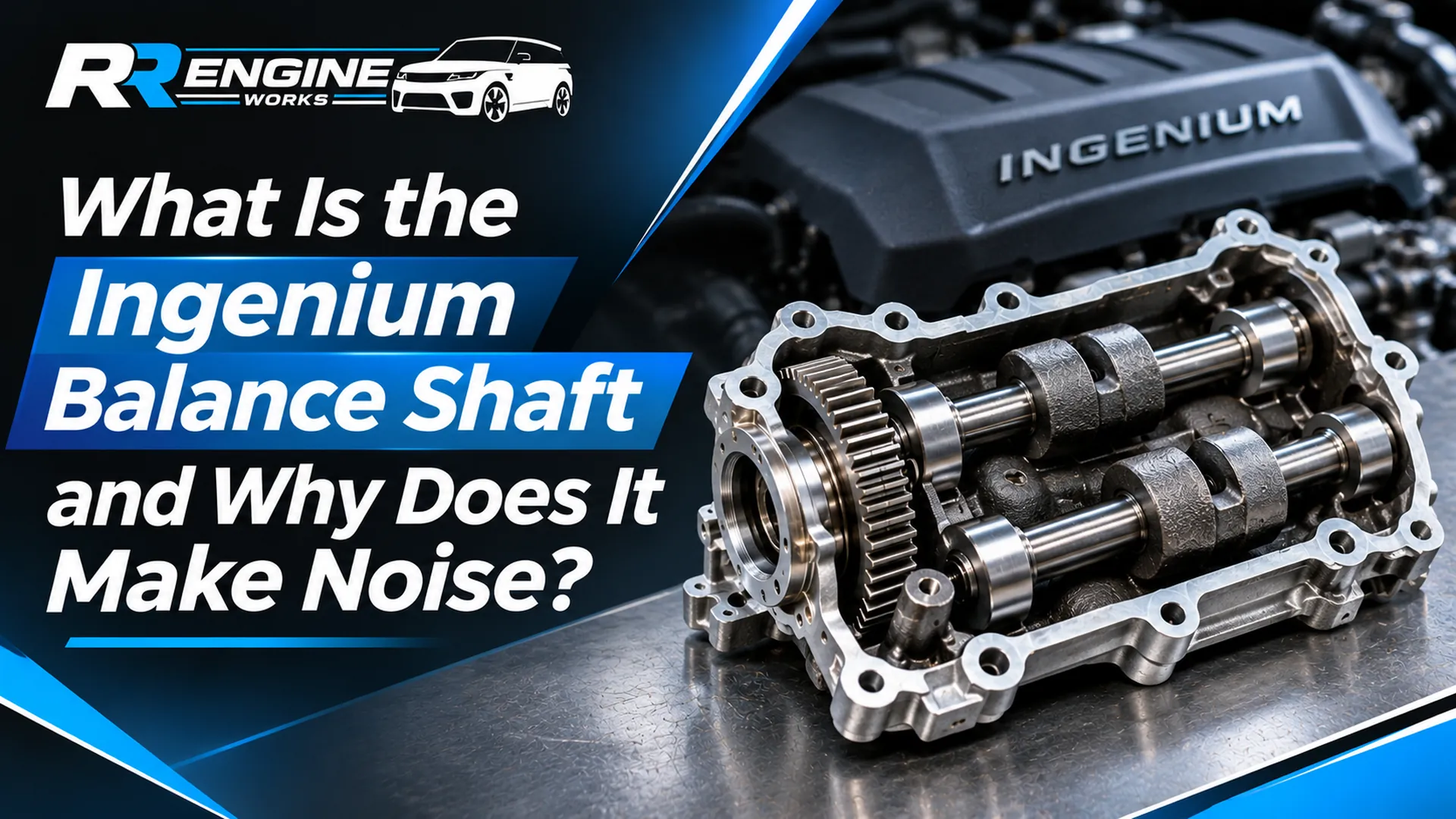
Most owners have never heard of the balance shaft until it starts making a noise. Here is what it does and why it can become a problem.
What Does the Balance Shaft Do in the 2.0 Ingenium Engine?
A four-cylinder engine is naturally rough. The pistons move up and down in pairs, which creates a secondary vibration you would feel through the seat and steering wheel. Balance shafts are weighted shafts that spin to cancel that vibration out. On the 2.0 Ingenium balance shaft setup, they are part of why this engine feels as smooth as it does.
Because they spin fast and rely on clean, correctly pressured oil, they are sensitive to wear, oil condition and drive problems. When something is off, you hear it.
A few comparisons help clear up the confusion in search results:
- Balancer shaft in a bike: many motorcycle engines use a single balancer shaft for the same reason, to reduce vibration. The principle is identical, but the engine, layout and failure patterns are completely different.
- M271 balance shaft timing: this is a Mercedes four-cylinder topic. The M271 has its own procedures, so don't apply anything you read about it to an Ingenium.
- What is a balance shaft belt? Some older engines drive their balance shafts with a toothed belt that has a service interval. On the 2.0 Ingenium, we treat the balance shaft drive as an internal engine component rather than a cambelt-style service item. Confirm the exact drive arrangement for your engine code before ordering anything. Our guide to Ingenium engine codes shows how.
What Happens If the Balance Shaft Belt or Drive Fails?
This is a common search: what happens if the balance shaft belt breaks? The honest answer is that it depends on the engine's design.
In general, a failed or worn balance shaft drive can cause:
- Noise and vibration, often a whine, hum or buzz that wasn't there before
- Loss of refinement, with a rougher idle and shaking at certain revs
- Wider internal damage if broken or loose components reach other moving parts
Because the outcome varies, don't guess. If the noise is new, get the engine inspected before it travels further than it needs to.
How Do You Diagnose Ingenium Balance Shaft Noise? Whine, Rattle, Idle and Acceleration
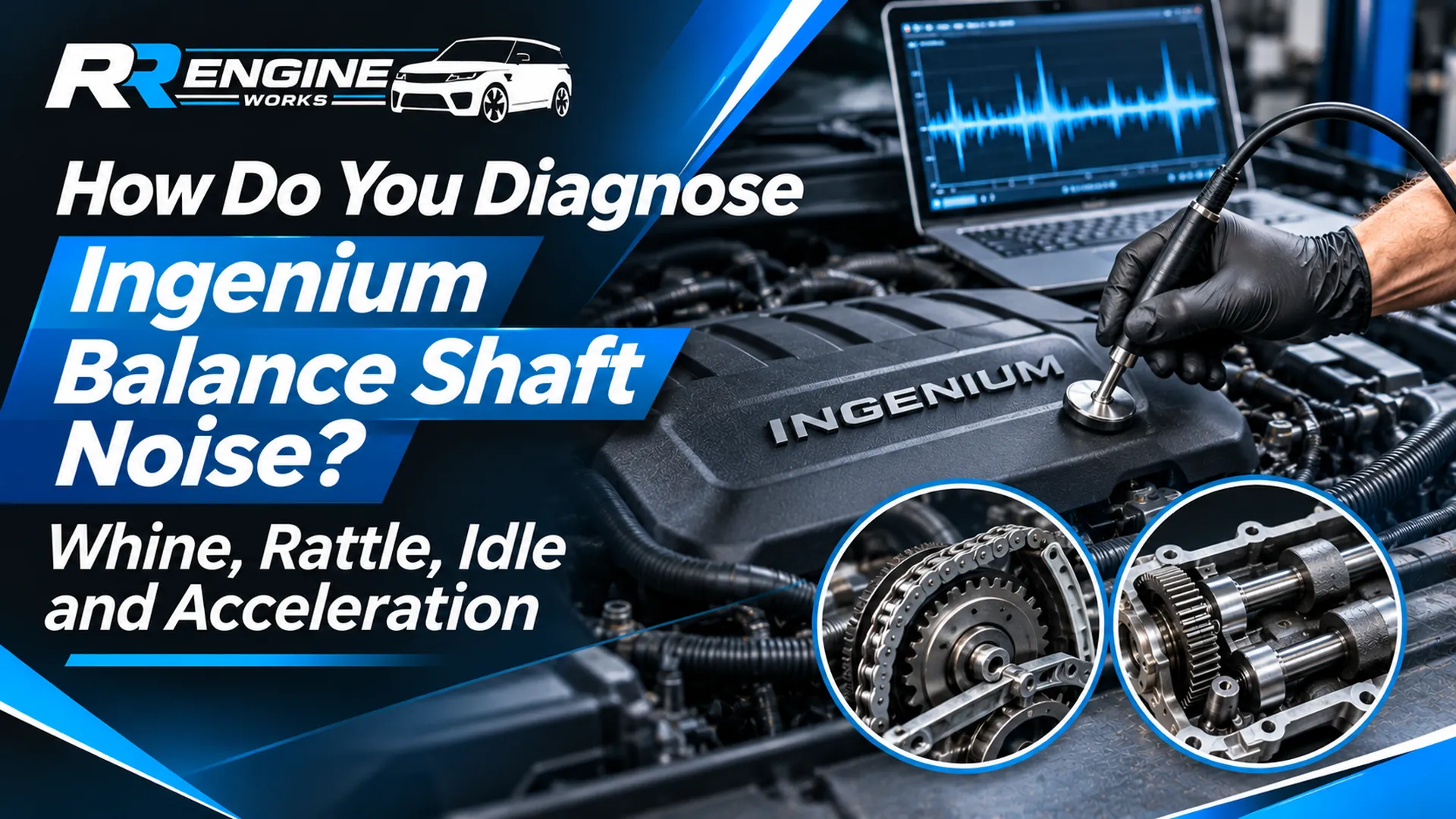
Diagnosis is where most owners waste money. A noise that sounds like one thing is often something else, and replacing the wrong part fixes nothing.
What Does Ingenium Balance Shaft Whine Sound Like at Idle and When Accelerating?
Ingenium balance shaft whine is typically described as a steady, mechanical whining or humming that rises and falls with engine speed. Here is how the symptoms generally break down:
When you hear it | What it often sounds like | Possible cause | Urgency |
| At idle | Low hum or whine, sometimes with extra vibration | Balance shaft bearing wear, oil pressure or condition issue | Medium: book an inspection |
| When accelerating | Whine or drone that rises with revs | Drive wear, bearing wear, or a noise from another ancillary | Medium–High |
| Cold start only | Short rattle or whine that fades once warm | Oil starvation at start-up, tensioner or chain issue | Medium: watch closely |
| Constant, getting louder | Persistent whine, hum or knock | Advancing wear | High: stop and call a specialist |
Use this as a guide only. Many noises sound alike from inside the cabin, and a stethoscope or proper diagnosis on the bench tells a different story.
A typical workshop scenario: an owner brings in a Discovery Sport convinced the Ingenium balance shaft noise at idle means an expensive internal fault. On inspection, the real culprit was a worn ancillary drive component, a much cheaper fix. Another customer assumed "just an ancillary noise" and drove on for weeks, and the engine came back with real bottom-end damage. Both cases show why diagnosis comes first.
Is It Balance Shaft Noise or Timing Chain Rattle?
This is the question that matters most, because the repairs and costs are very different.
- Timing chain rattle is usually a sharper, rattling or slapping noise, most noticeable on a cold start or when the engine is under load. On the Ingenium, the chain sits at the rear of the engine, so it can be hard to pinpoint from the driver's seat.
- Balance shaft noise tends to be a smoother whine or hum that follows engine speed.
If you hear a continuous rattle, a knock, or you see an oil pressure warning, stop driving and call a specialist. Do not keep going to see if it gets worse. A repairable timing problem can become a write-off very quickly.
Do 2.0 and 3.0 Ingenium Engines Share These Noise Problems?
Not equally. The 2.0 Ingenium engine problems we see most often involve the four-cylinder units, including oil dilution, timing chain wear and turbo faults, alongside noise concerns.
For 3.0 Ingenium engine problems, we'll be straight with you: the six-cylinder is newer, so long-term high-mileage evidence is still building. A six-cylinder is also inherently smoother than a four, so it has a different balancing design. Anyone claiming to know exactly how those engines will age is guessing. What we can say is that oil quality, service intervals and the right kind of driving matter just as much.
If you also own a Discovery Sport or similar, our guide to Land Rover Discovery 2.0 diesel engine problems covers the wider fault list.
Ingenium Balance Shaft Replacement and Removal: Repair Options, Risks and Costs
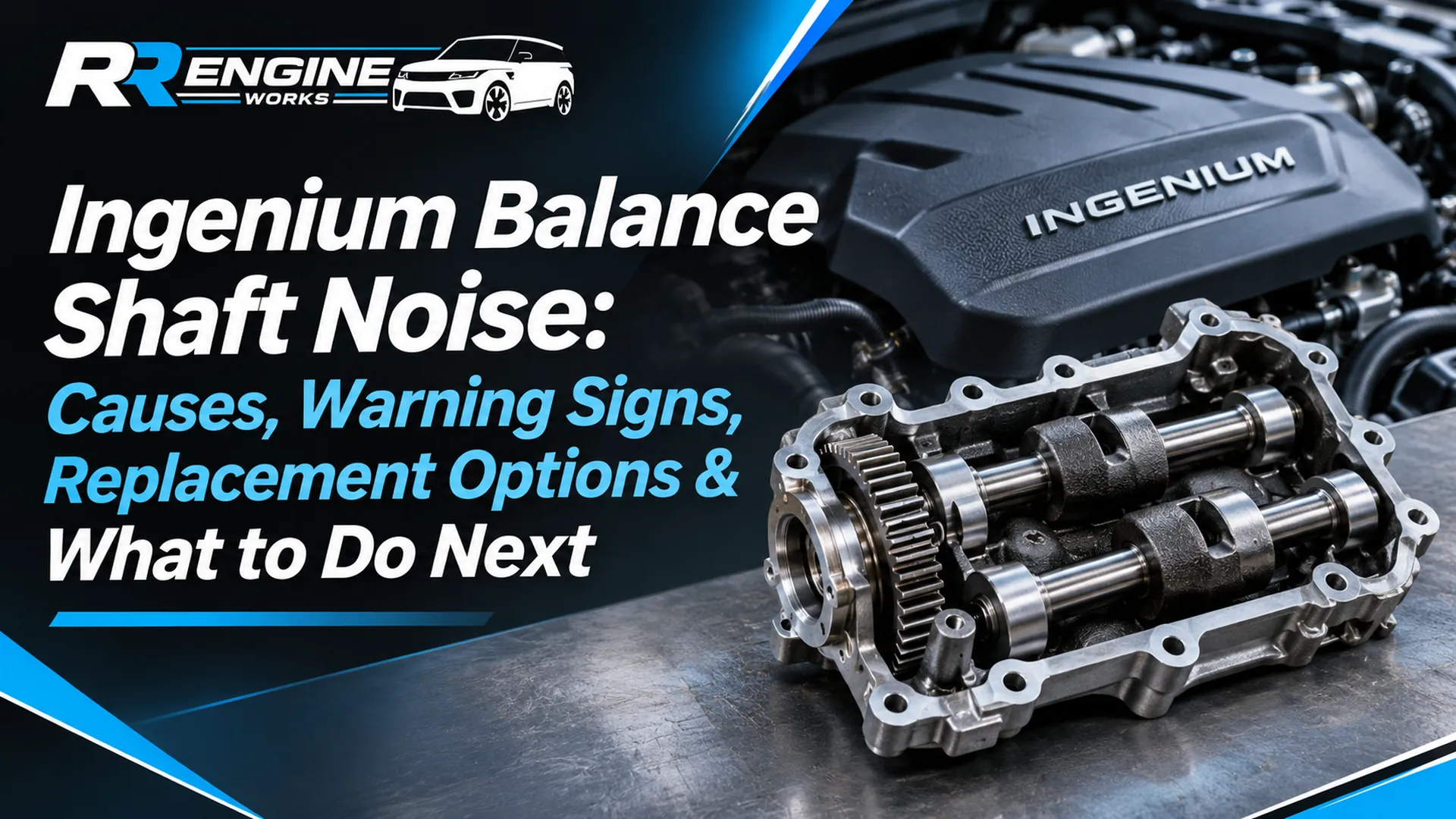
Once you know what's causing the noise, you have to decide what to do about it. This is the commercial heart of the question.
Can You Replace the Ingenium Balance Shaft, or Does It Mean a New Engine?
Ingenium balance shaft replacement is rarely a quick bolt-on job. Access is tight, labour is heavy, and the work often means taking the engine apart deeply enough that other worn parts come into the conversation. That is why the real choice usually looks like this:
Option | Best when | Pros | Cons |
| Repair | The fault is isolated and the rest of the engine is healthy | Lower upfront cost, keeps your original engine | Labour-heavy; risk of other wear showing up later |
| Recondition | The engine is sound but worn, and parts need renewing | Better value than new; wear items renewed | Quality varies by supplier, so check what's replaced |
| Replace | There's wider internal damage, or repair costs approach a replacement unit | Fresh start, usually with warranty | Higher upfront cost |
Before you commit to any supplier, ask these questions:
- Is the engine reconditioned or used, and what was replaced?
- What warranty applies, and what does it cover?
- Is supply and fit included, and is delivery UK-wide?
- Are there upfront charges or deposits?
Our pages on reconditioned engines and supply and fit explain how we handle each of these.
Is Ingenium Balance Shaft Removal a Good Idea?
You will see Ingenium balance shaft removal mentioned online as a way to cut cost or noise. We don't recommend it.
The shafts exist to cancel vibration. Removing them can mean more shake through the cabin, added stress on engine mounts and ancillaries, and possible conflicts with how the engine management expects the engine to run. It can also raise questions for warranty, MOT and resale. It trades one problem for several others and isn't a proper fix.
If your goal is a quieter, smoother engine, you are better off diagnosing the real cause and choosing between repair, reconditioning and replacement.
Which Ingenium Engines Are Most Affected, and How Do You Get a Fast, Free Quote?
How Do You Prevent Balance Shaft Noise and Early Wear?
Most noise complaints trace back to oil and use. These habits make the biggest difference:
- Change the oil more often than the book says. Many specialists suggest around 6,000 to 8,000 miles, especially with mixed or short-trip use.
- Use the correct, quality oil. The wrong spec or cheap oil accelerates wear on every moving part.
- Take regular longer runs. Twenty to thirty minutes at steady speed helps the DPF regenerate and limits oil dilution, which thins the oil that protects the shafts.
- Act on early noises. A new whine or rattle deserves attention now, not at the next service.
- Check the oil level and smell. A level above max or a diesel smell is a warning sign.
How Do You Get a Free Quote From RR Engine Works?
It takes a few minutes:
- Enter your registration. We pull your vehicle details and confirm the engine.
- Tell us the symptoms. Whine, rattle, idle or acceleration, whatever you're hearing.
- Get your options in plain English. Repair, recondition or replace, with the reasons behind each.
- Decide with no pressure. No upfront charges and no deposit before you've agreed.
You'll find us at Unit 1, Hedley Ave, Grays RM20 4EL, with UK-wide supply and fit for customers elsewhere.
Ingenium Balance Shaft Noise: FAQs
What is a balance shaft belt?
It is a toothed belt used on some engines to drive the balance shafts. On the 2.0 Ingenium, treat the balance shaft drive as an internal component rather than a cambelt-style service item, and confirm your engine's arrangement against its code.
What happens if the balance shaft belt breaks?
It depends on the engine's design. Typically you get noise, vibration and possible internal damage. Have the engine inspected before driving further.
Why does my 2.0 Ingenium make a whining noise at idle?
Common causes include balance shaft or ancillary wear, and oil-related issues. It can also be mistaken for timing chain trouble, so get it diagnosed.
Is Ingenium balance shaft removal safe?
We don't recommend it. It can increase vibration, stress other components and cause emissions or warranty problems. Fixing the cause is the better route.
How much does Ingenium balance shaft replacement cost?
It varies by model, year, the extent of the work and whether the engine is repaired, reconditioned or replaced. Send us your registration for a free, no-obligation quote.
Can I get a reconditioned Ingenium engine fitted in Essex?
Yes. We are based in Grays and offer supply and fit with UK-wide delivery.
Conclusion: Don't Guess at a Noise That Could Cost You an Engine
Ingenium balance shaft noise isn't always the disaster the forums suggest, but it isn't something to ignore either. A whine or rattle is your engine telling you something has changed, and the sooner it's diagnosed, the more options you keep.
Start with the basics: check your oil, listen for patterns at idle and under acceleration, and don't confuse balance shaft noise with timing chain rattle.
Enter your registration for a free quote from RR Engine Works, Unit 1, Hedley Ave, Grays RM20 4EL. We'll confirm your engine, explain what's likely going on and quote you before any work begins. No pressure and no upfront charges.