

If you're weighing up a used Range Rover, Discovery, or Range Rover Sport, one question keeps coming up in every owners' forum and every used car listing: is the 2.0 Ingenium reliable enough to buy, or should you stretch your budget for the 3.0? It's not an idle question. Engine reliability on these vehicles isn't a minor inconvenience, a failed Ingenium unit can mean a repair bill running into thousands of pounds, and the wrong choice at the buying stage often shows up two years and 30,000 miles later.
We've rebuilt, diagnosed, and repaired more Ingenium engines than most people will ever own, and the pattern is consistent: the 2.0 and 3.0 Ingenium are not equally reliable, and the reasons come down to engineering, not bad luck. This guide breaks down exactly where each engine stands, what actually fails, and how to protect whichever one you drive.
Ingenium 2.0 vs 3.0, Engineering and Design Differences
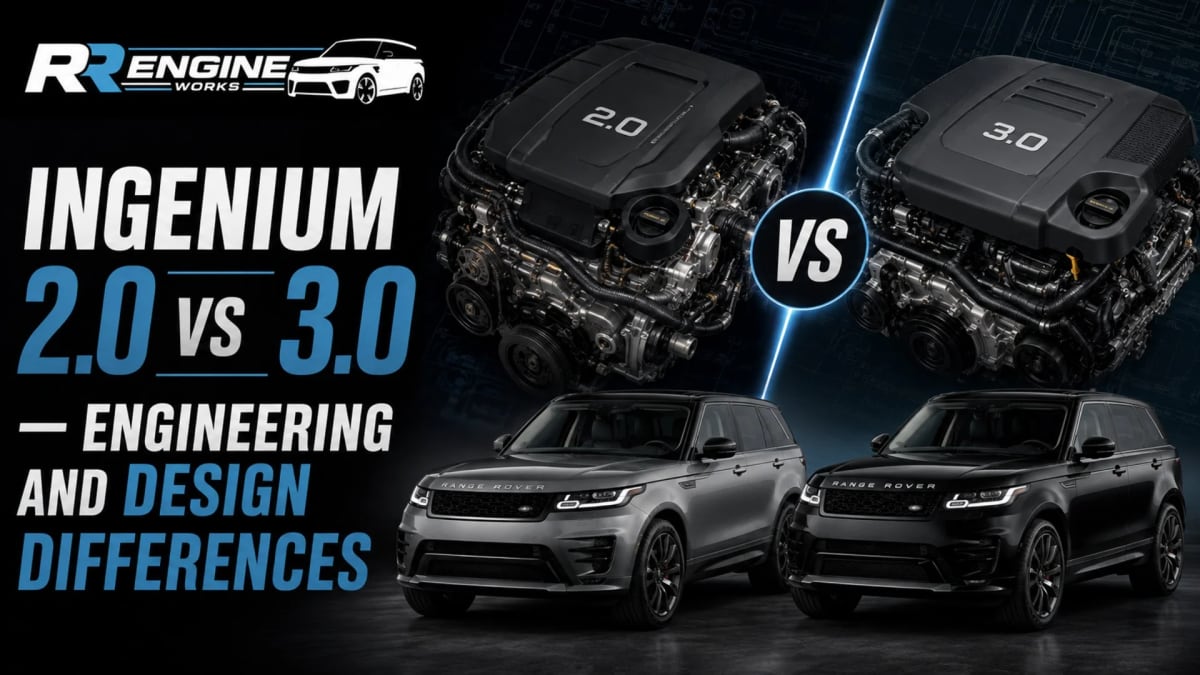
Before comparing failure rates, it helps to understand what you're actually comparing. The 2.0 and 3.0 Ingenium aren't the same engine in different sizes, they're built on different architectures with different inherent risk profiles.
What Is the 2.0 Ingenium Engine? (AJ200D / 204DTD Explained)
The 2.0 Ingenium diesel, known internally as the AJ200D, and badged 204DTD in some Jaguar Land Rover applications, is a four-cylinder unit that replaced the older Ford-derived diesels across the Land Rover and Jaguar range. It powers everything from the Range Rover Evoque and Discovery Sport through to the standard Range Rover and Range Rover Sport in D180, D200, and D240 outputs.
It was designed primarily around efficiency and emissions compliance, which is where a lot of its long-term reliability issues originate.
What Is the 3.0 Ingenium Engine? (AJ300D Inline-Six Explained)
The 3.0 Ingenium, the AJ300D, is a straight-six diesel, and current Range Rover Sport specifications list the D250, D300, and D350 as 3.0-litre six-cylinder mild-hybrid Ingenium diesels. It's a newer, more advanced design than the 2.0, built with mild-hybrid (MHEV) technology from the outset rather than retrofitted onto an existing architecture.
Four-Cylinder vs Inline-Six, Why Design Affects Reliability
This distinction matters more than most buyers realise:
- Cylinder count and balance, an inline-six is inherently smoother and places more even load across the crankshaft, reducing the kind of vibration-related wear that troubles four-cylinder diesels under load.
- Timing chain layout, the 2.0's timing chain sits at the back of the engine, buried under the intake manifold, which makes both inspection and replacement significantly more labour-intensive and expensive.
- Manufacturing generation, the 3.0 arrived later in JLR's development cycle, benefiting from lessons learned (and complaints logged) during the 2.0's early production years.
None of this means the 2.0 is a bad engine on paper. It means the two units carry different risk profiles, which is exactly why they show different real-world failure patterns.
Is the 2.0 Ingenium Reliable? Common Problems Explained
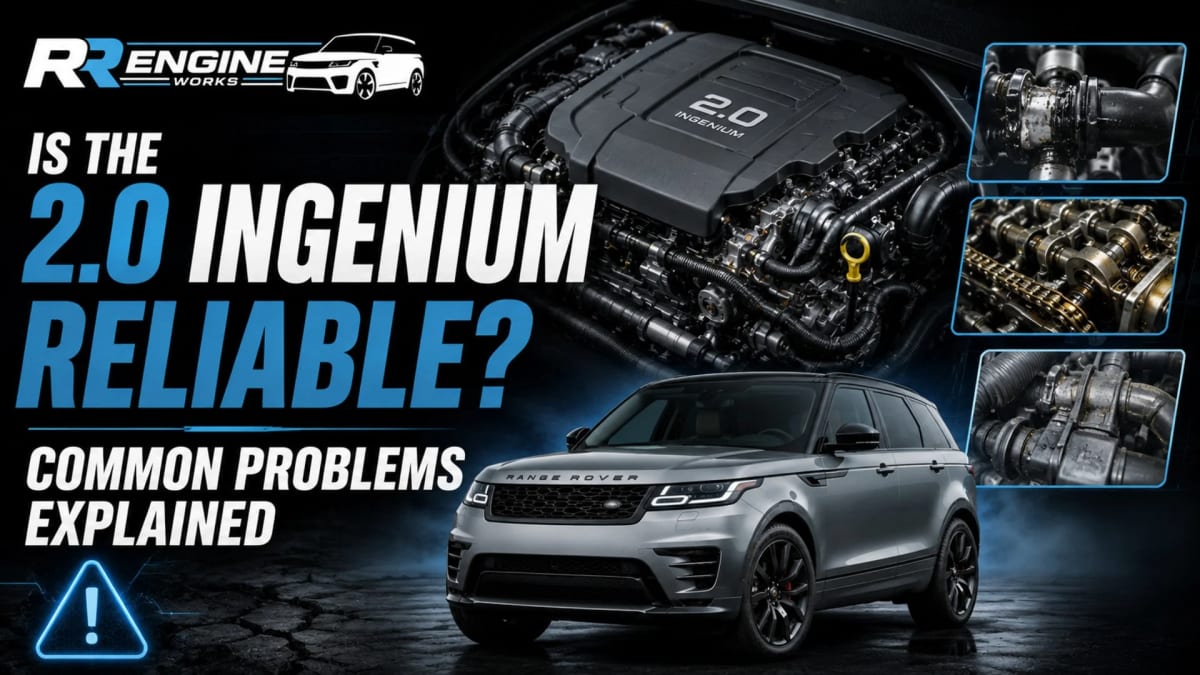
This is where most of the reliability concern in the JLR community actually concentrates. The 2.0 Ingenium diesel is repeatedly associated with timing-chain wear, oil dilution, DPF regeneration problems, turbocharger issues, and, in the worst cases, severe internal engine damage.
Timing Chain Wear and Tensioner Failure
The timing chain tensioner on early 2.0 Ingenium units is a known weak point. As the chain stretches over time, owners report a rattling noise on cold start that fades once oil pressure builds. Left unaddressed, chain stretch can cause valve timing to slip, which in worst-case scenarios leads to piston-to-valve contact and a destroyed engine.
Warning signs to watch for:
- A metallic rattle for the first few seconds after starting, especially in cold weather
- An engine warning light linked to camshaft or crankshaft position sensors
- Rough idle that wasn't there previously
Oil Dilution From Short Journeys and DPF Regeneration
This is arguably the single most common complaint associated with the 2.0 Ingenium diesel. The relationship between short journeys, incomplete DPF regeneration, and fuel entering the engine oil is a recurring pattern in specialist diagnostic reports.
Here's the mechanism in plain terms: diesel particulate filters need a sustained high-temperature "burn" to clear soot. If most of your driving is short school-run or commuter trips, the regeneration cycle often can't complete. The engine compensates by injecting extra fuel into the cylinders, and some of that unburned fuel washes past the piston rings into the sump, thinning the engine oil.
Signs of Oil Dilution You Shouldn't Ignore
- Oil level on the dipstick rising rather than falling between changes
- A strong diesel smell from the dipstick or oil filler cap
- Reduced oil pressure warnings
- Engine oil that looks unusually thin and dark
Diluted oil loses its lubricating properties, which accelerates wear on bearings, the crankshaft, and the timing chain, turning one problem into three.
Turbocharger and EGR Valve Issues
Turbo failure and EGR valve sticking are both commonly reported on higher-mileage 2.0 Ingenium units, usually presenting as reduced power, whistling noises under acceleration, or the vehicle entering limp mode. EGR issues are often linked to carbon buildup from stop-start urban driving, the same short-journey pattern that drives oil dilution.
Crankshaft and Bearing Failure Risk
In the more serious cases, usually where oil dilution has gone unnoticed for an extended period, owners have reported crankshaft bearing wear and, in rare instances, catastrophic bearing failure. This is the failure mode that typically results in a full engine replacement rather than a repair, which is why catching oil dilution early matters so much.
Is the 3.0 Ingenium More Reliable Than the 2.0?
Given everything above, it's a fair question, and the honest answer is: broadly, yes, though it's not immune to problems either.
Does the 3.0 Ingenium Have Timing Chain Problems?
The 3.0 Ingenium's timing chain has proven considerably more durable in service than the 2.0's, partly due to the revised chain geometry and partly due to the smoother six-cylinder power delivery reducing peak mechanical stress. Timing chain failure on the 3.0 is not a common complaint in the way it is on the 2.0.
3.0 Ingenium Oil and MHEV System Reliability
Oil dilution is less frequently reported on the 3.0, though it isn't entirely absent, particularly on vehicles used exclusively for short urban journeys. The mild-hybrid (MHEV) system adds complexity, the 48-volt belt-integrated starter generator is an extra component that can develop faults, but it doesn't directly affect core engine reliability the way the 2.0's fuelling and DPF interactions do.
How Many Miles Can Each Engine Realistically Last?
With consistent maintenance, a well-cared-for 3.0 Ingenium can comfortably reach 150,000–180,000 miles before requiring major work. The 2.0 Ingenium's realistic ceiling is lower in practice, many well-documented failures occur between 60,000 and 100,000 miles, almost always where short-journey use and extended oil change intervals combine.
Quick Comparison Table, 2.0 vs 3.0 at a Glance
Factor | 2.0 Ingenium (AJ200D) | 3.0 Ingenium (AJ300D) |
| Cylinder layout | Four-cylinder | Inline-six |
| Timing chain reliability | Known weak point | Comparatively robust |
| Oil dilution risk | High on short journeys | Lower, not eliminated |
| Typical trouble-free mileage | 60,000–100,000 miles | 150,000–180,000 miles |
| Repair complexity | High (rear timing chain access) | Moderate |
| Best suited to | Longer, motorway-heavy driving | Mixed and heavier use |
| Common models | Evoque, Discovery Sport, Velar | Range Rover Sport, Defender, Range Rover |
Which Ingenium Engine Should You Buy, and How to Protect It
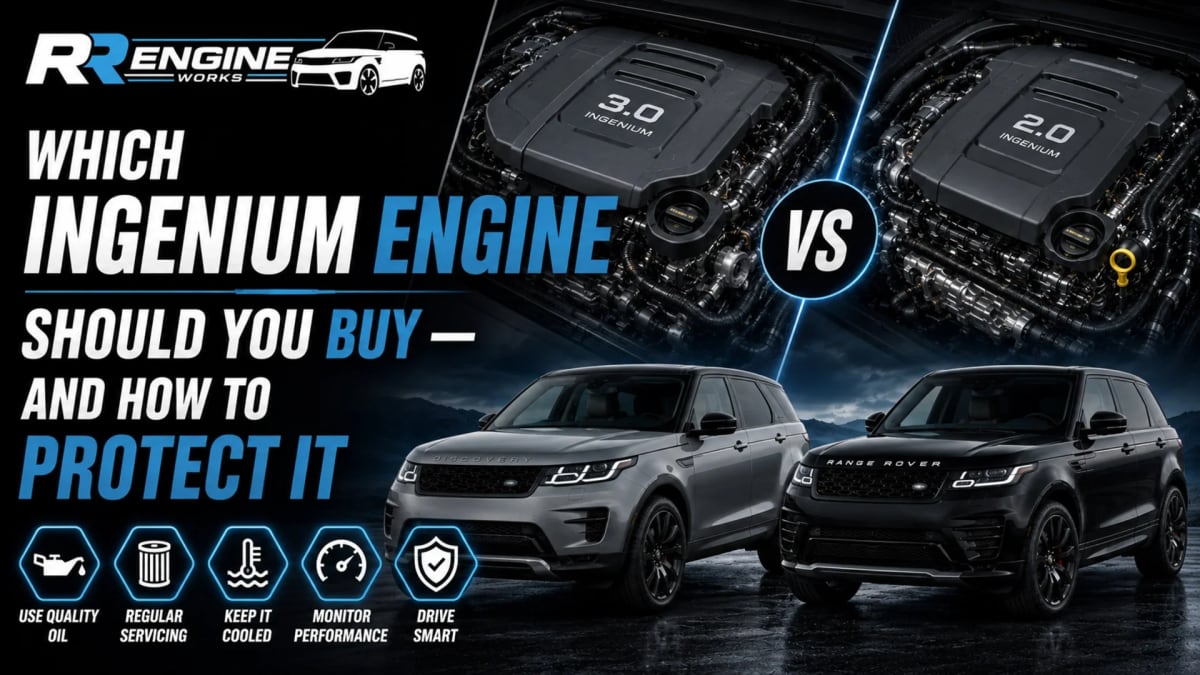
Reliability data only matters if it changes what you actually do, whether that's buying, maintaining, or repairing.
Should I Buy a 2.0 or 3.0 Range Rover Diesel?
If your budget stretches to it and you cover higher annual mileage, the 3.0 Ingenium is the safer long-term bet. If a 2.0 is your only realistic option, it isn't a reason to walk away, it's a reason to check service history carefully, favour examples with regular motorway use, and budget for slightly more proactive maintenance.
Preventative Maintenance That Extends Engine Life
Whichever engine you own, the same principles apply:
- Shorten your oil change intervals. Don't rely solely on the manufacturer's variable service schedule if most of your driving is short trips, annual oil changes, regardless of mileage, are cheap insurance against dilution damage.
- Take it on a proper run periodically. A 30–40 minute motorway drive at least every couple of weeks helps the DPF complete a full regeneration cycle.
- Get oil condition checked at every service. A quick dipstick and lab-analysis check catches dilution long before it shows up as a warning light.
- Don't ignore cold-start rattles. A timing chain inspection costs far less than a chain failure.
When to Consider a Reconditioned Ingenium Engine
If a 2.0 or 3.0 Ingenium has already suffered timing chain failure, crankshaft damage, or oil-starvation wear, a full rebuild or replacement is often more cost-effective than chasing repeated repairs on a compromised engine. A reconditioned Ingenium engine, properly rebuilt to factory tolerances, can restore the vehicle to reliable daily use at a fraction of a main dealer replacement cost.
Ingenium Engine Repair, Rebuild and Replacement at RR Engine Works
At RR Engine Works, based at Unit 1 Hedley Ave, Grays, RM20 4EL, we specialise specifically in Ingenium engine diagnostics, timing chain replacement, oil dilution repair, and full reconditioned engine builds for both the 2.0 and 3.0 platforms. If your Range Rover, Discovery, or Range Rover Sport is showing any of the warning signs covered in this guide, an early diagnostic visit is almost always cheaper than waiting for a warning light to become a breakdown.
FAQs, Ingenium 2.0 vs 3.0 Reliability
Is the 2.0 Ingenium reliable? It can be reliable with consistent maintenance and regular longer journeys, but it's more susceptible to timing chain wear and oil dilution than the 3.0, particularly in vehicles used mainly for short trips.
Is the 3.0 Ingenium reliable? Yes, it's generally considered the more robust of the two, with fewer reported timing chain and oil dilution issues, and a higher realistic mileage ceiling.
Which Ingenium engine should I avoid? Early 2.0 Ingenium units used almost exclusively for short urban journeys, with patchy service history, carry the highest risk of expensive failure.
How long does a 2.0 Ingenium last? With good maintenance, well past 100,000 miles is achievable, though many reported failures occur between 60,000 and 100,000 miles where oil dilution has gone unmanaged.
How long does a 3.0 Ingenium last? Typically 150,000–180,000 miles or more with regular servicing and a mix of driving conditions.
Is a reconditioned Ingenium engine worth it? For a vehicle that's otherwise sound, yes, a reconditioned engine is usually significantly cheaper than a main dealer replacement and restores full reliability.
Final Verdict
The 3.0 Ingenium is the more dependable engine on the numbers, the engineering, and the real-world evidence, but "reliable" and "bulletproof" aren't the same thing for either unit. The 2.0 Ingenium can serve you well for years if it's maintained with its specific weak points in mind, and the 3.0 still rewards proper care rather than punishing neglect less severely.
If you already own an Ingenium-powered Land Rover or Range Rover and you've noticed any of the warning signs covered here, a cold-start rattle, rising oil level, reduced power, or a stubborn warning light, don't wait for it to escalate. Get in touch with RR Engine Works in Grays for a proper diagnostic check, honest advice, and, where needed, a specialist repair or reconditioned engine built to last.