
You're halfway through a motorway journey when the dashboard lights up. Or you hear a rattle on a cold start that wasn't there last month. Or a garage has just quoted you a four-figure sum and used the word "chain." If you're searching for Land Rover Discovery 2.0 diesel engine problems, you probably want three straight answers: what goes wrong, which years are the riskiest, and what it will cost.
This guide gives you all three. At RR Engine Works in Grays, Essex, we see JLR diesel engines on the bench every week, and the same patterns repeat. We'll explain them in plain English so you can decide whether to repair, recondition, replace or walk away from a purchase.
Quick answer: the 2.0 Ingenium diesel is a capable, efficient engine, but it has known weak points. Service history, driving style and build year matter more than the badge on the tailgate.
What Is the Land Rover 2.0 Diesel Engine and Is It Reliable?
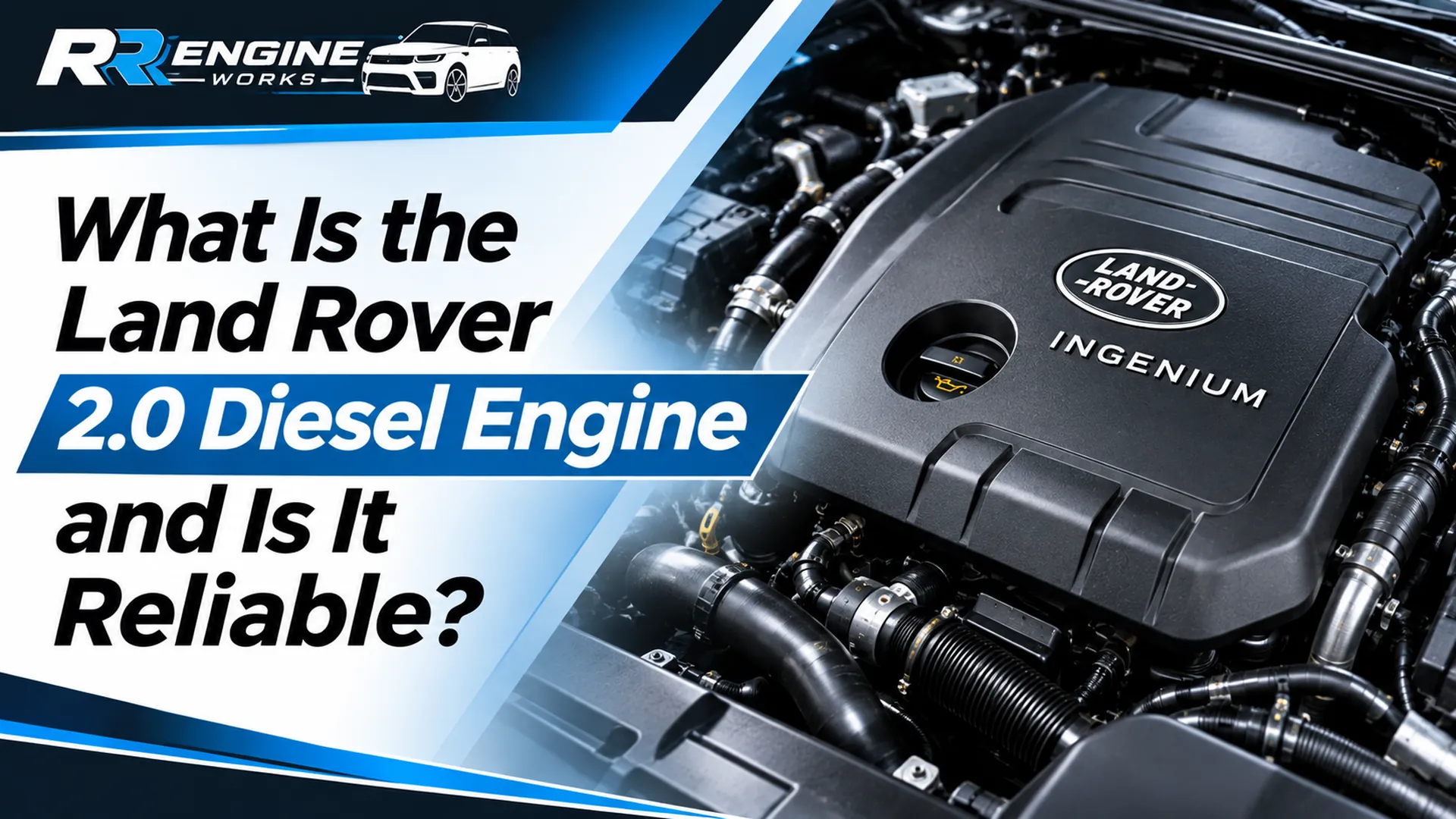
Before looking at faults, it helps to know what's under the bonnet. Plenty of confusion exists because of how Land Rover names its models and engines.
What Is the Ingenium 2.0 Diesel Engine and Which Land Rover and Jaguar Models Use It?
The 2.0 diesel Ingenium engine is Jaguar Land Rover's own four-cylinder family, built at its Wolverhampton plant and introduced from 2015. It replaced the older Ford-derived diesels. You'll commonly see it under the codes 204DTA (earlier builds) and 204DTD (later builds).
It was fitted across a wide range of vehicles:
- Land Rover: Discovery Sport, Range Rover Evoque, Range Rover Velar, Defender
- Jaguar: XE, XF, F-Pace, E-Pace
That last group matters. Jaguar 2.0 diesel engine problems are largely the same as the Land Rover ones, because the architecture is shared. If you're researching a Jaguar, most of this guide applies to you too.
A note on naming. Many searchers type "Land Rover Discovery 2.0 diesel" when they mean the Discovery Sport, which is the model that carries the 2.0 Ingenium. The full-size Discovery (Discovery 5) was offered mainly with the 3.0 V6 diesel in the UK, with a 2.0 diesel option on some versions. Always check which vehicle and which engine you're actually dealing with. Our guide to Ingenium engine codes explains how to confirm this from your registration.
What about the Land Rover 2.7 diesel? The older 2.7 TDV6, fitted to the Discovery 3 and early Discovery 4, is a different engine altogether. It has its own known issues, such as injector and EGR problems, but it avoids the Ingenium's rear-mounted chain design. Here's how the two compare:
Feature | 2.7 TDV6 (older) | 2.0 Ingenium (newer) |
| Layout | V6 | Four-cylinder |
| Typical era | Mid-2000s to around 2009 | 2015 onwards |
| Strengths | Torque, proven towing ability | Efficiency, refinement, lower emissions |
| Typical weak points | Injectors, EGR, ageing components | Timing chain, oil dilution, turbo, DPF/EGR |
| Best suited to | Owners who want a cheap, older workhorse | Owners doing regular longer journeys |
Is the Land Rover Discovery 2.0 Diesel Reliable? An Honest Workshop Verdict
Searches like "is the Land Rover 2.0 diesel engine reliable" deserve a direct answer: sometimes, and it depends.
A well-maintained example with on-time oil changes and regular longer runs can be a good ownership proposition. A car with patchy history that spends its life on short trips is a different story.
In our workshop experience, the engine's reputation is mixed rather than disastrous. A Land Rover Discovery 2.0 diesel review from an owner who does 20,000 motorway miles a year will read very differently from one written by a school-run driver. Both can be telling the truth.
What tips the balance:
- Service intervals. Sticking to the book can be too generous for this engine.
- Journey type. Short, cold trips stop the DPF regenerating properly.
- Build year. Early builds carry more risk, as we'll cover below.
- Prior repairs. A documented, correctly done fix is a good sign. A mystery gap in the history is not.
What Are the Most Common Land Rover Discovery 2.0 Diesel Engine Problems?

If you're searching Land Rover Discovery engine issues or Land Rover Discovery Sport engine problems, these are the faults we see most. They apply across the Discovery Sport, Evoque, Velar and Jaguar equivalents.
What Is the Problem With the Ingenium 2.0 Diesel Engine? The 5 Faults We See Most
1. Rear-mounted timing chain stretch and tensioner failure.
The chain sits at the back of the engine, against the bulkhead. When it stretches or the tensioner fails, you can get rattling, timing faults and in the worst case internal damage. Because of the location, the labour is heavy, which is why this repair costs so much.
2. Oil dilution.
When the DPF can't complete a regeneration, unburnt fuel can find its way into the sump. The oil thins, protects less and wears components faster. A rising oil level on the dipstick is the classic warning sign.
3. Turbocharger faults.
Rattling wastegates and sticking vanes are typical. Oil quality and dilution often sit behind turbo trouble, so a replacement turbo on its own may not cure the root cause.
4. Injector seal blow-by.
Failing injector seals can allow combustion gases to escape, leaving soot and carbon around the injector area. Caught early it's manageable. Left alone it can cause rough running and more serious damage.
5. EGR and intake blockages.
Soot build-up restricts airflow, hurts performance and can trigger warning lights. Short-trip driving makes it worse.
Here's how they compare:
Fault | Typical warning sign | Risk level | Likely outcome |
| Timing chain stretch / tensioner | Rattle on cold start, timing fault codes | High | Major repair or engine replacement if ignored |
| Oil dilution | Oil level rising, fuel smell on dipstick | High | Accelerated wear, possible bearing damage |
| Turbo faults | Whistling, rattling, loss of power | Medium–High | Turbo replacement, plus root-cause fix |
| Injector seal blow-by | Rough running, black residue near injectors | Medium | Seal and injector service |
| EGR / intake blockage | Limp mode, poor response, warning lights | Medium | Cleaning or component replacement |
A real scenario: a customer brought in a Discovery Sport that had been "a bit rattly" for months. Service history showed long oil intervals and mostly short local trips. The oil level had crept up and smelled of diesel. We caught it before the bearings went, but another few thousand miles and the conversation would have been about a replacement engine, not an oil service.
What Are the Warning Signs Your Discovery 2.0 Diesel Engine Is Failing?
Symptoms tend to build in stages. Knowing them helps you act early.
Early signs:
- A short rattle on cold start that fades as the engine warms
- Oil level slowly rising between services
- Occasional DPF or engine management warnings
Mid-stage signs:
- Limp mode or reduced power under load
- Visible smoke or a strong fuel smell
- Rough idle or hesitation
Late-stage signs:
- Persistent loud rattling or knocking
- Metallic noises, heavy smoke or sudden power loss
- Timing-related fault codes that keep returning
Stop driving and call a specialist if you hear continuous rattling or knocking, see an oil pressure warning, or find the oil level well above the maximum mark. Driving on can turn a repairable problem into a write-off.
Do the 3.0 Ingenium and Jaguar 2.0 Diesel Share These Problems?
Partly. As covered earlier, Jaguar uses the same 2.0 architecture, so the faults above apply there too.
For 3.0 Ingenium engine problems, we'll be straight with you: the six-cylinder units are newer, so long-term, high-mileage evidence is still building. Anyone claiming to know exactly how they'll age is guessing. What we can say is that the same fundamentals still matter, namely oil quality, service intervals and the right kind of driving.
Which Year to Avoid? Land Rover Discovery 2.0 Diesel Engine Problems by Model Year
Owners and buyers ask the same question constantly: which year to avoid Land Rover Discovery and which Ingenium engine to avoid. There's no official recall list for this, so what follows reflects workshop experience and owner reports, not a manufacturer statement.
Which Years Have the Most Ingenium 2.0 Diesel Problems (2016, 2017, 2018 and Later)?
The Ingenium engine problem years cluster around the early builds.
Build period | What owners commonly report | Risk level | What to check |
| 2015–2016 | Early-build teething problems, chain and oil dilution concerns | Higher | Full history, any chain or engine work done |
| 2017 | Land Rover Discovery 2.0 diesel engine problems most often tied to chain wear, DPF and oil dilution | Higher | Oil condition, cold-start noise, regen history |
| 2018 | Similar fault pattern to 2017, with some updates in later production | Medium–Higher | Service intervals, turbo behaviour, warning lights |
| 2019–2022 | Fewer chain complaints, though DPF, EGR and turbo issues still appear | Medium | Service history and driving use |
If you're researching 2016 Land Rover Discovery 2.0 diesel engine problems, 2017 Land Rover Discovery 2.0 diesel engine problems or 2018 Land Rover Discovery 2.0 diesel engine problems, the message is the same: a well-looked-after car from these years can be fine, and a neglected one is risky. The year raises the odds, but history decides the outcome.
Which Ingenium Engine to Avoid and What Should You Check Before Buying a Used Discovery or Discovery Sport?
Rather than avoiding one engine code outright, avoid unknown history. Use this checklist:
- Ask for the full service record. Oil changes at 6,000 to 8,000 miles or annually are a healthier sign than long-life intervals.
- Listen to a cold start. Insist the engine hasn't been warmed up before you arrive.
- Check the oil. Look at level and smell. A level above max or a diesel smell is a red flag.
- Ask about the DPF and EGR. Previous cleaning, replacement or repeated warnings tell you a lot.
- Look for chain work. Evidence of a correctly done timing chain job is a plus. Evidence of ignored rattles is not.
Walk away if: the seller won't let you hear a cold start, the history has big gaps, the oil smells of fuel, or the car has been "recently cleared" of fault codes without paperwork.
Repair, Recondition or Replace? Costs, Options and How to Get a Free Quote
If your engine is already showing symptoms, here's how to think about the decision.
When Should You Repair, Recondition or Replace Your Discovery 2.0 Diesel Engine?
- Repair when the fault is isolated. A turbo, EGR valve or injector seal problem with no internal damage is often worth fixing on its own.
- Recondition when the engine is structurally sound but worn. A rebuilt unit can offer far better value than a brand-new one.
- Replace when there's serious internal damage, such as chain failure with valve contact, or when repair costs approach the price of a replacement unit.
A quick example: a turbo-only fault on an otherwise healthy engine is a repair. A snapped or badly stretched chain with bent valves usually means a reconditioned or replacement engine. Costs vary widely by model, year and fault, so get a quote based on your actual registration rather than relying on a generic figure.
Before you commit to any supplier, ask:
- Is the unit reconditioned or used, and what was replaced?
- What warranty applies, and what does it cover?
- Is supply and fit included, and is delivery UK-wide?
- Are there upfront charges or deposits?
You can read more about reconditioned engines and our supply and fit service on our site.
How Do You Prevent Land Rover Discovery 2.0 Diesel Engine Problems?
Prevention costs far less than cure. These habits make the biggest difference:
- Change the oil more often than the book says. Many specialists suggest around 6,000 to 8,000 miles, especially with mixed or short-trip use.
- Take regular longer runs. Twenty to thirty minutes at steady speed helps the DPF regenerate and keeps oil dilution down.
- Use the correct, quality oil. Cheap or wrong-spec oil accelerates wear.
- Act on warning lights early. A DPF warning ignored for weeks can become an oil dilution problem.
- Listen to your engine. A new rattle on cold start deserves attention now, not at the next service.
Land Rover Discovery 2.0 Diesel Engine Problems: FAQs
Is the Land Rover 2.0 diesel engine reliable?
It can be, with good care. The 2.0 Ingenium diesel is efficient and refined, but it has known weak points in the timing chain, DPF, EGR and turbo. Regular oil changes and longer journeys improve your odds.
Which Ingenium engine should I avoid?
Avoid unknown history rather than a single code. Early 2.0 diesel builds from 2015 to 2018 carry more risk, especially with missed services or short-trip use.
What are the most common Land Rover Discovery Sport engine problems?
Timing chain wear, oil dilution, turbo faults, injector seal blow-by and EGR or intake blockages. Warning signs include cold-start rattle, rising oil level and limp mode.
How much does it cost to replace a Discovery 2.0 diesel engine?
It depends on the model, year, whether the unit is reconditioned or used, and the fitting work. Send us your registration and we'll give you a free, no-obligation quote.
Can you supply and fit a reconditioned Ingenium engine in Essex?
Yes. We're based at Unit 1, Hedley Ave, Grays RM20 4EL, and offer supply and fit with UK-wide delivery.
Conclusion: Know Your Engine Before It Costs You
The 2.0 Ingenium diesel isn't a lost cause, and it isn't bulletproof. Most serious failures trace back to the same few causes: stretched oil intervals, short-trip use and ignored warning signs. Catch them early and you stay in control of the bill.
Whether you're worried about your own car or checking a used one before you buy, the next step is simple.
Enter your registration for a free quote from RR Engine Works, Unit 1, Hedley Ave, Grays RM20 4EL. We'll confirm your engine, explain your options in plain English and quote you before any work begins. No pressure and no upfront charges.