

You're about to buy a used Discovery Sport, or you've just been told your Evoque has an "Ingenium" engine. You don't know what that means for your car, or whether it's good news.
Here's the direct answer. Ingenium is Jaguar Land Rover's in-house engine family, and it's fitted to most Land Rover and Range Rover models built since around 2015, including the new Defender, Discovery Sport, Evoque, Velar and the latest Range Rover and Range Rover Sport. Older models and some V6 and V8 variants still use different engines, so the model name alone doesn't settle it.
At RR Engine Works in Grays, Essex, we work on these engines regularly. This guide helps you confirm which engine your Land Rover has, understand the known faults and decide what to do next.
Which Land Rovers Have the Ingenium Engine, and Which Models Don't?
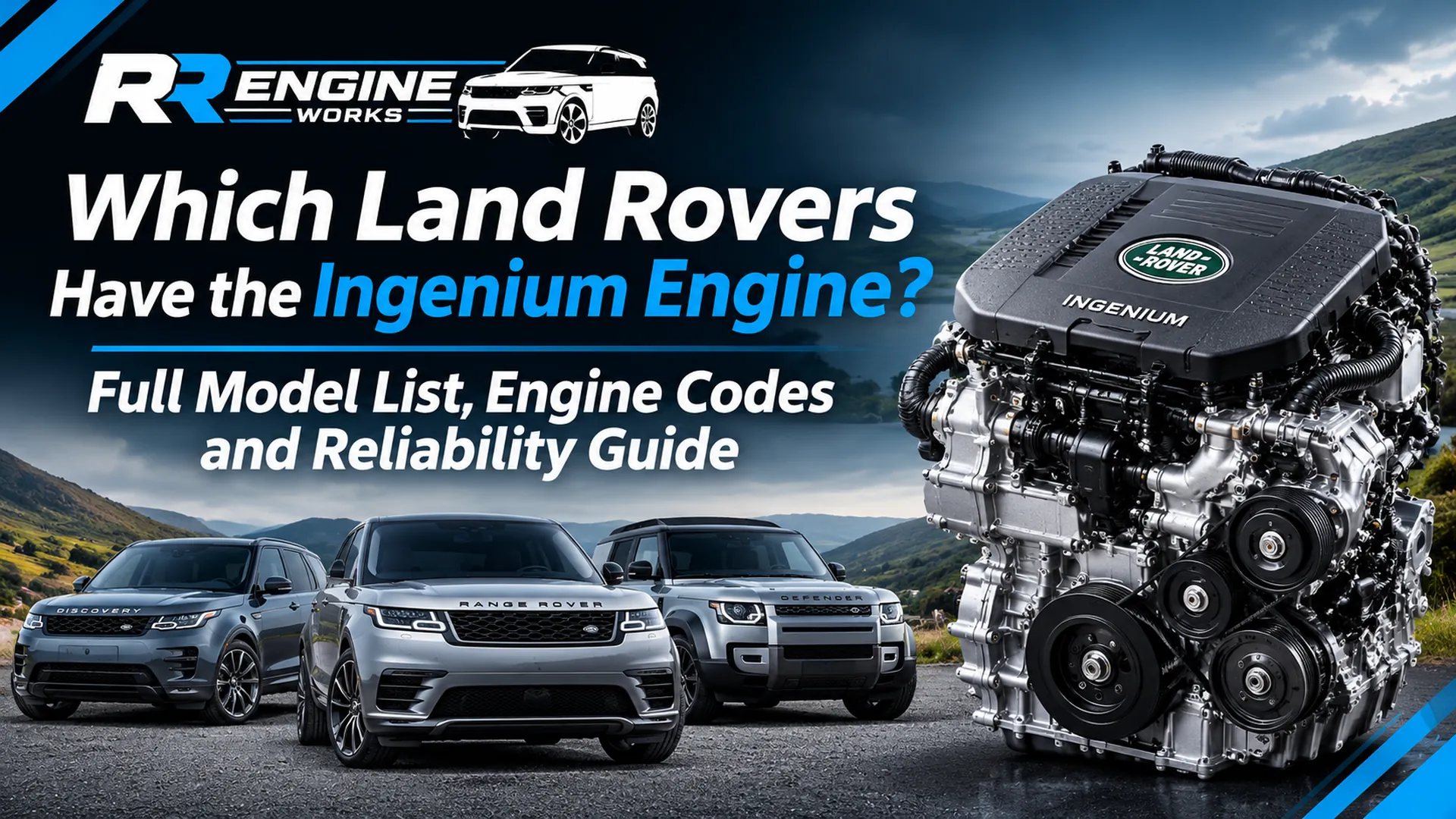
Ingenium is Jaguar Land Rover's own engine range, introduced from 2015 to replace engines that were bought in or shared with other manufacturers. It includes 2.0-litre four-cylinder petrol and diesel engines, a 3.0-litre straight-six with a 48-volt mild-hybrid system, and some plug-in hybrid versions.
Two points explain most of the confusion over which Land Rover has the Ingenium engine:
- The same model can carry different engines in different years. A 2016 car and a 2022 car with the same badge can be completely different under the bonnet.
- Land Rover has used other engines alongside Ingenium. Older V6 and V8 units, and the 4.4 V8 in the latest Range Rover and Range Rover Sport, are not Ingenium.
The sections below answer the most common model-by-model questions. Treat the year ranges as a guide and confirm your own car by registration or engine code (more on that further down).
Which Range Rovers Have the Ingenium Engine, and Which Range Rovers Don't?
If you're asking which Range Rovers have the Ingenium engine, the clearest dividing line is the generation. Newer cars lean heavily on the Ingenium 3.0 straight-six, while older ones relied on V6 and V8 engines.
Model | Years (approx.) | Ingenium engines fitted | Not Ingenium |
| Range Rover (L405) | 2013–2021 | 2.0 petrol plug-in hybrid (P400e), 3.0 six-cylinder mild hybrid on later cars | 3.0 V6 diesel (TDV6/SDV6), 4.4 V8 diesel, 3.0 supercharged V6 petrol, 5.0 V8 petrol |
| Range Rover (L460) | 2022 onwards | 3.0 straight-six diesel and petrol, plug-in hybrids | 4.4 V8 petrol |
| Range Rover Sport (L494) | 2013–2022 | 2.0 petrol plug-in hybrid (P400e), 3.0 six-cylinder mild hybrid on later cars | 3.0 V6 diesel, 3.0 supercharged V6, 4.4 V8 diesel, 5.0 V8 |
| Range Rover Sport (L461) | 2022 onwards | 3.0 straight-six diesel and petrol, plug-in hybrids | 4.4 V8 petrol |
| Range Rover Velar | 2017 onwards | 2.0 diesel and petrol, 3.0 straight-six on later cars | 3.0 V6 diesel and supercharged petrol on early cars, 5.0 V8 on the SV model |
So which Range Rover does not have the Ingenium engine? Mostly the older full-size Range Rover and Range Rover Sport models with V6 or V8 power, plus the V8 options on newer cars. If you're wondering which Range Rovers don't have an Ingenium engine at all, those older V8 and V6 cars are your answer.
One more tip. A badge like "D300" or "P400" on a newer car usually points to the 3.0 straight-six Ingenium, but check it rather than assuming.
Which Land Rover Discovery and Range Rover Evoque Models Have the Ingenium Engine?
These two are the models people ask about most, and the answer changes by generation.
Land Rover Discovery:
- Discovery 3 and 4 (2004–2016) don't have the Ingenium engine. They use older V6 diesel and V8 petrol engines.
- Discovery 5 (2017 onwards): the 2.0-litre diesel is Ingenium. The 3.0 V6 diesel and supercharged petrol on earlier cars are not. Later updated models moved to the 3.0 straight-six Ingenium.
- Discovery Sport (2014 onwards): it launched with older engines, then moved to Ingenium diesel and petrol, which became the standard choice. If you're asking which Land Rover Discovery has the Ingenium engine, the Discovery Sport is the most likely answer, with newer Discovery 5 cars next.
Range Rover Evoque:
- First generation (2011–2019): early cars used the older 2.2 diesel and 2.0 petrol units, which are not Ingenium. Ingenium engines arrived partway through its life.
- Second generation (2019 onwards): Ingenium throughout, including mild-hybrid and plug-in hybrid versions.
So which Range Rover Evoque has the Ingenium engine? Any second-generation car, and later first-generation cars with the updated engines. Which Evoque does not? The earliest first-generation cars.
Defender:
- Original Defender (up to 2016) doesn't have an Ingenium engine.
- New Defender (2020 onwards): the 2.0 petrol and diesel and the 3.0 straight-six are Ingenium. The 5.0 V8 is not.
A quick real-world example: a customer once rang us convinced his 2015 Discovery Sport had the new 3.0 engine because "all the new ones do". It carried the 2.0 diesel. The 3.0 isn't offered in that model, and the mix-up would have meant ordering the wrong parts and getting the wrong quote. That's why we always start with the registration.
What Is the Ingenium Engine, and Is It Any Good?
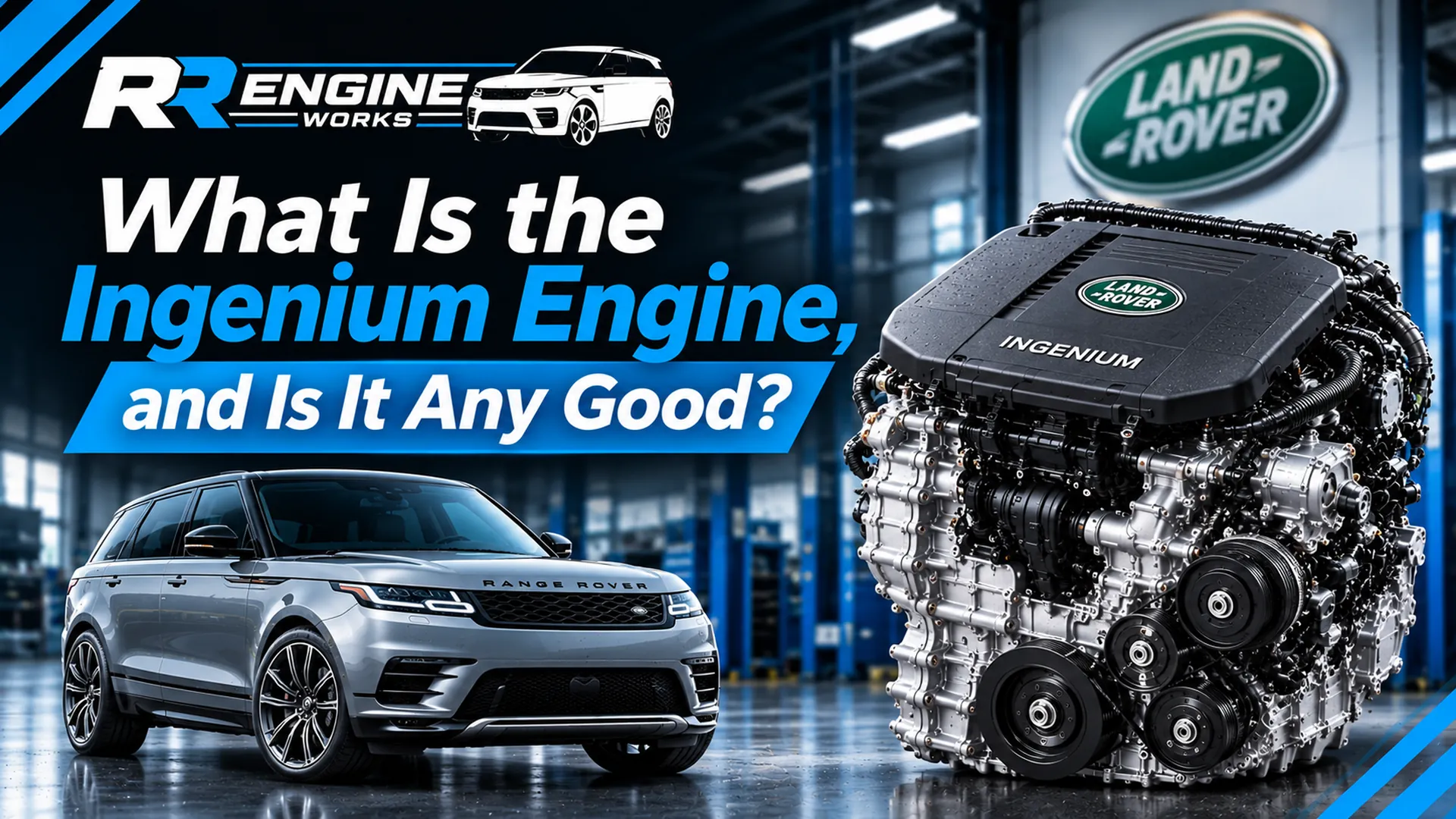
Jaguar Land Rover designs and builds the Ingenium engine, and it appears across both Land Rover and Jaguar. It's efficient and refined, and many owners cover high mileage without drama. The problems that have given it a patchy reputation come from specific faults on specific versions, usually made worse by missed servicing and short-journey use.
If you're searching for Ingenium engine problems, the honest answer depends on which engine you have.
How Do the 2.0 Petrol, 2.0 Diesel and 3.0 Ingenium Engines Compare for Reliability?
Here's how the three main versions compare, based on what we see in the workshop:
2.0 Diesel | 2.0 Petrol | 3.0 Diesel / Petrol | |
| Common models | Evoque, Discovery Sport, Velar, Discovery 5, Defender | Evoque, Discovery Sport, Velar, Defender | Defender, Discovery, Velar, Range Rover, Range Rover Sport |
| Typical faults | Timing chain wear, oil dilution, DPF issues, injector problems | Oil condition, sludge on some engines, coolant leaks | Cooling system leaks, mild-hybrid faults, ancillary issues |
| Risk level | Higher | Moderate | Lower to moderate |
| Best suited to | Owners with a full service history and longer journeys | Mixed use with regular oil changes | Owners who want smoothness and accept complex repairs |
The 2.0 Ingenium engine problems we hear about most involve the diesel. A rattle on a cold start can point to timing chain wear, and repeated short trips can fill the oil with unburnt fuel through DPF regeneration. The petrol has fewer headline faults, but oil condition still matters.
The 3.0 Ingenium engine problems are usually less dramatic. The core engine tends to be sturdy, but cooling leaks and mild-hybrid warnings need prompt attention because small faults can grow quickly on a complex engine.
None of this means every Ingenium engine will fail. A well-serviced example can run for a very long time. For a deeper look at the 3.0 diesel, see our guide on [AJ300D engine reliability], and for a comparison of risk levels, see [which Ingenium engine to avoid]. [Internal links]
How Can You Confirm Which Ingenium Engine Your Land Rover Has?
Don't guess. Use these steps:
- Check the V5C logbook. It shows engine capacity and fuel type, which quickly separates a 2.0 from a 3.0.
- Look at the engine code on the block or plate. The 2.0 diesel is commonly known as the 204DTD, and the 3.0 diesel as the AJ300D (the D300 and related versions). Petrol codes differ.
- Read the owner's handbook. It lists the engines available for your exact model and year.
- Use a registration lookup. It's the fastest route, and the one we use ourselves.
- Ask a specialist. If anything doesn't match, a technician can confirm it in minutes.
Knowing your engine code matters even more if you're ordering parts or a replacement unit. A wrong match costs time and money.
Should You Buy a Land Rover With an Ingenium Engine?
Often, yes. Plenty of buyers are very happy with them. The key is to go in prepared, because the engine matters less than the individual car's history.
What Should You Check Before Buying a Used Land Rover or Range Rover With an Ingenium Engine?
Before you hand over any money, check these:
- Full service history. Look for oil changes at sensible intervals, not just the longest one the dashboard allows.
- Oil level and condition. A rising level or a diesel smell is a red flag.
- Cold-start behaviour. Ask to start the engine cold and listen for a rattle in the first few seconds.
- Coolant level and any signs of leaks around hoses and the thermostat housing.
- Fault codes, read with a proper diagnostic tool, not just a glance at the dashboard.
- DPF history on diesels, including any warning lights or regeneration problems.
- Mild-hybrid warnings on the 3.0, which can look alarming and are sometimes software or battery related.
Walk away if the seller won't let you start it from cold, the service history has big gaps, or there are active warning lights nobody can explain. A lower price rarely covers a failed engine.
A scenario we see often: a used Discovery Sport that's done mostly school runs arrives with a slightly rising oil level and a faint rattle at start-up. Neither symptom looks serious alone, but together they suggest dilution and early chain wear. Caught at that stage, the repair is far cheaper than waiting for a failure.
What Should You Do If Your Ingenium Engine Is Failing?
If your engine is showing serious symptoms, you have three realistic routes, and the right one depends on the diagnosis, the vehicle's value and how long you plan to keep it. Act quickly if you notice knocking or rattling, a whine from the engine, oil level rising, unexplained coolant loss, heavy smoke or repeated limp mode.
Should You Repair, Rebuild or Replace It, and How Do You Get a Free Quote From RR Engine Works?
Option | Best when | Trade-off |
| Repair | The fault is isolated, such as a leak, sensor or injector problem | Lowest cost, but only worthwhile if the rest of the engine is sound |
| Rebuild | There's internal wear but the block and core components are good | Can cost more than replacement and take longer |
| Replace | Damage is widespread or the engine has failed | Higher upfront cost, but usually the most predictable result |
We won't quote a generic price here, because costs vary with the model, the engine and the fault. What we can say is that a properly diagnosed quote always beats a guess.
A good quote should include:
- The engine's condition and where it came from
- The length and terms of the warranty
- Whether fitting is included
- The testing or reconditioning standard applied
- A realistic timescale
At RR Engine Works we go through all of this before any work begins. To find out where your engine stands, enter your registration for a free engine quote, or visit us at Unit 1 Hedley Ave, Grays RM20 4EL. [Internal link: Get a Free Engine Quote]
Frequently Asked Questions About Ingenium Engines in Land Rovers
Which Range Rovers have the Ingenium engine?
Newer Range Rover and Range Rover Sport models (2022 onwards) use the 3.0 straight-six Ingenium. The Velar and Evoque use 2.0 Ingenium engines, and the Velar also offers the 3.0. Some older Range Rovers carried the 2.0 petrol plug-in hybrid.
Which Land Rover Discovery has the Ingenium engine?
The Discovery Sport and newer Discovery 5 models have Ingenium engines. Discovery 3 and 4 do not.
Which Range Rover Evoque has the Ingenium engine?
All second-generation Evoques (2019 onwards) and later first-generation cars. The earliest first-generation Evoques use older engines.
Which Land Rover models don't have the Ingenium engine?
The original Defender, Discovery 3 and 4, Freelander 2, and older Range Rover and Range Rover Sport models with V6 or V8 power. The 5.0 and 4.4 V8 engines in newer cars are also not Ingenium.
Which Range Rover doesn't have the Ingenium engine?
Typically the older L405 Range Rover and L494 Range Rover Sport with V6 or V8 engines, plus the V8 variants of the newer cars.
Is the Ingenium engine reliable?
It depends on the version and the maintenance. The 3.0 is generally regarded as stronger, while the 2.0 diesel needs more careful checking and servicing.
Which Ingenium engine should I avoid?
Be most cautious with high-mileage 2.0 diesels that have patchy service history. See [which Ingenium engine to avoid] for the full breakdown. [Internal link]
Conclusion
The question of which Land Rovers have the Ingenium engine has a clear pattern. Most models from around 2015 onwards carry one, while older cars and the V6 and V8 options often don't. The year, the model and the engine code matter far more than the badge.
If you're buying, verify the engine and inspect the car before you commit. If you're already an owner, service early and act on warning signs. And if something has gone wrong, get a proper diagnosis before you decide on a repair, rebuild or replacement.
Need a straight answer about your engine? Get your free quote from RR Engine Works today, or visit us at Unit 1 Hedley Ave, Grays RM20 4EL.