
The most common Range Rover 4.2 supercharged engine problems are supercharger coupler and bearing wear, which cause a rattle or whine. The auxiliary intercooler pump can fail, and cooling system parts age. Timing chains and guides wear, and misfires often come from coils or vacuum leaks. Oil leaks from ageing gaskets are also common. Every 4.2 supercharged Range Rover is now well over 15 years old, so many of these faults come down to age and maintenance history rather than design alone. This guide explains the main problems, what changes as these engines get older and what to check before you buy or spend money on one.
The 4.2 Supercharged V8 in Brief
The 4.2-litre supercharged V8 came from the Jaguar engine family (AJ34S, coded 428PS) and was adapted by Land Rover. It has an Eaton supercharger with an intercooler and drives a ZF six-speed automatic gearbox. It replaced the BMW-sourced engines in the L322 and powered the first-generation Range Rover Sport from launch. The 5.0 supercharged V8 replaced it for the 2010 model year.
Models and Years
Model | Approx. years | Notes |
| Range Rover Sport (L320) | 2005–2009 | Top petrol model of the first-generation Sport |
| Range Rover (L322) | 2006–2009 | Replaced the BMW-era petrol V8s |
Sister models used the 4.4 naturally aspirated V8 from the same family. Our Range Rover Sport engine page and L322 engine page list the 428PS engine.
Common Problems on an Ageing 4.2 Supercharged
Supercharger, Coupler and Intercooler Pump
Supercharger coupler and bearing wear. The supercharger is driven through a coupler, or isolator, that damps the drive. As it wears, owners hear a rattle at idle or a growing whine. The nose-cone bearings can also wear. If ignored, the wear can damage the pulley and the drive. A rattle at idle can sound worse than it is, so a proper diagnosis should come before anyone condemns the supercharger or the engine.
Auxiliary intercooler pump. The intercooler has its own water circuit and electric pump. If the pump fails, intake temperatures rise and the engine loses power to protect itself. This is a common, often overlooked fault on older cars.
Drive belt and pulleys. Belts, tensioners and idlers are wear items. On a car of this age, check them at every service.
Cooling, Timing Chains, Misfires and Leaks
Cooling system ageing. The 4.2 supercharged works hard in a heavy car, and its cooling parts are now old. Water pumps, the thermostat housing, plastic pipes and hoses can all leak or crack with age. Overheating is the biggest risk to any V8 of this era, so a falling coolant level, a sweet smell or a rising temperature gauge needs attention straight away.
Timing chains, guides and tensioners. The engine uses timing chains with tensioners and plastic-faced guides. At this age and mileage, the guides can wear and chains can stretch. A rattle at cold start is the classic warning. Forum reports include stretched chains replaced together with all the guides. Our timing chain replacement service covers JLR petrol V8s.
Misfires and running faults. Ignition coils, spark plugs and vacuum or intake leaks are frequent causes of misfires on older engines. A smoke test is a simple way to find air leaks, and forum owners recommend it before anything else. On early cars, Land Rover bulletin LTB00197 (January 2009) covered poor cold starting or stumbling on 2006 model-year Range Rover and Range Rover Sport Supercharged models. It was caused by a "sensitive ECM calibration" and fixed with a software update.
Oil leaks. Cam cover gaskets, seals and other gaskets harden with age. Oil reaching the exhaust can smoke or smell. Find the source early.
Gearbox load. It is not an engine fault, but the ZF six-speed gearbox carries the supercharged engine's torque. Specialists advise watching for slipping or harsh shifts and keeping the fluid fresh.
Owning One Today: LPG, Rebuilds and Buying
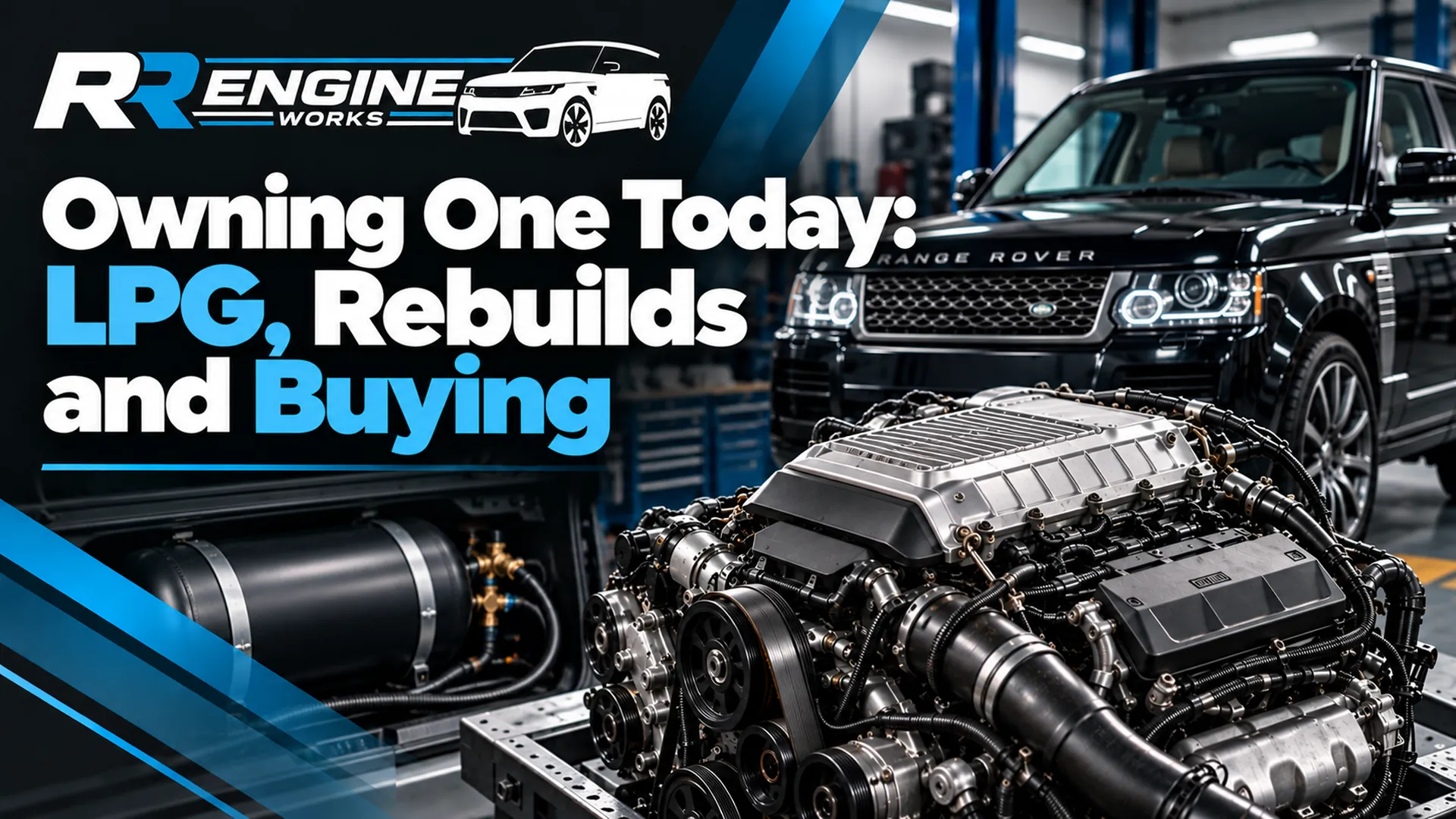
Many 4.2 supercharged cars have had LPG conversions to cut fuel bills. LPG burns hotter and drier than petrol, and forum reports describe valve seat recession on these engines after LPG use, even with a valve lubrication system fitted. That shows up as valve clearances closing up and, eventually, poor compression. If a car runs on LPG, ask for conversion records and check the valve clearances.
Rebuild quality also matters. Forum owners describe misfires and air leaks after rebuilds that reused gaskets, and valve clearances left out of specification. If a car has had engine work, ask for a full record of what was done. Our engine rebuild service measures components against factory tolerances and tests compression and leaks before refitting.
4.2 Supercharged Checklist
What to check | Why |
| Idle noise, a rattle or whine | Supercharger coupler or bearing wear |
| Power loss when warm | Intercooler pump or charge-air cooling fault |
| Coolant level, smell and temperature gauge | Ageing pump, housing, pipes or hoses |
| Cold-start rattle | Timing chain, guide or tensioner wear |
| Misfire or rough running | Coils, plugs, vacuum leaks or valve clearances |
| LPG conversion records | Risk of valve seat recession |
| Oil leaks | Hardened gaskets and seals |
| Gearbox behaviour and fluid history | ZF six-speed under supercharged torque |
| Records of previous engine work | Quality of past repairs |
| Open recalls | Check by registration on GOV.UK |
For any warning light, misfire or noise, our engine diagnostics and repair service uses fault-code scans and live data to confirm the actual fault before recommending a repair. To book an inspection, contact the team or call 01708 592377.
FAQs
4.2 Supercharged Engine FAQs
Is the Range Rover 4.2 supercharged engine reliable?
It can still be a satisfying engine, but every example is now old. Reliability depends on how it has been maintained, especially the cooling system, the supercharger drive and the oil changes.
What is the rattle from my 4.2 supercharged at idle?
It is often the supercharger coupler, or isolator, wearing. A cold-start rattle that fades is more typical of timing chain wear. A proper check tells them apart.
Is LPG bad for the 4.2 supercharged?
LPG can be used, but forum reports describe valve seat recession on these engines. Regular valve clearance checks and a well-maintained conversion are essential.
Why does my 4.2 supercharged lose power when it gets warm?
A failing auxiliary intercooler pump is a common cause, because intake temperatures rise and the engine protects itself. Coolant problems and sensor faults are other possibilities.
Which replaced the 4.2 supercharged in the Range Rover?
The 5.0 supercharged V8 replaced it for the 2010 model year in both the Range Rover and the Range Rover Sport.