
If your Range Rover is running hot, eating through coolant, or blowing white smoke every time you start the engine, you're probably already dreading the words "head gasket." And honestly? That instinct isn't wrong to take seriously. A head gasket failure is one of the few faults on these vehicles that punishes hesitation , wait too long, and a manageable repair turns into a full engine rebuild.
We see this pattern constantly at our Grays workshop. A customer notices the temperature gauge creeping up on the M25, tops up the coolant, and carries on. Three weeks later, they're calling us from the hard shoulder. So before anything else, let's get you clear on what's actually happening under the bonnet , and what your realistic options are from here.
What Are the Signs of a Failing Range Rover Head Gasket?
A head gasket sits between the cylinder head and the engine block, sealing the combustion chambers, coolant passages, and oil galleries. When it fails, it stops doing all three jobs properly , and that's when things start leaking, mixing, or overheating.
Here's what tends to show up first:
- Coolant disappearing with no puddle underneath the car , because it's being burned internally or seeping into the oil, not leaking onto your driveway.
- White smoke from the exhaust, especially thick and constant rather than a brief puff on cold mornings.
- A sweet smell around the engine bay or exhaust , that's coolant burning inside the combustion chamber.
- The temperature gauge sitting higher than normal, or spiking during motorway driving or in traffic.
- Rough idle or a noticeable misfire, particularly on one or two cylinders.
- Bubbling or frothing in the coolant expansion tank when the engine is running, which points to combustion gases entering the cooling system.
Why Is My Range Rover Losing Coolant With No Visible Leak?
This is one of the most common questions we get, and it catches people out because they go looking for a puddle under the car and find nothing. If coolant is disappearing but there's no external leak, it's very likely going one of two places: into the combustion chamber (where it burns off as steam and white smoke) or into the engine oil.
Neither is good news, but knowing which one is happening changes the diagnostic approach , and it's exactly the kind of thing a proper compression or block test identifies quickly, rather than guessing.
What Does White Smoke From the Exhaust Mean?
A small wisp of vapour on a cold morning is normal , that's just condensation clearing from the exhaust. What's not normal is thick, persistent white smoke that doesn't clear after the engine warms up. That's usually coolant burning inside the cylinder, and it's one of the clearest head gasket symptoms we look for during inspection.
Milky or Contaminated Oil , Is It a Head Gasket Fault?
Pull the dipstick or check under the oil filler cap. If you see a pale, milky, mayonnaise-like residue, coolant is mixing with your engine oil. This is a serious sign , contaminated oil loses its lubricating properties fast, which puts bearings, the crankshaft, and camshaft at risk of accelerated wear on top of the original gasket problem.
Can I Still Drive My Range Rover With a Blown Head Gasket?
Short answer: you can, but you really shouldn't , and definitely not for long. Driving on a failing head gasket risks:
- Rapid overheating, which can warp the cylinder head within a single journey
- Coolant contamination reaching the point where an oil change alone won't fix it
- Complete loss of compression, turning a gasket repair into an engine rebuild
If your temperature gauge is climbing, the safest move is to stop, let the engine cool, and arrange recovery rather than trying to "get it home." We've seen manageable jobs become five-figure engine rebuilds simply because someone pushed on for another 20 miles.
Why Do Range Rover Head Gaskets Fail?
Head gasket failure rarely comes out of nowhere. It's almost always the end result of a cooling system that's been under strain , sometimes for weeks, sometimes for years , before the gasket itself finally gives up.
Common root causes include:
- A failing water pump or thermostat that lets the engine run hotter than it should, gradually stressing the gasket material.
- Blocked or degraded radiators reducing the cooling system's ability to shed heat.
- Old or contaminated coolant that's lost its corrosion-inhibiting properties, leading to internal corrosion around the gasket seal.
- General age and mileage , gasket materials do have a service life, even under normal conditions.
- Towing or sustained heavy loads, which push engine temperatures higher for longer periods.
Ingenium, SDV6 and V8 Engines , Which Are Most at Risk?
Not all Range Rover engines behave the same way when it comes to head gasket reliability, and this is where genuine model knowledge matters.
Engine Variant | Common Head Gasket Risk Factors |
| Ingenium 2.0 (petrol/diesel) | Often linked to EGR cooler faults contributing to localised overheating |
| SDV6 3.0 Diesel | Higher mileage examples more prone to gasket wear, especially with delayed cooling system servicing |
| TDV6 3.0 Diesel | Older platform; timing chain and gasket wear can present around similar mileage |
| AJ-V8 Petrol | Less frequent gasket failure, but repair costs tend to be higher due to engine layout |
| 5.0 Supercharged V8 | Higher thermal loads under performance driving increase stress on seals over time |
This is exactly why we diagnose by engine variant rather than applying a blanket approach , an Ingenium repair plan looks different from an SDV6 or supercharged V8 job in terms of parts, labour time, and machining requirements.
Does Overheating Always Cause Head Gasket Failure?
Not always, but it's the single biggest contributing factor we see. Overheating causes the cylinder head to expand unevenly, which can warp the mating surface and break the gasket's seal. Once that seal is compromised, the problem tends to escalate quickly rather than staying stable.
Common Cooling System Faults That Lead to Gasket Failure
Before a head gasket fails, something in the cooling system has usually already been struggling , a slow-leaking water pump, a thermostat stuck partially closed, or a radiator that's lost efficiency. Catching these early, through routine cooling system checks, is genuinely the most cost-effective form of prevention available to any Range Rover owner.
Our Range Rover Head Gasket Replacement Process
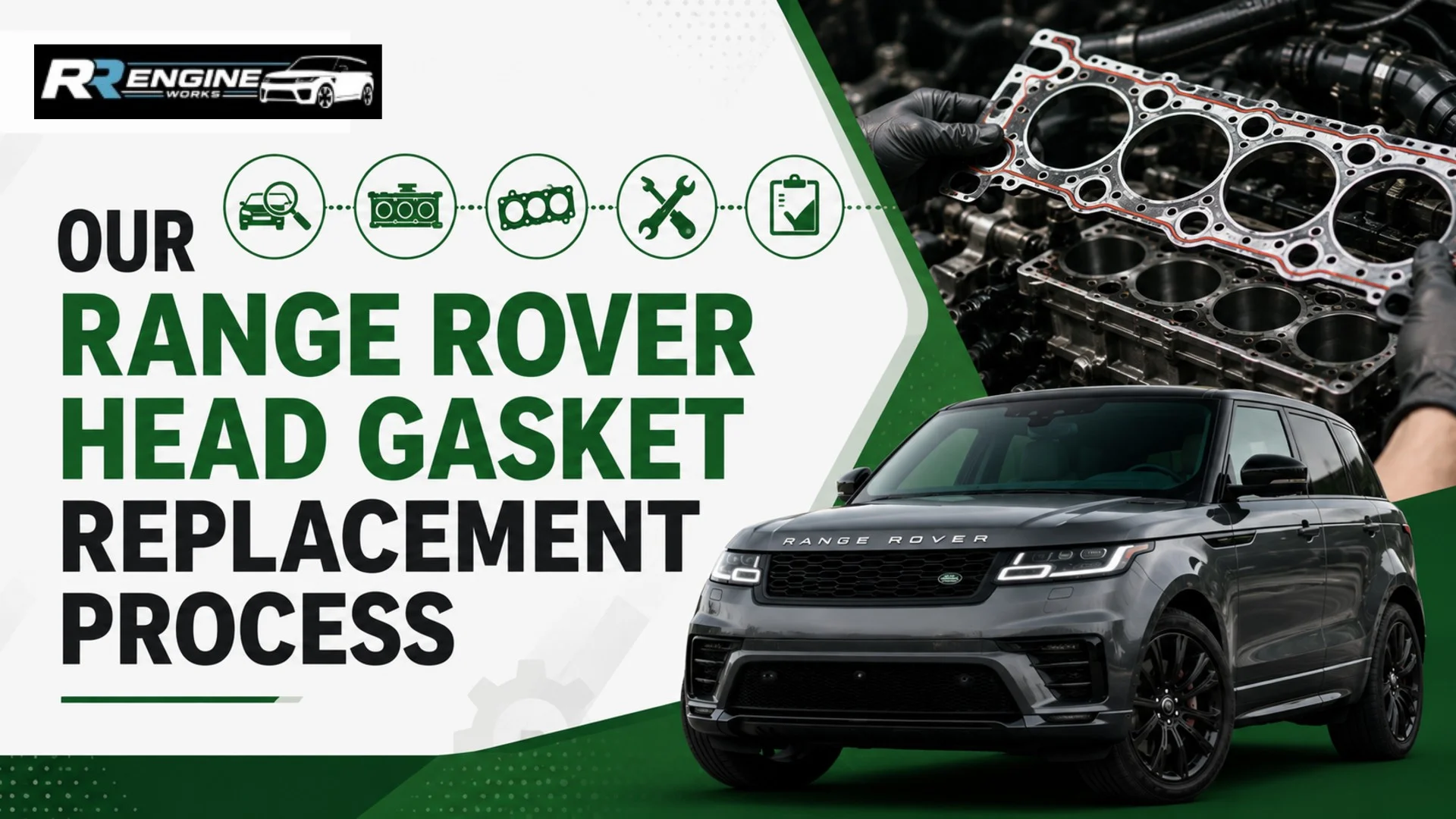
This is where experience actually shows. A head gasket job done properly involves several stages, and skipping any of them is exactly how comeback failures happen , which is unfortunately common with rushed or budget repairs.
How Do We Diagnose a Blown Head Gasket?
We don't guess based on symptoms alone. Before any strip-down begins, we confirm the fault using proper diagnostic methods:
- Compression testing across all cylinders to identify pressure loss
- Leak-down testing to pinpoint exactly where pressure is escaping
- Coolant system pressure testing to check for internal leaks
- A combustion/block test, which detects combustion gases present in the coolant , a definitive sign of a head gasket breach
This step matters more than most people realise. Confirming the fault properly avoids paying for a head gasket replacement when the real issue turns out to be a cracked head, a failed water pump, or something else entirely.
Is Head Skimming Always Necessary?
Not in every case, but it's checked on every job. Once the cylinder head is removed, we measure it for warping using precision equipment. If it's out of tolerance , which is common after overheating , CNC skimming resurfaces the head to restore a flat, true sealing surface. Fitting a new gasket onto a warped head is one of the most common reasons repairs fail again within months, so this step isn't optional when warping is present.
OEM vs Aftermarket Head Gasket , What Do We Use?
Factor | OEM Gasket | Quality Aftermarket (MLS) Gasket |
| Fit accuracy | Guaranteed factory spec | High, if sourced from reputable manufacturers |
| Cost | Typically higher | Often more competitive |
| Availability | Can involve longer lead times | Usually readily available |
| Our approach | Used where specified or requested | Multi-layer steel (MLS) gaskets used where appropriate for durability |
We talk this through with every customer rather than defaulting to one option , the right choice depends on the vehicle's age, usage, and your budget.
How Long Does a Head Gasket Replacement Take?
Realistically, a Range Rover head gasket replacement takes between two and five working days, depending on the engine variant, whether machining is needed, and parts availability. V8 and supercharged engines generally take longer due to their layout and component access. We always give an honest timeline upfront rather than a vague "few days" that stretches out unexpectedly.
Torque Specifications & Quality-Checked Reassembly
Head bolts on Range Rover engines are torqued to precise manufacturer specifications, often in a specific sequence and sometimes using torque-to-yield bolts that require replacement rather than reuse. Getting this wrong is a common cause of early gasket failure after a "repair" , it's a detail that separates a specialist job from a rushed one.
Range Rover Head Gasket Replacement Cost & Why Choose Us
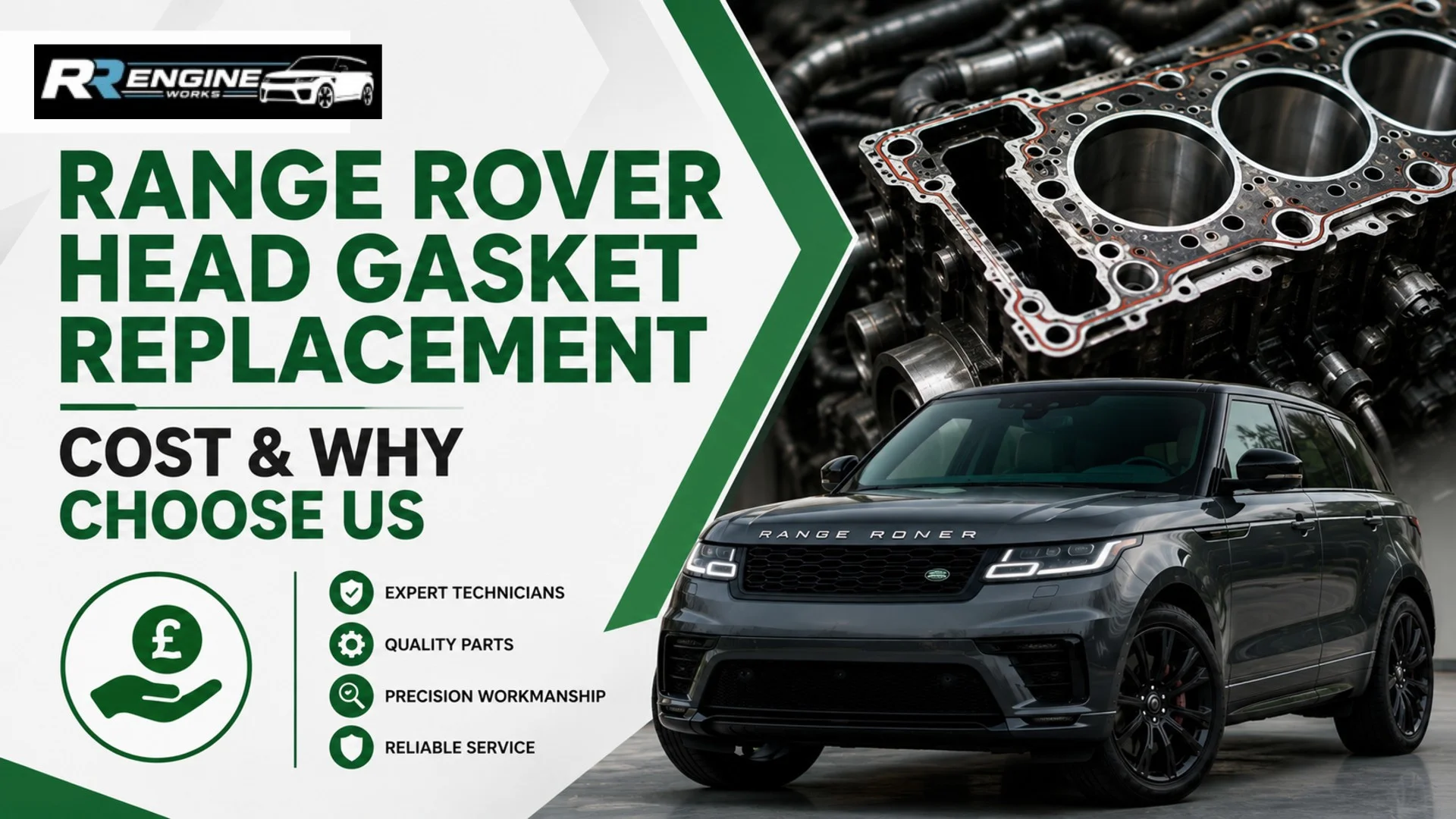
We understand cost is usually the first thing on your mind once you've accepted the repair is necessary. It's a fair question, and it deserves a straight answer rather than a vague "it depends" with no further detail.
How Much Does Head Gasket Replacement Cost on a Range Rover?
Costs vary based on engine type, whether skimming is required, and parts chosen (OEM vs aftermarket). Broadly speaking:
- Ingenium engines tend to sit at the more accessible end of the repair cost range
- SDV6/TDV6 diesel engines are moderately more involved due to component access
- V8 and supercharged V8 engines typically carry higher labour costs due to their complexity
We provide a clear, itemised quote before any work begins , no surprise additions once the engine is already stripped down.
Repair vs Full Engine Replacement , Which Is More Cost-Effective?
If the head gasket failure was caught early and the engine wasn't run for long while overheating, repair is almost always the more economical route. However, if there's evidence of bearing damage, a cracked block, or extended overheating, a rebuilt or replacement engine may actually work out better value long-term than repeatedly repairing a compromised block. We'll always tell you honestly which situation you're in rather than pushing the more expensive option by default.
Warranty, Recovery & Verified Customer Reviews
Every head gasket replacement we carry out is backed by a workmanship warranty, and we offer vehicle recovery for customers who can't safely drive their Range Rover to us. Our reputation in Grays and across Essex has been built on customers who came in with exactly the symptoms described above and left with a properly diagnosed, correctly repaired engine , not a quick patch job.
Frequently Asked Questions
What are the early signs of a head gasket failure? Coolant loss without a visible leak, white exhaust smoke, a rising temperature gauge, and milky oil are the earliest and most reliable indicators.
Is head skimming necessary for every head gasket repair? No , it depends on whether the cylinder head has warped. We measure every head during strip-down and only skim when it's out of tolerance.
How long does a head gasket replacement take? Typically two to five working days, depending on engine variant and whether machining or additional parts are required.
Can a head gasket leak cause internal engine damage? Yes. If left unaddressed, coolant contamination can damage bearings and the crankshaft, while continued overheating can warp the cylinder head or block.
Do you use multi-layer steel (MLS) gaskets for repairs? Yes, where appropriate for the engine and application, alongside OEM gaskets when specified , we discuss the best option for your vehicle before starting work.
How much does it cost to replace a Range Rover head gasket? Cost depends on engine type, machining needs, and parts choice. We provide a detailed quote after diagnosis so you know exactly what you're paying for and why.
Can I drive with a blown head gasket? It's not advisable. Continuing to drive risks turning a repairable fault into a full engine rebuild within a short distance.
How long should a head gasket last on a Range Rover? With proper cooling system maintenance, a head gasket should comfortably outlast typical ownership periods , most failures trace back to an underlying cooling system issue rather than the gasket simply wearing out on its own.
Don't Let a Head Gasket Problem Turn Into an Engine Rebuild
A Range Rover head gasket failure is stressful, but it doesn't have to be catastrophic , provided it's caught early and diagnosed properly. The difference between a straightforward repair and a five-figure engine rebuild often comes down to how quickly you act and who you trust to look at it.
If you're seeing any of the warning signs above , coolant disappearing, white smoke, a climbing temperature gauge , get your Range Rover assessed before you drive it any further. Our team at RR Engine Works in Grays, Essex specialises in exactly this repair across Ingenium, SDV6, TDV6, and V8 engines, with proper diagnostics, honest quotes, and a workmanship warranty behind every job.
Get in touch today for an honest assessment and a clear, no-surprises quote for your Range Rover head gasket repair.