
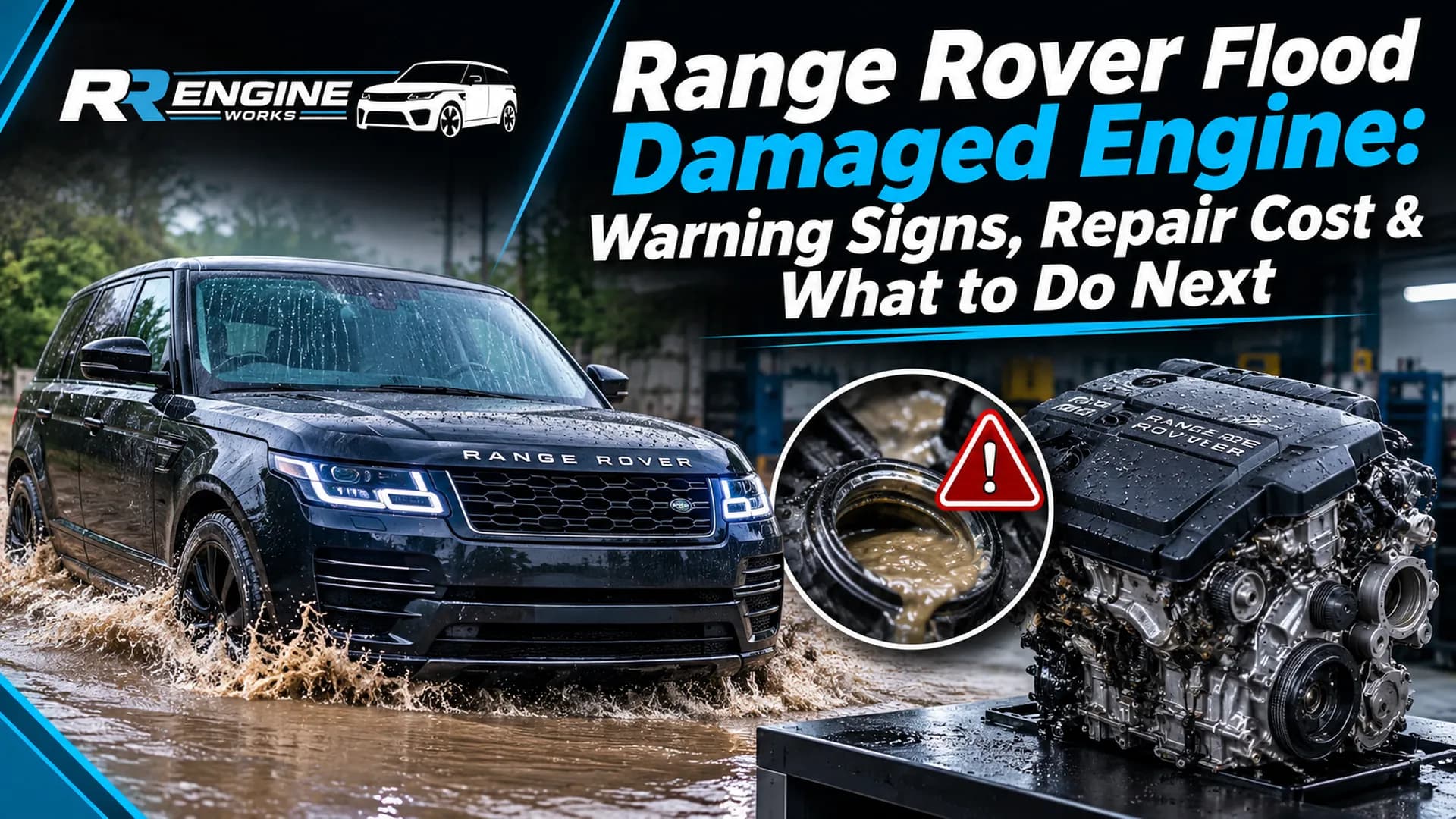
Your Range Rover has been through floodwater, and the engine turns over, or you're tempted to try it. Stop. Don't restart it.
A Range Rover flood damaged engine can look fine on the surface and still be one turn of the key from total failure. Water inside the cylinders can bend connecting rods, crack pistons and turn a repairable problem into a full engine replacement.
This guide covers the symptoms, the checks that matter, realistic repair costs and the safest next steps. RR Engine Works in Grays, Essex, handles this kind of work, so everything below is based on how these engines fail and how they are fixed.
What Are the Signs of a Range Rover Flood Damaged Engine?
Flood damage rarely announces itself with a single dramatic failure. It usually shows up as a collection of small symptoms that get worse with every mile or every start.
Which symptoms and warning lights show a Range Rover flood damaged engine?
Water gets into a Range Rover engine in two main ways. It's either drawn in through the air intake (the classic cause of hydrolock), or it contaminates the oil and coolant systems from outside. Each leaves different clues.
Here are the Range Rover flood damaged engine symptoms to watch for:
- Engine management light or amber warning on the dash. This is the most common Range Rover flood damaged engine warning light. It often appears alongside "engine fault" messages and reduced power.
- Hard starting or a engine that cranks, then stops dead. If the starter motor suddenly won't turn the engine over, water may be sitting in a cylinder.
- Misfires and rough running. Contaminated fuel or water in the combustion chamber causes uneven firing.
- White or grey exhaust smoke. This points to water or coolant being burned off.
- Milky or frothy oil. Check the dipstick and the oil filler cap. A coffee-with-milk look means water has mixed with the oil.
- Knocking, tapping or a sudden metallic bang. This can mean bent internal components. Switch off immediately.
- Unexplained coolant loss. Dropping levels can point to a damaged pipe or internal leak, which is why Range Rover coolant repair often comes up alongside flood work.
- A damp or musty cabin and strange electrical faults. Wet carpets, flickering screens and failing sensors are common after flooding.
If you see two or more of these after contact with floodwater, treat it as a serious Range Rover engine failure risk. Keep driving and a small repair can become a write-off.
Is It Safe to Start a Range Rover After Flood Water? (Flood Test & Immediate Steps)
Short answer: no. If the vehicle stalled in water or was parked in a flooded area, don't turn the ignition on.
What should you do first after a Range Rover floods?
Modern Range Rovers pack a lot of electronics into the cabin and around the engine bay. Switching the ignition on can short a wet module, and cranking the engine can force water through the cylinders.
Follow this order:
- Stay out of the car if the water is still rising or standing around it.
- Don't press the start button or turn the key.
- Disconnect the battery if you can do so safely.
- Arrange recovery on a flatbed, not a tow with the wheels turning.
- Call your insurer and take photos of the waterline before anything is moved.
- Book a specialist inspection before any restart attempt.
How do you carry out a Range Rover flood test?
A proper Range Rover flood test is about finding where the water went and what it touched. A specialist will typically check:
- The air intake and filter box. A wet filter or standing water is the strongest sign of ingestion.
- Engine oil and coolant condition. Milky oil, or oil that smells of water, needs a full strip and analysis.
- Cylinder inspection. Glow plugs or spark plugs are removed and the engine is turned by hand to check for resistance.
- Waterline marks. Look inside door shuts, under the seats and in the boot for silt lines.
- Electrical connectors and control modules. Corrosion often appears weeks later, not days.
- Gearbox and differentials. Water in these areas is easy to miss and expensive to fix.
A DIY look is better than nothing, but it won't catch a bent rod or early corrosion. A professional diagnostic gives you a clear picture before you commit to repair costs.
Buying a used car? Flood damaged Land Rovers are sometimes sold with the history hidden. Check for damp carpets, rust in odd places, silt in the seat runners and a musty smell. Ask for a full service history, and have a specialist inspect the car before you pay.
How Much Does Range Rover Flood Damaged Engine Repair Cost?
This is the question everyone asks, and the honest answer is: it depends on how far the water travelled.
What is the average cost of repairing a Range Rover flood damaged engine?
The Range Rover flood damaged engine repair cost depends on three things:
- The engine. The 4.4 SDV8, the 3.0 SDV6 and the 5.0 petrol V8 have very different parts and labour costs.
- The damage level. Water in the intake only is cheaper than bent rods, a cracked block or a failed crankshaft.
- How quickly it was addressed. An engine left sitting wet will corrode, which adds to the bill.
Here is a general guide to what to expect. These are indicative ranges only, and a firm Range Rover flood damaged engine cost needs an inspection first.
Repair option | Best suited to | Typical range (fitted) |
| Drain, flush and re-oil | Minor water ingress, no internal damage | £500 – £1,500 |
| Partial repair (rods, pistons, bearings) | Moderate internal damage, sound block | £3,000 – £6,500 |
| Full engine rebuild | Severe damage, salvageable block | £4,500 – £8,500 |
| Reconditioned or replacement engine | Cracked block or widespread damage | £5,500 – £10,000+ |
Should you rebuild, recondition or replace a flood damaged Range Rover engine?
There is no single right answer. It comes down to damage, budget and how long you plan to keep the car.
- Rebuild when the block and crankshaft are sound and the damage is limited to a few components. It often costs less and keeps the original engine.
- Recondition or replace when the block is cracked, several cylinders are affected or the engine has been sitting wet for a while. A replacement can also save time on labour.
Always ask about warranty cover and turnaround time before agreeing to either route.
One more point: flood work often reveals other faults. On the 4.4 diesel, for example, the coolant crossover pipe is a known weak point, and a leak there can mimic or worsen flood symptoms. Any decent Range Rover coolant repair during a flood job should include a check of those pipes, hoses and connections.
Why Choose RR Engine Works for Flood Damaged Range Rover Repair in Grays?
Flood damage repair is part detective work, part precision engineering. You want a workshop that finds the real extent of the problem before quoting, not one that guesses.
Can RR Engine Works repair or replace my Range Rover flood damaged engine?
Yes. At RR Engine Works, the process is built around giving you clear answers early:
- Diagnosis first. We inspect the intake, cylinders, oil and coolant before recommending anything.
- Full strip-down where needed. Engines are opened up, cleaned and measured so nothing is missed.
- A clear recommendation. You'll know whether a repair, rebuild or replacement makes sense, and why.
- Straight quotes. No pressure and no vague estimates.
- Recovery support. We can help arrange collection of a vehicle that can't be driven.
A typical scenario: a Range Rover is caught in surface water on a country road and cuts out. The owner restarts it, hears a knock and tows it in. If it had been left alone, the repair might have been a flush and a service. After the restart, the rods are bent and the engine needs rebuilding. That single decision can double the bill.
Find us at: Unit 1 Hedley Ave, Grays RM20 4EL. Call or message us for a free quote on your flood damaged Range Rover engine, even if you're not sure how bad it is.
Range Rover Flood Damaged Engine: Frequently Asked Questions
Can a flooded Range Rover engine be repaired?
Often, yes. If the damage is caught early and the block is sound, a repair or rebuild is realistic. Severe hydrolock or corrosion may call for a replacement.
How do I know if my Range Rover has water in the engine?
Look for milky oil, white exhaust smoke, hard starting, misfires, a knocking noise and an engine management light. A professional inspection confirms it.
What is hydrolock?
Hydrolock happens when water enters a cylinder. Because water can't be compressed, the piston stops against it and can bend a connecting rod or crack a component.
Is it worth repairing a flood damaged Range Rover?
It depends on the model, mileage and extent of damage. For many owners, a rebuild or reconditioned engine costs far less than replacing the vehicle.
Will insurance cover a flood damaged engine?
Many comprehensive policies cover flood damage, but terms vary. Contact your insurer before moving or repairing the car, and keep photos and inspection reports.
Can I drive a Range Rover after driving through deep water?
Only if it ran perfectly through the water and shows no warning lights. If it stalled, coughed or smelled wet, do not restart it and get it inspected.
Final Thoughts
A Range Rover flood damaged engine is rarely a lost cause, but it is always time-sensitive. The best outcomes come from owners who stop, don't restart and get a proper inspection quickly.
If your Range Rover has been in floodwater, or you're worried about a used car's history, speak to a specialist before spending money. Contact RR Engine Works today for a free quote and get a clear answer on repair, rebuild or replacement.