
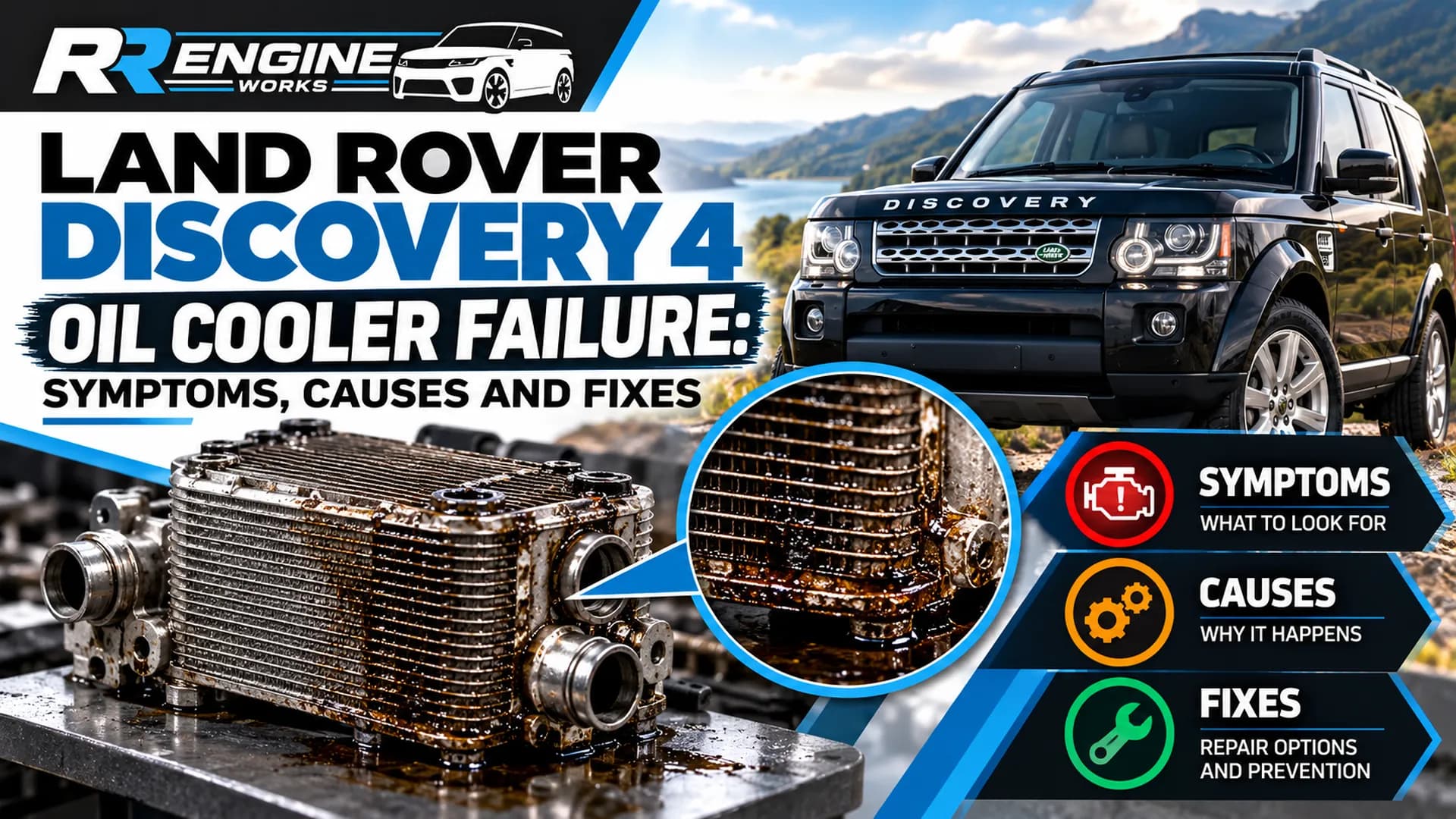
On the Discovery 4's 3.0-litre V6 diesel, the engine oil cooler can fail in two ways:
- Externally: it leaks oil into the engine's valley and onto hot exhaust parts.
- Internally: oil and coolant cross-contaminate inside the cooler.
The usual warning signs are a burning-oil smell, oil loss with no obvious drip, or dark sludge in the coolant expansion tank. None of these proves on its own that the oil cooler has failed. Similar symptoms can come from a head gasket, an EGR cooler, other cooling-system leaks, or the separate transmission oil cooler pipes.
A proper diagnosis matters because the fixes cost very different amounts: from a seal or pipe repair to engine work if contaminated oil has already damaged the bearings.
What Does the Discovery 4 Oil Cooler Do?
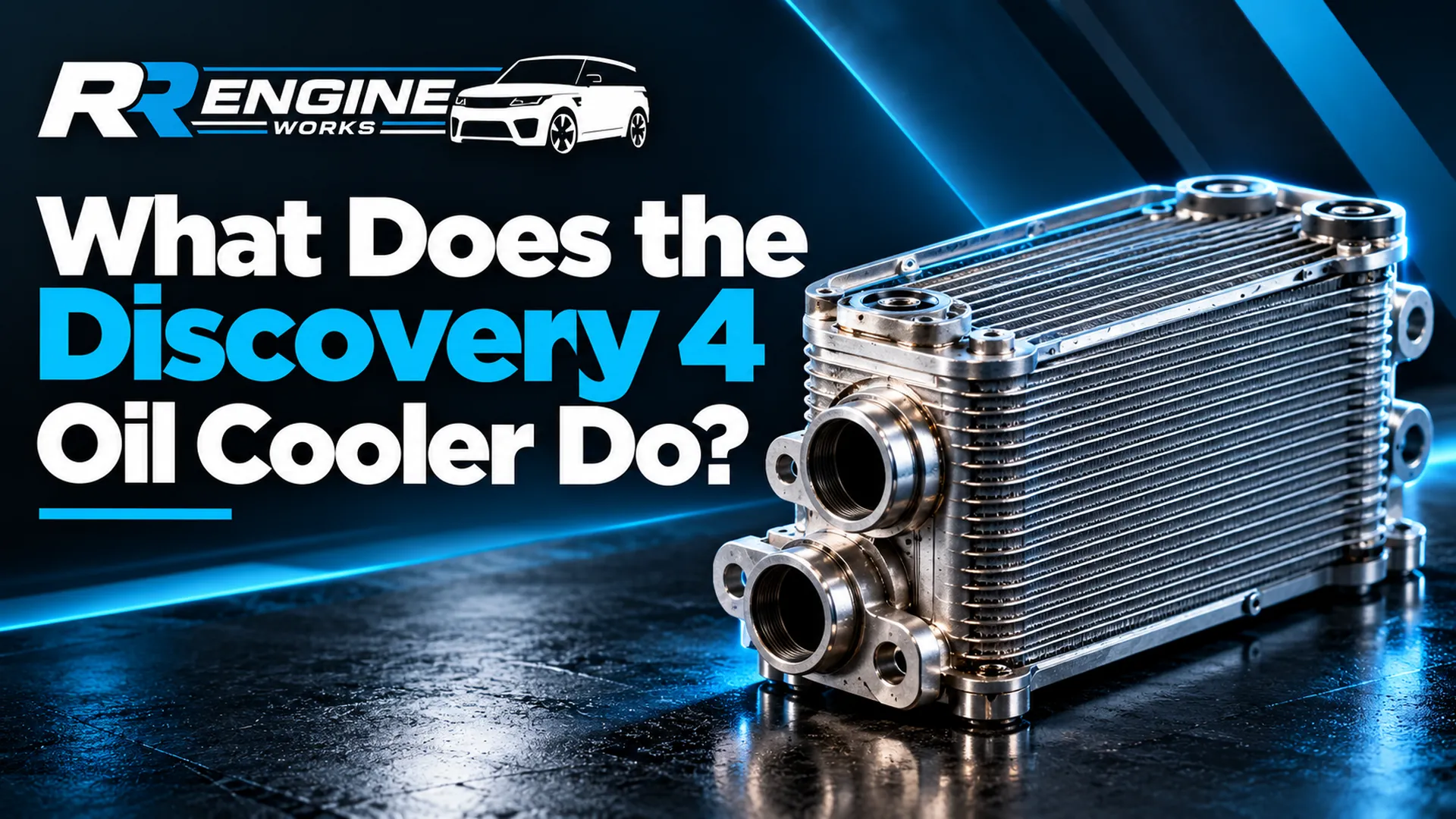
The engine oil cooler is a heat exchanger. Hot engine oil passes through it and gives up heat to the engine coolant, keeping the oil within its working temperature.
On the 3.0 TDV6 and SDV6, it sits deep in the "vee" between the two cylinder banks, beneath the intake components. That position is why even a simple leak can be labour-intensive to fix (JLR Engines).
Internal Failure vs External Leaks
Failure type | What happens | Typical signs |
| External leak | Gaskets, seals or feed pipes harden and crack, so oil escapes | Burning smell, smoke from the bonnet, oil pooling in the valley or dripping at the back of the engine, falling oil level |
| Internal failure | The cooler's internal seals or plates break down, so oil and coolant mix | Dark, tar-like sludge in the coolant tank; overheating; coolant loss |
Specialists note that early Discovery 4s (2010–2012) used plastic and rubber oil and coolant feed pipes that become brittle with heat cycling. Later cars received revised parts, but pipes can still degrade at high mileage.
An external leak can also be hidden under the acoustic covers, so the oil level may fall without any obvious drip on the driveway.
Is It Really the Oil Cooler?
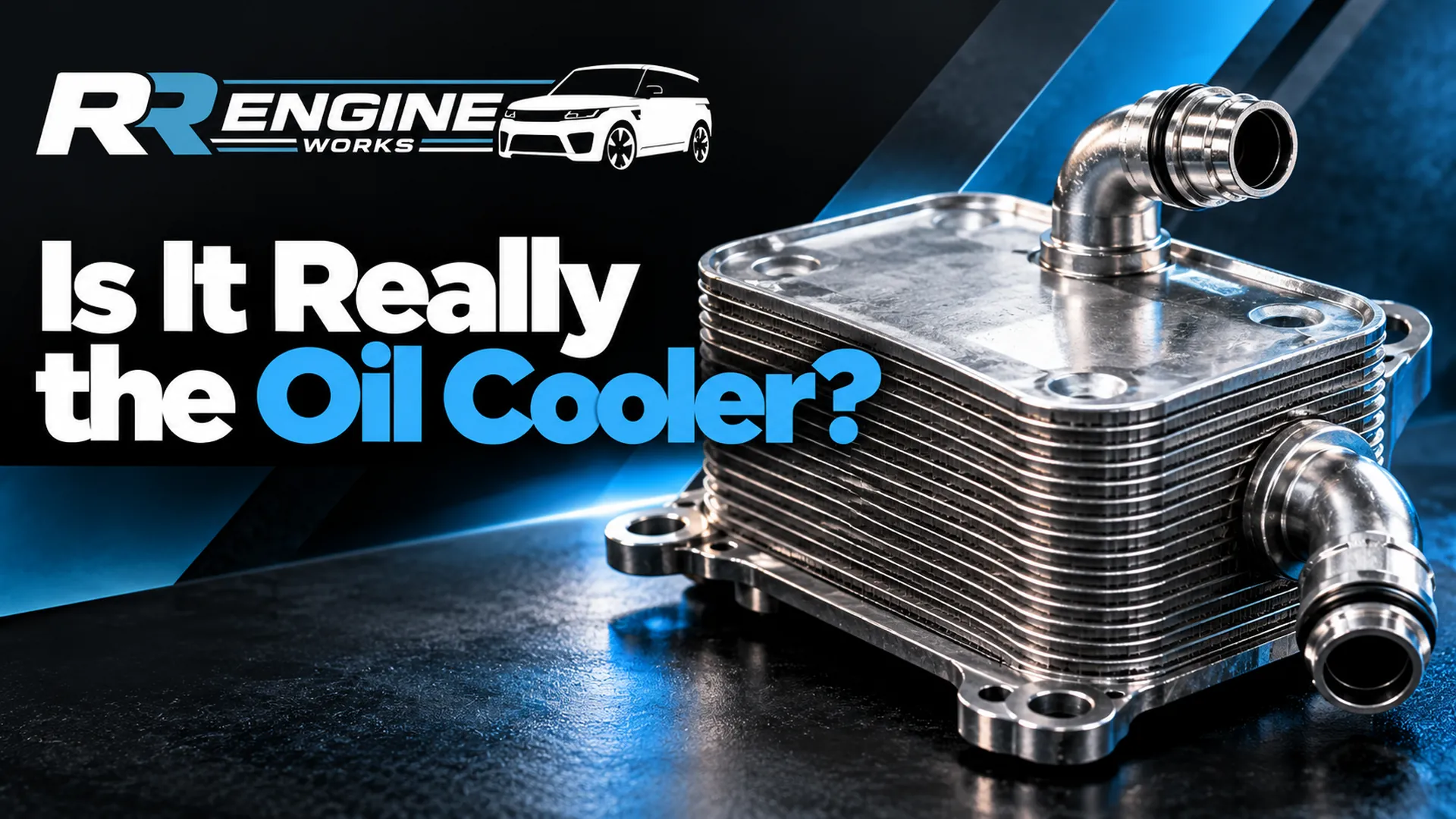
Oil in the coolant is a symptom, not a diagnosis. Several other faults produce similar signs, so test before you replace parts.
Symptoms and Other Possible Causes
Symptom | Possible oil cooler cause | Other possible causes |
| Oily sludge in the coolant tank | Internal cooler failure | Head gasket or cylinder head fault; contaminated coolant from a previous repair |
| Milky or "mayonnaise" residue in the oil | Internal cooler failure | Head gasket; short-trip condensation (usually only on the filler cap) |
| Burning-oil smell, smoke from the bonnet | External cooler or pipe leak | Leaking cam covers, turbo oil feeds, crankcase breather |
| Oil drips at the rear of the engine or gearbox area | Oil running down from the valley | Rear crankshaft seal; transmission oil cooler pipes |
| Coolant loss with no external leak | Internal cooler failure | EGR cooler leak (coolant into the exhaust); head gasket |
The transmission oil cooler is a separate component. Land Rover issued technical bulletin LTB00378 for Discovery 4 (LR4) vehicles from 2010 to 2016. It covers transmission fluid cooler pipes that could chafe at a bracket and leak (Land Rover bulletin via NHTSA).
A leak from those pipes is gearbox fluid, not engine oil. It needs a different repair.
How a Proper Diagnosis Works
A specialist should rule causes in or out rather than guess. A thorough process normally includes the following steps:
- Cold checks. Record the oil and coolant levels with the engine cold, and inspect the expansion tank and oil filler cap.
- Cover removal and cleaning. Remove the engine covers and undertray, clean suspect areas, and trace leaks to their highest wet point.
- Cooling-system pressure test. This shows whether coolant is escaping, and where.
- Combustion-gas test. A sniffer or block test checks for exhaust gases in the coolant, which points to a head gasket or cylinder head problem rather than the cooler.
- Oil inspection or analysis. Checking for coolant in the oil (glycol), metal particles or fuel dilution.
- Live data. Monitoring coolant temperature and oil-pressure readings.
JGS4x4's TDV6 cooling guide recommends a similar step-by-step approach to concealed coolant leaks (JGS4x4).
RR Engine Works' engine diagnostics service covers warning lights, leaks and power loss. If testing points to the head gasket instead, its head gasket replacement service includes compression and pressure testing.
Repair Options and Costs
Where the fault is limited to the cooler, its seals or its feed pipes, the repair usually means:
- removing the intake components to reach the valley;
- replacing the cooler or its gaskets and pipes;
- cleaning out spilt oil;
- flushing the cooling system and renewing the engine oil and filter.
One UK specialist puts a Discovery 4 SDV6 oil cooler leak repair at roughly £600–£1,100. It does not state whether that includes VAT, or exactly which parts are covered (JLR Engines). It is not an RR Engine Works price.
When you get a quote, ask whether it covers:
- A new cooler or only seals and pipes
- Coolant system flushing (more than once if contaminated)
- Oil and filter change
- Any thermostat or hoses disturbed during the work
- VAT
When Oil Cooler Failure Becomes an Engine Problem
The risk grows if the fault is ignored.
If coolant has entered the oil, the oil can no longer protect the bearings properly. JLR Engines identifies crankshaft and bearing failure as a major SDV6 risk. Once bearings are damaged, a cooler repair alone is not enough.
If you see any of these, stop driving and arrange recovery:
- Milky or emulsified oil on the dipstick
- An oil-pressure warning
- Knocking from the engine
- Rising temperature or steam
- Smoke from under the bonnet
If the inspection finds metal in the oil or bearing damage, the realistic options become an engine rebuild or replacement. RR Engine Works' Discovery 4 engine page covers those routes.
Frequently Asked Questions
Discovery 4 Oil Cooler Failure FAQs
What are the symptoms of a failing oil cooler on a Discovery 4?
The main signs are a burning-oil smell, smoke from under the bonnet, a falling oil level, oil at the rear of the engine, or dark sludge in the coolant expansion tank. Have a specialist confirm the cause before parts are replaced.
Does oil in the coolant always mean the oil cooler has failed?
No. A head gasket or cylinder head fault can produce similar contamination, and residue can also come from a previous repair. Pressure and combustion-gas tests help separate the causes.
Can I drive a Discovery 4 with a leaking oil cooler?
Not with oil reaching hot exhaust parts, emulsified oil, an oil-pressure warning or overheating. These risk fire or engine damage. A minor weep should still be inspected promptly.
Is the transmission oil cooler the same thing?
No. The transmission oil cooler and its pipes carry gearbox fluid. Land Rover issued bulletin LTB00378 for leaking transmission cooler pipes on 2010–2016 Discovery 4s, which is a different repair from the engine oil cooler.
How much does it cost to fix a Discovery 4 oil cooler?
One UK specialist estimates about £600–£1,100 for an SDV6 oil cooler leak repair. The final cost depends on the parts needed, the flushing required, and whether the engine has suffered damage.
If you suspect oil cooler trouble on your Discovery 4, contact RR Engine Works on 01708 592377 via the contact page. Please share:
- your registration and model year
- mileage
- what you've noticed in the oil or coolant
- any warning lights