

If your Jaguar or Land Rover has started making a metallic rattle on cold mornings, or your dashboard's been throwing up an amber warning light more often than you'd like, you're probably here for one reason: something's not right with your Ingenium engine, and you want a straight answer before it turns into a five-figure repair bill.
You're not alone. Since Jaguar Land Rover rolled out the Ingenium engine family in 2015, it's ended up under the bonnet of everything from the Range Rover Evoque to the Jaguar F-Pace, and with that widespread use has come a well-documented pattern of faults. Timing chains that stretch early. Diesel oil that dilutes itself. Turbos that give up well before they should.
This guide walks through exactly why Ingenium engines develop problems, how to spot the early warning signs before they become catastrophic, what repairs actually cost, and what you can do about it, whether that's preventative maintenance or booking a proper diagnostic with a specialist who knows this engine inside out.
Why Do Ingenium Engines Develop Problems?
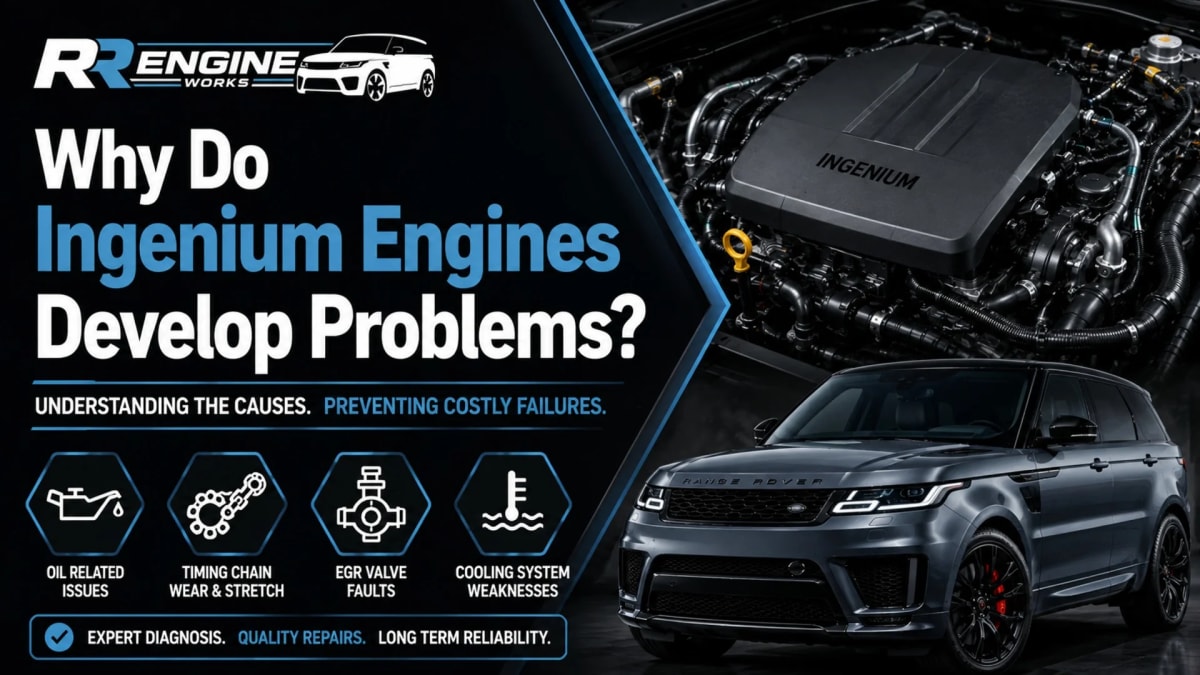
The Ingenium engine was JLR's answer to tightening emissions regulations and the industry-wide push toward smaller, more efficient turbocharged units. On paper, it's a clever piece of engineering, modular, lightweight, and designed to be shared across both Jaguar and Land Rover's diesel and petrol ranges.
In practice, several design choices have caused recurring issues that independent garages and main dealers alike have become very familiar with.
Timing Chain Stretch and Wear Explained
This is the fault that comes up more than any other when people search for Ingenium engine problems, and for good reason.
Unlike older Jaguar Land Rover engines that used external timing chains with easy access for inspection and replacement, the Ingenium engine houses its timing chain at the back of the engine, closer to the bulkhead. That positioning alone tells you most of what you need to know about repair costs, more on that shortly.
The chain itself is prone to stretching earlier than you'd expect from a modern engine, particularly on high-mileage vehicles or ones that have had infrequent oil changes. As the chain stretches, timing accuracy drifts, and you start to hear it before you feel it:
- A metallic rattle or tapping noise, most noticeable on cold start
- The noise fading (or seeming to) once the engine warms up
- In more advanced cases, a rough idle or hesitation under load
Left unaddressed, a stretched timing chain can jump time entirely. On an interference engine, which the Ingenium is, that means piston-to-valve contact. That's not a repair job anymore; that's an engine rebuild or replacement.
Oil Dilution in Ingenium Diesel Engines
Oil dilution is one of those problems that's almost invisible until it isn't. It happens when unburned diesel fuel finds its way past the piston rings and into the engine oil, thinning it out and reducing its ability to lubricate properly.
It's largely linked to how the engine manages DPF regeneration cycles, short journeys, stop-start driving, and infrequent motorway runs all make it worse. Over time, diluted oil means increased wear on bearings, the crankshaft, and the timing chain itself, effectively accelerating several other faults on this list at once.
Owners often only find out when a service technician checks the oil level and finds it's risen above the maximum mark, a strange but telling sign that fuel, not oil, is doing the topping up.
Turbocharger and Fuel Injector Failures
The Ingenium's turbocharger and fuel injection system work under serious pressure, literally. High-pressure fuel injectors are engineered to extremely tight tolerances, and when they fail, it's rarely subtle.
Common signs include:
- Loss of power or noticeable turbo lag
- Black or blue smoke from the exhaust
- A rough idle or misfire, particularly on cold starts
- Engine management light paired with fault codes relating to fuel pressure or injector correction values
Turbo actuator faults are also fairly common on Ingenium units, sometimes triggering limp mode even when the turbo itself is otherwise healthy, which is exactly why a proper diagnostic scan matters before anyone starts replacing expensive parts on a guess.
DPF and EGR Related Faults
Like most modern diesels, the Ingenium relies on a Diesel Particulate Filter (DPF) and EGR valve to keep emissions within legal limits. Both are common failure points, especially on vehicles used mostly for short journeys where the DPF never gets hot enough to regenerate properly.
Soot buildup, blocked EGR valves, and failed regeneration cycles tend to show up as:
- Poor fuel economy
- A noticeable drop in power
- Warning lights specific to the emissions system
- In persistent cases, limp mode
(Internal link opportunity: link to a dedicated "DPF Regeneration Problems Explained" page here, if one exists on your site.)
How Do You Know If Your Ingenium Engine Is Failing?
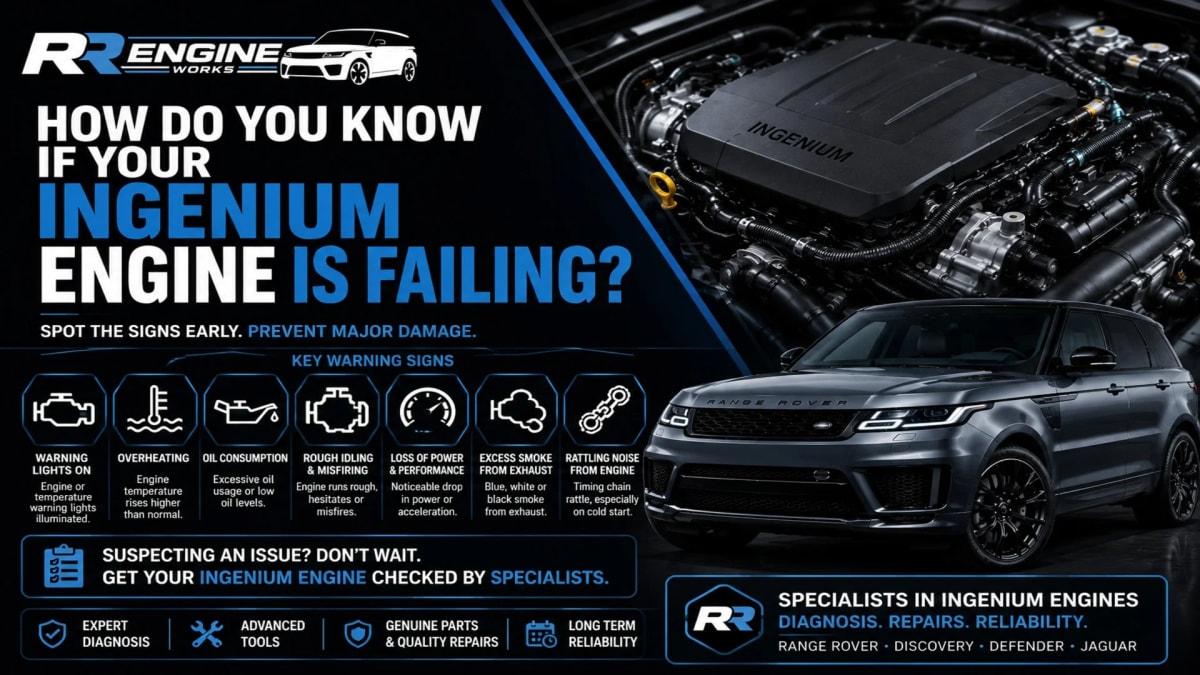
Catching an Ingenium engine problem early is the difference between a £300 repair and a £6,000 rebuild. Most owners describe a slow build-up of small annoyances before things get serious, which is exactly why they're worth taking seriously the first time.
Warning Signs, Noises, and Fault Codes to Watch For
Here's what tends to show up first, roughly in the order owners usually notice them:
- Cold start rattle, a metallic, chain-like noise lasting a few seconds after startup, often the earliest sign of timing chain wear
- Oil level creeping up between services, a strong indicator of oil dilution
- Engine management light, especially paired with fault codes like P0016, P0017 (timing correlation), P2263 (turbo boost), or P0299 (underboost)
- Rough idle or hesitation, particularly noticeable when pulling away from a stop
- Reduced fuel economy with no obvious cause
- Limp mode, the engine restricting power to protect itself, usually a sign something's already tripped a safety threshold
If more than one of these sounds familiar, it's worth booking a diagnostic scan rather than waiting to see if it resolves itself. It won't.
Which Jaguar and Land Rover Models Are Most Affected
The Ingenium engine family is genuinely widespread across both brands, which is part of why so many owners are searching for answers right now. Vehicles fitted with it include:
- Range Rover Evoque
- Range Rover Velar
- Land Rover Discovery Sport
- Land Rover Discovery
- Jaguar XE
- Jaguar XF
- Jaguar F-Pace
- Jaguar E-Pace
- Jaguar F-Type (petrol variants)
Engine codes to look out for include the AJ200D (diesel) and AJ200P (petrol), spanning output variants like D150, D180, D200, and P200 through P300.
Reliability by Model Year
Generally speaking, earlier Ingenium units, roughly 2015 to 2018, carry the highest reported rates of timing chain and oil dilution issues. JLR made incremental engineering revisions across the years, including software updates aimed at managing regeneration cycles more intelligently and reducing fuel dilution. Later builds (post-2018/2019) tend to show fewer complaints, though they're not immune, particularly on high-mileage or poorly maintained examples.
If you're buying used, checking the exact build date and engine code, not just the model year on the listing, is a genuinely useful step before you commit.
What Does It Cost to Repair or Replace an Ingenium Engine?
This is usually the question that brings people here in the first place, so let's not dance around it.
Repair Type | Typical Cost Range (UK) | Notes |
| Diagnostic scan | £80 – £150 | Essential first step before any repair decision |
| Timing chain replacement | £1,500 – £3,000+ | Labour-intensive due to rear-mounted chain position |
| Turbocharger replacement | £900 – £2,200 | Varies by model and whether OEM or quality aftermarket part is used |
| Injector replacement (per injector) | £300 – £600 | Often needs coding/calibration after fitting |
| DPF cleaning or replacement | £250 (clean) – £1,800 (replacement) | Cleaning is often viable if caught early |
| Full engine rebuild | £4,000 – £7,000 | Depends on extent of internal damage |
| Full engine replacement (reconditioned) | £5,000 – £9,000+ | Often the more cost-effective option beyond a certain damage threshold |
Costs are indicative and vary by vehicle, mileage, and whether genuine JLR parts or quality aftermarket alternatives are used. An accurate quote always requires a physical inspection.
Repair vs Rebuild vs Full Replacement: Which Is Right for You
This decision genuinely depends on three things: how far the damage has progressed, the vehicle's overall condition, and what you're planning to do with it long-term.
- Repair makes sense when the fault is isolated and caught early, a single failed injector or an EGR valve that needs cleaning, for example.
- Rebuild is usually the right call when there's internal damage (like a stretched timing chain that hasn't yet caused catastrophic failure) but the engine block itself is sound.
- Full replacement tends to be the more sensible route when damage is extensive, when a rebuild would cost nearly as much as a reconditioned unit, or when you're planning to keep the car for several more years and want peace of mind.
A proper diagnostic, not a guess based on symptoms alone, is what actually tells you which category you're in.
Book an Ingenium Engine Diagnostic at RR Engine Works, Grays
If any of the symptoms above sound familiar, the smartest next step isn't to wait and see. It's to get the engine properly scanned by someone who works on Ingenium units regularly, not occasionally.
At RR Engine Works, based at Unit 1 Hedley Ave, Grays RM20 4EL, we specialise in diagnosing and repairing Jaguar and Land Rover Ingenium engines, from timing chain replacements and turbo repairs to full rebuilds and reconditioned engine supply and fitting. We see these faults regularly, which means we're not learning on your vehicle; we already know what to check first, and what usually comes with it.
Why Choose a Local Independent Specialist Over a Main Dealer
Main dealer labour rates on Jaguar and Land Rover work are notoriously high, and turnaround times can stretch into weeks. An independent specialist that focuses specifically on Ingenium engines typically offers:
- Faster diagnostic turnaround
- Lower labour rates without cutting corners on parts quality
- More flexibility around repair vs replacement options, including reconditioned engines
- Direct communication with the technician actually working on your car, rather than a service advisor relaying information
It's also worth knowing that using an independent specialist for maintenance and repairs generally doesn't void your manufacturer warranty, provided the correct parts and procedures are used, a common misconception that puts people off exploring cheaper, faster options.
Frequently Asked Questions

Is the Ingenium Engine Reliable?
It's a mixed picture. The Ingenium engine is efficient and performs well when properly maintained, but it has well-documented weak points, particularly timing chain wear and oil dilution on diesel variants. Reliability improves noticeably on later builds and with consistent servicing, but it's not an engine you can neglect and expect to last trouble-free.
How Long Do Ingenium Engines Last?
With regular maintenance and prompt attention to early warning signs, an Ingenium engine can comfortably reach 100,000–150,000 miles. Neglected oil changes, frequent short journeys, and ignored warning lights significantly shorten that lifespan, sometimes causing serious faults well under 60,000 miles.
Which Ingenium Engine Should You Avoid?
Early diesel variants built between 2015 and 2017 tend to carry the highest reported rates of timing chain and oil dilution issues. If you're buying used, it's worth checking the specific build date and service history rather than avoiding the engine family entirely, later, well-maintained examples are a different story.
Can You Prevent Timing Chain or Oil Dilution Problems?
You can't eliminate the risk entirely, since it's partly a design characteristic of the engine. But you can significantly reduce it by shortening oil change intervals below the manufacturer's default recommendation, using the correct low-SAPS specification oil, and occasionally taking longer motorway drives to allow the DPF to regenerate fully. Regular diagnostic checks also catch developing issues before they escalate.
Final Thoughts
Ingenium engine problems are common enough that if you're experiencing symptoms, you're dealing with a known pattern, not a freak fault unique to your car. That's actually good news: known problems have known diagnostic paths and known solutions, which means there's no need to guess or delay.
The single biggest factor in keeping repair costs down is catching the fault early. A cold-start rattle or a slowly rising oil level might seem minor today, but left unchecked, either can turn into a full engine rebuild.
If you're noticing any of the warning signs covered here, get it looked at properly. RR Engine Works, Unit 1 Hedley Ave, Grays RM20 4EL, specialises in Ingenium engine diagnostics, repairs, and reconditioned engine replacement, get in touch to book a diagnostic and find out exactly what's going on under the bonnet before it gets more expensive.