
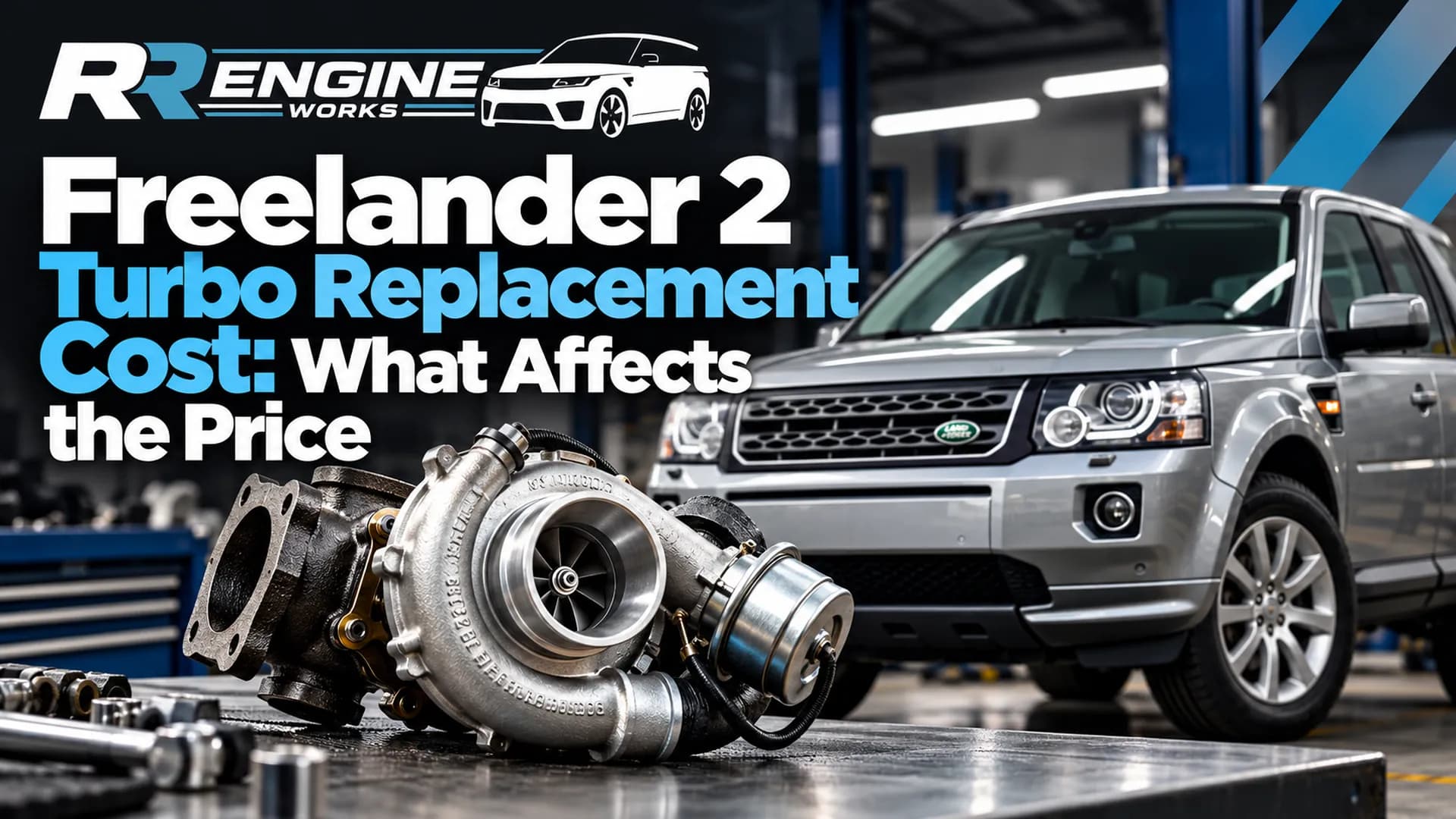
Freelander 2 turbo replacement cost depends mainly on why the turbo failed. It also depends on which engine and turbo your car has, how the workshop reaches it, whether the replacement is new, remanufactured or rebuilt, and which supporting parts need renewing so the new turbo lasts. On the 2.2 diesel, that usually includes the oil feed pipe and the fine filter in its banjo bolt. Many "turbo failures" on this car turn out to be split boost hoses or sticking vanes, so the first step is confirming the diagnosis. Then you need an itemised written quote. This guide explains each factor.
First, Confirm It Is the Turbo
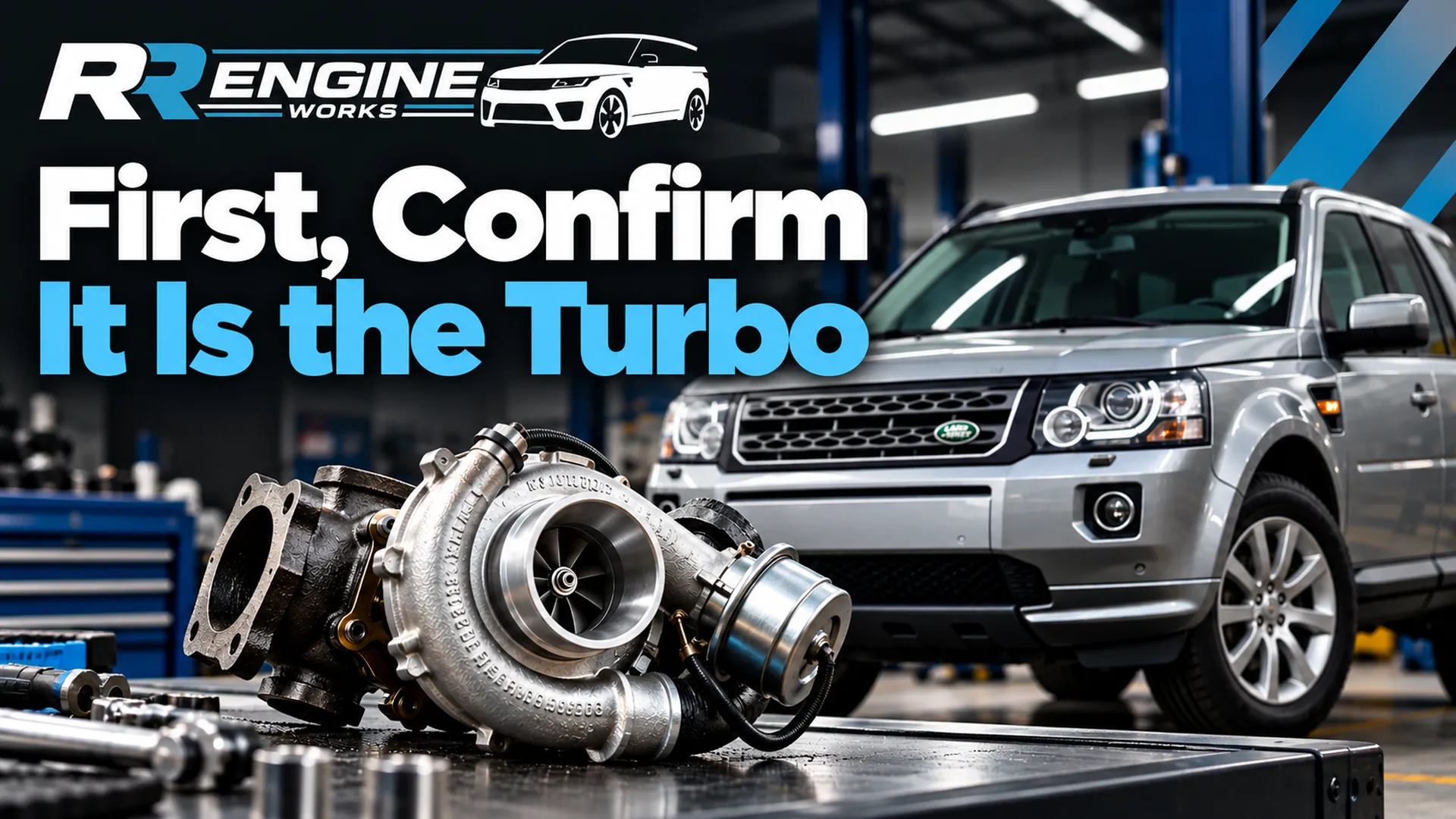
A turbo is one of the more expensive parts to replace, so make sure it really has failed. On the Freelander 2, several cheaper faults produce similar symptoms.
Faults That Mimic Turbo Failure
Symptom | Could also be | How to tell |
| Power loss or limp mode | A split intercooler or boost hose | Pressure-test the intake system |
| Over-boost or under-boost codes | Sticking variable vanes or a worn actuator | Check the vane and actuator movement |
| Repeated DPF warnings and lack of power | A blocked DPF raising back pressure | Check DPF condition and soot load |
| Black smoke | Over-fuelling or injector faults | Check the injectors and live data |
| Whistle | A normal turbo spooling sound | Listen for a change in the noise, plus other symptoms |
If the vanes are sticking with soot, or a hose has split, the turbo itself may be fine. A blocked DPF must be repaired rather than removed. GOV.UK confirms that the MOT checks for the DPF, and a car fails if it has been taken out. Our engine diagnostics and repair service uses fault-code scans and live data to confirm the actual fault before recommending a repair.
What Decides the Cost
Engine, Turbo Type and Access
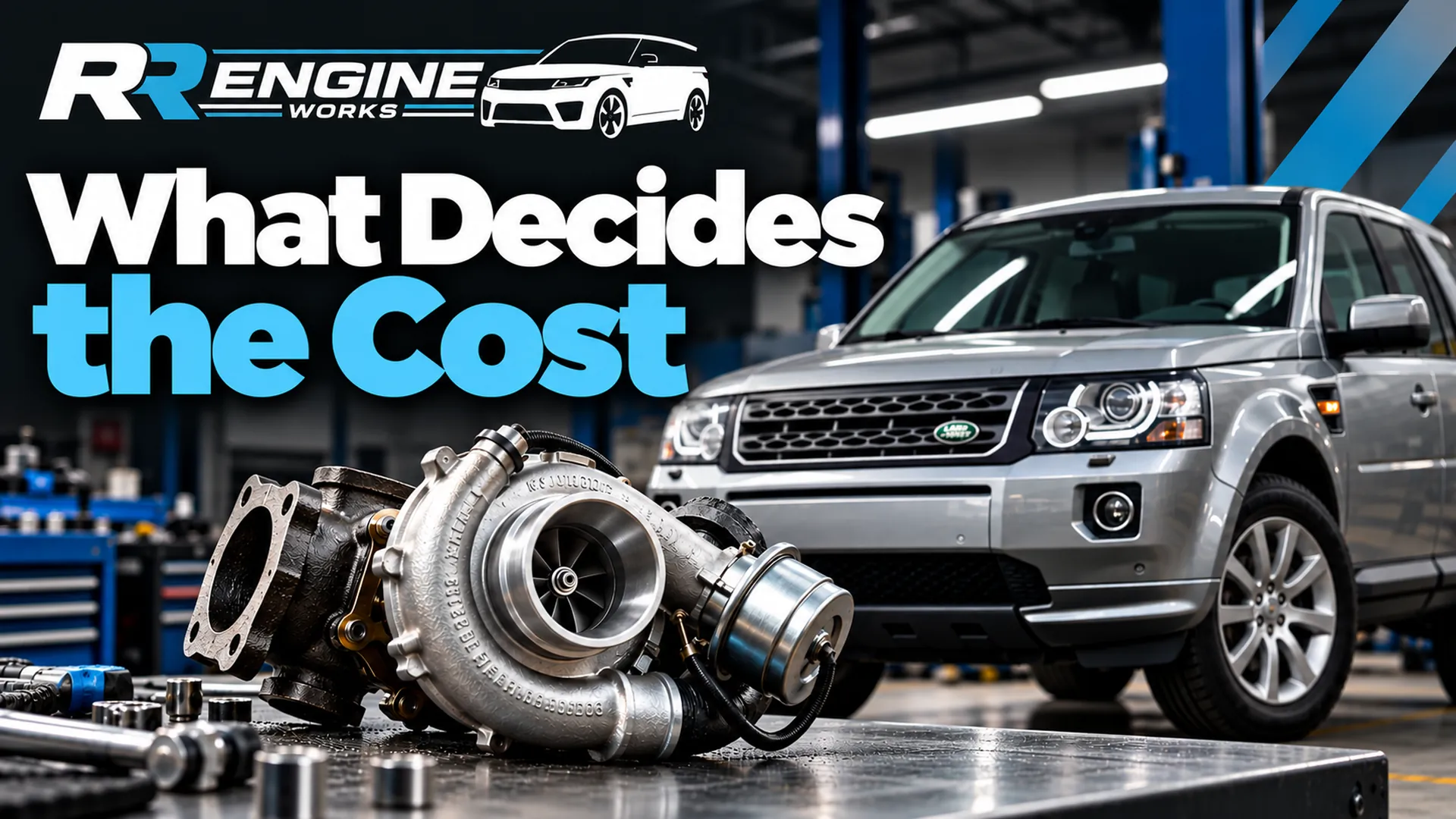
Engine. Most Freelander 2s have the 2.2 TD4, SD4 or eD4 diesel (224DT), which uses a variable-geometry turbo. The rare 2.0 Si4 petrol has its own turbo. The 3.2 i6 has none. Our Land Rover 2.2 diesel engine page covers the 224DT.
Type of replacement turbo.
Turbo type | What to expect |
| New | A new unit matched to your engine's part number |
| Remanufactured | A rebuilt and tested exchange unit |
| Rebuild of your own turbo | Suits internal wear with an intact housing |
The replacement must match your engine and the original turbo's part number. A mismatched unit can cause boost faults.
Access and labour. The turbo and its oil feed connection are not the easiest parts to reach. Owners describe the feed pipe's banjo bolt as sitting low at the back of the engine, near the front differential. Access affects labour time, and so does any corroded fixing on an older car.
The Oil Feed, Filter and Supporting Parts
Oil supply problems are the most common cause of Freelander 2 turbo failure. They are also the most common reason a replacement turbo fails early.
Part | Why it matters |
| Oil feed pipe | Can carbonise inside and starve the turbo of oil, so it is usually renewed |
| Banjo bolt filter | A fine filter in the feed. Turbo suppliers generally advise keeping it fitted |
| Banjo seal washers | Usually renewed, because they can leak |
| Oil return pipe | Must drain freely |
| Oil and filter change | Debris and old oil must not reach the new turbo |
| Intercooler and boost hoses | Oil or fragments left inside can damage the new turbo or the engine |
| Gaskets and fixings | Renewed with the turbo |
| Actuator set-up | Correct set-up avoids boost codes |
| DPF and EGR | High back pressure and soot shorten turbo life |
Our turbo replacement service checks oil supply and feed pressure before a new turbo is fitted. Leaving out the oil feed parts may lower the quote, but it risks the new turbo failing in the same way.
Getting an Accurate Quote

What Your Written Quote Should Show
Ask for these items in writing so you can compare quotes like for like:
- Diagnosis: the fault codes, the inspection findings and why the turbo failed
- Turbo: the part number, and whether it is new, remanufactured or rebuilt
- Oil feed: a new pipe, the filter and seal washers
- Oil return: checked or replaced
- Oil and filter: included
- Intercooler and hoses: cleaning or replacement
- Gaskets and fixings: what is renewed
- Actuator set-up: included
- DPF and EGR checks: included or quoted separately
- Labour: the access involved
- Testing: boost check, fault-code clear and road test
- Extras: how further faults will be approved before any work goes ahead
- Warranty: written terms for parts and labour
For a diagnosis and an itemised quote, contact the team or call 01708 592377.
FAQs
Freelander 2 Turbo Replacement FAQs
Why don't you give a fixed price for Freelander 2 turbo replacement?
The cost depends on the cause of failure, the turbo type, access and the supporting parts needed. These are only known after diagnosis, so an itemised quote is the reliable way to find your cost.
Does the oil feed pipe need replacing with the turbo?
It is usually recommended. The feed pipe can carbonise inside, and a restricted feed is a common cause of turbo failure.
Should the banjo filter be kept in?
Turbo suppliers generally advise keeping it fitted as designed, and leaving it out can affect a turbo warranty. Follow the manufacturer's and the supplier's guidance.
Can a Freelander 2 turbo be repaired instead of replaced?
Sometimes. Sticking vanes or a faulty actuator may be fixed without a new turbo, and internal wear can sometimes be rebuilt. A damaged housing or wheel usually means replacement.
How long does Freelander 2 turbo replacement take?
It depends on access, the condition of the fixings and what else is found. Ask for an estimated timescale in your written quote.