
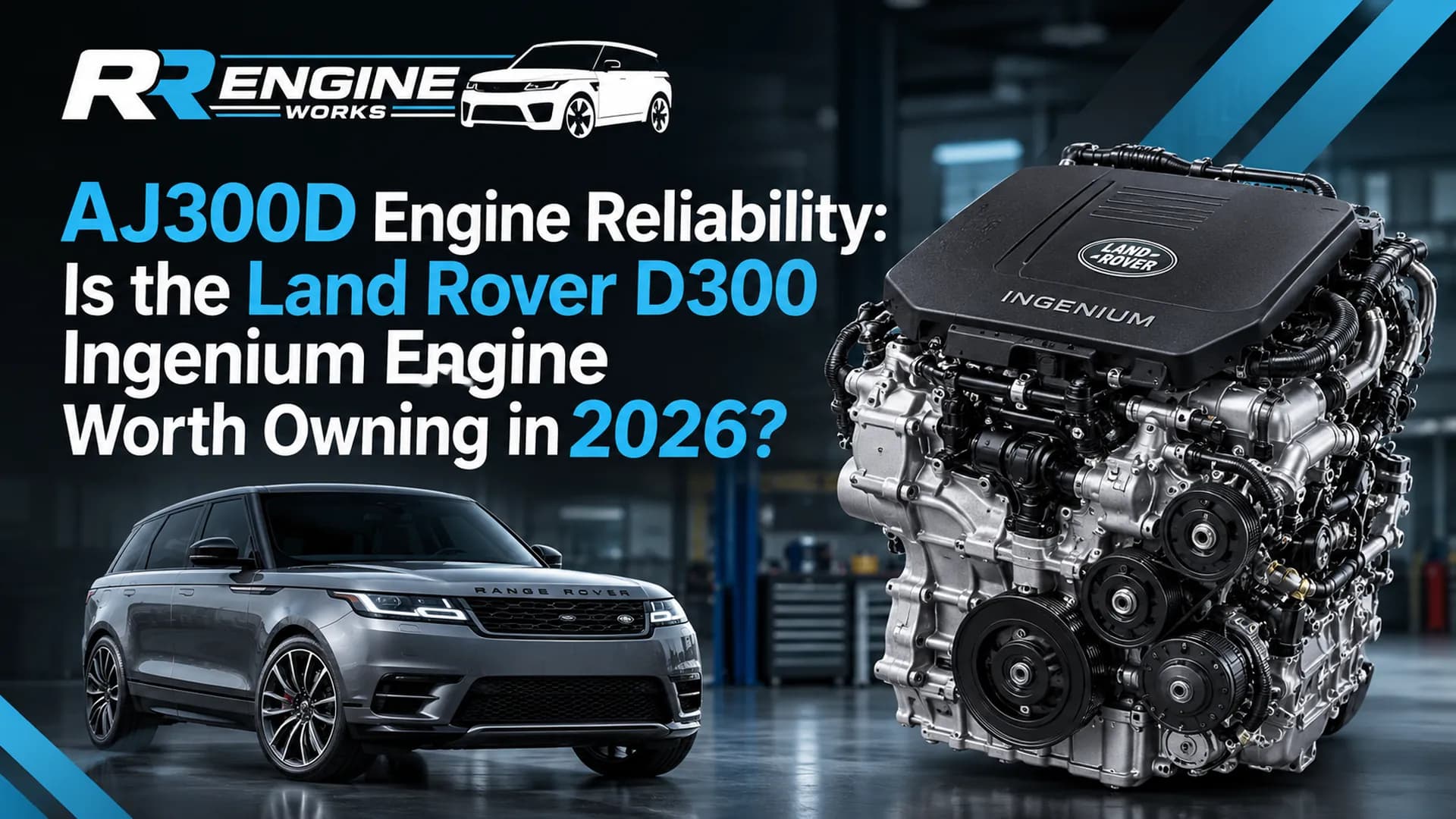
If you own a Defender, Range Rover or Range Rover Sport with the D300 badge, or you're thinking of buying one, you've probably seen the worrying forum threads. You've also seen the glowing reviews, and neither tells you much.
So, is the AJ300D reliable? Mostly yes, if it's serviced properly and bought with open eyes. The AJ300D is the 3.0-litre straight-six mild-hybrid diesel from Jaguar Land Rover's Ingenium family. It powers the D300 models, and it has known weak points that every owner and buyer should understand.
At RR Engine Works in Grays, Essex, we deal with Land Rover and Jaguar engines every week. Below is what the AJ300D does well, where it can go wrong, and what to do if yours starts showing symptoms.
How Reliable Is the AJ300D Engine, and What Problems Do Owners Report?
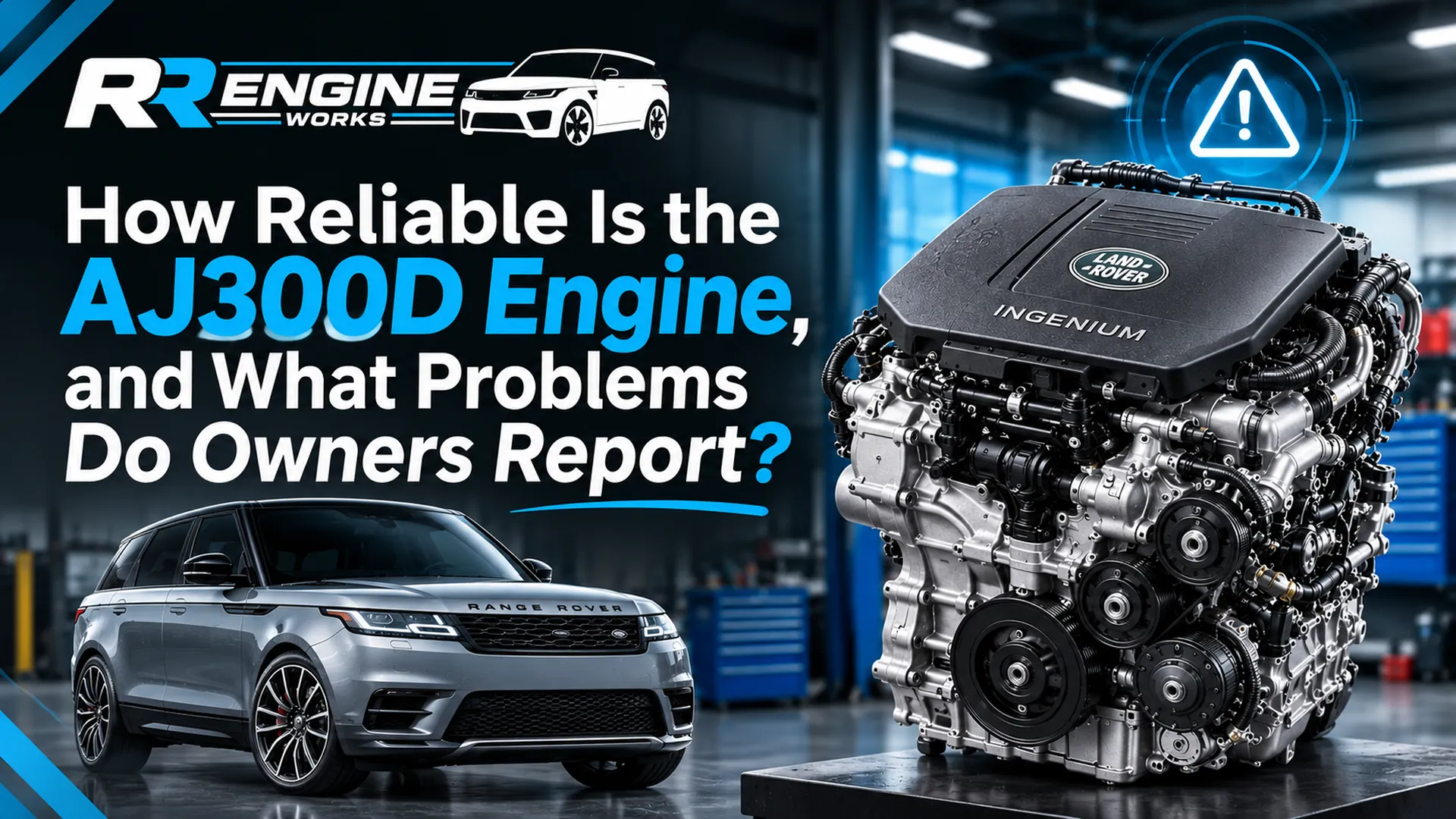
The AJ300D is a modern, complex diesel. It has a turbocharger, a diesel particulate filter (DPF), a 48-volt mild-hybrid system and a computer-controlled cooling circuit. More components mean more places where a fault can start, which is a design reality and says little about the engine's core quality.
The good news is that the bottom end of a well-maintained AJ300D is generally robust. The faults we see tend to come from ancillary systems, oil condition and missed servicing, rather than from the engine block itself.
What Are the Most Common 3.0 Ingenium Engine Problems on the 2021 and 2022 D300?
Whether you're researching AJ300D engine reliability for 2021 or 2022 models, the same patterns come up. These are the areas to watch:
- Timing chain and tensioner wear. Rattling on start-up or a drop in performance can point to chain stretch. It's not universal, but it's expensive when ignored.
- Oil dilution. Frequent short journeys and repeated DPF regeneration cycles can push unburnt diesel into the sump. Thinner oil protects less, so wear speeds up.
- Cooling system faults. Leaks around hoses, thermostat housings and connectors are common on modern engines. A small coolant loss left alone can become an overheating problem.
- Turbo and actuator issues. Whistling, loss of boost or limp mode can trace back to the turbo, an actuator or a pipe leak.
- Mild-hybrid (MHEV) warnings. The 48V system can throw fault messages that look serious. Sometimes they're software or battery related rather than mechanical.
- Restricted performance messages. These tell you the engine management has detected a problem. They don't automatically mean a failed engine.
Here's a quick reference for what you might notice and what it usually means:
What you notice | Possible cause | Urgency |
| Rattle on cold start | Timing chain or tensioner wear | High: stop and inspect |
| Oil level rising on the dipstick | Fuel dilution | High: change oil, investigate |
| Coolant level dropping | Leak at hose, housing or connector | High: risk of overheating |
| Whistle or loss of power | Turbo or boost leak | Medium: book diagnosis |
| "Restricted performance" message | Sensor, DPF, turbo or MHEV fault | Medium: read fault codes first |
| Vibration at idle | Mounts, ancillaries or an internal fault | Medium: inspect before assuming the worst |
A note for anyone searching D300 engine problems or 3.0 Ingenium engine problems: a warning light is a symptom, not a verdict. A proper diagnosis, with fault codes read and live data checked, comes before any decision to repair or replace.
AJ300D vs 2.0 Ingenium: Which Land Rover Engine Is More Dependable?
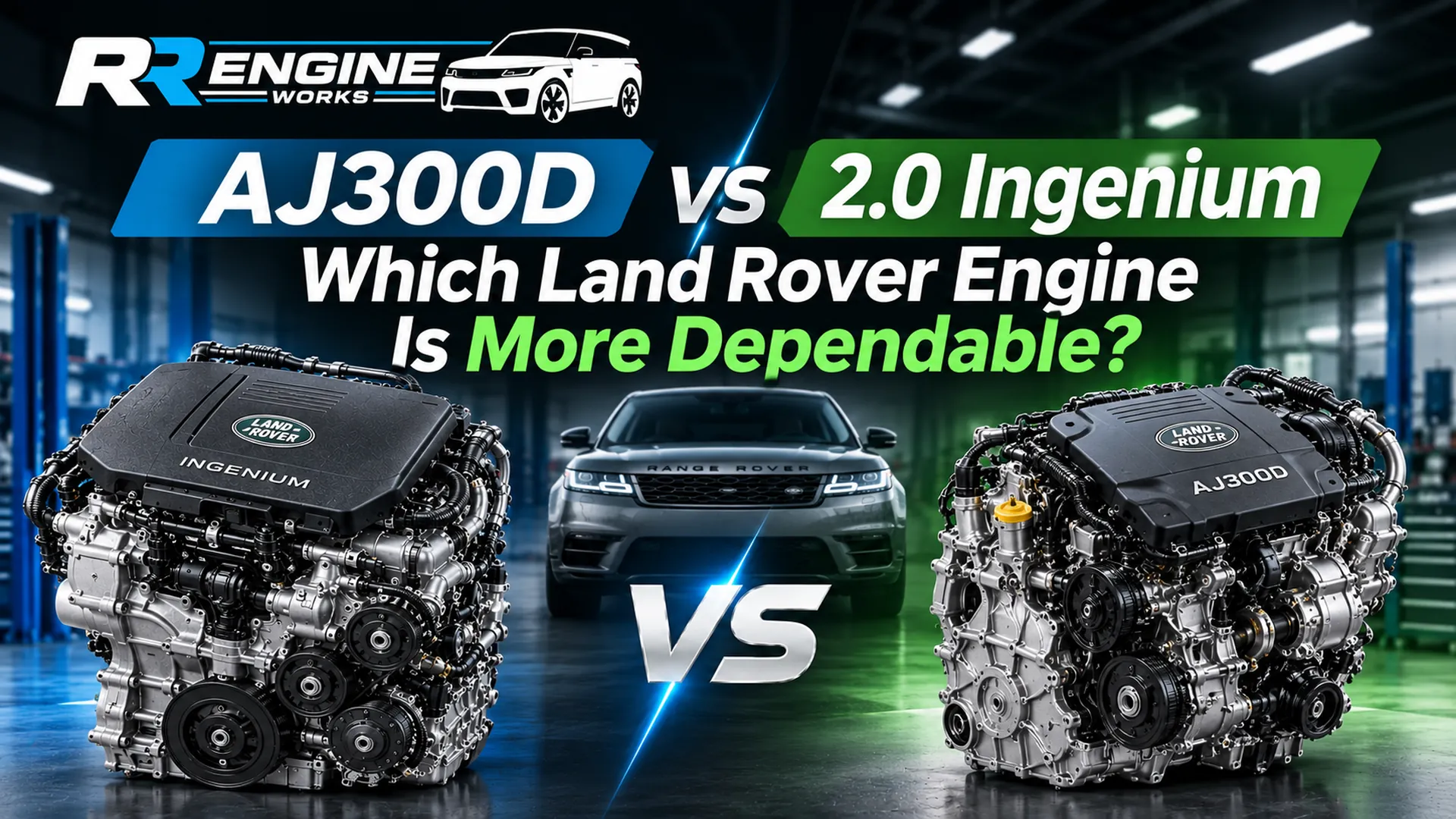
People often lump the Ingenium range together, but the 2.0-litre four-cylinder and the 3.0-litre six-cylinder are different engines with different issues.
The 2.0 Ingenium engine problems we hear about most include balance shaft noise on some diesels, oil condition concerns on some petrol versions and coolant leaks around the thermostat area. The AJ300D is a more refined unit, and its straight-six layout is inherently smoother. It brings its own complexity through the mild-hybrid hardware, though.
Neither engine is "bad" or "perfect". Both reward owners who stick to service intervals and use quality oil, and both punish those who skip them.
Has Land Rover Reliability Improved, and How Does It Compare With Audi and Volkswagen?
This is one of the most common questions we get, whether people phrase it as "has Range Rover reliability improved" or "has Audi reliability improved". The honest answer is that it depends on the model, the engine and how the car has been maintained.
Modern Land Rover engines like the AJ300D have addressed several weaknesses from earlier generations. Audi and Volkswagen have also moved on from some well-known older faults, so the question "has Volkswagen reliability improved" has a similar answer: yes in places, with caveats. Independent reliability surveys vary year to year, so check the latest ones for the exact model you're considering rather than trusting a blanket claim from any brand or garage.
What matters more than the badge is the individual car's history. A fully serviced D300 with documented oil changes is a very different proposition from one with gaps in its record.
What Makes an Engine Reliable? Lessons From Toyota, Honda, Mahindra and Rotary Engines
Search for "are Toyota engines reliable" or "why Honda engines are so reliable" and you'll find a consistent theme: simplicity, conservative tuning and tight manufacturing control. Toyota and Honda have long built engines with generous safety margins, which is much of why they have such strong reputations. Mahindra's diesels also have a good name for durability in demanding conditions, and for the same broad reasons: robust design and moderate stress on components.
Rotary engines are the opposite case. People ask "why are rotary engines unreliable" and "can rotary engines be reliable". The apex seals wear, oil consumption is part of the design and heat management is hard. They can last with careful ownership, but they ask more of their owners. As for "what is the most reliable engine ever", there's no single winner, since it depends on the criteria. Simple, under-stressed, well-maintained designs tend to top every list.
Apply that to the AJ300D. It's a high-output, high-complexity engine, so it has less margin for neglect than a simple naturally aspirated unit. Reliability here is earned through maintenance.
Why Do Some Modern Diesels Struggle With Short Journeys and Missed Servicing?
Modern diesels need heat. A DPF only cleans itself when the exhaust runs hot enough for long enough. On a car used mainly for short school runs or town trips, regeneration can be interrupted again and again. Extra fuel ends up in the oil, and the oil thins out.
Practical habits that help:
- Take the car on a longer run of 20 to 30 minutes at steady speed regularly.
- Check the oil level and condition between services, not only at them.
- Don't stretch oil change intervals just because the dashboard allows it.
- Never ignore a coolant warning, however small the top-up seems.
Is Your AJ300D Failing? Repair, Rebuild or Replace With RR Engine Works
If your AJ300D is showing warning signs, the question becomes what to do about it. There are three routes, and the right one depends on the diagnosis, the vehicle's value and your plans for the car.
What Are the Warning Signs, What Does Repair Cost in the UK, and How Do You Get a Quote?
Act quickly if you notice:
- Knocking, rattling or a persistent whine from the engine
- Oil level rising rather than falling
- Unexplained coolant loss or overheating
- Blue, white or heavy black smoke
- Repeated limp mode or restricted performance warnings
How the three options compare:
Option | Best when | Trade-off |
| Repair | The fault is isolated (a turbo, a leak, a sensor) | Lowest cost, but only sensible if the rest of the engine is sound |
| Rebuild | The engine has internal wear but the block is good | Can cost more than replacement, with longer downtime |
| Replace | Internal damage is widespread or the engine has failed | Higher upfront cost, but usually the most predictable outcome |
UK costs vary widely with the fault, the model and the parts needed, so we won't quote a generic figure here that could mislead you. What we can say is that a diagnosed price is always better than a guess, and catching a problem early almost always costs less than waiting for failure.
A good quote should include:
- A clear description of the engine's condition and source
- What is covered by the warranty, and for how long
- Whether fitting is included
- The reconditioning or testing standard applied
- Realistic timescales
At RR Engine Works we're open about all of this before any work starts. If you'd like to know where your D300 stands, enter your registration for a free engine quote, or call in to see us at Unit 1 Hedley Ave, Grays RM20 4EL. We'll tell you plainly whether a repair makes sense or whether you're better off with a replacement. [Internal link: Get a Free Engine Quote]
Frequently Asked Questions About AJ300D Engine Reliability
How long does an AJ300D engine last?
With regular oil changes and sensible use, a well-kept AJ300D can reach high mileage. Lifespan depends heavily on servicing history, driving pattern and how quickly small faults are fixed.
Is the D300 engine reliable at high mileage?
It can be, but verify the history. Look for documented oil changes, a clean fault code history and no signs of coolant loss or oil level rise. Don't assume either way without a proper inspection.
Does the 3.0 Ingenium have timing chain problems?
Some owners report timing chain and tensioner wear, so it's worth listening for rattles on a cold start. It's not guaranteed to affect every engine, but it should be on your checklist.
Are 2.0 and 3.0 Ingenium engine problems the same?
No. The 2.0 and 3.0 share a family name but have different layouts and different common issues. Diagnose each on its own merits.
Is a used Defender or Range Rover with a D300 worth buying?
Often yes, if it comes with full service history and passes a thorough pre-purchase inspection. Always check oil condition, coolant level, fault codes and the state of the mild-hybrid system.
Can regular servicing prevent AJ300D problems?
It can prevent many of them. Fresh oil, healthy cooling and prompt attention to warnings are the best defence against the faults we see most.
What does a "restricted performance" warning mean?
It means the engine management system has detected a fault and limited power to protect the engine. Have the fault codes read before deciding on a repair.
Conclusion
The AJ300D is a capable, refined engine, and its reliability is largely in the owner's hands. Keep the oil fresh, watch the cooling system and don't ignore warning lights, and it should serve you well. If problems do appear, get a proper diagnosis before committing to a repair, rebuild or replacement.
Need a straight answer about your D300? Get your free engine quote from RR Engine Works today, or visit us at Unit 1 Hedley Ave, Grays RM20 4EL.