
You're looking at a used Defender, Evoque, Velar or F-Pace and the price looks right. Then you read one forum thread about timing chains and another that calls the engine rock solid. Now you can't tell what's true.
Here's the short answer. Not every Ingenium engine is a bad buy, but the 2.0-litre diesel (engine code 204DTD) has the most documented problems, so it needs the closest checking. The 3.0-litre six-cylinder and the 2.0 petrol each have their own weak points, and none of them is a write-off if the car has been looked after.
Ingenium is Jaguar Land Rover's modern engine family, built at its engine plant in Wolverhampton. At RR Engine Works in Grays, Essex, we see these engines on the bench and in the workshop regularly. This guide covers which versions deserve caution, why, and what to do if you already own one.
What Is the Ingenium Engine, and Is It Any Good?
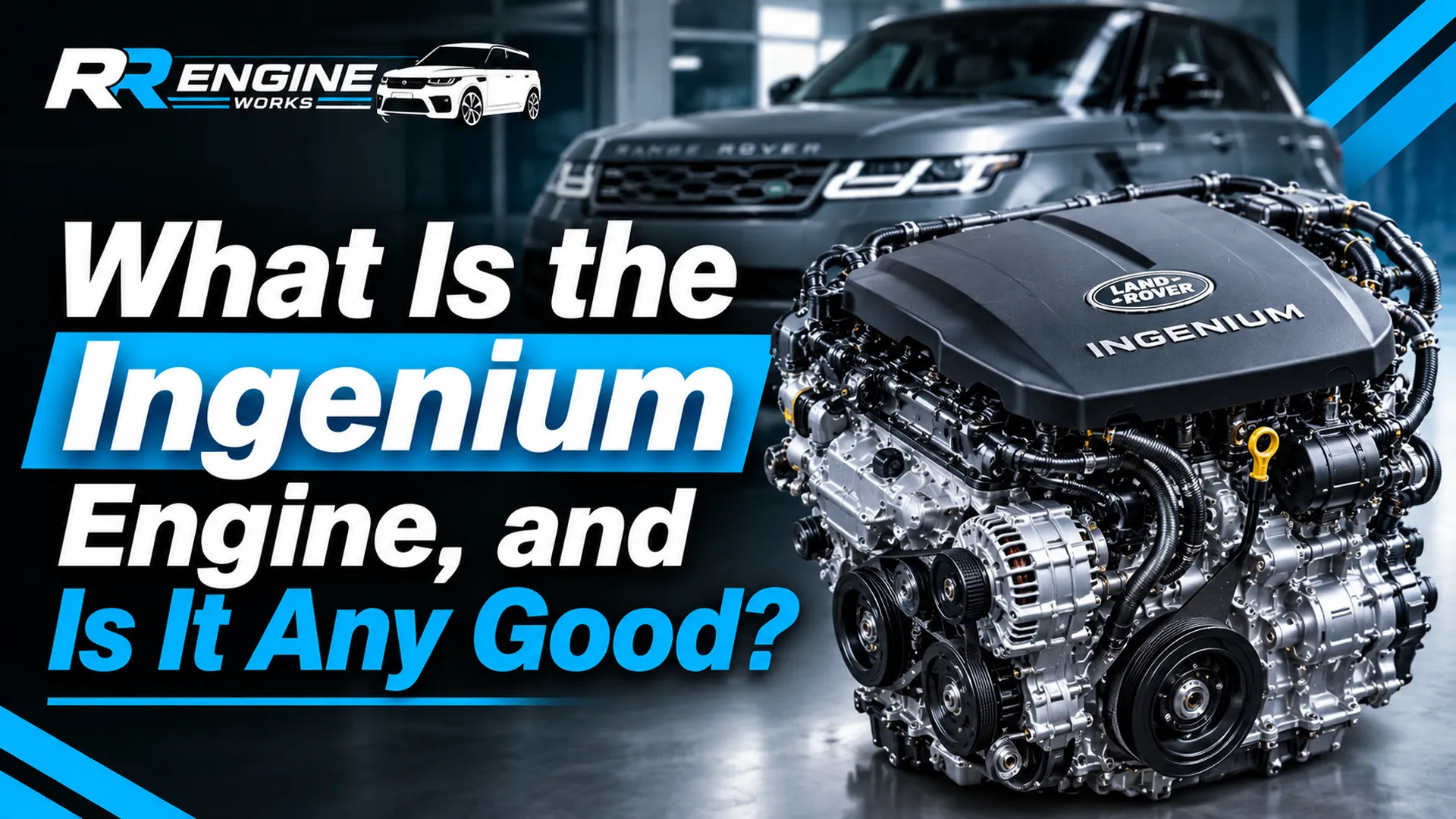
Ingenium is the name Jaguar Land Rover gives to its in-house engine range, introduced in 2015 to replace engines that were previously bought in or shared with other manufacturers. It covers four-cylinder diesel and petrol engines (2.0 litre) and a six-cylinder inline unit (3.0 litre) with a 48-volt mild-hybrid system.
Is the Ingenium engine any good? Yes, in many respects. It's efficient, it's refined, and the 3.0 straight-six in particular is smooth and strong. The reputation problems come from specific faults on specific versions, which tend to be made worse by missed servicing and short-journey use. Is the Ingenium engine reliable overall? It depends heavily on which version you have and how it has been maintained.
Who Makes the Ingenium Engine, and Which Land Rover and Jaguar Models Use It?
Jaguar Land Rover designs and builds the Ingenium engine. You'll find it across both brands:
- Land Rover: Defender, Discovery Sport, Range Rover Evoque, Range Rover Velar, Range Rover and Range Rover Sport (3.0)
- Jaguar: XE, XF, E-Pace, F-Pace, F-Type (petrol) and XJ in some markets
If you're asking "which engine is installed in" a particular car, the registration number is the quickest route to a reliable answer, since the same model can carry different engines across different years.
Here's how the family breaks down:
Engine | Fuel | Typical models | General reliability outlook |
| 2.0 four-cylinder (204DTD) | Diesel | Evoque, Discovery Sport, Velar, F-Pace, XE, XF | Highest number of reported faults; needs careful checking |
| 2.0 four-cylinder | Petrol | Evoque, Discovery Sport, Velar, F-Pace, E-Pace | Mixed; oil condition is the main concern |
| 3.0 six-cylinder | Diesel (mild hybrid) | Defender, Range Rover, Range Rover Sport, Velar | Generally stronger; cooling and mild-hybrid issues to watch |
| 3.0 six-cylinder | Petrol (mild hybrid) | Range Rover, Range Rover Sport, Defender, F-Type | Generally stronger; similar ancillary points |
Which Ingenium Engine Should You Avoid, and Why?
If you want one line, here it is: be most cautious with the 2.0 Ingenium diesel, particularly on higher-mileage cars with patchy service history. That doesn't mean every one will fail. It means the odds of a costly problem are higher, so the checks matter more.
Why Is the 2.0 Ingenium Diesel (204DTD) the Engine Most Buyers Are Told to Avoid?
The 204DTD is the engine behind most of the 2.0 Ingenium engine problems that owners report. In our experience, the trouble usually traces back to a handful of causes:
- Timing chain stretch. A rattle on a cold start is the classic warning. Left alone, a stretched chain can lead to serious internal damage.
- Oil dilution from DPF regeneration. The diesel particulate filter cleans itself by burning off soot, which adds fuel to the oil. On cars used for short trips, this happens repeatedly and thins the oil.
- Long service intervals. Dashboard intervals can be generous. Oil that's left in too long, especially when diluted, protects less.
- Injector and DPF faults. Injector retaining bolts and clogged DPFs show up in repair records and can lead to limp mode.
- Balance shaft whine. Some diesels develop noise from the balance shaft system, which is worth investigating rather than ignoring.
None of these faults is exclusive to Jaguar Land Rover. Plenty of modern diesels from other brands suffer from the same DPF and chain issues. The 204DTD just has a reputation for combining several of them.
A real-world scenario: An owner brings in a four-year-old Discovery Sport that has covered most of its miles on school runs. The oil on the dipstick has risen slightly and smells of diesel, and there's a faint rattle at start-up. Neither symptom looks dramatic on its own, but together they point to dilution and early chain wear. Caught at this stage, the fix is far less expensive than waiting for a failure.
How Do the 2.0 Petrol and the 3.0 Ingenium Compare on Reliability?
The 2.0 petrol has seen fewer headline problems than the diesel, but Ingenium petrol engine reliability isn't spotless. Some owners report oil condition problems and sludge, particularly where oil changes were stretched or the car does mostly short trips.
The 3.0 is a different animal. The 3.0 Ingenium engine problems we see most often involve cooling system leaks, mild-hybrid component faults and, occasionally, timing chain or oil dilution concerns. The core engine tends to be sturdier than the 2.0 diesel, but its complexity means small faults deserve prompt attention.
2.0 Diesel (204DTD) | 2.0 Petrol | 3.0 Diesel / Petrol | |
| Common faults | Timing chain, oil dilution, injectors, DPF, balance shaft whine | Oil condition, sludge, coolant leaks | Coolant leaks, MHEV faults, ancillary issues |
| Risk level | Higher | Moderate | Lower to moderate |
| Best suited to | Higher-mileage drivers with full service history | Mixed use with regular oil changes | Owners who want smoothness and can afford complex repairs |
| Watch for | Cold-start rattle, rising oil level | Oil colour, low oil | Coolant loss, warning messages |
Is the Ingenium Engine Safe to Buy Used, and What Should You Check First?
It can be, if you go in prepared. Before you hand over any money, check:
- Full service history, with oil changes at sensible intervals rather than the maximum the dashboard allows
- Oil condition and level. A rising level or a diesel smell is a red flag
- Cold-start behaviour. Ask to start the engine cold and listen for a rattle in the first few seconds
- Coolant level and any signs of leaks around the thermostat housing and hoses
- Fault codes, read with a proper diagnostic tool, not just a glance at the dashboard
- DPF history, including any warning lights or regeneration problems
Walk away if: the seller won't let you start the car from cold, the service history has big gaps, or there are active warning lights that nobody can explain. A cheap price won't make up for an engine that needs replacing.
How Can You Make an Ingenium Engine More Reliable, and Which Oil Is Best in the UK?
Reliability on these engines is largely earned through maintenance. The good news is that the habits that protect an Ingenium are simple.
What Maintenance Keeps an Ingenium Engine Healthy?
- Change the oil more often than the dashboard suggests. Many specialists recommend roughly every 6,000 to 10,000 miles or once a year, especially on the 2.0 diesel. Your own garage can advise on the right interval for your usage.
- Use the correct oil specification. Modern diesels with a DPF generally need an approved low-SAPS oil that meets Jaguar Land Rover's specification. The right answer to "which engine oil is best in the UK" for your car is whichever grade meets the specification in your owner's handbook, not a brand name. Always check the handbook or ask a qualified technician before choosing.
- Take regular longer drives. A steady 20 to 30 minute run lets the DPF regenerate properly and helps reduce oil dilution.
- Check the oil level between services. Don't wait for a warning light.
- Fix coolant loss early. A small top-up now and then is a sign that something needs inspecting.
- Don't ignore warning messages. A fault code read early is cheaper than a failure later.
A mechanic diagnosing an Ingenium problem should read the fault codes, check live data, inspect the oil and test the cooling system before recommending any major work. If a garage jumps straight to "you need a new engine" without a diagnosis, get a second opinion.
What Should You Do If Your Ingenium Engine Is Already Failing?
If your engine is showing serious symptoms, you have three realistic routes. The right one depends on the diagnosis, the value of the vehicle and how long you plan to keep it.
Should You Repair, Rebuild or Replace It, and How Do You Get a Quote From RR Engine Works?
Act quickly if you notice knocking or rattling, a whine from the engine, oil level rising, unexplained coolant loss, heavy smoke or repeated limp mode.
Option | Best when | Trade-off |
| Repair | The fault is isolated, such as a leak, sensor or injector problem | Lowest cost, but only worth it if the rest of the engine is sound |
| Rebuild | There's internal wear but the block and core components are good | Can cost more than a replacement and take longer |
| Replace | Damage is widespread or the engine has failed | Higher upfront cost, but usually the most predictable result |
We won't quote a generic price here, because costs vary a great deal with the model, the fault and the parts involved. What we can promise is that a diagnosed quote beats a guess every time.
A good quote should include:
- The engine's condition and where it came from
- The length and terms of the warranty
- Whether fitting is included
- The testing or reconditioning standard applied
- A realistic timescale
At RR Engine Works we go through all of this before any work begins. To find out where your engine stands, enter your registration for a free engine quote, or visit us at Unit 1 Hedley Ave, Grays RM20 4EL. [Internal link: Get a Free Engine Quote]
Frequently Asked Questions About Ingenium Engines
Which Ingenium engine is the most reliable?
The 3.0-litre six-cylinder is generally regarded as the stronger of the family, though it has its own cooling and mild-hybrid issues. Reliability still depends on servicing and use.
Is the 2.0 Ingenium diesel really that bad?
It has the most reported faults, including timing chain wear, oil dilution and DPF problems. Many run well with proper maintenance, but it carries more risk than the others.
What is the 204DTD engine?
It's the engine code for the 2.0-litre Ingenium diesel used across several Land Rover and Jaguar models.
Does the 3.0 Ingenium have timing chain problems?
Some owners report them, though it's less common than on the 2.0 diesel. Listen for a cold-start rattle and check the service history.
Is a high-mileage Ingenium engine a bad buy?
Not automatically. A high-mileage engine with documented oil changes and a clean fault history can be a better bet than a low-mileage one that has been neglected.
How often should the oil be changed on an Ingenium engine?
More often than the maximum interval shown on the dashboard. Ask a qualified technician what suits your driving pattern.
Can regular servicing prevent Ingenium engine problems?
It can prevent many of them. Fresh oil, a healthy cooling system and prompt attention to warnings make the biggest difference.
Conclusion
The honest answer to "which Ingenium engine to avoid" is this: be most careful with the 2.0 diesel, check any high-mileage example thoroughly, and don't dismiss the 3.0 or the petrol versions without looking at the individual car. The engine matters, but the history matters more.
If you're buying, inspect before you commit. If you're already an owner, service early and act on warning signs. And if something has gone wrong, get a proper diagnosis before you decide how to fix it.
Need a straight answer about your engine? Get your free quote from RR Engine Works today, or visit us at Unit 1 Hedley Ave, Grays RM20 4EL.