
Your Range Rover is idling like it's got a cough it can't shake. Maybe there's a puff of black smoke on start-up, or a faint diesel knock that wasn't there last month. If you're staring at the dashboard wondering whether you're looking at a simple fix or the start of a very expensive problem, you're not alone, and you've landed in the right place.
TDV8 injector problems are one of the most common reasons Range Rover L322 owners end up searching for answers at 11pm. The good news is that injector issues, when caught early, are usually manageable. The bad news is that ignoring the early warning signs can turn a straightforward injector job into a much bigger repair bill.
This guide walks through exactly what causes TDV8 injector failure, how to tell the difference between a genuine injector fault and something that only looks like one, and what replacement actually costs in the UK right now. Whether you're driving the 3.6-litre or the 4.4-litre V8 diesel, you'll find the specifics that apply to your engine.
What Are the Symptoms of a Failing Range Rover TDV8 Injector?
Injector problems rarely announce themselves with a single dramatic failure. Instead, they build gradually, a bit of roughness here, a little extra smoke there, until one day the symptoms are impossible to ignore. Knowing what to listen and look for early can save you thousands.
Rough Idle, Misfire & Diesel Knock
A healthy TDV8 should idle with a smooth, steady thrum. When an injector starts to wear or its spray pattern deteriorates, that smoothness disappears.
You might notice:
- A lumpy or uneven idle that feels almost like the engine is hesitating between beats
- A knocking or ticking noise, often more noticeable at idle or light throttle, caused by fuel not atomising properly inside the cylinder
- An occasional misfire, where the engine briefly loses power then catches again
This happens because a worn or leaking injector delivers fuel inconsistently, either too much, too little, or at the wrong spray pattern, which throws off combustion in that cylinder. The engine management system tries to compensate, but it can only do so much before the imbalance becomes physically noticeable.
Black Smoke, White Smoke & Fuel Smell
Smoke from the exhaust is one of the clearest visual signs of an injector problem, and the colour actually tells you something useful.
- Black smoke usually points to over-fuelling or poor atomisation, the injector is dumping too much fuel, or spraying it in a pattern the engine can't burn cleanly
- White smoke, particularly on cold starts, often signals incomplete combustion, which can be linked to a weak spray pattern or a leaking injector seal
- A noticeable diesel smell in or around the vehicle can mean fuel is leaking past a worn injector seal or a failed copper washer
None of these symptoms are things to drive past for weeks. Persistent smoke isn't just an emissions issue, it's a sign that unburned fuel may be washing down cylinder walls and diluting your engine oil, which creates problems well beyond the fuel system.
Loss of Power, Hard Starting & Limp Mode
As injector faults progress, the effects move from "annoying" to "genuinely disruptive."
- Hard or delayed starting, especially in cold weather, is often caused by excessive leak-back, fuel draining out of the injector and rail faster than the pump can maintain pressure
- Loss of power or poor acceleration happens when the engine management system detects an imbalance and pulls back performance to protect the engine
- Limp mode is the ECU's last line of defence, if injector correction values fall outside acceptable limits, the vehicle restricts power and speed until it's diagnosed and repaired
If your Range Rover has dropped into limp mode, it's worth getting it checked promptly rather than continuing to drive on it. Limp mode is a protective measure, but the underlying fault doesn't fix itself.
What Causes Range Rover TDV8 Injector Failure?
Not every TDV8 injector problem has the same root cause, and, importantly, the 3.6-litre and 4.4-litre engines don't fail in quite the same way. Understanding the difference matters if you want an accurate diagnosis rather than a guess.
3.6 TDV8 vs 4.4 TDV8 Injector Problems, What's the Difference?
Treating "TDV8" as one single engine is where a lot of generic advice goes wrong. The two engines share a family resemblance but behave differently when it comes to injector wear.
Area | 3.6 TDV8 | 4.4 TDV8 (SDV8/448DT) |
| Most common issue | Injector wear, poor spray pattern, leak-back | Injector coding/data faults, wiring-related issues |
| Typical symptom pattern | Rough running, lumpy idle, diesel knock | Injector data warnings, access-related repair complexity |
| Known trouble spot | Injector 8 access and removal | Injector removal restricted by engine layout |
| Coding requirement | Generally required after replacement | Frequently flagged for "injector data incomplete" faults |
If you're driving a 3.6 TDV8, injector wear and leak-back tend to be the dominant story, the injectors physically degrade over time and mileage, and the symptoms are mostly mechanical (rough running, knock, smoke).
If you're driving the 4.4 TDV8, injector coding and data issues show up more often in diagnostic sessions. It's not unusual for a 4.4 to throw an "injector data incomplete" fault that has nothing to do with the injector's mechanical condition, it's an ECU communication issue that needs the correct coding procedure to resolve.
Knowing which camp your engine falls into helps a technician (or you, if you're doing your own groundwork before booking a diagnosis) ask the right questions from the start.
Injector Wear, Leak-Back & Fuel Contamination
At a mechanical level, injectors fail for a handful of predictable reasons:
- Internal wear from age and mileage, which affects spray pattern and fuel metering accuracy
- Excessive leak-back, where fuel escapes past worn internal components faster than it should, robbing the rail of pressure
- Nozzle restriction or blockage, often linked to fuel quality
- Fuel contamination, water ingress, poor-quality diesel, or debris from a neglected fuel filter, which accelerates wear on injector internals
Fuel quality deserves more attention than it usually gets. A blocked or overdue fuel filter lets contaminants reach the high-pressure pump and injectors, and once that fine machinery is compromised, the damage tends to be progressive rather than reversible. Regular fuel filter changes and buying diesel from reputable stations aren't glamorous maintenance tasks, but they're some of the cheapest insurance you can buy against a four-figure injector bill.
Is It the Injector, or a Wiring Fault?
This is the question that separates a proper diagnosis from a guess, and it's one of the most overlooked steps in TDV8 injector troubleshooting.
Injector symptoms, misfire, rough running, fault codes referencing a specific cylinder, can be caused by:
- A damaged or corroded injector connector
- A wiring fault between the ECU and the injector solenoid
- Intermittent continuity caused by a poor connection or chafed loom
- Voltage drop affecting how the solenoid fires
We've seen cases where an injector was on the verge of being condemned and replaced, only for the actual fault to trace back to a damaged wire or a corroded connector pin. Replacing a perfectly good injector doesn't fix a wiring problem, it just adds cost without solving anything.
Before authorising a full injector replacement, it's worth insisting on:
- A visual inspection of the injector wiring and connectors
- A continuity and voltage check at the connector
- Confirmation that the fault code and live data both point to the injector itself, not just the circuit
Symptom-to-Cause Quick Reference Table
Use this as a starting point when trying to work out what's actually going on under the bonnet, though a proper diagnostic session is always the way to confirm it.
Symptom | Likely Injector-Related Cause |
| Rough idle | Poor injector balance |
| Hard starting | Excessive leak-back |
| Black smoke | Over-fuelling / poor atomisation |
| White smoke | Poor combustion |
| Diesel knock | Abnormal injection pattern |
| Loss of power | Restricted or incorrect fuel delivery |
| Engine shudder | Cylinder imbalance |
| Fuel smell | Fuel leakage from seal or washer |
| Ticking or chuffing noise | Injector seal or seat issue |
| Limp mode | Fuel-system or engine-management fault |
How to Diagnose a Range Rover TDV8 Injector Problem
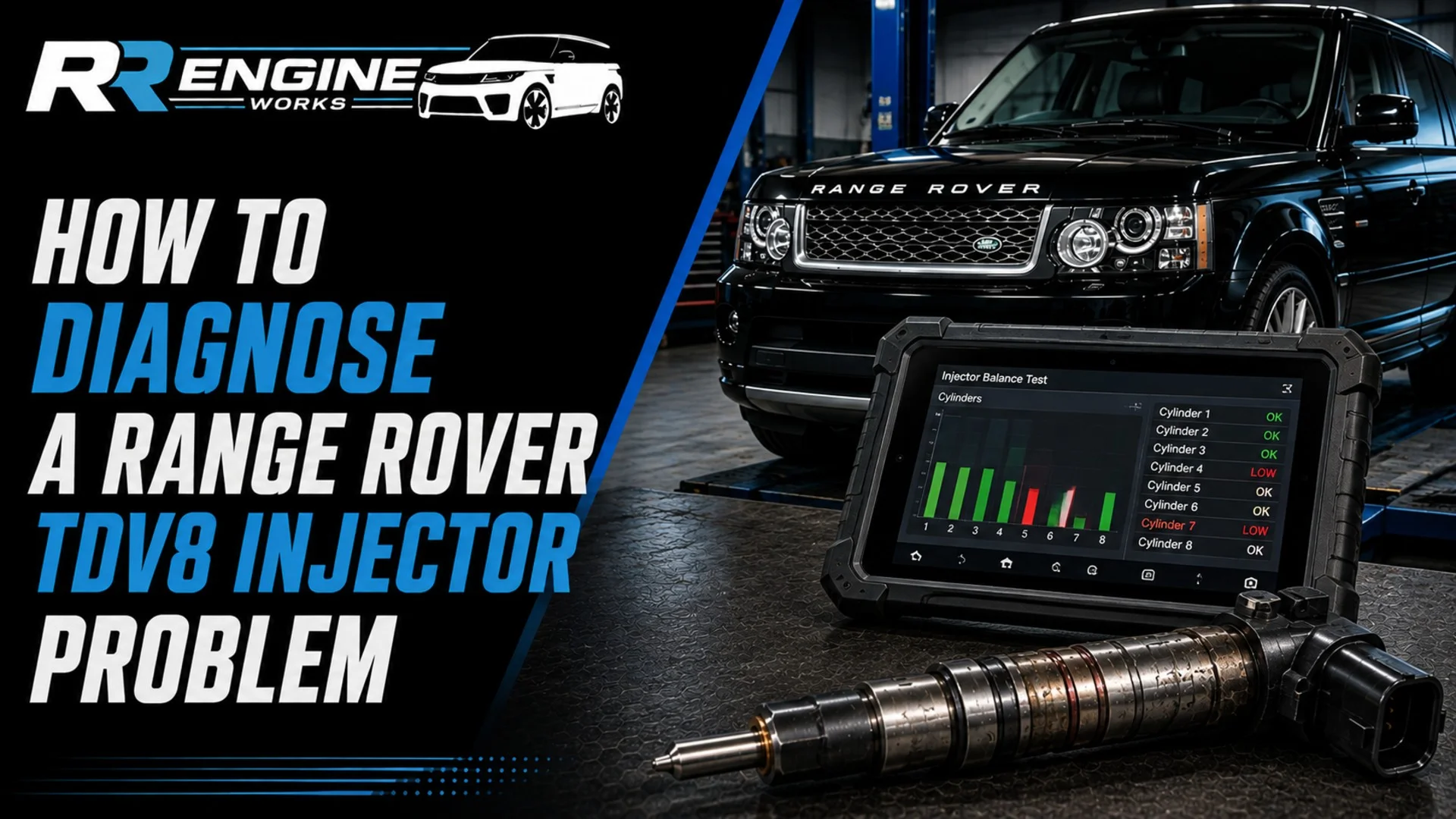
Guessing at injector faults is an expensive habit. A proper diagnostic process uses real data, not just symptom-spotting, to identify exactly which injector, if any, is at fault.
Checking Injector Balance & Correction Values
Modern diagnostic tools (commonly IIDTool or SDD in the TDV8 world) can pull live injector correction and balance values for each cylinder individually. These values tell a technician how much the ECU is having to compensate for each injector to keep combustion even across all cylinders.
Here's the part that matters for anyone trying to self-diagnose from a forum post: one abnormal value doesn't automatically confirm a failed injector. Correction values can shift due to:
- Genuine injector wear
- A wiring or connector issue affecting one cylinder
- Fuel delivery inconsistencies unrelated to that specific injector
- Normal variation that falls just outside a "typical" range without indicating failure
A single outlying reading is a prompt to investigate further, not a green light to order a new injector. This is exactly why correction values are interpreted alongside other tests, not in isolation.
What Is an Injector Leak-Off Test?
A leak-off test (sometimes called a return-flow test) measures how much fuel is escaping back through the return line from each injector under controlled conditions.
The logic works like this:
- The engine is run and each injector's return flow is measured individually
- The results are compared across all cylinders
- An injector returning noticeably more fuel than the others is leaking excessively internally
- That result is cross-checked against live data and correction values
- If everything points the same direction, the injector is confirmed faulty and scheduled for replacement
This step-by-step confirmation process is what separates a genuine diagnosis from an educated guess, and it's the difference between replacing the injector that's actually causing the problem versus replacing one that happened to be convenient to blame.
Do TDV8 Injectors Need Coding After Diagnosis or Replacement?
Yes, in most cases, TDV8 injectors need to be coded to the ECU, particularly on the 4.4 TDV8, where "injector data incomplete" faults are a known occurrence.
Injector coding matters because:
- Each injector has calibration data specific to its individual manufacturing tolerances
- The ECU uses this data to fine-tune fuel delivery for that exact injector
- Fitting a new or reconditioned injector without coding it can leave the ECU running with inaccurate calibration data, undermining the whole point of the replacement
- A used injector carries someone else's calibration data, which is one of the reasons fitting used injectors without recoding is generally a false economy
If you're comparing quotes from different garages, it's worth asking directly whether injector coding is included, some quotes look cheaper simply because this step has been left out.
TDV8 Injector Replacement, Cost, Options & Getting It Fixed Right
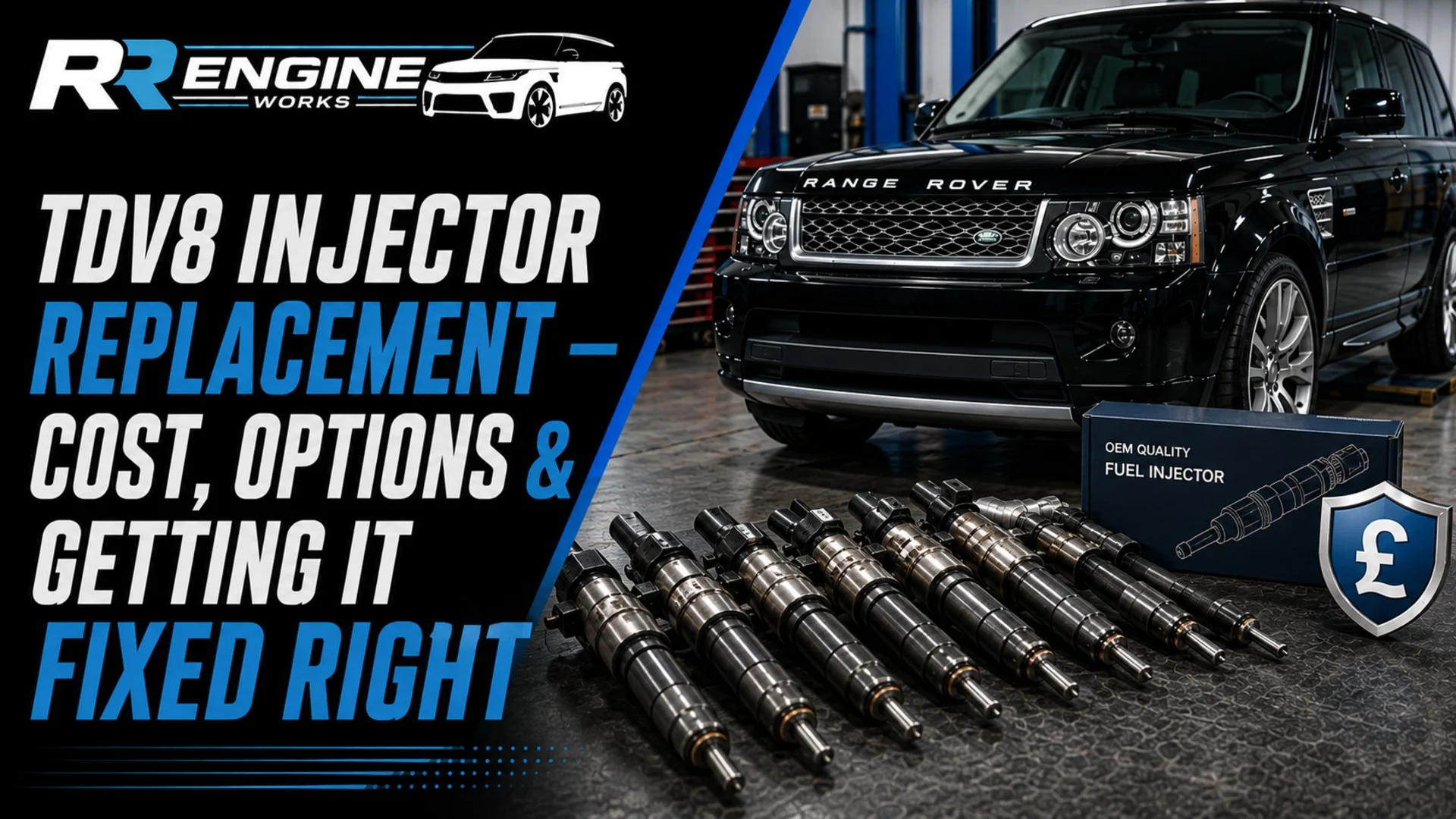
Once a fault is confirmed, the next decision is what to actually fit, and who should fit it.
New vs Reconditioned TDV8 Injectors, Which Should You Choose?
Both options have a place, depending on your budget and how long you plan to keep the vehicle.
New injectors:
- Come with full manufacturing tolerances and typically the longest warranty
- Cost more upfront
- Best suited if you're keeping the vehicle long-term or want maximum peace of mind
Reconditioned injectors:
- Rebuilt and tested to restore performance closer to original specification
- Considerably cheaper than new
- A sensible middle ground when budget matters, provided they come from a reputable specialist with proper testing and warranty backing
What you want to avoid is an untested used injector with no warranty and no calibration data, it might run fine for a few weeks, then fail again, and you'll be back where you started with none of the diagnostic work saved.
How Much Does Range Rover TDV8 Injector Replacement Cost?
Costs vary depending on how many injectors need replacing, whether you go new or reconditioned, and labour complexity, which, as covered above, differs between the 3.6 and 4.4 due to access difficulty.
Broadly, expect the total to reflect:
- Parts, the injector itself (new vs reconditioned pricing differs significantly)
- Labour, access on certain cylinders (injector 8 in particular) can take noticeably longer due to restricted space
- Coding, required after fitting to ensure the ECU recognises the correct calibration data
- Ancillary parts, copper washers and seals should be replaced as standard, not reused
Because pricing depends on your specific vehicle, mileage, and how many injectors are affected, the most accurate way to know what you're looking at is a proper inspection rather than a ballpark figure pulled from a forum thread.
Why Choose RR Engine Works for Your TDV8 Injector Repair
We work on Range Rover TDV8 fuel systems regularly, and we've built our diagnostic process specifically to avoid the guesswork that leads to unnecessary injector replacements. That means checking wiring before condemning an injector, confirming correction values against leak-off results, and coding every injector we fit, no shortcuts.
We're based at Unit 1 Hedley Ave, Grays RM20 4EL, and we work on both the 3.6 TDV8 and 4.4 TDV8, understanding that they're not interchangeable problems with interchangeable fixes.
Get a Free, No-Obligation TDV8 Injector Quote
If your Range Rover is showing any of the symptoms covered in this guide, rough idle, smoke, hard starting, or a warning light that won't clear, get in touch for a proper diagnostic assessment before committing to a repair. We'll tell you honestly whether you're looking at an injector fault, a wiring issue, or something else entirely, and give you a clear, itemised quote before any work begins.
Frequently Asked Questions About Range Rover TDV8 Injectors
What are the most common Range Rover TDV8 injector problems?
The most common issues are injector wear affecting spray pattern, excessive leak-back causing hard starting, and, particularly on the 4.4 TDV8, injector coding or data faults that show up during diagnostics.
How do I know if my TDV8 injector is faulty?
Look for rough idle, diesel knock, smoke on start-up or acceleration, hard starting, and loss of power. A proper diagnosis using correction values and a leak-off test is the only way to confirm which injector, if any, is actually at fault.
Can a faulty injector cause limp mode?
Yes. If injector correction values fall outside the ECU's acceptable range, the vehicle can enter limp mode as a protective measure until the fault is investigated.
Should all TDV8 injectors be replaced at the same time?
Not necessarily. If diagnostics confirm only one or two injectors are outside normal parameters, there's no inherent need to replace all eight, though some owners choose to do so preventatively on higher-mileage vehicles to avoid repeat labour costs down the line.
Do TDV8 injectors need coding after replacement?
Yes, in almost all cases. Coding ensures the ECU has accurate calibration data for the newly fitted injector, particularly important on the 4.4 TDV8 where data faults are a known issue.
Can a wiring fault cause the same symptoms as a bad injector?
Yes, and it's more common than many owners realise. A damaged connector or wiring fault can produce misfire and rough-running symptoms that look identical to a failing injector, which is why wiring should always be checked before a replacement is agreed.
Why is injector 8 harder to remove on the TDV8?
Its position relative to the rocker cover and surrounding components restricts access, which typically increases labour time compared to more accessible cylinders.
Can a faulty injector damage the rest of the engine?
It's possible in more severe or prolonged cases. An over-fuelling injector can contribute to poor combustion and, in extreme circumstances, cylinder or piston damage, though the actual risk depends heavily on the specific fault and how long it's left unaddressed. It's not an automatic outcome, but it's a good reason not to ignore persistent symptoms.
Final Thoughts
TDV8 injector problems are common, but they're rarely as mysterious as they first appear. Whether you're dealing with a 3.6 or a 4.4, the pattern is usually the same: symptoms build gradually, a proper diagnostic process identifies the real cause, and the right combination of parts and coding gets the vehicle running cleanly again.
The costliest mistake isn't a faulty injector, it's an inaccurate diagnosis that leads to the wrong part being replaced while the actual problem stays put. If your Range Rover is showing any of the warning signs covered here, get it looked at properly before it escalates.
Get in touch with RR Engine Works for an honest diagnosis and a straightforward, no-obligation quote on your TDV8 injector repair.