

If your Range Rover's engine has just failed, you're probably staring down a repair bill that feels impossible to plan for. One garage tells you to go used. Another pushes reconditioned. A third throws around the word "remanufactured" like it's obvious what that means. It isn't , and getting this decision wrong can cost you thousands of pounds and months of frustration.
Here's the truth: these three terms are not interchangeable, even though plenty of sellers treat them that way. Each comes with a different level of risk, a different price tag, and a very different answer to the question that actually matters , how many miles will you get before you're back here again?
This guide breaks down exactly what separates a used engine from a reconditioned one, and a reconditioned one from a remanufactured one, specifically in the context of Range Rover engines. By the end, you'll know which option fits your budget, your model, and how long you actually plan to keep the vehicle.
What's the Real Difference Between Used, Reconditioned, and Remanufactured Range Rover Engines?
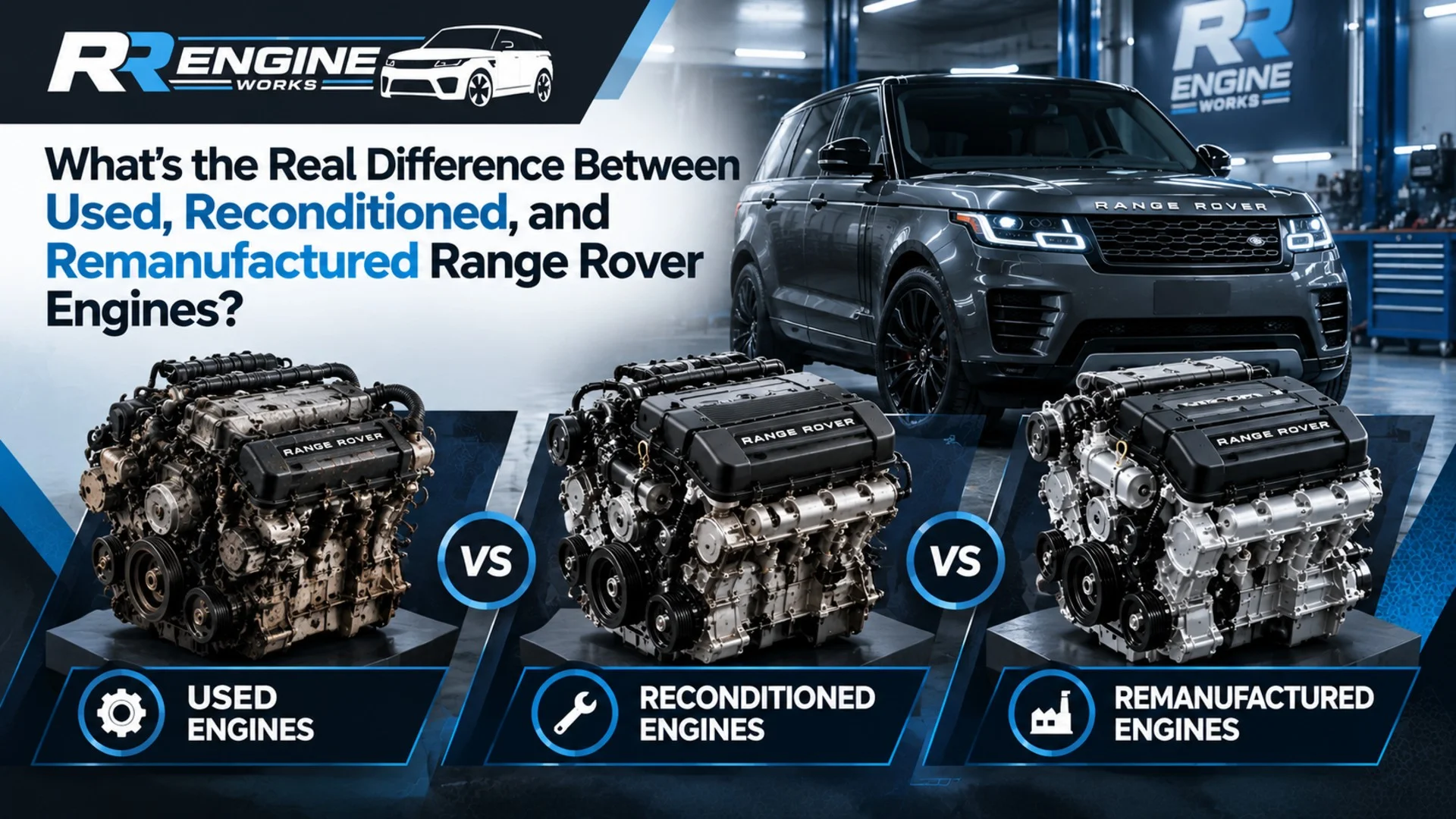
Before comparing costs or warranties, you need a clear picture of what you're actually buying. Each engine type goes through a completely different process before it ever reaches your Range Rover.
What Is a Used Range Rover Engine?
A used engine is exactly what it sounds like , a complete engine pulled from a donor vehicle, usually one that's been written off, scrapped, or stripped for parts. It hasn't been rebuilt. It hasn't been machined. In most cases, it's been tested to confirm it runs, then sold as-is.
The appeal is obvious: price. A used engine is almost always the cheapest replacement option on the table. But you're inheriting someone else's engine history, including whatever wear, mileage, and maintenance neglect came with it. If the donor vehicle had 90,000 miles on the clock and a patchy service history, that's now your problem too.
What Is a Reconditioned Range Rover Engine?
A reconditioned engine has been stripped down, inspected, and had its worn or damaged components replaced or repaired. This typically includes new bearings, gaskets, seals, and piston rings, along with machining of the cylinder head and block where needed. The core internals , crankshaft, engine block , are usually retained if they pass inspection, rather than replaced outright.
Think of reconditioning as a targeted repair job at engine level. Whatever's worn gets fixed. Whatever's fine gets left alone. It sits in the middle ground between used and remanufactured , better reliability than a straight used engine, but not a full internal rebuild.
What Is a Remanufactured Range Rover Engine?
Remanufacturing goes considerably further. The engine is completely stripped to individual components, every part is inspected against original factory tolerances, and worn components are replaced with new or refurbished parts as standard , not just the ones that failed. Machining is done to precise OEM specification, and the finished engine typically goes through compression testing, leak-down testing, and bench testing before it's cleared for sale.
In short, a remanufactured engine is built to behave like new, even though the core block may have started life in another vehicle. This is the most rigorous , and most expensive , of the three options.
Why Engine Terminology Can Be Confusing (and What Actually Matters)
Here's something most guides won't tell you: there's no strict legal definition separating "reconditioned" from "remanufactured" in the UK motor trade. Some suppliers use the terms interchangeably. Others treat remanufacturing as a premium tier above reconditioning, with stricter testing and more components replaced as standard.
This means the label alone isn't enough. What actually matters is what was done to the engine , which components were replaced, what testing was carried out, and whether the finished engine was measured against factory tolerances. A trustworthy supplier should be able to tell you exactly what work was performed, not just hand you a label and a price.
Reconditioned vs Rebuilt , Are They the Same Thing?
Largely, yes. "Rebuilt" and "reconditioned" are usually used to describe the same process , stripping the engine, replacing worn parts, and reassembling it. Some sellers use "rebuilt" more loosely to describe even partial repairs, like a head gasket replacement without a full strip-down. If you see the word "rebuilt," always ask what was actually replaced.
Which Range Rover Engine Option Is Best for Cost, Reliability, and Lifespan?
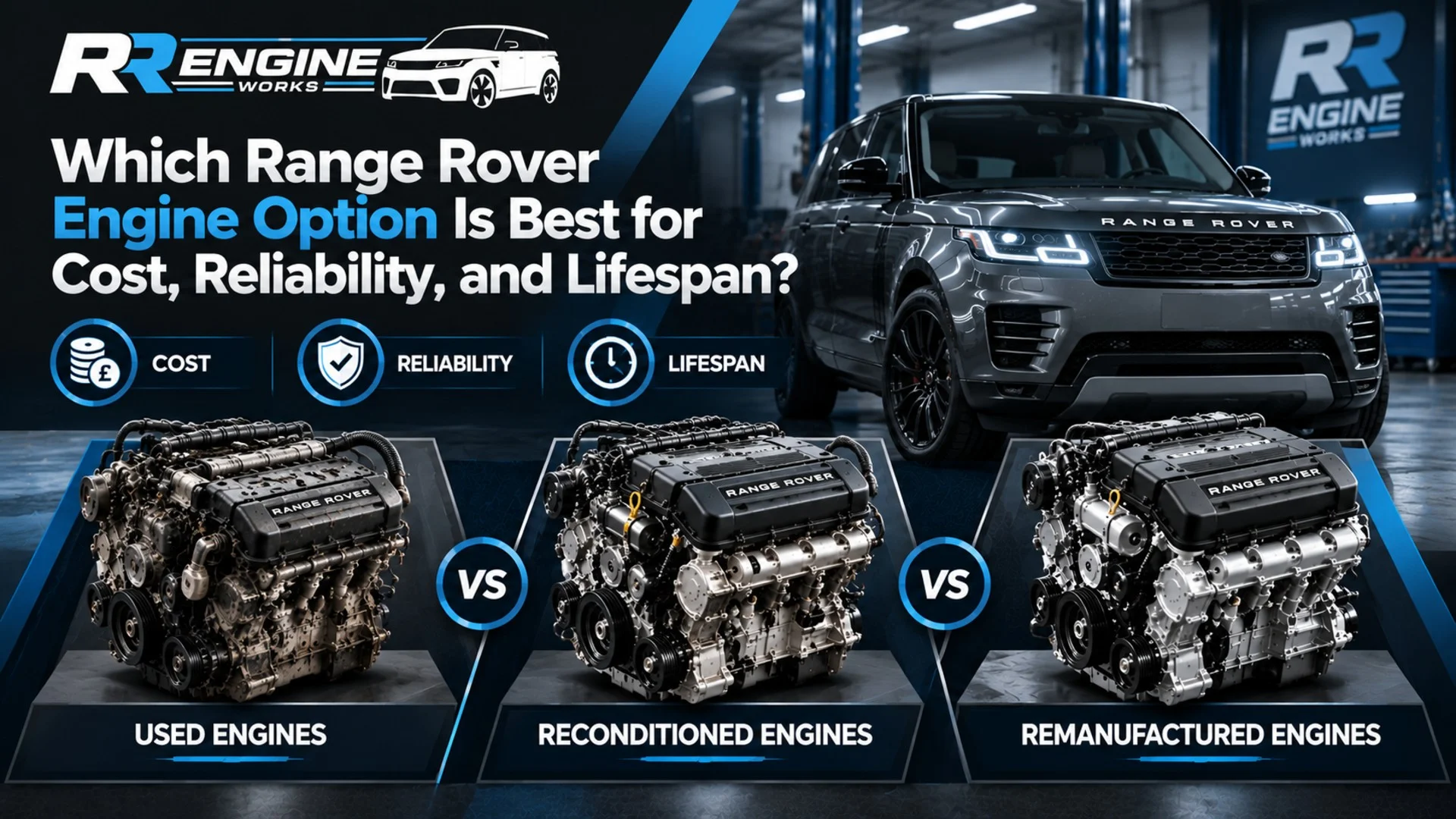
Price is usually the first question, but it shouldn't be the only one. The cheapest option upfront isn't always the cheapest option over three years of ownership.
Range Rover Engine Replacement Cost Compared (Used vs Reconditioned vs Remanufactured)
Engine Type | Typical Price Range (Supply Only) | Testing Included | Component Replacement | Best For |
| Used | Lowest | Basic run test only | None | Short-term fix, older/lower-value vehicles |
| Reconditioned | Mid-range | Compression and leak testing | Worn parts only | Balanced cost and reliability |
| Remanufactured | Highest | Full bench, compression, leak-down testing | Comprehensive, to OEM spec | Long-term ownership, higher-value models |
Prices vary depending on your model and engine code , a 2.0 Ingenium replacement will differ significantly from a 5.0 Supercharged V8 or 4.4 SDV8 , so treat this table as a general guide rather than a fixed quote.
Purchase Price vs Total Cost of Ownership
The sticker price on an engine is only part of the equation. A cheap used engine that fails again in 18 months means paying for removal, refitting, and diagnostics twice. Factor in:
- Fitting labour , typically several hours of skilled work regardless of engine type
- Fluids and filters , oil, coolant, and often a new timing kit
- Ancillary parts , sensors, gaskets, and mounts that may not transfer cleanly from the old engine
- Diagnostics and ECU work , particularly important on Ingenium and later JLR platforms
- Warranty risk , a shorter or thinner warranty means you're exposed if something goes wrong
When you add these up, a reconditioned or remanufactured engine often works out more cost-effective over a two-to-three-year ownership window, even though the upfront number looks higher.
Fitting, Fluids, and Ancillary Part Costs
Don't assume fitting cost is identical across engine types. A remanufactured engine that arrives correctly tested tends to go in cleanly with fewer surprises. A used engine, by contrast, can throw up unexpected issues mid-fit , a seized ancillary component, a mismatched sensor, or a fault that only shows up once it's running , which can extend labour time and cost.
How Long Does Each Engine Type Last?
As a general rule of thumb across the trade:
- Used engines typically carry the remaining life of the donor engine , this could be anywhere from a few thousand miles to well over 50,000, depending entirely on its history, which is often unverifiable.
- Reconditioned engines commonly deliver a further 60,000–80,000 miles of reliable service, assuming correct fitting and maintenance.
- Remanufactured engines are built to perform closer to original factory life expectancy, often exceeding 100,000 miles when properly maintained.
These figures aren't guarantees , they depend heavily on driving style, servicing, and the quality of the work carried out during fitting.
Which Option Is Most Reliable for High-Mileage Range Rovers?
If your Range Rover already has high mileage on the clock, a remanufactured engine can feel like overkill on a vehicle that's depreciating quickly. In this scenario, many owners find a well-inspected reconditioned engine strikes the right balance , solid reliability without paying premium prices on a vehicle that may not be kept for the long haul.
On the other hand, if you're planning to keep the vehicle for years, or you own a newer or higher-value model like a Range Rover Sport or Vogue, the extra investment in a remanufactured engine tends to pay for itself in fewer breakdowns and stronger long-term reliability.
What Should You Check Before Buying a Replacement Range Rover Engine?
This is the section most guides skip , and it's exactly where buyers get caught out.
Does Your Range Rover Engine Code Match?
Range Rover has used a wide range of engines across its model generations, and getting this wrong means the engine simply won't fit , or worse, it fits but doesn't run correctly with your ECU. Always confirm the exact engine code, not just the model name.
Common Range Rover Engine Codes (TDV6, SDV8, Ingenium, and More)
- 3.0 TDV6 , found across L322 and early L405 generations
- 4.4 SDV8 , used in higher-spec L405 models
- 5.0 Supercharged V8 , the performance-focused petrol option
- 2.0 Ingenium , JLR's modern four-cylinder platform, used across Evoque, Velar, and later Range Rover models
- 306DT / 508PS , engine block codes referenced in parts and supply listings
Cross-check your engine code against your V5C or the code stamped on the engine block itself before ordering. This one step prevents the most common (and most expensive) mistake in engine replacement.
What Warranty Cover Should You Expect?
A "12-month warranty" means very little on its own. What matters is what's actually covered.
What a Genuine Warranty Should Include (Parts, Labour, Timing Chain, Turbo)
A warranty worth trusting should clearly state whether it covers:
- Core internal components , bearings, crankshaft, cylinder head
- Timing chain and tensioners
- Oil pump
- Turbocharger, where fitted
- Labour costs if a fault requires the engine to come back out
- Any exclusions , consequential damage, ancillary parts, or fitting-related issues
If a supplier can't answer these questions clearly, that's a warning sign. A confident, established specialist will have this information ready without hesitation.
Questions to Ask Your Engine Supplier Before You Buy
Before committing, ask for:
- The exact engine code and confirmation it matches your vehicle
- Mileage and donor vehicle history, where available
- Compression and leak-down test results
- A breakdown of what was replaced or machined
- Full written warranty terms, including labour cover
- Whether ancillary components are included or need sourcing separately
- Fitting requirements and any additional costs involved
A supplier who answers these questions without pushback is one worth trusting with a job this significant.
Supply-Only vs Supply-and-Fit , Which Is Right for You?
If you have a trusted independent garage or the mechanical know-how to fit the engine yourself, supply-only can save money. But engine fitting on a Range Rover , particularly on Ingenium and SDV8 platforms , often involves ECU work, adaptation, and precise torque procedures that are easy to get wrong.
For most owners, supply-and-fit is the safer route. It puts the responsibility for correct installation, fluid changes, and initial diagnostics in the hands of the people who tested and prepared the engine in the first place , reducing the risk of comeback issues caused by fitting errors rather than the engine itself.
Get a Genuine Range Rover Replacement Engine From RR EngineWorks in Grays
Why Choose RR EngineWorks for Your Range Rover Engine
At RR EngineWorks, based at Unit 1 Hedley Ave, Grays RM20 4EL, we work exclusively with Range Rover and wider Land Rover engines, which means we know the difference between a TDV6 and an SDV8 without needing to look it up. We supply used, reconditioned, and remanufactured engines, and we're upfront with customers about which option genuinely suits their vehicle and budget , not just the one with the best margin.
Our Supply and Fit Service, Testing Standards, and Warranty
Every engine we supply is checked against the specifics covered in this guide , engine code verification, compression and leak-down testing where applicable, and a clear written warranty that spells out exactly what's covered. Our supply-and-fit service includes fitting, ECU work where required, and a full post-installation check, so you're not left managing the process yourself.
Request a Quote Today
If you're weighing up used, reconditioned, or remanufactured for your Range Rover, get in touch with our team at RR EngineWorks for a straight answer and a clear quote , based on your exact model, engine code, and how long you're planning to keep the vehicle.
Frequently Asked Questions
What is the difference between a reconditioned and a remanufactured Range Rover engine?
A reconditioned engine has worn components replaced and is machined where needed, but the core block and crankshaft are typically retained if they pass inspection. A remanufactured engine goes further, with comprehensive component replacement and testing against original factory tolerances, offering closer-to-new performance.
Is a used Range Rover engine worth buying?
It can be, particularly for older or lower-value vehicles where cost is the priority. The main risk is unknown mileage and service history, so it's worth asking for as much documentation as possible before buying.
How long does a reconditioned Range Rover engine last?
With correct fitting and regular maintenance, a reconditioned engine commonly delivers a further 60,000–80,000 miles, though this varies based on driving conditions and servicing.
How much does a Range Rover engine replacement cost in the UK?
Costs vary significantly by engine type and model , used engines sit at the lower end, reconditioned in the middle, and remanufactured at the top. Fitting, fluids, and ancillary parts should always be factored into the total cost alongside the engine price itself.
Which is better for a Range Rover , reconditioned or remanufactured?
If you're keeping the vehicle long-term or own a higher-value model, remanufactured typically offers better long-term reliability. If you're after a solid, cost-effective repair on an older vehicle, reconditioned usually strikes the right balance.
Do I need to check the engine code before buying a replacement engine?
Yes, always. Range Rover has used multiple engine codes across its model range, including TDV6, SDV8, and Ingenium variants. Buying the wrong code means the engine won't fit or won't run correctly with your vehicle's ECU.