
Your Range Rover has dropped into limp mode. The DPF warning light is glowing on the dash, the power has gone flat, and a scan tool has thrown up P246B, usually next to P2463.
Don't panic, but don't ignore it either. This code is your diesel particulate filter telling you something is wrong with how it's reading, or how much soot it's holding.
This guide explains what the Range Rover P246B fault code means, what causes it, how to reset it properly, and when to hand it to a specialist. If you're near Essex, the team at RR Engine Works in Grays diagnoses and repairs this fault regularly.
What Does the Range Rover P246B Fault Code Mean?
Before spending money on parts, you need to know what the code is actually reporting. Many owners replace the wrong component because they treat P246B as a verdict rather than a clue.
What Does Fault Code P246B Mean, and Why Does It Appear With P2463 on Land Rover, Jaguar and Peugeot?
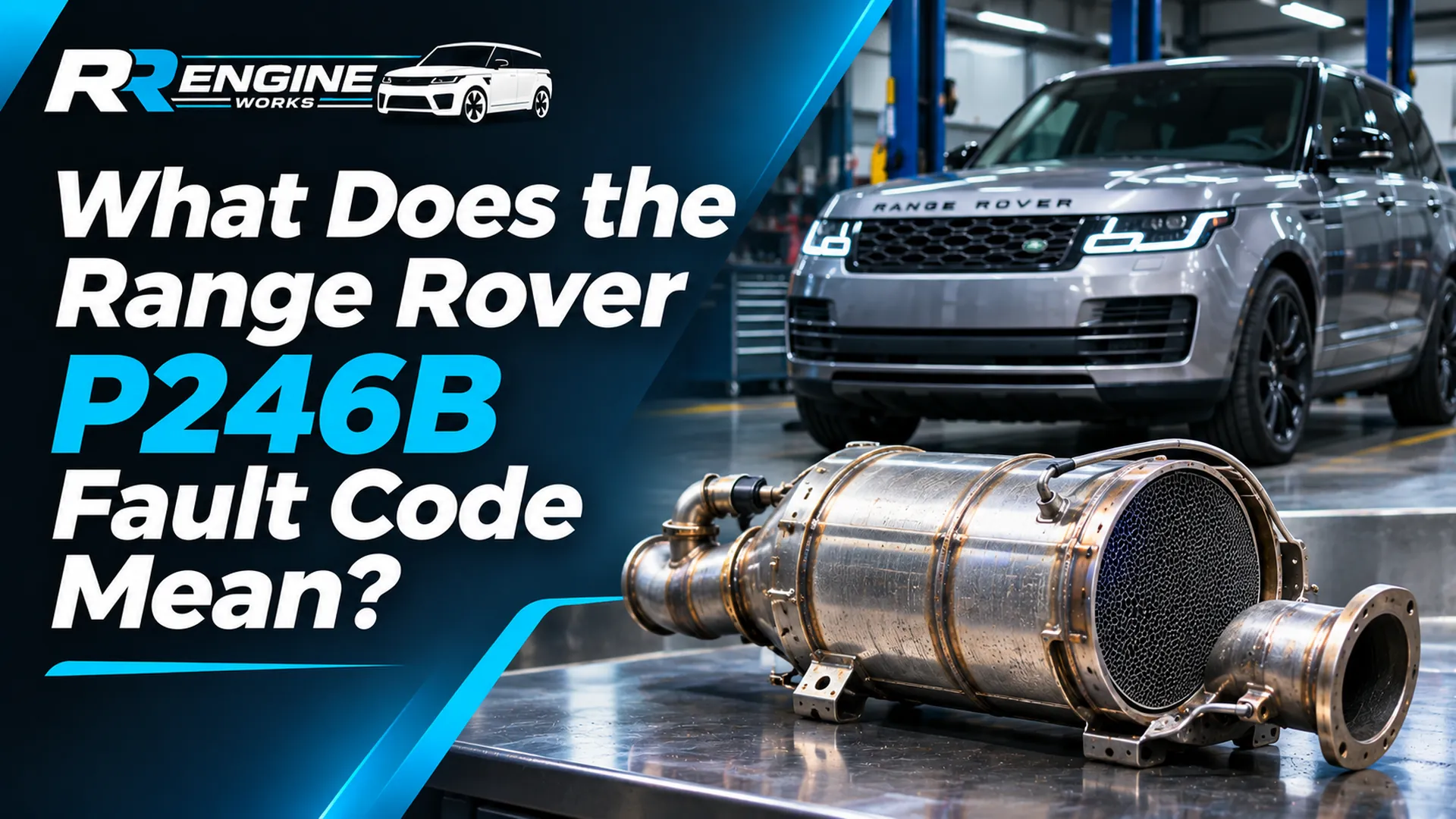
P246B points to a problem with the DPF differential pressure sensor circuit or its readings. The sensor measures the pressure difference before and after the filter, and the engine computer uses that figure to judge how clogged the DPF is. If the reading looks wrong or implausible, the computer logs P246B.
It often appears alongside P2463, which refers to soot accumulation in the filter. The two codes together suggest the filter may be restricted and the system can't clear it.
You'll see the same pattern on other vehicles that share this diesel technology:
- Land Rover P246B-00 appears on Range Rover, Range Rover Sport and Evoque diesels.
- Jaguar P246B-00 shows up on Jaguar models running similar engines.
- P246B Peugeot is reported on Peugeot diesels with a comparable DPF setup.
- P246C is a closely related code that tells a similar story about the pressure sensor or filter.
The manufacturer suffix (the "-00" in "P246B-00") varies between scan tools. It's the same fault, displayed in a different format.
A quick note on other codes. Owners often search for other fault codes at the same time. These usually belong to different systems and need their own diagnosis:
- P0174 is a "system too lean" code for bank 2.
- P2187 is a "system too rich at idle" code for bank 1.
- P0915 relates to the gear shift position circuit.
- P2610 relates to the engine control module's internal timer.
- P115B, P240A and C1A18 64 point to other systems entirely, so read them from a full scan rather than guessing.
If you're hunting a Range Rover classic fault codes list, note that older classic models pre-date the modern OBD-II system. They rely on different diagnostics, so a generic code list won't match them.
Can You Drive a Range Rover With a Blocked Diesel Particulate Filter?
You can usually limp it a short distance, but you shouldn't keep driving on a blocked DPF. The car protects itself by cutting power, which is limp mode. Pushing on risks bigger bills.
Here's what a restricted filter can lead to:
- Rising back pressure, which strains the turbo and the engine.
- Oil dilution if repeated failed regenerations push extra fuel into the sump.
- A failed MOT, since emissions faults are an automatic problem.
- A pricier repair, because a filter that could have been cleaned may need replacing.
A short motorway run sometimes triggers a self-clean, but only if the sensor and the filter are healthy. If the warning light stays on or the code returns, book a diagnostic instead of gambling on another drive.
How Do You Diagnose and Fix a Range Rover P246B Fault?
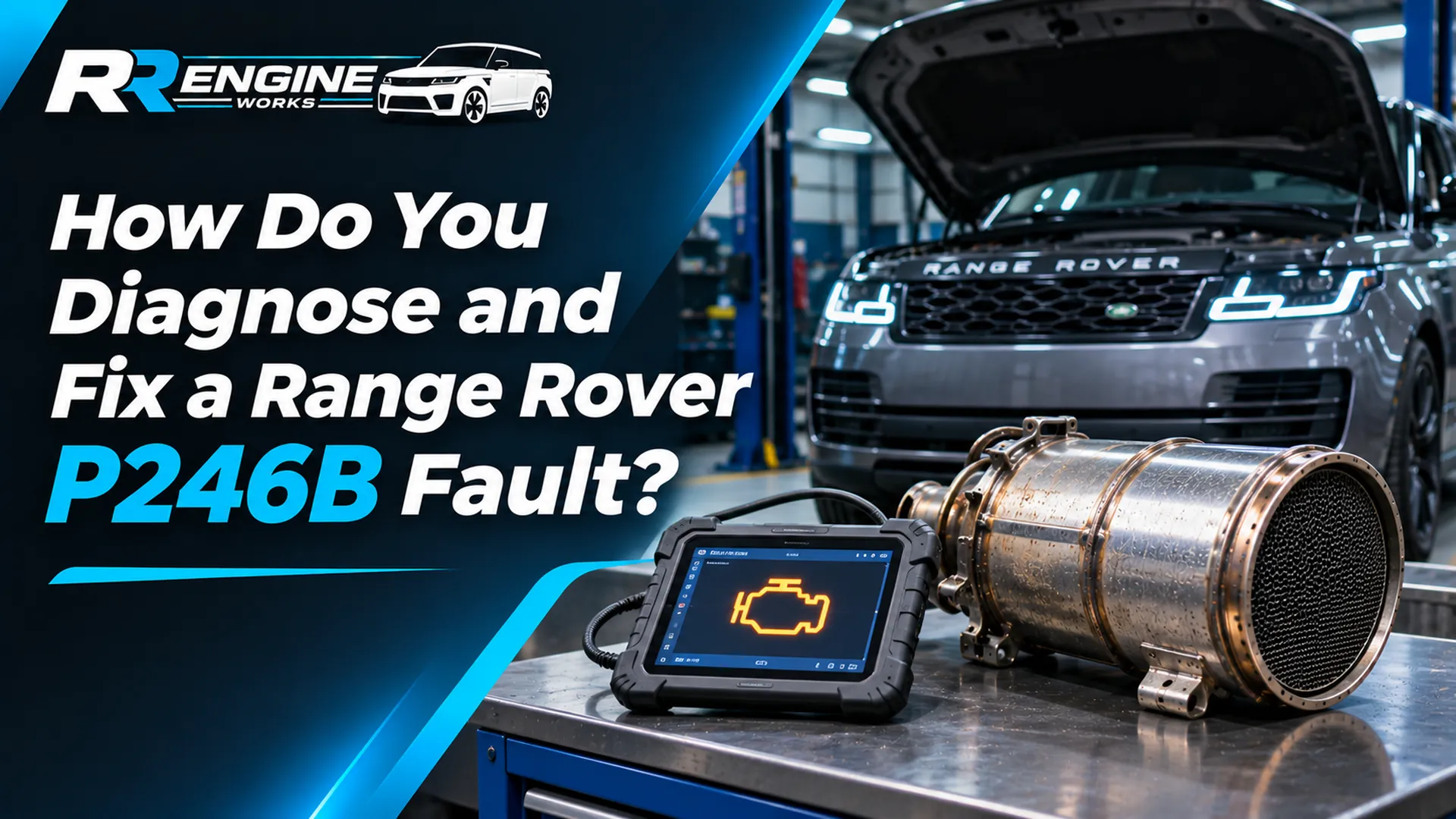
Clearing the code is easy. Finding why it came back is where the real work sits. This section covers how a workshop approaches it so you know what a proper repair involves.
How to Fix a Range Rover P246B Fault Code Step by Step: From Scan to Repair
A competent technician follows a logical order rather than swapping parts. Here is the typical process:
- Run a full diagnostic scan to capture every stored and pending code, not just P246B.
- Check live data from the differential pressure sensor with the engine running, comparing readings at idle and under load.
- Inspect the pressure pipes and connections. Split, blocked or disconnected pipes are a common, cheap cause.
- Assess the soot load to see whether the filter is genuinely clogged or only reading wrongly.
- Carry out the repair. This might be replacing the sensor, fixing the pipes, forcing a regeneration, or cleaning or replacing the DPF.
- Clear the codes and road test to confirm the fault doesn't return.
The cause usually falls into one of three groups. The table below shows how they compare.
Likely Cause | Typical Signs | Usual Fix |
| Faulty differential pressure sensor | Code appears but the filter is clean; erratic live readings | Sensor replacement |
| Split, blocked or loose pressure pipes | Intermittent code; readings that don't match engine load | Pipe repair or replacement |
| Clogged or soot-heavy DPF | Limp mode, repeated regenerations, P2463 alongside | Forced regeneration, cleaning or DPF replacement |
Short, stop-start journeys make the third cause more likely. The filter never gets hot enough to burn off soot, so it slowly fills up.
A word of caution: Replacing the sensor on a hunch is the most common wrong turn. If the filter is the real problem, a new sensor won't help. The live data tells you which one it is.
Where Is the Range Rover DPF Differential Pressure Sensor Located?
The sensor sits on or near the exhaust's DPF assembly, connected by two small pipes that run to the filter. Exact placement varies by model, year and engine, such as the 3.0 TDV6, 3.0 SDV6 or 2.0 Ingenium diesel.
Because access can be awkward, check your vehicle's workshop manual or ask a specialist before pulling things apart. Sensor and pipe connections are easy to damage, and a disturbed pipe can create a fresh fault.
Remember that locating the sensor is only half the job. If you clear the code without finding what triggered it, it will almost always return.
How Do You Reset the DPF Differential Pressure Sensor and Unblock a DPF Without Removing It?
You can often clear the fault without taking the filter off the car, but the method depends on what caused it.
To reset the code: Once the underlying fault is fixed, a diagnostic tool clears the code and runs any required adaptations. This is the correct Range Rover P246B fault code reset. Wiping the code with a cheap reader while the cause remains only hides it temporarily.
To unblock the DPF without removal: A workshop can use one of these routes:
- A forced (static) regeneration, run through diagnostic equipment, which heats the filter and burns off the soot under controlled conditions.
- On-vehicle cleaning, where a cleaning process clears accumulated soot and ash without removing the filter.
- A sustained motorway drive, which only works for light soot loads and a healthy system.
If the filter is badly blocked, cracked or full of ash, none of these will work and replacement becomes the sensible option. That's why diagnosis comes first.
A reset is a finishing step, never a repair. If the code reappears within days, the original cause is still there.
Why Choose RR Engine Works for Range Rover P246B Repair in Grays?
Reading about P246B is useful. Having someone fix it correctly the first time is better. Here's what to expect if you bring your car in.
What Does a Range Rover P246B Fault Code Repair Include at RR Engine Works, and How Do You Book?
A proper repair covers the full chain of the fault, not only the symptom. Your visit would typically include:
- A complete diagnostic scan of all systems, so related codes aren't missed.
- Sensor and pipe testing to confirm the true source of the fault.
- DPF assessment, with cleaning, regeneration or replacement depending on the filter's condition.
- Code clearing and adaptations once the work is done.
- A road test to verify the fault is gone.
You'll get a clear explanation of what was found and why a given fix is recommended, before any work begins.
Find us at: RR Engine Works, Unit 1 Hedley Ave, Grays RM20 4EL.
If your Range Rover is in limp mode or showing a DPF warning, don't wait for it to get worse. Call or send an enquiry through rrengineworks.co.uk and we'll book your diagnostic.
Frequently Asked Questions About the Range Rover P246B Fault Code
What does fault code P246B mean?
It signals a fault with the DPF differential pressure sensor circuit or its readings. It frequently appears with P2463 when the filter is holding too much soot.
How do I fix a Land Rover P246B-00 error?
Diagnose first: check live sensor data, inspect the pressure pipes, and assess the filter's soot load. Then repair the sensor, the pipes or the DPF as required, and clear the code.
P2463 fault code: how do I fix it?
P2463 points to soot accumulation. Fixes range from a forced regeneration to DPF cleaning or replacement, depending on how blocked the filter is.
Can I drive with a blocked diesel particulate filter?
Only briefly and with care. Continued driving risks limp mode, engine strain and a larger repair bill.
How do I reset the DPF differential pressure sensor?
Fix the underlying cause first, then use a diagnostic tool to clear the code and run adaptations. Resetting alone won't hold if the fault remains.
How can I unblock a DPF without removing it?
A workshop can perform a forced regeneration or on-vehicle cleaning. Heavily clogged or damaged filters may still need replacing.
Is P246B only a Range Rover problem?
No. It also appears on Jaguar and Peugeot diesels that use similar DPF technology.
Final Thoughts: Don't Let a Small Sensor Reading Become a Big Repair
The Range Rover P246B fault code rarely fixes itself. It's an early warning, and acting on it quickly usually keeps the repair simpler and the bill lower.
Get the diagnosis right, treat the cause rather than the code, and your Range Rover goes back to the power and economy you expect.
Ready to get it sorted? Contact RR Engine Works in Grays for expert Range Rover DPF diagnosis and repair.