
An AdBlue warning pops up on the dash. Then comes a message that the engine may not restart in a set number of miles. Maybe the car feels flat on a hill, or it drops into limp mode on the motorway. If that sounds familiar, you're probably dealing with a Range Rover NOx sensor fault.
The good news is that it's fixable, and it usually costs far less when you act early. The bad news is that the warning countdown is real, and ignoring it can leave you stuck on the drive. At RR Engine Works, Unit 1 Hedley Ave, Grays RM20 4EL, we diagnose and repair NOx sensor faults on Range Rover diesels, and this guide covers what we see on the workshop floor.
What Are the Symptoms of a Range Rover NOx Sensor Fault?
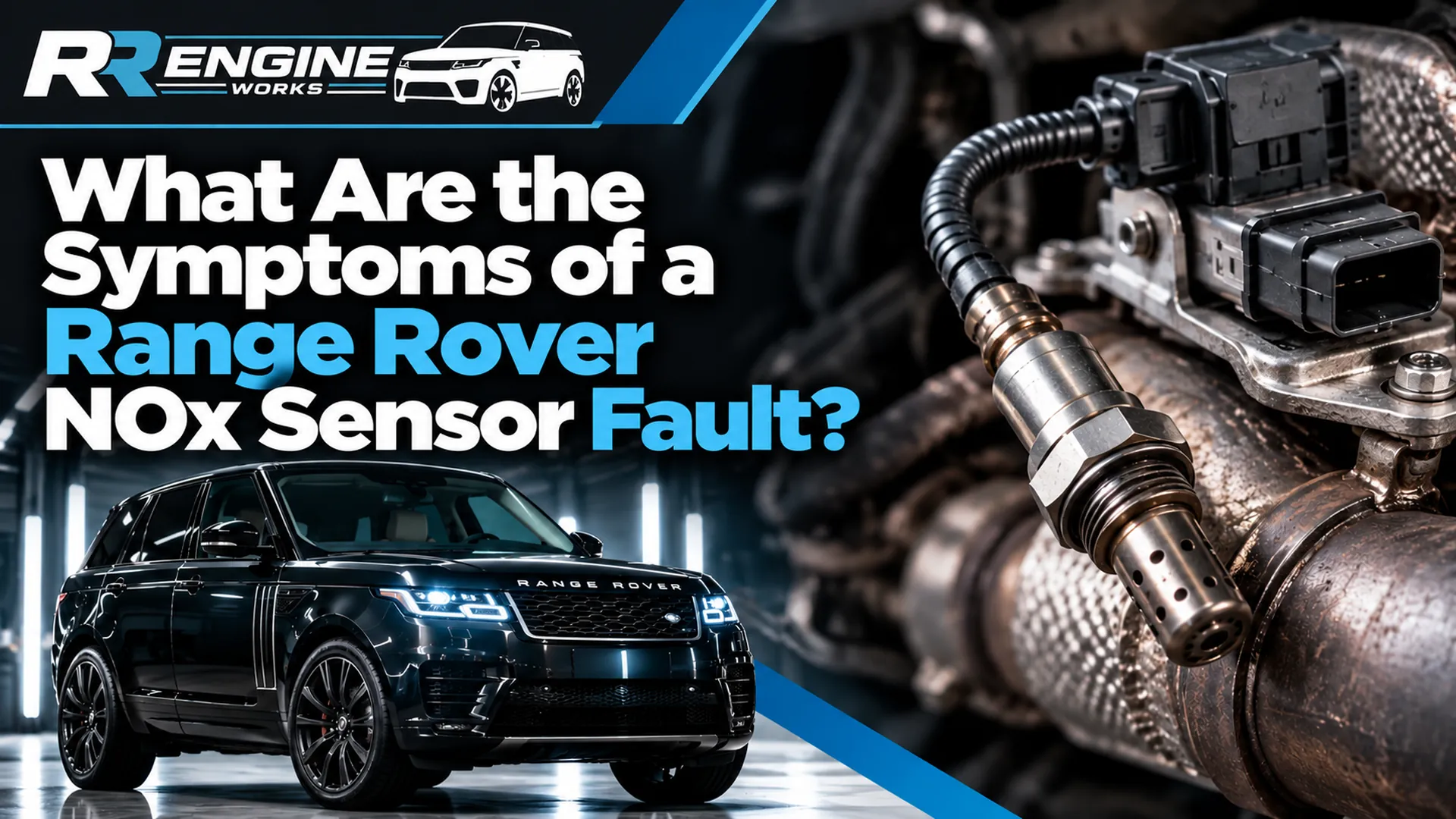
A NOx sensor measures nitrogen oxide levels in the exhaust. The engine management uses that reading to control the AdBlue (diesel exhaust fluid) dosing in the SCR system. When the sensor gives bad data, the whole emissions system loses its reference point, and the car reacts.
Most owners notice the warning first, then the performance changes. The symptoms below are the Range Rover NOx sensor fault symptoms we see most often.
What Happens When the NOx Sensor on a Range Rover Goes Faulty?
Here's what typically shows up, roughly in the order drivers report it:
- AdBlue or exhaust fluid warning. The message appears even when the tank is full. That's a strong hint the sensor, not the fluid level, is the problem.
- Emissions system fault message. The dash may tell you to visit a dealer or specialist.
- Restart countdown. The car counts down miles or starts remaining before it refuses to restart.
- Reduced power or limp mode. The engine management protects the emissions system by limiting output.
- Poorer fuel economy. Incorrect dosing and engine strategy changes can push consumption up.
- Rough running or hesitation. Less common, but it happens when the fault sits alongside other exhaust issues.
- MOT emissions failure. A faulty sensor or an active fault can lead to a failed emissions test.
One warning isn't a diagnosis. Several of these symptoms overlap with AdBlue pump faults, injector problems and blocked SCR catalysts. That's why we scan and test before we recommend a part.
Can I Still Drive My Range Rover With a Faulty NOx Sensor?
Yes, for a short time, but we wouldn't treat that as a plan. The car usually keeps running while the countdown ticks down. Once it hits zero, many Range Rovers will not restart after you switch off.
Here's a scenario we see regularly. A driver gets the warning on a Monday, carries on for the week, then switches off at a petrol station and the car won't start. That's a recovery bill on top of the repair.
There's also the risk to the wider system. Driving for weeks with the fault active can stress the SCR system and, in some cases, contribute to catalyst damage. Fixing the sensor early protects the more expensive parts downstream.
How Serious Is a NOx Sensor Failure on a Diesel Range Rover?
It depends on what's failing and how long it's been ignored. This table shows how we think about urgency:
What you notice | Likely meaning | Urgency |
| Single AdBlue warning, car drives normally | Early sensor drift or a connector issue | Book within days |
| Restart countdown showing | Fault confirmed, system counting down | Book now |
| Limp mode or lost power | Fault affecting engine strategy | Book immediately |
| Warning plus failed MOT emissions | Active fault and emissions impact | Book immediately |
A failing sensor on its own is a manageable job. A sensor fault that has been left alone while the AdBlue system struggles is a bigger one.
How Do You Fix and Reset a Range Rover NOx Sensor Fault?
Owners often ask us for a quick reset first. That's understandable, but a reset and a fix are not the same thing.
Can You Reset a Range Rover NOx Sensor Fault Without Replacing the Sensor?
Sometimes, but only in specific cases. A Range Rover NOx sensor fault reset works when the cause was a one-off glitch, a loose connector or a temporary signal drop. We check wiring and plugs first because a poor connection is cheaper to sort than a new sensor.
If the sensor itself has failed, clearing the code only hides the problem. The warning returns, usually within a few drive cycles, and the countdown starts again. We'd rather tell you that up front than send you away with a fault that comes back next week.
A quick rule of thumb:
- Reset may be enough if the fault appeared once, the connector was loose or damaged, and the code stays clear after a full test drive.
- Replacement is needed if the code returns, the sensor readings are out of range, or the sensor is physically damaged or contaminated.
What Does a Proper NOx Sensor Diagnosis and Repair Involve?
A genuine Range Rover NOx sensor fault fix follows a clear order. Skipping steps is how people end up paying for parts they didn't need.
- Scan for fault codes. We read stored and pending codes and check live sensor data.
- Inspect wiring and connectors. Heat and road spray damage plugs and cables more often than people expect.
- Test the AdBlue and SCR system. We check dosing, fluid quality and related components.
- Identify upstream or downstream sensor. Range Rovers can carry more than one NOx sensor, so we confirm which one has failed.
- Replace the faulty sensor. We fit the correct unit and clear the fault.
- Road test and recheck. We confirm the fault stays clear and the system reads correctly.
A typical example: a customer arrives with an AdBlue warning and a countdown, convinced the fluid pump has failed. Live data shows the pump dosing correctly while one sensor reports impossible readings. Replacing that sensor clears the fault, and the customer avoids buying a pump they didn't need.
Is It the NOx Sensor, the AdBlue System, or Something Else?
This is the question that decides your bill. The NOx sensor, the AdBlue pump, the injector and the SCR catalyst all feed into the same warning. The same message can come from any of them.
That's why guessing is expensive. Replacing the wrong part can cost more than a proper diagnosis, and the warning stays on. Testing first means you only pay for what's actually broken.
How Much Does It Cost to Fix a Range Rover NOx Sensor Fault in Grays?
The question we hear most is "how much does it cost to fix a NOx sensor?" An honest answer is that it varies, and anyone quoting a flat price before looking at the car is guessing.
What Affects the Repair Cost of a Range Rover NOx Sensor?
Here are the main factors behind the Range Rover NOx sensor fault repair cost:
- Which sensor has failed. Upstream and downstream sensors differ in price and access.
- Model and engine. An Evoque, Sport and full-size Range Rover vary in parts and labour.
- Wiring or connector damage. Extra repairs add time and parts.
- Related AdBlue or SCR faults. If another component is also failing, the job grows.
- Labour time. Access to the sensor differs by vehicle.
The best way to control cost is to deal with the fault early. A single sensor is a far smaller job than a sensor plus a damaged SCR component.
We give a written quote after diagnosis, so you know the figure before any work begins.
How Do I Book a NOx Sensor Diagnosis With RR Engine Works?
Booking is straightforward. Call or message us with your Range Rover's model, year and engine, and tell us exactly what the dash is saying. If there's a countdown on screen, let us know how many miles are left so we can prioritise.
Then bring the car to Unit 1 Hedley Ave, Grays RM20 4EL. We'll diagnose it, explain what we find in plain English and give you a clear quote.
Range Rover NOx Sensor Fault: Common Questions
Will a faulty NOx sensor fail an MOT?
It can. An active emissions fault or abnormal emissions readings may cause a failure, so it's better to fix the fault before the test.
What happens when a NOx sensor is faulty?
The emissions system loses accurate data, which triggers warnings, can reduce power and may start a restart countdown.
Is a NOx sensor fault the same as an AdBlue fault?
Not always. The sensor feeds the AdBlue system, so one can trigger the other, but the cause may be the sensor, the pump, the injector or the catalyst.
How long does the repair take?
It depends on the model and what diagnosis finds. We confirm the timeframe once we've tested the car.
Is an AdBlue delete a legal fix?
No. Removing or disabling emissions equipment is not legal for road use in the UK, and it can cause MOT failure and insurance problems. We repair the system properly instead.
Don't Let the Countdown Reach Zero
A Range Rover NOx sensor fault rarely fixes itself, and the warning only gets more inconvenient the longer you wait. Early diagnosis keeps the repair small and keeps you on the road.
If your Range Rover is showing an AdBlue warning, a restart countdown or limp mode, book a diagnosis with RR Engine Works in Grays, Essex. Call us or use the contact page, and we'll find the real cause before any work starts.