
Your Range Rover's temperature gauge is creeping up. There's a strange sweet smell drifting from the exhaust. Maybe you've topped up the coolant twice this month and you're starting to wonder where it's actually going. If any of that sounds familiar, you're probably here for one reason: you want to know what a head gasket repair is going to cost you before you commit to anything.
Fair enough. A head gasket job isn't cheap, and Range Rover engines, whether it's the TDV6, the SDV8, the supercharged V8, or the newer Ingenium units, aren't simple to work on. The price swings a lot depending on the engine, the extent of the damage, and whether the cylinder head needs machining. So let's break it down properly, engine by engine, so you know roughly what you're looking at before you ring around for quotes.
Range Rover Head Gasket Replacement Cost Breakdown
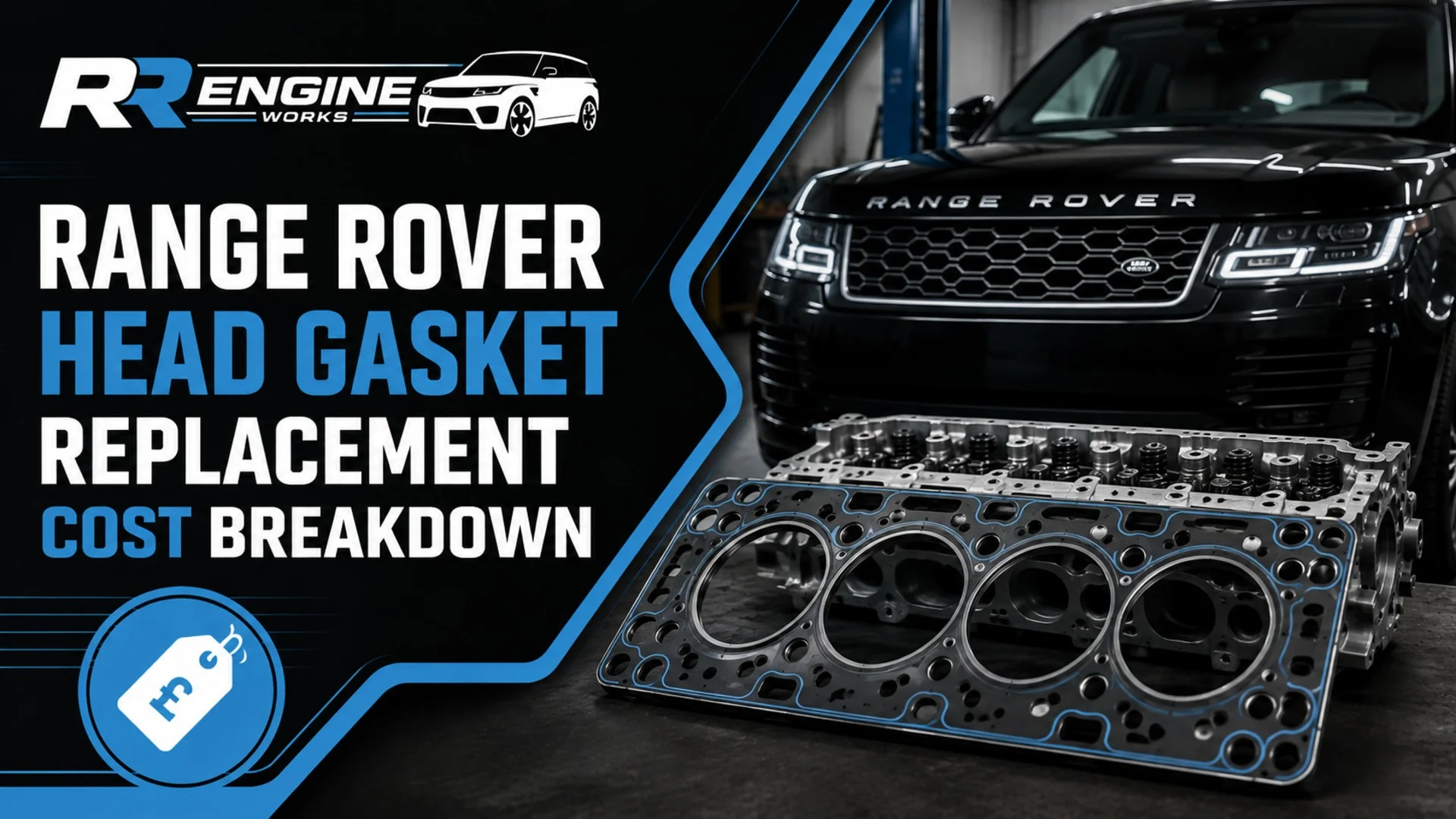
There isn't one single number that applies to every Range Rover. A gasket-only job on a straightforward diesel is a very different bill from a V8 repair that needs head skimming and new bolts. Below is a realistic guide based on typical UK specialist pricing.
How Much Does a Range Rover Head Gasket Cost by Engine?
Engine | Typical UK Cost (Parts & Labour) |
| 2.0 Ingenium (petrol/diesel) | £900 – £1,600 |
| 3.0 TDV6 / SDV6 | £1,400 – £2,400 |
| 4.4 TDV8 / SDV8 | £1,800 – £3,200 |
| 4.4 / 5.0 V8 (petrol) | £2,200 – £3,800 |
| 5.0 Supercharged V8 | £2,800 – £4,500+ |
These figures are indicative, not fixed quotes, think of them as a starting point for budgeting rather than a final invoice. The exact price for your car depends on the year, mileage, whether the head has warped, and whether any secondary damage (like a cracked cylinder head or contaminated engine oil) has occurred.
3.0 TDV6 / SDV6 Head Gasket Cost
These engines are common across the Range Rover Sport and Discovery range. Because access to the cylinder heads is more involved than on the Ingenium units, labour hours tend to run higher, which pushes the overall bill up even when the parts themselves aren't dramatically more expensive.
4.4 SDV8 / V8 Head Gasket Cost
The V8 diesel and petrol variants carry more mass and more components around the cylinder head, so removal and refitting simply take longer. If the head needs skimming due to warping from prolonged overheating, expect that to add noticeably to the final figure.
5.0 Supercharged V8 Head Gasket Cost
This is the most involved and typically the most expensive repair in the range. The supercharger assembly, intercooler, and associated plumbing all need to come off before the cylinder heads are even accessible, which is reflected in the labour time.
2.0 Ingenium Head Gasket Cost
Ingenium engines are generally more straightforward to work on than the older V6/V8 units, which is one reason this repair tends to sit at the lower end of the cost scale, though Ingenium engines bring their own set of known issues worth having checked at the same time.
What's Included in the Price? (Parts vs Labour)
A head gasket "replacement cost" isn't just the price of the gasket itself, that's actually one of the smaller line items. A proper quote should separate out:
- The head gasket set, including new seals and, where applicable, valve seals
- New cylinder head bolts, these are almost always torque-to-yield and shouldn't be reused
- Labour hours, removal, inspection, refitting, and reassembly
- Cylinder head pressure testing, to confirm the head itself isn't cracked or warped before it goes back on
- Machining/skimming, if the head surface isn't flat
- Coolant and engine oil, both need replacing, and oil that's been contaminated with coolant should never just be topped up
- Filters and consumables
- Post-repair diagnostic testing, confirming the cooling system holds pressure and there's no residual combustion leak
If a garage gives you a single flat number with no breakdown, ask for one. A transparent quote tells you exactly what you're paying for and protects you from surprise add-ons once the engine is already stripped down.
Head Bolts, Skimming & Pressure Testing Explained
Cylinder head bolts stretch slightly under torque and generally can't be reliably reused once removed, reusing them risks an uneven seal and a repeat failure down the line. Skimming (machining the head flat again) is only needed if the head has warped, usually from overheating, and it's worth insisting on a pressure test afterwards so you're not paying twice for the same repair.
Signs of a Blown Range Rover Head Gasket
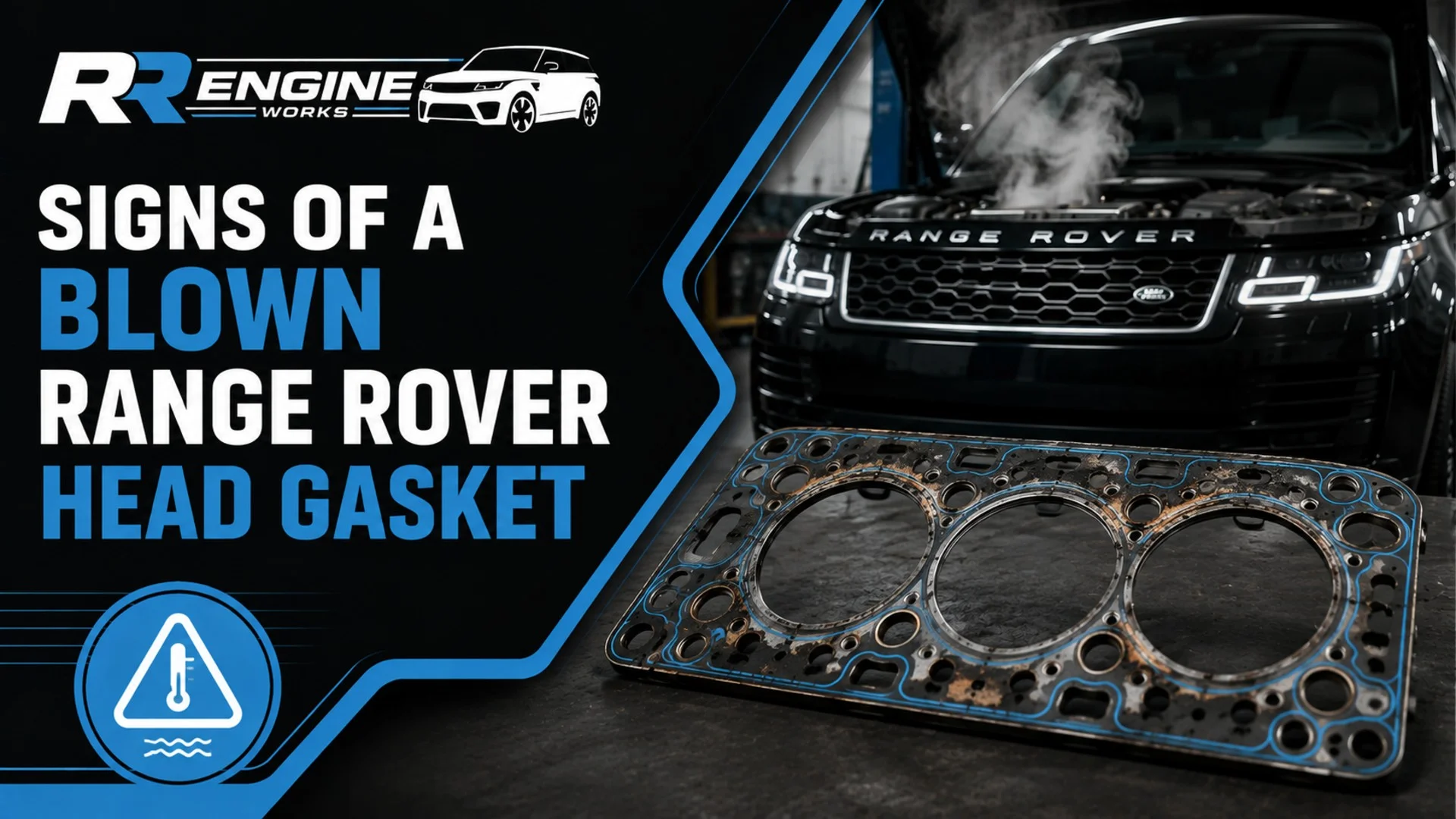
Before you book anything in, it's worth knowing what you're actually dealing with. Head gasket failure has a fairly recognisable pattern of symptoms, though, and this matters, not every one of these symptoms automatically means the head gasket is the culprit.
Common Blown Head Gasket Symptoms
Keep an eye out for:
- White exhaust smoke, especially on start-up or under load, caused by coolant burning in the combustion chamber
- Milky, mayonnaise-like residue on the oil filler cap or dipstick, a sign coolant has mixed into the engine oil
- Persistent coolant loss with no visible puddle underneath the car
- Engine overheating, particularly on motorway runs or in stop-start traffic
- Bubbling in the coolant reservoir or expansion tank, even with the engine off
- Rough idle or a noticeable misfire, caused by coolant fouling a cylinder
- Difficulty starting, sometimes accompanied by a "hydraulic lock" feeling if coolant has pooled in a cylinder overnight
- A sweet smell from the exhaust, that's coolant, and it's a fairly distinctive giveaway
If you're seeing two or three of these together, it's worth getting the car looked at sooner rather than later. Driving a Range Rover with a genuinely blown head gasket for an extended period risks turning a gasket job into a full engine rebuild.
Is It Really the Head Gasket? (Ruling Out Other Causes)
Here's where a lot of owners, and, frankly, some garages, jump to conclusions too fast. Coolant loss and oil contamination don't automatically mean the head gasket has gone. Several other components can produce near-identical symptoms.
Oil Cooler, EGR Cooler & Thermostat Faults That Mimic Head Gasket Failure
A failing oil cooler can allow coolant and oil to mix internally without any head gasket involvement at all, and on some Range Rover engines, this is actually a more common culprit than the gasket itself. An EGR cooler fault can cause unexplained coolant loss with no obvious external leak. A sticking thermostat or a worn water pump can trigger overheating that has nothing to do with the cylinder head. Even a perished coolant hose or a cracked expansion tank can mimic early gasket symptoms.
This is exactly why proper diagnosis matters before any parts get ordered. Replacing a head gasket when the actual fault is a £150 oil cooler is an expensive mistake, and one we see more often than you'd think.
How We Diagnose and Repair Your Range Rover
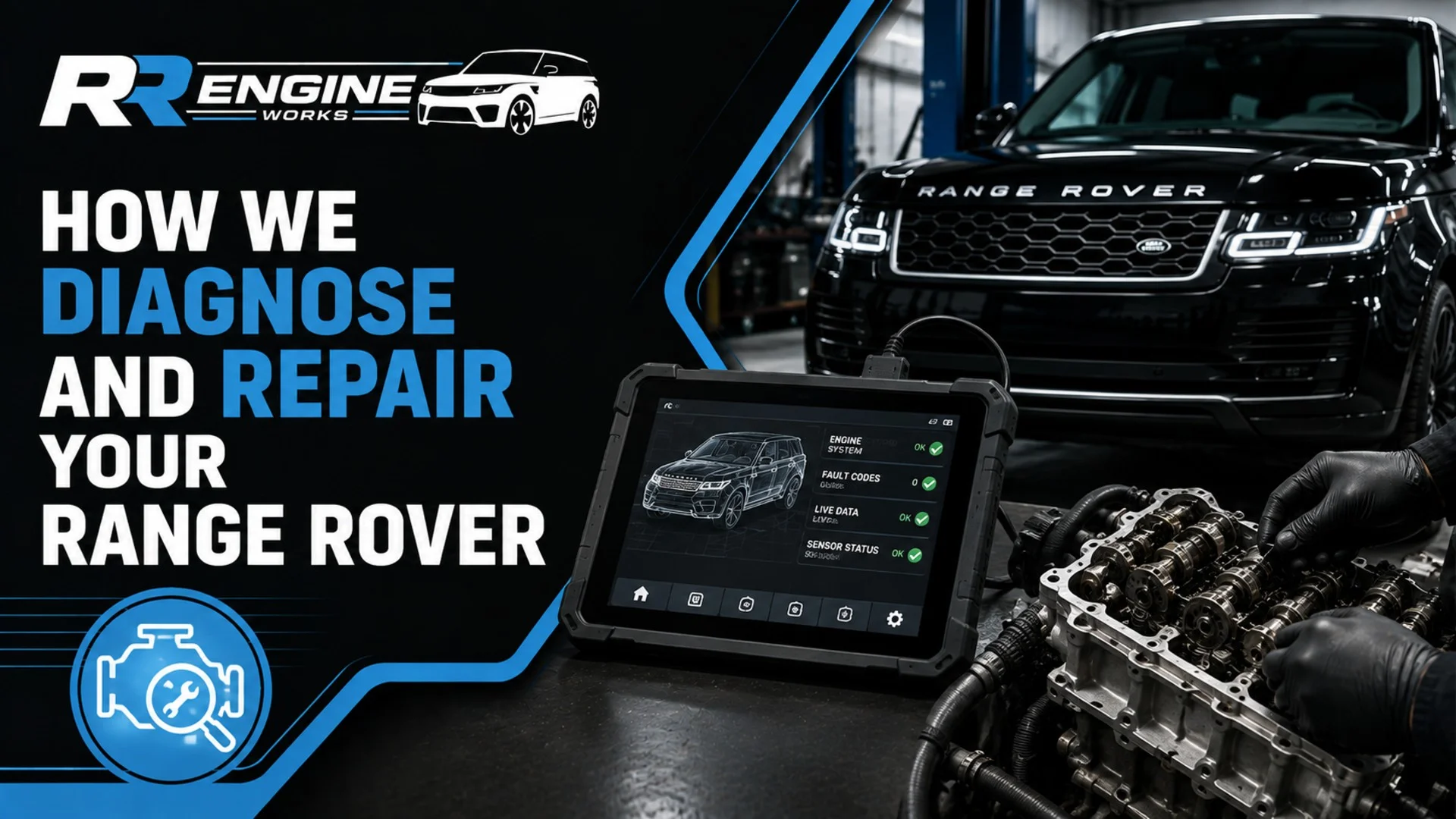
At RR Engine Works, we don't quote for a head gasket replacement based on symptoms alone. We test first, confirm the fault, and then give you a firm, itemised quote, so you know you're paying to fix the actual problem, not just the most likely guess.
Our Head Gasket Diagnostic Process
Our approach follows a clear diagnostic sequence rather than jumping straight to a repair:
- Visual inspection of the cooling system, hoses, oil cooler, and EGR cooler for obvious external faults
- Cooling system pressure test to check whether the system holds pressure and whether there's an external leak
- Combustion gas test, which detects combustion gases in the coolant, a strong indicator of a genuine head gasket or cracked head issue
- Compression test, comparing pressure across all cylinders to spot a cylinder that's underperforming
- Cylinder head removal and pressure testing (once we've confirmed the fault sits at the head), to check for warping or hairline cracks before any parts are ordered
Compression, Combustion Gas & Pressure Testing Explained
A combustion gas test uses a chemical reagent that changes colour if combustion gases are present in the coolant, a fairly definitive sign the head gasket (or the head itself) has failed. A compression test tells us if a specific cylinder is losing pressure, which helps pinpoint exactly where the fault sits before we open the engine up. Together, these tests take the guesswork out of what's otherwise an expensive repair decision.
Head Gasket Repair vs Engine Rebuild, Which Do You Need?
This is the question that really determines your final bill, and it's one worth understanding properly.
A straightforward head gasket replacement addresses a failed seal between the cylinder head and the engine block. But if the engine has been driven for any length of time while overheating, the damage can extend further, a warped or cracked cylinder head, damaged valve seats, or even bore damage from prolonged coolant contamination.
Scenario | Likely Repair | Rough Cost Range |
| Early-stage failure, no overheating history | Head gasket replacement | £900 – £3,800 (engine dependent) |
| Warped cylinder head | Gasket replacement + head skimming | Add £150 – £400 |
| Cracked cylinder head | New or reconditioned head required | Add £500 – £1,200+ |
| Extended overheating, bore/bearing damage | Full or partial engine rebuild | £3,500 – £7,000+ |
| Catastrophic engine damage | Engine replacement (recon/used) | £4,000 – £9,000+ |
The honest answer is: the sooner you get a suspected head gasket issue looked at, the more likely you are to be looking at the cheaper end of that table. Delaying diagnosis is usually what pushes a job from "gasket repair" into "engine rebuild" territory.
Get a Free Range Rover Head Gasket Quote in Grays
If your Range Rover is showing any of the symptoms above, don't wait for it to get worse on the motorway. We'd rather test it properly now than have you calling for recovery later.
Why Choose RR Engine Works
We're based at Unit 1 Hedley Ave, Grays, RM20 4EL, and we work on Range Rover, Range Rover Sport, Evoque, Velar, and Land Rover Discovery and Defender models across every major engine variant, from the older TDV6/SDV6 diesels through to the current Ingenium units. A few things that set our approach apart:
- Proper diagnostic testing before any quote, no guesswork, no unnecessary parts
- Itemised, transparent pricing, you'll know exactly what you're paying for and why
- Land Rover and Range Rover-specific experience, not general mixed-fleet servicing
- Honest advice on whether a repair is worth it or whether you're better off considering alternatives
Frequently Asked Questions
Can You Drive a Range Rover With a Blown Head Gasket?
Technically, for a short distance, yes, but it's not advisable. Driving with a failed head gasket risks further overheating, warping the cylinder head, and contaminating the engine oil, all of which turn a moderate repair into a much larger one. If you suspect the head gasket has gone, the safest move is to get it looked at before driving it any real distance.
How Long Does Head Gasket Replacement Take?
For most Range Rover engines, a head gasket replacement typically takes between one and three working days, depending on the engine layout, whether the head needs skimming, and whether any additional faults are found once the engine is opened up. V8 and supercharged variants generally sit at the longer end due to the extra components that need removing first.
Is Head Gasket Repair Worth It or Should I Replace the Engine?
In most cases, yes, a head gasket repair is worth it, particularly if it's caught early and there's no significant secondary damage. It's usually far cheaper than an engine rebuild or replacement. The exception is when overheating has been prolonged and there's evidence of bore, bearing, or internal component damage, at that point, a rebuild or recon engine may actually offer better long-term value. This is exactly the kind of call a proper diagnostic test should inform, rather than guesswork.
A blown head gasket on a Range Rover is a serious repair, but it doesn't have to be an unpredictable one. Get the symptoms checked early, insist on proper diagnostic testing rather than an assumption-based quote, and you'll likely save yourself both money and a lot of stress.
If you're seeing coolant loss, white smoke, or milky oil on your Range Rover, get in touch with RR Engine Works in Grays for a proper diagnostic check and a free, no-obligation quote. We'll tell you exactly what's wrong, what it'll cost to fix, and whether it's actually the head gasket at all.