
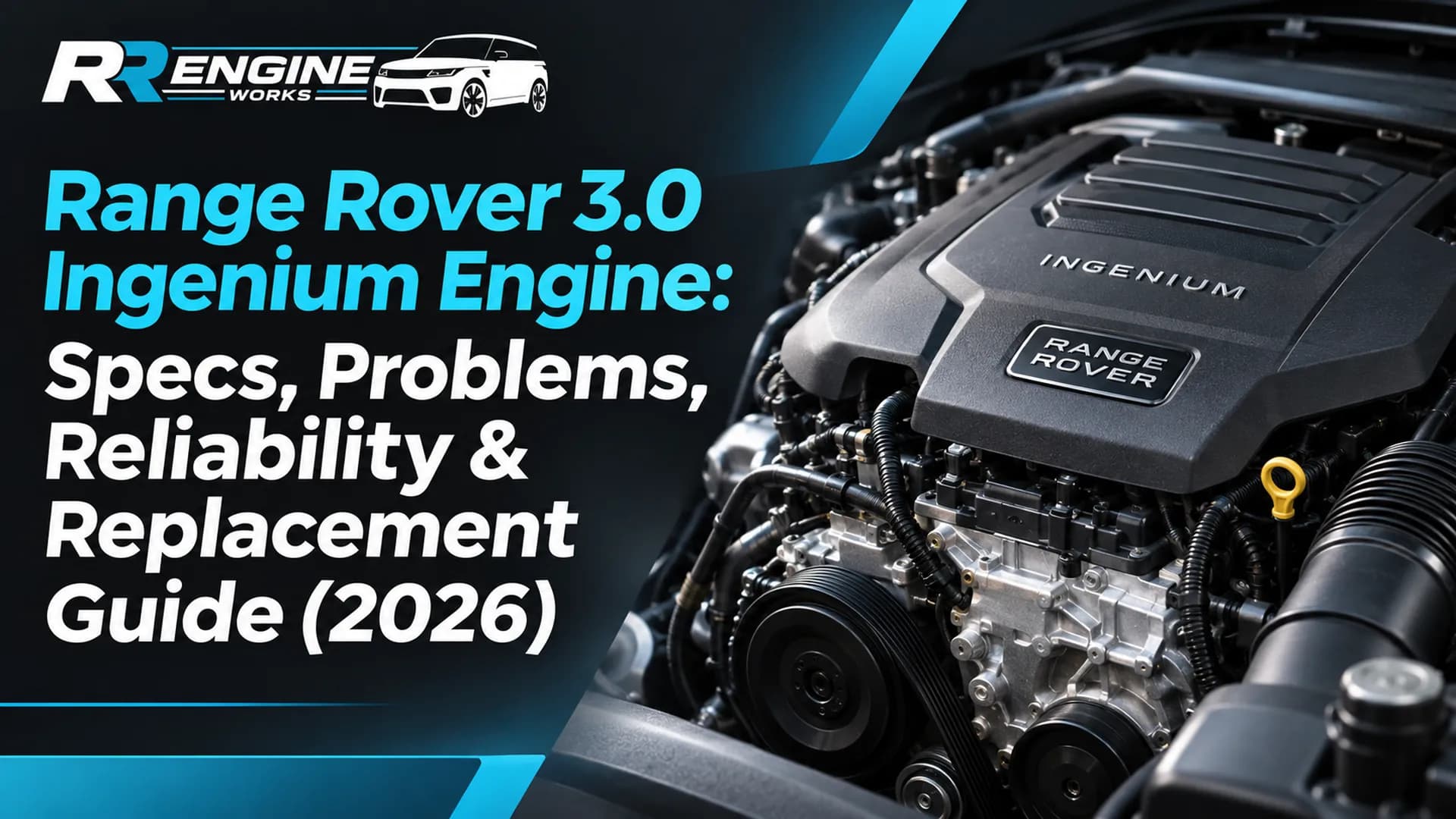
Hearing a new rattle, seeing a warning light, or being quoted a huge bill is stressful on a car that cost this much. Before you spend anything, you need to know what the Range Rover 3.0 Ingenium engine is, what usually goes wrong with it, and when replacing it makes more sense than repairing it.
This guide covers all of that in plain terms. It is based on the kind of faults our workshop in Grays, Essex deals with on 3.0-litre Land Rover engines.
In short: the 3.0 Ingenium is Jaguar Land Rover's modern 3.0-litre inline-six, available in petrol and diesel and paired with a 48V mild-hybrid system. It is smoother and more refined than the older V6, but it has its own weak points, mainly around cooling, oil management and the mild-hybrid hardware.
Jump to:
- Specs and models
- Common problems and reliability
- Replacement options and cost
- FAQs
What Are the Range Rover 3.0 Ingenium Engine Specs and Which Models Use It?
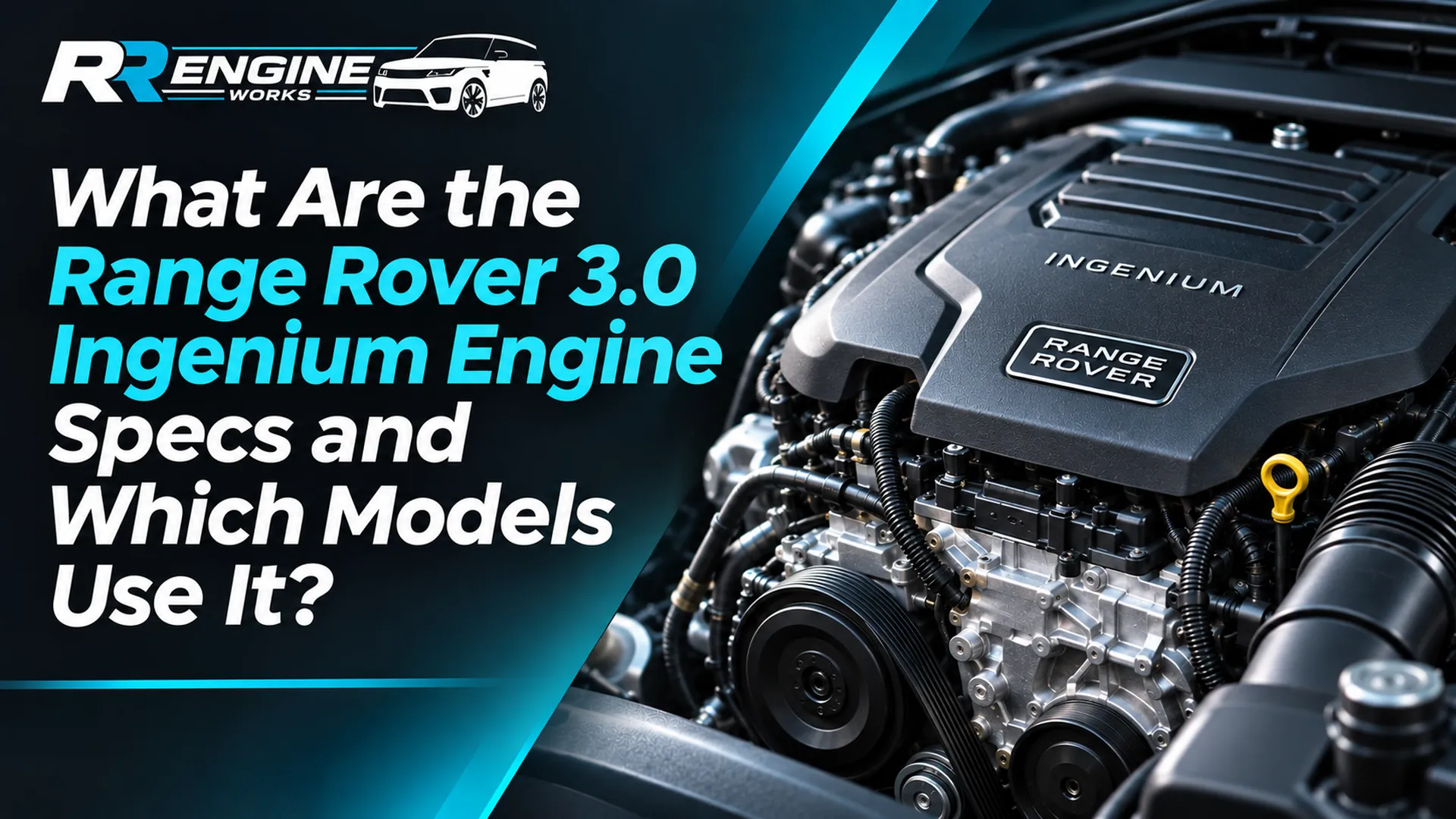
The 3.0 Ingenium replaced the older supercharged petrol V6 and the 3.0 diesel V6 that many owners know as the SDV6. It is an inline six-cylinder with a turbocharger and a 48V mild-hybrid system. The six-in-a-row layout is naturally well balanced, which is a big part of why the engine feels so smooth at motorway speeds.
Two engine families sit under the name:
- Petrol (AJ20-P6): sold as the P360 and P400, depending on model and year.
- Diesel (AJ20-D6): sold as the D250, D300 and D350, depending on model and year.
The engine appears across the Range Rover, Range Rover Sport and Range Rover Velar, and in other Jaguar Land Rover models such as the Defender, Discovery and Jaguar F-Pace. Exact availability changes by model year and market, so always check your handbook or VIN before ordering parts or an engine.
What Are the Key Specs of the 3.0 Ingenium Petrol and Diesel Engines?
Here is a quick-reference table. The figures are approximate and vary by model year and tune, so confirm yours against official Land Rover documentation.
Feature | Petrol (AJ20-P6) | Diesel (AJ20-D6) |
| Layout | Inline 6-cylinder | Inline 6-cylinder |
| Capacity | 3.0 litres | 3.0 litres |
| Induction | Turbocharged | Twin-stage turbocharged |
| Hybrid system | 48V mild hybrid | 48V mild hybrid |
| Typical output | Roughly 360–400 PS | Roughly 250–350 PS |
| Typical torque | Roughly 500–550 Nm | Roughly 570–700 Nm |
| Common trims | P360, P400 | D250, D300, D350 |
The 48V mild-hybrid system uses a belt-driven starter generator (BSG) and a small battery. It does not drive the car on electric power alone. It smooths stop-start operation, recovers energy under braking and gives the engine a small boost.
What this means in daily driving: the diesel suits high-mileage motorway work and towing because of its torque. The petrol suits shorter trips and drivers who prefer a quieter, more responsive engine.
Is the 3.0 Ingenium Fitted to the Range Rover Velar, and How Does It Differ from the Older SDV6?
Most Velar owners have the 2.0-litre four-cylinder Ingenium. The 3.0-litre inline-six arrived in the Velar later, mainly in the diesel D300 and a petrol P400, so check your engine code before assuming which you have.
The older SDV6 is a V6 with a very different design. Here is how the two compare:
Point | 3.0 Ingenium (inline-six) | Older 3.0 SDV6 (V6) |
| Layout | Inline six | V6 |
| Hybrid assistance | 48V mild hybrid | None |
| Refinement | Very smooth | Good, but more vibration |
| Complexity | Higher (BSG, 48V system, cooling) | Lower |
| Common weak points | Cooling, BSG, oil management | Turbo and EGR issues, injectors |
Neither engine is "bad". The Ingenium is the more modern and efficient design, but the extra mild-hybrid hardware means more parts that can fail.
Not sure which engine your vehicle has? Use the engine finder tool on our site and enter your registration for an instant match.
What Are the Most Common Range Rover 3.0 Ingenium Engine Problems, and Is It Reliable?
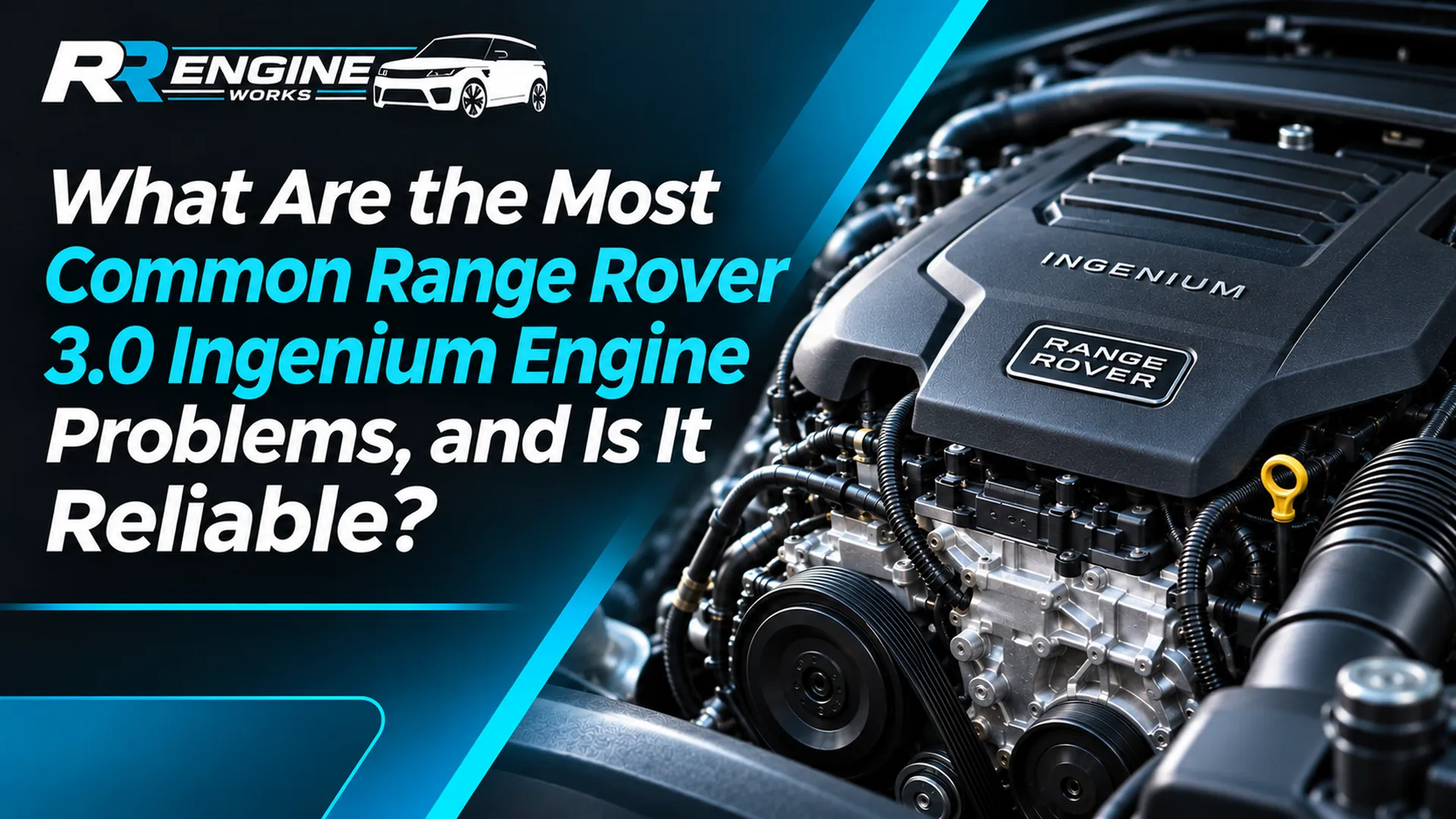
Most 3.0 Ingenium engine problems are manageable if you catch them early, and the engine does not suffer from one single catastrophic flaw. Where owners get hurt is ignoring the early signs or stretching service intervals, because a small fault can turn into an engine failure.
What Are the Common 3.0 Ingenium Engine Problems and the Warning Signs to Watch For?
Here are the faults we see most often, with the warning signs for each:
- Cooling system faults: coolant loss, overheating warnings or a sweet smell. The mild-hybrid components rely on the cooling system, so a leak can affect more than the engine.
- BSG (belt starter generator) problems: squealing from the belt area, a mild-hybrid warning on the dash, or rough starts.
- Oil consumption and contamination: a falling oil level between services, or oil that looks thin or smells of fuel. Short trips make this worse on the diesel.
- Turbocharger wear: loss of power, whistling, blue or grey smoke, or limp-mode warnings.
- DPF and AdBlue faults (diesel): repeated regeneration warnings, poor economy or an AdBlue message. These are common when the car mostly does short journeys.
- Timing-related noise: a cold-start rattle or ticking. Chain issues are better documented on the 2.0-litre Ingenium, but any new engine noise needs checking.
Stop driving and call a recovery service if you see a red oil pressure light, a temperature warning that will not clear, or heavy smoke. Driving "just a few more miles" is how a repairable fault becomes a full engine replacement.
A typical scenario: an owner notices their coolant level dropping every few weeks and decides to top it up. Two months later the engine overheats on the motorway. Had the leak been traced early, it would have been a hose or housing repair. Once the engine has overheated, head gasket and bearing damage become much more likely.
Not sure what your symptoms mean? Send us your registration and a short description for a free assessment.
Is the Range Rover 3.0 Ingenium Engine Reliable Compared with Other Range Rover 3 Litre Diesel Engines?
The honest answer is yes, with conditions. A well-serviced 3.0 Ingenium can be a dependable, long-lasting engine. A neglected one can become expensive quickly.
Compared with the older 3 litre diesel engines, owners tend to report these differences:
- Older SDV6 / TDV6: known for turbo, EGR and injector issues, but simpler, with no mild-hybrid system to maintain.
- 3.0 Ingenium: smoother and cleaner-running, but with more complex cooling and electrical hardware.
For those searching for Range Rover 3 litre diesel engine problems, the pattern is the same across generations: most failures trace back to missed servicing, poor oil quality and ignored warning lights, not to one defective part.
To protect an Ingenium's reliability:
- Shorten your oil change interval. Many specialists recommend roughly 10,000 miles or 12 months rather than the longest factory interval, especially for short-trip use.
- Check coolant regularly. Low coolant is an early warning sign, not a top-up job.
- Keep up with software updates. Dealers or specialists can apply updates that address known faults.
- Drive the diesel properly now and then. A longer, faster run helps the DPF regenerate.
- Buy with a history. A full service record matters more than low mileage.
Repair, Rebuild or Replace? Range Rover 3.0 Ingenium Engine Replacement Explained
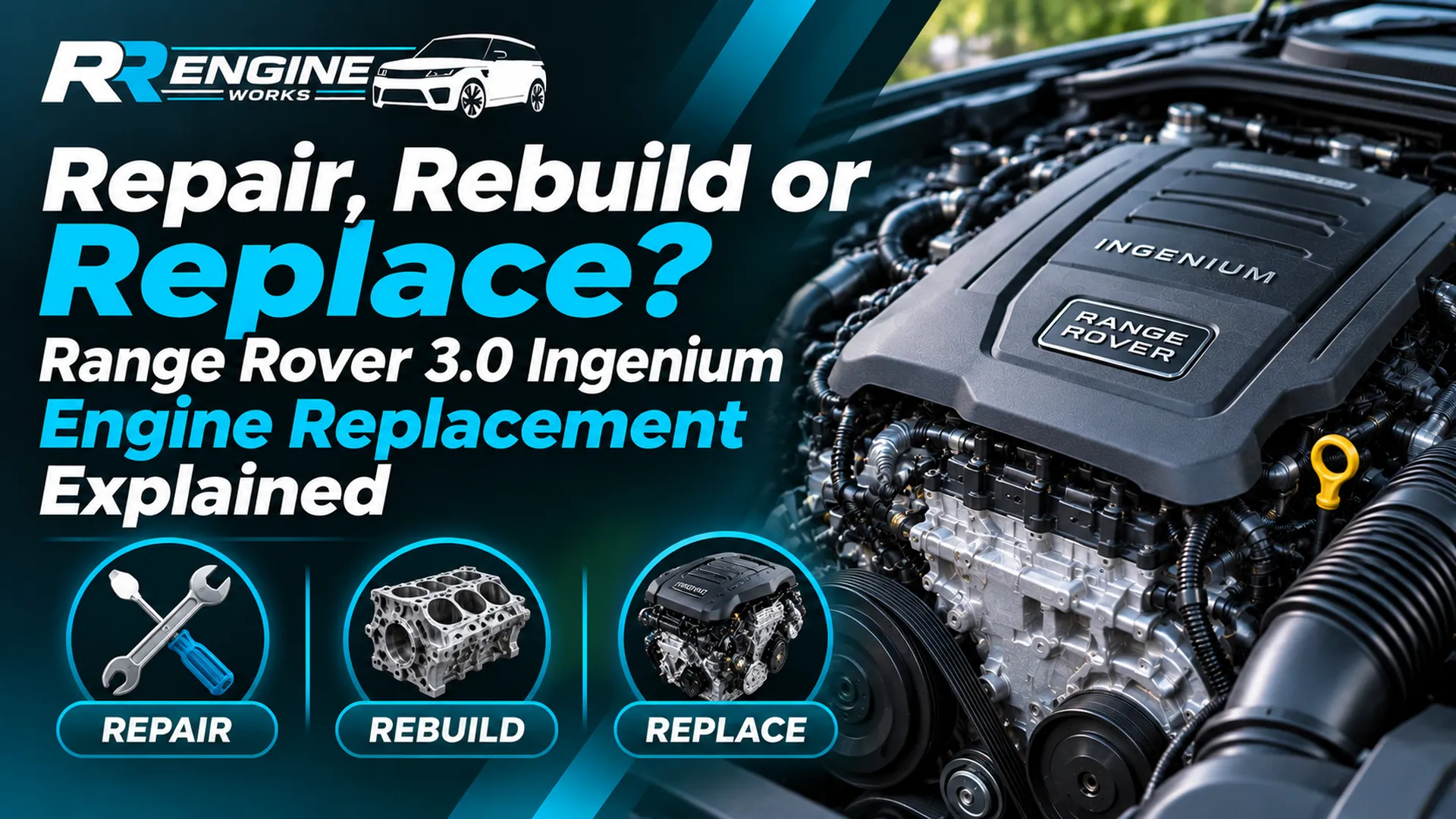
Engine replacement is a big decision, so let's break it down. The right choice depends on the fault, the car's value and how long you plan to keep it.
Option | Best for | Main advantage | Main drawback |
| Repair | A single, isolated fault | Lowest upfront cost | Does not fix hidden wear |
| Reconditioned engine | Most owners with a failed engine | Strong value, usually with a warranty | Quality varies by supplier |
| New engine | Newer or high-value vehicles | Maximum peace of mind | Highest cost |
| Used engine | Tight budgets | Lowest price | Unknown history and more risk |
For most owners, a reconditioned or quality-tested replacement engine offers the best balance of cost and confidence. If you are weighing options, our guide to range rover 3.0 ingenium engine replacement walks through each route in more detail.
How Much Does a Range Rover 3.0 Ingenium Engine Replacement Cost in the UK?
There is no single price, because several things move the total:
- Engine variant: petrol or diesel, and the power output.
- Engine condition: reconditioned, new or used.
- Labour: the 3.0 Ingenium is a tight installation, so fitting takes real time.
- Extra parts: mild-hybrid components, hoses, belts and fluids are often replaced at the same time.
- Warranty length: longer cover usually means a higher price.
Expect a replacement to run into the thousands of pounds. The fairest way to get a number is a quote based on your exact registration, because variant and model year change the price.
When comparing quotes, ask each supplier:
- Is the engine tested before sale?
- How long is the warranty, and what does it cover?
- Is fitting included, or can they recommend a trusted fitter?
- What happens if the engine fails inside the warranty period?
Why Choose RR Engine Works in Grays, Essex for Your Range Rover 3.0 Ingenium Engine?
Choosing who supplies your engine matters as much as the engine itself. At RR Engine Works, we focus on Land Rover and Range Rover engines, so we see the same faults often and know what to look for.
- Specialist focus: Range Rover, Land Rover and Jaguar engines, including the 3.0 Ingenium.
- Tested engines and clear warranty terms, so you know what you are buying.
- UK-wide delivery, plus a local base at Unit 1 Hedley Ave, Grays RM20 4EL for customers in Essex and the surrounding area.
- Straight advice: if a repair is the smarter option, we will say so.
Getting your quote takes three steps:
- Enter your registration and we confirm your exact engine.
- Check the details with us so there are no mistakes.
- Receive your quote, with warranty terms and delivery options.
Ready to find out what your engine will cost? Enter your registration now for a free engine quote.
Frequently Asked Questions About the Range Rover 3.0 Ingenium Engine
Is the Range Rover 3.0 Ingenium engine reliable?
Generally yes, when it is serviced on time with quality oil. Most major failures follow neglected maintenance or ignored warning lights.
What are the most common Range Rover 3.0 Ingenium engine problems?
The usual issues are cooling system leaks, BSG faults, oil consumption, turbo wear and DPF or AdBlue problems on diesel models.
Which is better, the petrol or diesel 3.0 Ingenium?
Diesel suits long-distance driving and towing thanks to its torque. Petrol suits shorter journeys and drivers who want a quieter, more responsive engine.
How long does a 3.0 Ingenium engine last?
With regular servicing and careful driving, many owners expect well over 100,000 miles. Maintenance history has a bigger effect than the odometer reading.
Can I replace just the engine, or do I need a new vehicle?
You can replace the engine alone. For most owners it costs far less than changing the vehicle.
Does the Range Rover Velar use the 3.0 Ingenium engine?
Some Velar models do, mainly later diesel and petrol variants, but many use the 2.0-litre Ingenium. Check your engine code or registration.
Conclusion: Make the Right Call on Your 3.0 Ingenium Engine
The 3.0 Ingenium is a refined, capable engine, but it rewards owners who stay on top of maintenance and act quickly on warning signs. Know your variant, watch the cooling system and oil level, and do not delay when something feels wrong.
If your engine has already failed or is heading that way, the right replacement can put you back on the road with confidence.
Get your free engine quote from RR Engine Works today. Enter your registration, and our team will confirm your engine and give you clear pricing and warranty details.