
A proper Freelander 1.8 head gasket repair means more than swapping the gasket. On the K-series engine, a lasting repair checks the cylinder head for flatness and damage and checks that the cylinder liners sit at the correct height. It fits an improved gasket with steel locating dowels, renews the head bolts and supporting parts, and flushes, bleeds and pressure-tests the cooling system. Land Rover's own Technical Bulletin 0036 sets out these checks. It also says that if the liners have dropped or the engine has severely overheated, the engine should be replaced rather than repaired. This guide explains what to expect.
Why the 1.8 K-Series Fails Its Head Gasket
The Freelander 1 (1997–2006) 1.8 petrol uses the Rover K-series engine. It is light and lively, but it has a well-known weakness. Its aluminium block uses wet cylinder liners, and the head is clamped down by long through-bolts. Owners and specialists point to several contributing factors:
- A small coolant reserve. A minor leak can quickly turn into overheating.
- Original nylon locating dowels. Land Rover later replaced these with steel ones.
- Liner height. Liners sitting flush with or below the block face reduce gasket clamping.
- Rapid temperature changes, especially hard driving from cold.
- Cooling system weaknesses such as ageing hoses, thermostats, radiator caps and water pumps.
Most head gasket failures on this engine are triggered by coolant loss or overheating. That is why the cooling system is as important as the gasket itself.
Signs of Head Gasket Failure
Sign | What it can mean |
| Coolant level dropping with no visible leak | Coolant passing the gasket |
| Mayonnaise-like residue under the oil cap | Coolant mixing with oil (short trips can also cause condensation) |
| White, sweet-smelling exhaust smoke | Coolant burning in a cylinder |
| Overheating or a rising temperature gauge | Gasket failure, or a cooling fault that will cause it |
| Bubbles in the expansion tank | Combustion gas entering the coolant |
| Hard coolant hoses when cold | Pressure from combustion gases |
| Oil in the coolant | Oil and coolant passages mixing |
If you see these signs, stop driving and avoid repeatedly topping up and carrying on. Continued overheating can turn a head gasket repair into an engine replacement. Our engine diagnostics and repair service confirms the actual fault before recommending a repair.
What a Proper Repair Includes
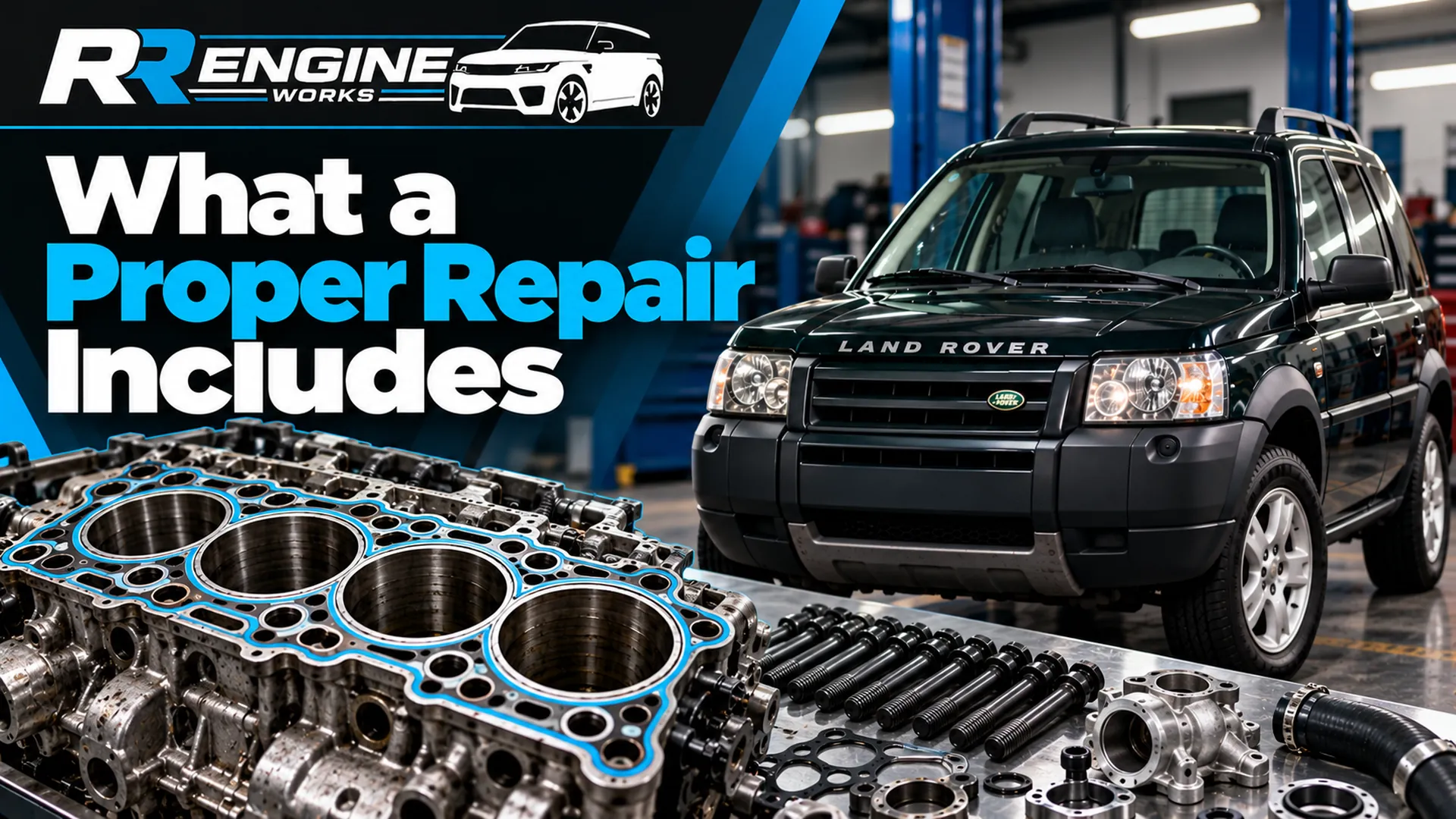
Land Rover's Own Checks
Land Rover's Technical Bulletin 0036 (Issue 1, June 2004) covers the Freelander 1.8 K-series after overheating, from VIN WA600000 onwards. It sets out what to check once the head is off:
Check | Bulletin guidance |
| Head gasket and dowels | Fit the later-type gasket with steel dowels. Discard the old nylon dowels and fit the steel ones 10–11 mm above the block face |
| Inlet manifold gasket | Replace |
| Head flatness | Within 0.05 mm |
| Head refacing | Scratches up to 0.2 mm can be refaced, but the head height must not drop below 118.75 mm |
| Head damage | Replace the head if there is pitting, porosity or pinholes on the gasket face, or indentation from the bore eyelets |
| Liner height | Liners must be level with, or up to 0.075 mm above, the block face. Liners below the face mean the engine is replaced |
| Bores and bearings | Severe scoring, seized rings or bearing damage mean the engine is replaced |
| Oil and coolant contamination | Flush the engine and cooling system, and replace badly contaminated parts |
| Refill | Use the correct antifreeze, bleed the system properly and carry out a final pressure test |
These checks decide whether a head gasket repair will last, or whether the engine is too far gone.
Gasket Choice and Supporting Parts
Gasket type. Owners and specialists debate two main approaches: an improved elastomer-type gasket with steel dowels, or a multi-layer steel (MLS) gasket, which some say works best with the liners standing slightly proud. Experiences differ. One forum owner found an MLS gasket weeped coolant, while an uprated elastomer gasket with a saver shim worked better. Ask your workshop which gasket it uses and why.
Supporting parts usually renewed:
- Head bolts (most specialists advise new ones rather than reusing stretched bolts)
- Timing belt, tensioner and water pump, since the belt comes off anyway
- Inlet and exhaust manifold gaskets, cam seals and rocker cover gasket
- Thermostat, radiator cap and ageing coolant hoses
- Spark plugs and an oil and filter change, with extra flushes if coolant got into the oil
Some owners also fit an uprated oil rail or a different thermostat, though others prefer to keep the standard parts.
Head machining. The head is checked for flatness and machined only within the bulletin's limits. Our head gasket replacement service includes compression and contamination testing, a cylinder head inspection and machining where needed, followed by a pressure test and temperature monitoring before the car is returned.
Repair or Replace the Engine?
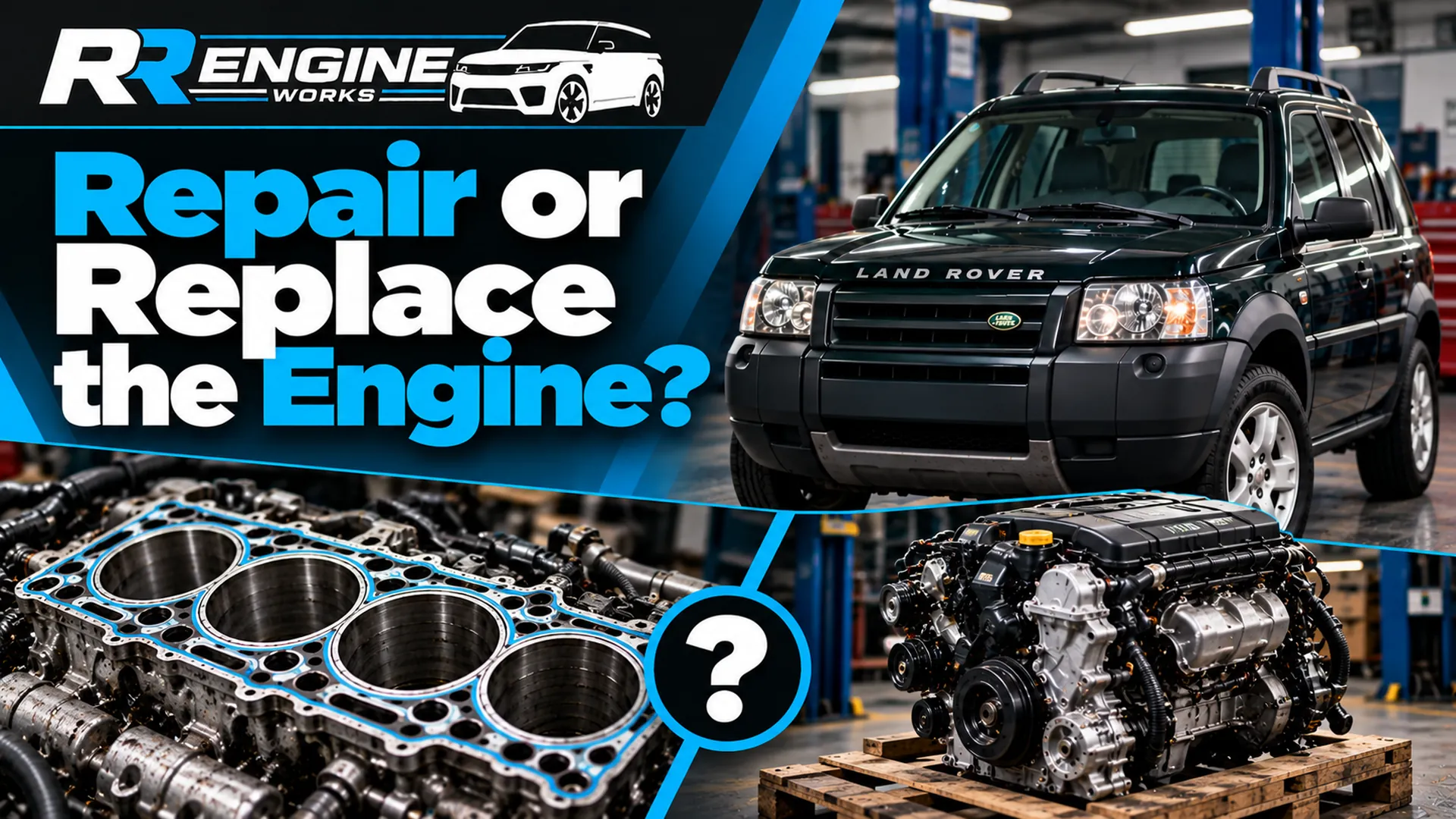
A head gasket repair makes sense when the head can be saved, the liners are at the correct height and the bores and bearings are healthy. If the liners have dropped below the block face, the bores are scored or the engine has clearly overheated severely, Land Rover's bulletin points to replacing the engine. If you would rather keep the original unit, a full rebuild is the other option. See our engine rebuild service.
On a Freelander 1 that is now 20 years old or more, also weigh the cost against the car's value and the condition of the rest of the car, including the IRD, rear differential, body and suspension.
What Your Written Quote Should Show
- Diagnosis: compression or leak-down test and contamination checks
- Gasket type: elastomer or MLS, and steel dowels fitted
- Head work: flatness check, any machining, and the head height after machining
- Liner height check: measured and recorded
- Head bolts: new or reused
- Timing belt, tensioner and water pump: included or not
- Other gaskets and seals: inlet and exhaust manifold, cam seals and rocker cover
- Cooling system: thermostat, cap, hoses, flush and bleed
- Oil service: oil, filter and any extra flushes
- Testing: pressure test and temperature monitoring
- Extras: what happens if the liners or bores fail the checks
- Warranty: the written terms
For a diagnosis and an itemised quote, contact the team or call 01708 592377.
FAQs
Freelander 1.8 Head Gasket FAQs
Why does the Freelander 1.8 suffer head gasket failure?
The K-series has a small coolant reserve, wet liners and, on earlier engines, nylon locating dowels. Coolant loss or overheating usually triggers the failure.
What is the steel dowel fix?
Land Rover's Technical Bulletin 0036 says to replace the old nylon dowels with steel ones and fit the later-type head gasket, alongside a set of checks on the head and liners.
Is an MLS head gasket better for the K-series?
Opinions differ. Some specialists prefer MLS gaskets with liners set slightly proud, while others find uprated elastomer gaskets more reliable. Ask your workshop for its reasoning.
When should the engine be replaced instead?
According to Land Rover's bulletin, if the liners sit below the block face, the bores or bearings are damaged, or there are other signs of severe overheating.
Can I keep driving with a suspected head gasket failure?
It is not advisable. Continued overheating can damage the head and liners and turn a repair into an engine replacement.